
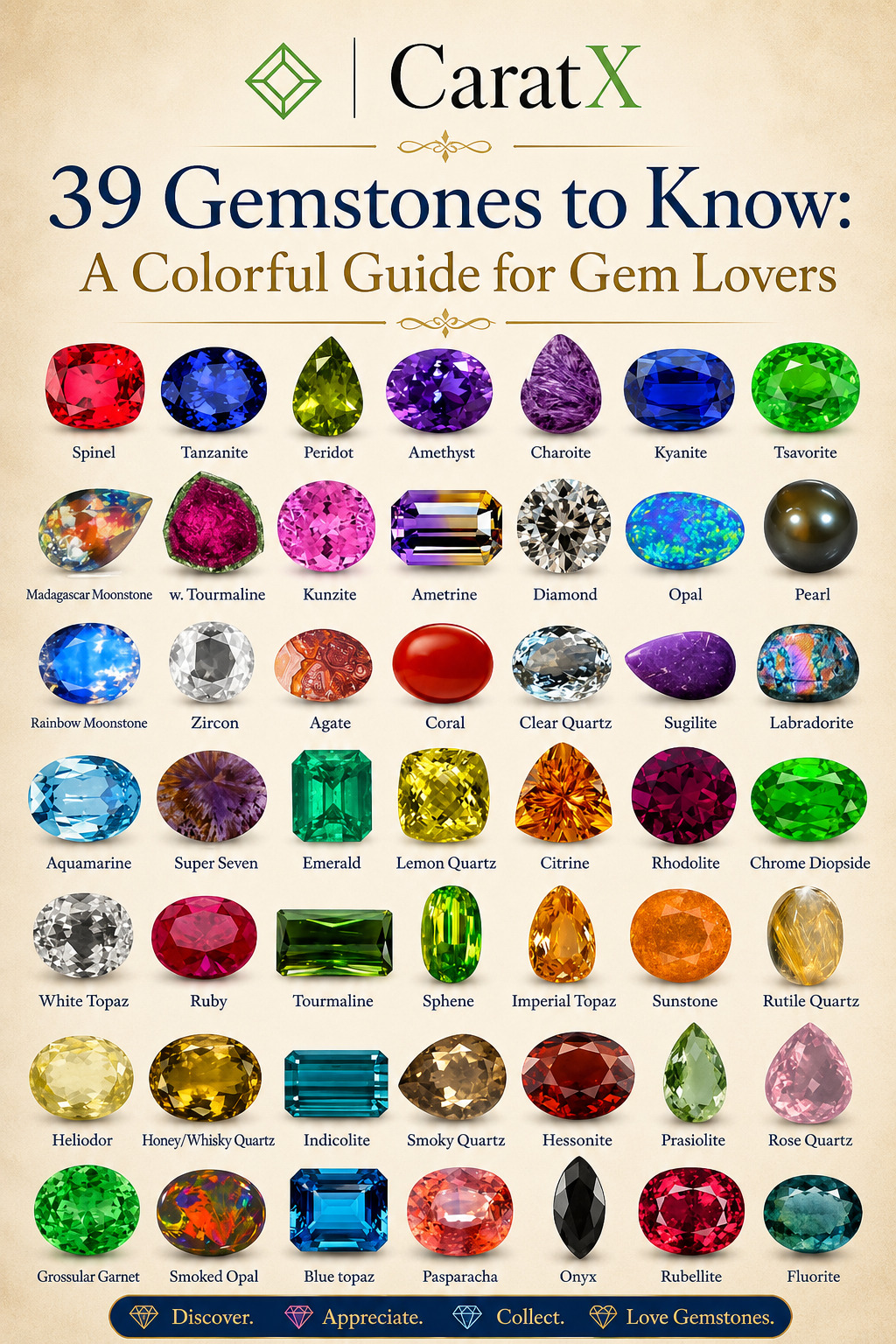
The world of gemstones is a dazzling tapestry of colors, patterns, and natural beauty. From the fiery red ofrubyto the ethereal blue oftanzanite, each gemstone tells a unique story of geological processes spanning millions of years. Whether you're a seasoned collector, a jewelry enthusiast, or simply captivated by the beauty of Earth's treasures, understanding these 39 remarkable gemstones will deepen your appreciation for nature's artistry.
AtCaratX, we're passionate about connecting gem lovers with the finest natural gemstones and diamonds from around the world.
Explore our marketplaceto discover exceptional gems at unbeatable prices.
The Complete Guide to 39 Exceptional Gemstones -
1. Spinel –
For centuries,spinelmasqueraded as ruby in Europe's crown jewels including the famous Black Prince'sRubyin the British Imperial Crown, which is actually a red spinel. This sparkling gem is found in red, pink, blue, and other colors, with a Mohs hardness of 8, making it highly durable for everyday wear.
Spinelis a magnesium aluminum oxide (MgAl₂O₄) that crystallizes in the cubic crystal system and forms in metamorphic rocks, particularly marble and schist. In 2016,spinelwas officially added as an August birthstone, sharing the month withperidot.
The most valued spinel colors includebright red, cobalt blue, and vivid pink and orange. Fine-color spinel is rare above five carats, making larger stones particularly valuable.
Explore spinel at CaratX: Shop Spinel Gemstones
2. Tanzanite –
Tanzaniteis one of the most exciting gem discoveries of the 20th century. Found in only one place on Earth, the hills of Merelani in northern Tanzania, near majestic Mount Kilimanjaro this rare blue-violet gem was first unearthed in 1967. Tiffany & Co named this blue-violet variety of zoisite in honor of its country of origin.
Tanzaniteis remarkably pleochroic, showing three different colors when viewed from different crystal directions. With a Mohs hardness of 6 to 7, it requires careful handling in jewelry.Tanzaniteserves as a December birthstone alongside zircon, turquoise, and blue topaz.
Explore tanzanite at CaratX: Shop Tanzanite Gemstones
3. Peridot –
Peridotis the gem-quality variety of the mineral olivine, a magnesium-iron silicate with the chemical formula (Mg,Fe)₂SiO₄. It is one of the few gemstones that forms deep within the Earth's mantle around 60 kilometers below the surface and is brought up by volcanic activity. Peridot forms at temperatures between 910° and 980°C.
Commercially importantperidotsources include Zabargad (Egypt), San Carlos (Arizona), Myanmar, China, Pakistan, Vietnam, Ethiopia, and Tanzania. The most valued shade is a vivid, saturated lime green without brownish overtones.
Peridotis one of the August birthstones, sharing the month with spinel.
Explore peridot at CaratX: Shop Peridot Gemstones
4. Amethyst –
Amethystis the most prized gem variety of quartz, valued for its beautiful violet-to-purple color. The purple color is caused by small amounts of iron impurities in the quartz crystal lattice.Amethystis found in a variety of geologic settings but most commonly as crystals lining cavities or voids in volcanic rock, forming geodes.
The major sources for amethyst are Brazil and Uruguay. With a Mohs hardness of 7,amethystis suitable for all types of jewelry. Amethyst is the February birthstone.
Explore amethyst at CaratX: Shop Amethyst Gemstones
5. Charoite –
Charoite is a rare purple ornamental stone found only in the Murun alkaline-carbonatite complex in Eastern Siberia, Russia. Its complex chemical composition is (K,Na)₅(Ca,Ba,Sr)₈Si₁₈O₄₆(OH,F)·nH₂O, making it an example of the extraordinary complexity of silicate minerals.
Charoite forms in polycrystalline aggregates with other minerals including pyroxene, K-feldspar, amphibole, and quartz. Its striking purple color and swirling patterns make it highly sought after by collectors and jewelry designers.
6. Kyanite –
Kyanite is a metamorphic mineral typically found in blue with a glass-like shine. It has an unusual property: its hardness varies by direction, 4 to 5 parallel to the crystal's length and 6 to 7.5 at right angles. Its chemical formula is Al₂SiO₅, and it forms under high-pressure metamorphic conditions in schists and gneisses.
Kyanite's blue color comes from Fe³⁺ intervalence interactions, and sky-blue kyanite found in diamond pipes may contain Cr³⁺. It is typically colorless to pale blue in thin section with weak pleochroism.
7. Tsavorite –
Tsavorite is a vivid green variety of grossular garnet that is exceptionally rare and valuable. It was first discovered in 1967 in northern Tanzania and again in 1970 in Kenya's Tsavo National Park by renowned geologist Campbell Bridges. In 1973, it was named tsavorite in honor of Kenya's Tsavo National Park.
The most desirable tsavorites display an intense green to blue-green color. Remarkably, tsavorite is a totallynatural gemstone, it is not heated, oiled, filled, irradiated, or treated in any way. The Kenya-Tanzania border region remains the only source of gem tsavorite.
8. Madagascar Moonstone –
Madagascar moonstone is a feldspar gem known for its attractive light effects, particularly a phenomenon called adularescence a ghostly sheen that moves under the stone's surface like moonlight glowing in water. This optical effect is caused by light scattering between microscopic layers of feldspar that are similar in size to the wavelength of light.
Feldspars are the most widespread minerals in Earth's crust, and moonstone is perhaps the most familiar gem-quality member of the feldspar group. Besides adularescence, moonstone sometimes displays a cat's-eye effect.
9. Watermelon Tourmaline –
Watermelon tourmaline is a spectacular variety of tourmaline that displays beautiful pink and green color bands, resembling the fruit it's named after. The pink center is surrounded by a green outer zone, creating a striking visual contrast.Tourmalineoften displays color zoning, with watermelontourmalineshowing pink and green color zoning parallel to the c-axis.
The green color intourmalineis generally caused by iron, while manganese produces reds and pinks. Watermelontourmalinespecimens are highly prized by collectors and jewelry enthusiasts alike.
10. Kunzite –
Kunzite is the pink-to-violet variety of the mineral spodumene (LiAlSi₂O₆), and its color comes from manganese. With a Mohs hardness of 6.5 to 7.0, it has perfect cleavage in two directions, making it somewhat fragile for everyday wear.
Kunzite is strongly pleochroic, displaying different colors in different crystal directions from nearly clear to pink to lilac depending on the viewer's perspective. It is found in Afghanistan, Brazil, Madagascar, and California. Kunzite's color can fade with prolonged exposure to heat or intense light.
11. Ametrine –
Ametrine is a transparent, bicolored quartz that displays both the purple of amethyst and the yellow of citrine in the same crystal. Both colors are caused by small amounts of iron (approximately 40 parts per million).
The only significant source of natural ametrine is eastern Bolivia's Anahi mine, where it occurs in veins in dolomitic limestone. Ametrine is typically cut as a rectangular step cut to best display its striking bicolor effect. With a Mohs hardness of 7, it is durable enough for most jewelry applications.
12. Diamond –
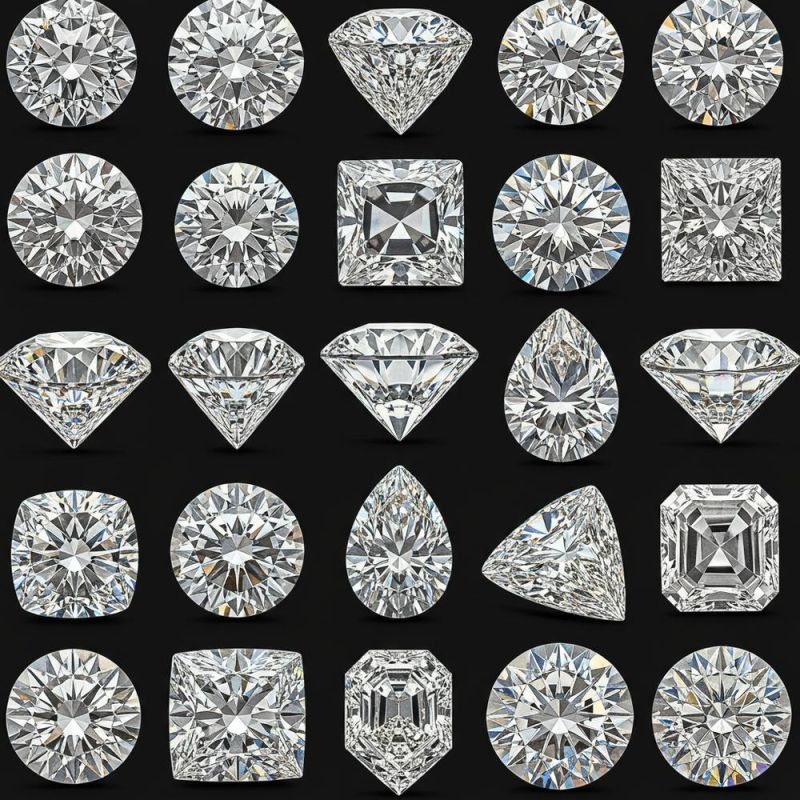
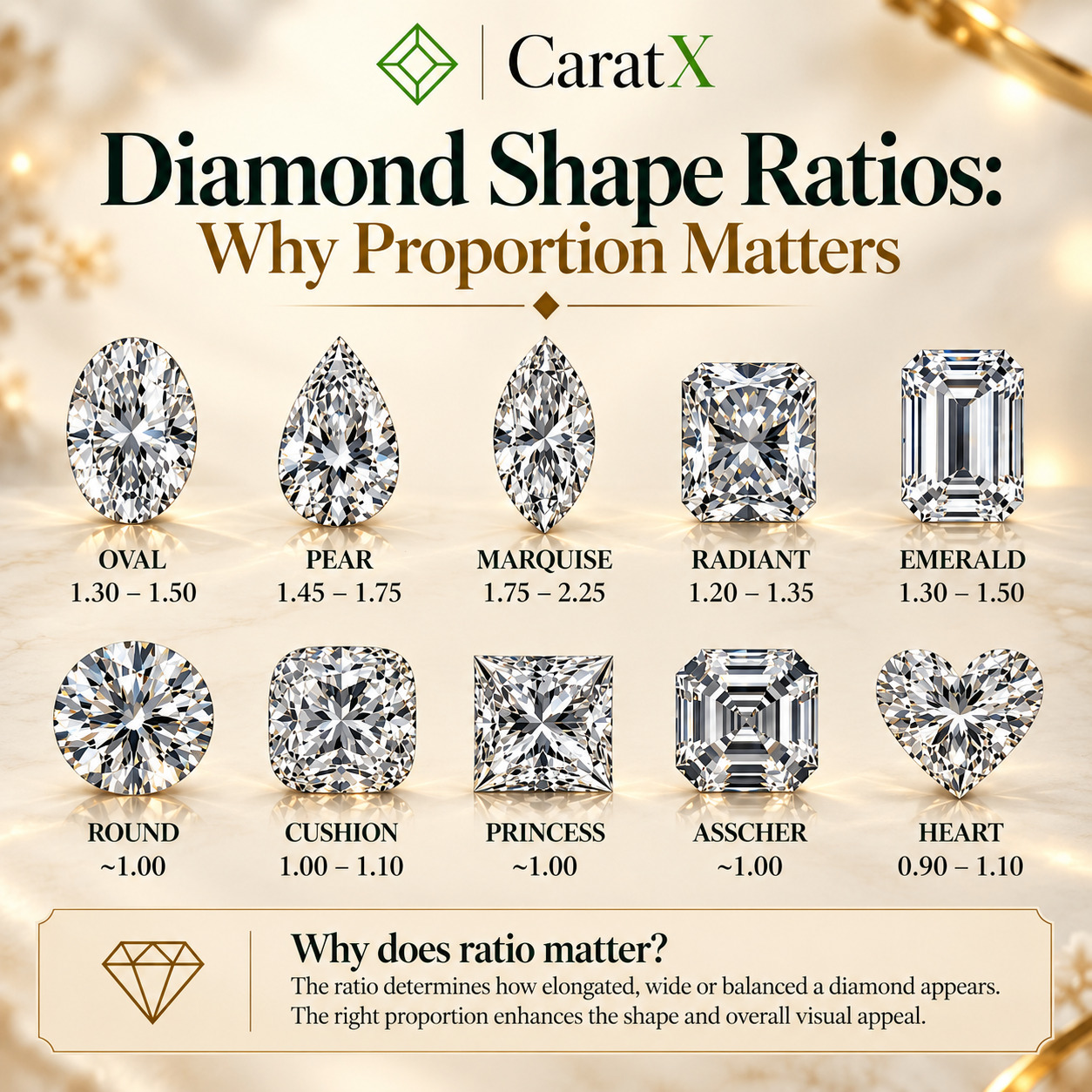
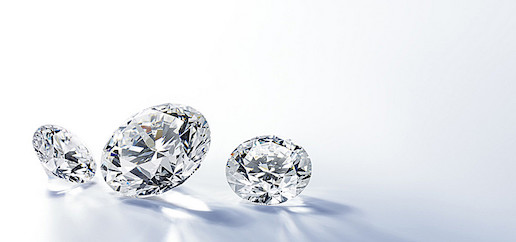
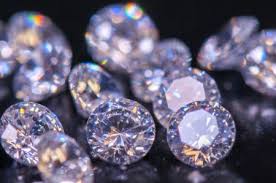
Diamondis the hardest natural gemstone and one of the most famous and valuable.Diamondsform deep within the Earth's mantle traditionally thought to be within 150–250 kilometers depth where carbon crystallizes under extreme pressure and temperature. They are brought to the surface through volcanic eruptions.
Diamondscan form in both peridotite and eclogite in the cratonic lithospheric mantle. The formation of diamonds involves redox reactions and the presence of fluids that migrate due to plate tectonics. Their unmatched hardness (10 on the Mohs scale) and brilliance have made them the ultimate symbol of enduring love and commitment.
Shop natural diamonds at CaratX: Shop Natural Diamonds
13. Opal –
Opal is famous for its mesmerizing play-of-color a display of spectral colors caused by the diffraction of light as it passes through organized, submicroscopic spherical silica particles. This phenomenon occurs when light interacts with the three-dimensional periodic ordering of uniformly sized silica nanoparticles.
Precious opals display iridescence that can include a full spectrum of colors. Ethiopian opals, discovered in the mid-1990s, have become particularly notable for their unique play-of-color characteristics. The microstructure of opal specifically the size and arrangement of silica spheres determines which colors are displayed.
14. Pearl –
Pearlsare unique among gemstones because they are of organic origin, formed inside mollusks such as oysters, clams, and mussels. Apearlforms when an irritant such as a grain of sand becomes lodged between the mantle lobe and the shell of the bivalve. The mollusk secretes layers of nacre (mother-of-pearl) around the irritant, building up the pearl over time.
The nacre consists of aragonite (calcium carbonate) crystals bound together by an organic cementing agent called conchiolin.Pearlsare found in both freshwater and marine habitats and come in a stunning range of colors.Pearlis the June birthstone.
15. Rainbow Moonstone –
Rainbow moonstone is a variety of labradorite (a plagioclase feldspar) that shows flashes of multiple colors including blue, creating a rainbow-like iridescence. This optical phenomenon, known as labradorescence, is caused by light interference from microscopic exsolution lamellae within the feldspar.
Unlike traditional moonstone (which is orthoclase), rainbow moonstone belongs to the plagioclase group and falls into the calcium-rich labradorite variety. High-quality transparent rainbow moonstone from Madagascar can be cut into faceted stones.
16. Zircon –
Zirconis a colorful natural gem with high refraction and fire that is often unfairly confused with cubic zirconia (a synthetic diamond simulant).Zirconis zirconium silicate (ZrSiO₄) known for its high refractive index (1.925 to 1.984) and high dispersion, giving it brilliant rainbow flashes of fire.
Colorlesszirconis particularly notable for its brilliance and fire, which are close enough to diamond's properties to have caused centuries of confusion between the two gems.Zirconhas a Mohs hardness of 6 to 7.5 and comes in a wide range of colors. Zircon is one of the December birthstones.
17. Agate –
Agate is a fine-grained variety of quartz known as chalcedony that displays beautiful concentric color banding. The bands can range from parallel to highly uneven, even within individual specimens. The colors in agate are caused by microscopic inclusions of iron oxide minerals in the quartz.
Agates are typically white, gray, and yellowish-brown to reddish-brown, but can also display shades of blue. They form in volcanic rocks and are abundant worldwide. Agates with distinctive patterns such as "eye agate" displaying concentric banding are particularly prized by collectors.
18. Coral –
Coral used in jewelry is the excreted skeleton of coral animals (phylum Cnidaria, class Anthozoa). The skeleton is composed of calcium carbonate (aragonite) and organic material. Red to pink corals consist mainly of calcium carbonate, while black and gold corals are formed by hornlike organic matter.
Red coral is one of the most important organic gemstones. Its microstructure is controlled by the interaction between calcite and the organism. Coral has been used in jewelry and ornamentation for thousands of years and remains highly valued today.
19. Clear Quartz –
Clear quartz, also known as rock crystal, is the pure, colorless form of quartz (SiO₂). With a Mohs hardness of 7, it has conchoidal fracture surfaces and lacks cleavage planes. Clear quartz has been used for millennia for carved goblets, bowls, and ornamental objects.
Quartz is one of the most abundant minerals in Earth's crust and, in its pure state, is colorless. Clear quartz crystals can range from microscopic to gigantic one from Brazil weighed 5.5 tons.
20. Sugilite –
Sugilite is a rare purple ornamental gemstone that contains lithium. Its chemical composition is KNa₂Li₃(Fe,Mn,Al)₂Si₁₂O₃₀. Examination of jewelry-quality sugilite shows that it consists of manganese-bearing sugilite and other minerals in a polycrystalline aggregate.
There are actually two types of gem materials sold as sugilite: one that is predominantly manganoan sugilite with minor impurity minerals, and another that is chalcedony mixed with and colored by sugilite. Sugilite is found primarily in South Africa's Kalahari Desert and is known for its distinctive bluish-purple to reddish-purple color.
21. Labradorite –
Labradorite is famous for its spectacular blue, green, and golden flashes an optical phenomenon called labradorescence. This effect results from light diffracting off closely spaced layers of calcium- and sodium-rich feldspar. As the stone is turned, flashes of blue, green, yellow, orange, and red become visible across properly oriented surfaces.
The iridescence is caused by optical interference effects from microscopic exsolution lamellae that have very specific and consistent thicknesses. Labradorite was first recognized in Labrador, Canada and has since become a popular gemstone for both jewelry and ornamental objects.
22. Aquamarine –
Aquamarineis the blue to blue-green variety of beryl, colored by iron ions (Fe²⁺). With a Mohs hardness of 7.5 to 8, it is durable enough for all types of jewelry. Beryl has a hexagonal crystal system and can form enormous crystals weighing several tons.
Aquamarine'scolor ranges from greenish blue to pure blue, with more intense blue hues being most valued. It is the March birthstone. Major sources include Brazil, Madagascar, and various African countries.
Explore aquamarine at CaratX: Shop Aquamarine Gemstones
23. Super Seven –
Super Seven is a trade name for quartz that contains several mineral inclusions typically including amethyst, citrine, smoky quartz, rutile, and other minerals. This combination of multiple mineral species within a single quartz crystal makes Super Seven highly prized by metaphysical practitioners and collectors alike.
24. Emerald –
Emeraldis the valuable green variety of beryl, colored by trace amounts of chromium and/or vanadium. With a Mohs hardness of 7.5 to 8, emerald is the third most valuable gemstone after diamond and ruby.Emeraldsare famously included their internal fractures and inclusions are often described as "jardin" (French for garden), and it's said that "an emerald without inclusions is like a rose without scent".
Emeraldforms in pegmatite veins when pegmatite extrudes into wall rocks of different composition, such as ultrabasic rocks. Colombian emeralds are particularly prized for their pure, vibrant green with a slight bluish undertone.
Explore emeralds at CaratX: Shop Emeralds
25. Lemon Quartz –
Lemon quartz is yellow quartz that is typically color-treated to achieve its bright, sunny hue. While natural yellow quartz (citrine) exists, lemon quartz often refers to material that has been heat-treated or irradiated to enhance or create the yellow color. It offers an affordable alternative to more expensive yellow gemstones.
26. Citrine –
Citrineis the transparent, pale yellow to brownish orange variety of quartz. A trace of iron in citrine's structure is responsible for its yellow-to-orange color. Citrine is rare in nature, with most commercially available citrine actually being heat-treated amethyst.
Citrinerates 7 on the Mohs hardness scale and is generally free of eye-visible inclusions. Saturated yellow to reddish orange colors free of brownish tints are most prized. Citrine is the November birthstone.
Explore citrine at CaratX: Shop Citrine Gemstones
27. Rhodolite –
Rhodolite is a pinkish-red to purplish variety of garnet that is a mixture of pyrope and almandine. Its chemical formula is (Mg,Fe)₃Al₂(SiO₄)₃. Rhodolite typically does not have eye-visible inclusions, making it an excellent choice for jewelry.
The refractive index of rhodolite ranges from approximately 1.758. Its purplish-red color is highly sought after and distinguishes it from other red garnets.
28. Chrome Diopside –
Chrome diopside is a bright green gem colored by chromium. It is a calcium magnesium silicate mineral (CaMgSi₂O₆) in the pyroxene group. Chrome diopside is known for its vivid emerald-green color, which can be deeper and more intense than many emeralds.
As a diamond inclusion, chromium diopside indicates that the host diamond formed in a rock type known as peridotite. Chrome diopside is found in metamorphosed carbonate rocks like skarns and marbles.
29. White Topaz –
White topaz is the clear, sparkling variety of topaz, a fluorosilicate of aluminum with the formula Al₂(F,OH)₂SiO₄. With a Mohs hardness of 8, topaz is a durable gemstone suitable for all types of jewelry.
Topazcan be colorless, white, yellow, pink, red, orange, brown, green, blue, or violet. It has perfect cleavage in one direction and is optically biaxial positive. White topaz offers excellent brilliance at an affordable price point.
30. Ruby –
Rubyis the red variety of corundum (Al₂O₃) and is one of the most famous and valuable precious gemstones. Theredcolor comes from trace amounts of chromium.Rubyandsapphireare gem varieties of the mineral corundum.
Corundum is found in metamorphic rocks as well as in igneous rocks such as low-silica syenites and pegmatites.Rubydeposits are classified as primary (where corundum crystallized) or secondary (placer deposits). Ruby has a Mohs hardness of 9, second only to diamond, making it exceptionally durable.
Shop rubies at CaratX: Shop Ruby Gemstones
31. Green Tourmaline –
Green tourmalineis a popular green variety of tourmaline, with its color generally attributed to traces of iron.Tourmalineshave one of the widest color ranges of any gem, and green tourmaline is among the most sought-after varieties.
Greentourmalinetypically has fewer visible inclusions than pink to red varieties. The green color is caused by Fe and is often associated with absorption bands at approximately 410 nm and 718 nm. Greentourmalineis durable with a Mohs hardness of 7 to 7.5.
32. Sphene (Titanite) –
Sphene, better known to mineralogists as titanite (CaTiSiO₅), is famous for exceptional fire and brilliance resulting from its high dispersion. Typically yellow, green, orange, or brown in color, sphene displays incredible fire that can rival diamond.
The name "sphene" comes from the Greek word "sphenos" meaning "wedge," referring to the mineral's characteristic wedge-shaped crystals. Sphene has a Mohs hardness of 5 to 5.5, making it somewhat delicate for ring use but excellent for pendants and earrings. Gem-quality titanite has been found in various locations including Madagascar and Zimbabwe.
33. Imperial Topaz –
Imperial topaz is a valuable variety of topaz in golden, orange, and pinkish shades. Many dealers insist that a stone must show a reddish pleochroic color to be called imperial topaz. It is highly prized and very rare.
The refractive index of imperial topaz (1.629-1.641) is higher than that of blue or colorless topaz. Imperial topaz serves as the gem for the 23rd anniversary. Its price per carat rises dramatically with increasing size.
34. Sunstone –
Sunstone is a feldspar known for its distinct and lively glitter called aventurescence. This sparkly effect is caused by flat, reflective inclusions typically copper or hematite flakes that scatter light.
Oregon sunstone is a transparent feldspar with glittery copper inclusions. Sunstones exhibit a reddish to golden sheen resulting from light reflecting off numerous tiny copper or hematite flakes scattered within the stones. The feldspar is typically An₇₀ labradorite, a high calcic plagioclase.
35. Rutilated Quartz –
Rutilated quartz is natural quartz that contains golden or reddish needle-like inclusions of rutile (titanium dioxide, TiO₂). These golden needle inclusions are appreciated as a pleasing feature, giving this variety its distinctive name. The inclusions can form single needles, radiating sprays, or even six-rayed "star" patterns.
Rutilated quartz, sometimes called "Venus' hair," is formed through fluid-mediated co-crystallization at temperatures between 150-450°C. The contrast between the golden rutile needles and the clear quartz background makes this gemstone highly prized by collectors and jewelry designers alike.
36. Heliodor –
Heliodor is the yellow to golden variety of beryl, with its warm color attributed to iron impurities. The name comes from two Greek words meaning "sun" and "gift". Heliodor shares the same chemical formula as emerald and aquamarine (Be₃Al₂Si₆O₁₈) but with different trace elements producing its distinctive golden color.
Heliodor samples show weak dichroism but relatively saturated color. Large heliodor crystals can reach impressive sizes one deeply saturated heliodor weighing 275.31 carats is from Ukraine.
37. Honey/Whisky Quartz –
Honey quartz, also known as whisky quartz, is golden-brown quartz with a warm honey color. This variety of quartz gets its warm brown to golden color from natural irradiation and the presence of aluminum and other trace elements.
The rich, warm tones of honey quartz make it popular for both jewelry and ornamental objects, offering an earthy elegance that complements a wide range of styles.
38. Indicolite –
Indicolite is the blue variety of tourmaline, prized for its stunning blue hues. The blue color is generally caused by traces of iron and possibly titanium. Indicolite is one of the most valuable tourmaline colors, particularly when it displays a pure, saturated blue without green or gray overtones.
Brazil is famous for producing vivid blue to green tourmalines colored by copper. Indicolite is relatively rare compared to other tourmaline colors, making it highly sought after by collectors.
39. Smoky Quartz –
Smoky quartz is quartz with brown to smoky-gray colors, ranging from pale gray to warm brown to almost black. The color is caused by natural irradiation of the quartz crystal, which creates color centers in the crystal lattice.
With a Mohs hardness of 7, smoky quartz is durable and suitable for all types of jewelry. Smoky quartz can vary from light and clear to an almost "solid" looking black/brown. Notable sources include Scotland and the United States.
The Science Behind Gemstone Colors -
Gemstones get their stunning colors from trace elements incorporated into their crystal structures during formation. For example:
Chromium colors ruby red and emerald green.
Iron produces the blue of aquamarine and the yellow of heliodor.
Manganese creates the pink of kunzite and rhodolite.
Titanium and iron together create the blue of sapphire.
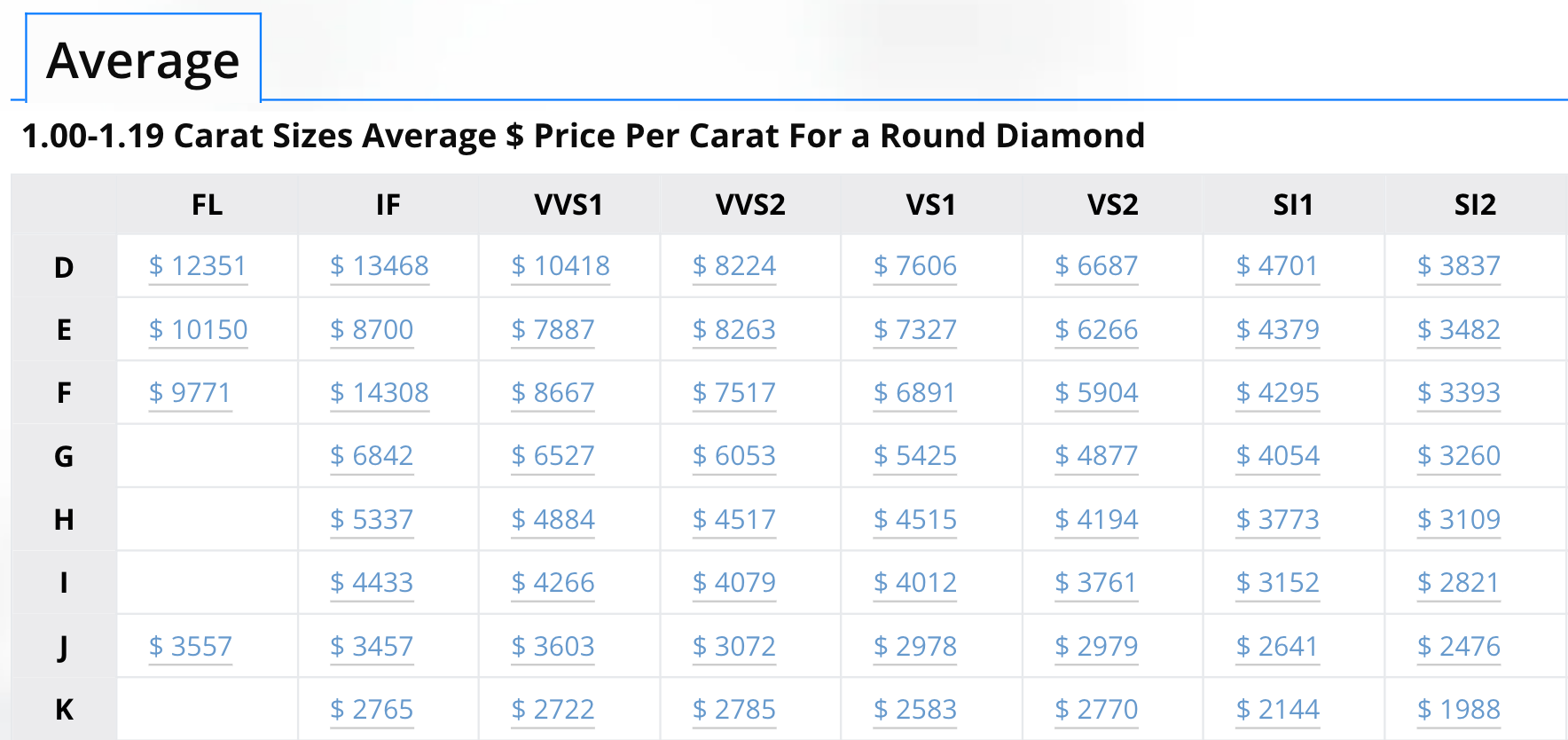
TheGemological Institute of America (GIA)provides educational resources on gemstone color, clarity, cut, and carat weight the "Four Cs" that determine gemstone value. Understanding these factors is essential for making informed purchasing decisions.
Buying Guide: What to Look For
When purchasing gemstones, consider these key factors:
Color: The most important factor look for vivid, saturated colors without undesirable secondary hues.
Clarity: Fewer visible inclusions typically mean higher value, though some gems (like emerald) are valued despite inclusions.
Cut: A well-proportioned cut maximizes brilliance and color.
Carat Weight: Larger stones of fine quality are rarer and more valuable.
Origin: Some origins (like Colombian emeralds or Burmese rubies) command premium prices.
Start selling gemstones internationally: Register as a Seller on CaratX
Learn more about CaratX pricing: CaratX Pricing Plans
Recommended Reads from CaratX -
Expand your gemstone knowledge with these insightful articles from the CaratX blog:
The Colour-Change Spinel – In Depth Understanding– Discover the fascinating science behind color-change spinel, one of nature's most remarkable optical phenomena.
Not All Blues Are the Same: A Deep Dive into Sapphire, Spinel, Diamond & Tanzanite– Explore the unique characteristics of blue gemstones and what makes each one special.
The 31‑Hue Wheel: The Ultimate Guide to Gemstone Colour Grading– Master the art of gemstone color grading with this comprehensive guide.
Gemstone Healing Powers: Fact or Fiction?– Separate myth from reality in the world of crystal healing.
Start your gemstone journey with CaratX today!
Shop gemstones at unbeatable prices:https://caratx.com/search?query=gemstones
Shop natural diamonds:https://caratx.com/search?query=Natural
Register as a seller to start selling to 18+ international countries:www.caratx.com/register
Sell jewelry internationally through our CaratX seller plan:www.caratx.com/register
Learn more about our pricing:https://caratx.com/sell-on-caratx
Follow CaratXfor more insightful and educational content on gemstones, diamonds, and the jewelry industry.
Frequently Asked Questions -
What is the rarest gemstone on this list?
Tanzanite is often considered one of the rarest because it's found in only one location on Earth the hills of Merelani in northern Tanzania. Tsavorite is also exceptionally rare, found only in the Kenya-Tanzania border region.
Which gemstone is hardest?
Diamond is the hardest natural gemstone, scoring 10 on the Mohs hardness scale. Ruby and sapphire (corundum) are next at 9, followed by spinel at 8 and topaz at 8.
What is the difference between a precious and semi-precious gemstone?
Historically, the "precious" gemstones were diamond, ruby, sapphire, and emerald. All other gemstones were considered "semi-precious." However, this classification is increasingly outdated, as many "semi-precious" stones (like tanzanite, tsavorite, and spinel) can be rarer and more valuable than some "precious" stones.
Are treated gemstones less valuable?
Not necessarily. Many gemstones are routinely heat-treated to enhance color (like citrine from amethyst or blue topaz from colorless topaz). Disclosure of treatment is essential for ethical commerce. Natural, untreated stones typically command premium prices but are rarer.
What is the best gemstone for an engagement ring?
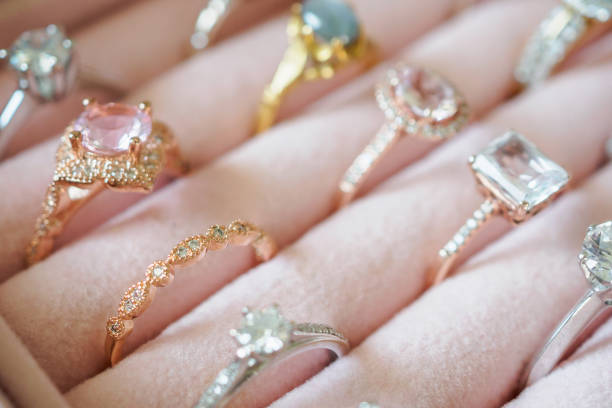
For everyday wear, harder gemstones are recommended. Diamond (10), ruby and sapphire (9), spinel (8), and topaz (8) are all excellent choices. Softer stones like opal (5.5-6.5) and pearl (2.5-4.5) require more careful handling.
Where can I buy authentic gemstones?
CaratXoffers a curated marketplace of natural gemstones and diamonds from verified sellers.Shop our collectionfor authentic, high-quality gemstones at competitive prices. Sellers canregister on CaratXto reach buyers in 18+ international countries.