
Citrine, with its warm golden and orange hues, stands as one of the most belovedgemstonesin the world. As a variety of quartz, it captures the essence of sunlight and brings a radiant warmth to any piece of jewelry.
This guide explores everything you need to know about citrine from its geological formation and color varieties to its rich history, modern market dynamics, and practical buying advice.
What Is Citrine? Understanding the Mineralogy
Citrineis the transparent, pale yellow to brownish orange variety of quartz. Its chemical composition is silicon dioxide (SiO₂), and it crystallizes in the trigonal crystal system. The warm yellow-to-orange color that defines citrine comes from trace amounts of iron within its crystal structure.
Physical Properties at a Glance -
According to research from Rice University, quartz adopts a trigonal crystal system that has no center of symmetry in the arrangement of atoms. This structural characteristic gives quartz its unique optical properties and contributes to its value as a gemstone. The iron content ofnatural citrinestypically ranges between 0.05–0.07%.
Citrineis relatively durable with a hardness of 7 on the Mohs scale, making it suitable for everyday wear inrings, pendants, earrings, and bracelets. Its affordability compared to otheryellow gemstoneslikeyellow sapphireor imperial topaz has made it a popular choice for both fine jewelry and fashion accessories.
The Spectrum of Citrine: Exploring Color Varieties
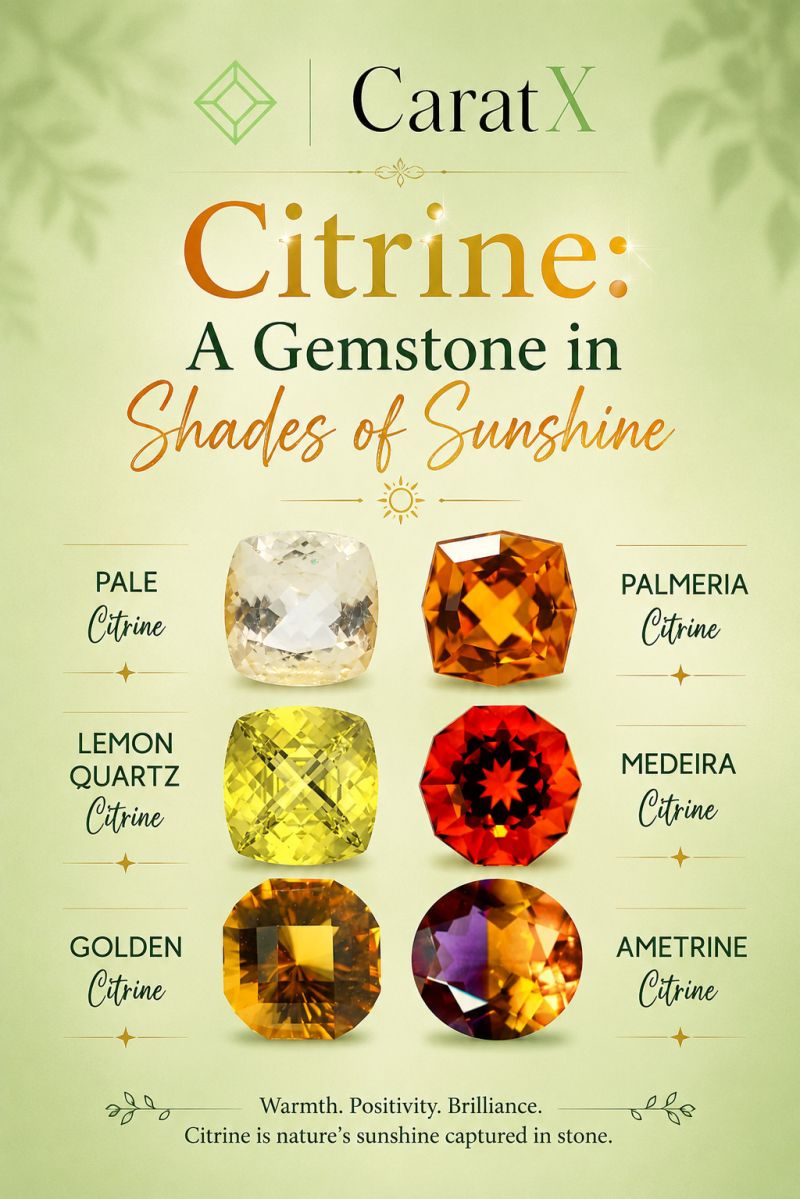
Citrineoffers one of the most diverse color ranges among quartz varieties. The gemstone’s color spans from delicate pale yellows to intense reddish oranges, with each shade offering a distinct aesthetic appeal.
Pale Yellow Citrine -
The softest variety ofcitrinedisplays a gentle, light yellow hue with a subtle glow. This shade is often what occurs naturally before any heat treatment, asnatural citrinetends to be paler in color.Pale yellow citrineoffers a delicate, understated elegance that works beautifully in vintage-inspired designs and minimalist jewelry.
Golden Yellow Citrine -
A bright, rich yellow that gives the stone a warm, sunlit appearance. This is perhaps the most recognizable citrine color and what many people envision when they think of the gemstone.The golden yellowshade captures the essence of sunshine and radiates warmth and positivity.
Orangy Yellow Citrine -
This variety represents a harmonious blend ofyellowand orange tones, creating a deeper, more saturated color. The combination of these two warm hues produces a gemstone that appears to glow from within, making it particularly eye-catching in jewelry.
Reddish-Orange Citrine -
A strong orange with prominent red tones, this variety is highly valued when the color is rich and free from brownish tints. The finest citrine colors are saturated, with little or no brownish component, and range from yellow to reddish orange, and even orangy red.
Madeira Citrine -
Madeira citrine is a popular trade name used for deep orange to reddish-orange citrine, known for its warm, earthy appearance. Named after the famous fortified wine from the Portuguese island of Madeira, this variety is prized for its rich, autumn-like hues. The most valuable color of citrine is known as Madeira citrine, which ranges from orange-red to brownish red. Most Madeira citrine originates from Brazil.
Natural Citrine vs. Heat-Treated Citrine
Understanding the difference between natural and treated citrine is essential for any buyer or enthusiast.
Natural Citrine -
Natural citrineis relatively rare in nature. In the days before modern gemology, its tawny color caused it to be confused with topaz. Natural-color citrine is less common than other quartz varieties such as amethyst and smoky quartz.
Natural citrinetypically displays a paler yellow color. Geologists have determined that citrine formations often occur as thin veins in crack zones at the contacts of metamorphic units. In nature, low-grade radiation over time, combined with secondary, high-temperature volcanic bodies, is believed to be responsible for the color change that produces citrine.
Heat-Treated Citrine -
Since natural citrine is rare, most of the citrine on the market today is the result of heat treatment. This process involves heating amethyst the purple variety of quartz to temperatures of 450°C or above, which transforms its undesirable pale violet color into an attractive yellow.
The amethyst’s original hue can determine the richness of the resulting citrine’s yellow color. In contemporary practice, giant hollow crystal-lined amethyst geodes from areas like Brazil are often heated to become giant citrine “cathedrals”.
Identifying Natural vs. Treated Citrine -
Gemological identification of natural citrine relies on inclusion observation or analysis of trace elements. FTIR spectroscopy can sometimes distinguish natural from synthetic material, though this is not always definitive. According to GIA research, there are presently no known tests to definitively distinguish natural bicolor material from heat-treated material.
The History and Lore of Citrine -
Citrinehas been treasured by civilizations for thousands of years. People have used quartz in jewelry for millennia, with Egyptians gathering agates as talismans, ancient Greeks carving rock crystal ornaments, and Roman pontiffs wearing rings set with amethysts.
Ancient Civilizations -
Citrine has been reported in Roman jewelry, where it was valued for its warm golden color. In ancient times, people believed thatcitrine gemstonescould calm tempers and soothe anger. Egyptians used citrine gemstones as talismans, the ancient Greeks carved iconic images into them, and Roman priests fashioned them into rings.
Among the ancients and the mystics, citrine is said to protect against snake venom, evil thoughts, and heartache. It was thought to carry the power and energy of the sun and would not absorb negative energy.
The “Merchant’s Stone” -
Citrineearned the nickname “the merchant’s stone” for its historical association with prosperity and success. According to lore, carrying citrine would attract love and prevent heartbreak. It was also believed that the gemstone made men more handsome and intelligent and could help women bear more children.
Victorian Era Popularity -
Citrineexperienced a resurgence in popularity during the Victorian era, with gems from this period still surfacing today. Ornate Victorian citrine brooches from the 1860s remain prized by collectors. The gemstone was enormously popular in jewelry of the 1940s as well, with its sunny color and dramatic proportions suiting the streamlined style and bold gold of the era.
Citrine as a Birthstone -
Along withtopaz, citrine is recognized as the birthstone for November. Those with November birthdays have two beautiful birthstones to choose from: topaz and citrine.
The November birthstone citrine is prized for its charming yellow and orange hues. It is known to have calming energies while bringing fortune and warmth to the wearer. The birthstone meaning of citrine includes health, vitality, prosperity, and good fortune.
Citrine is also recognized as the gem that commemorates the thirteenth wedding anniversary.
Global Sources of Citrine -
Brazil -
Most citrine is mined in Brazil, particularly the state of Rio Grande do Sul. The state of Bahia, located north of Minas Gerais, produces citrine made by heating amethyst, which is called “Bahia” citrine with a light yellow color. Brazil is currently the leader in overall production of amethyst, much of which is heat-treated to become citrine.
Zambia -
Additional deposits are mined in Zambia. Zambian citrine ranges from pale slightly brownish yellow to brownish orangy yellow. Large, clean citrine reportedly from the Kitwe deposit in Zambia has been a welcome addition to the gem market.
Other Sources -
Citrine is also found in western Europe, Scotland, Uruguay, Africa, the Malagasy Republic, Madagascar, Sri Lanka, the Urals, and the United States.
Quality Factors: What Makes a Valuable Citrine?
According to GIA’s comprehensive guide on citrine quality factors, several elements combine to determine a citrine’s value.
Color -
Vivid yellows,reddish oranges, and earth tones are popular with consumers. A saturated yellow to reddish orange color free of brownish tints is prized in citrine. However, in the contemporary market, citrine’s most popular shade is an earthy hue, a deep brownish or reddish orange.
Clarity -
Eye-visible inclusions are not common in citrine. Much of the faceted citrine in the market is eye-clean, meaning it lacks eye-visible inclusions. If inclusions are present, they decrease the gemstone’s value.
Cut -
Citrine might be carved, custom-cut, or calibrated for jewelry use. In recent years, many high-end jewelry designers and gem carvers have fashioned the warm yellow gem into unusual cuts for jewelry and carvings.
Carat Weight -
Citrine is available in a wide range of sizes. Citrines of up to 20 carats are readily available in jewelry. Even fine citrine has a modest price tag, and large gems remain affordable as price per carat does not rise dramatically for larger sizes.
Citrine vs. Other Yellow Gemstones
Citrine vs. Yellow Topaz -
Citrine has shared a history of mistaken identities with topaz. In the days before modern gemology, their similar tawny colors caused confusion. However, they are chemically distinct citrine is quartz (SiO₂) while topaz is an aluminum fluorosilicate. Topaz is harder at 8 on the Mohs scale compared to citrine’s 7.
Citrine vs. Yellow Sapphire -
Yellow sapphire(corundum) is the most durable yellow gemstone with a Mohs hardness of 9. It is also significantly more expensive than citrine. Citrine serves as an affordable and beautiful alternative to yellow sapphire.
Citrine vs. Imperial Topaz -
Imperial topaz is the most coveted variety of topaz and is rarer and more expensive than citrine. Both citrine and imperial topaz are often promoted as affordable alternatives to yellow sapphire.
Caring for Your Citrine Jewelry -
Like other quartz gems, citrine is durable and great for everyday wear. For safe cleaning, wash citrine jewelry in a solution of mild dish soap and warm water, using a soft brush to scrub behind the stone where dust can collect. Like all fine jewelry, citrine should be removed before sleeping or engaging in strenuous activities.
Avoid using ultrasonic cleaners or steam cleaning on citrine jewelry, as sudden temperature changes or vibrations could potentially damage the stone. With proper care, citrine jewelry will maintain its beautiful golden glow for generations.
Ametrine: Nature’s Color Combination
In Bolivia, amethyst and citrine colors can occur together in the same crystal. These unique gems are called ametrine. Ametrine from Bolivia has been prevalent in the gem trade for many years, featuring alternating regions of amethyst and citrine within a single quartz crystal.
The Science Behind Citrine’s Color -
The yellow-to-orange color of citrine is caused by trace amounts of iron within the quartz crystal structure. Simply stated, the iron impurity in quartz causes the color, with heat destabilizing the color center and producing citrine when ferric iron (Fe³⁺) is present.
Before irradiation of quartz, iron is in the +3 oxidation state, but high-energy radiation causes it to lose an electron to the crystal lattice. The purple color of amethyst will fade if exposed to heat or sunlight, becoming colorless, yellow, or pale green.
Frequently Asked Questions About Citrine -
Is citrine a natural gemstone?
Yes, citrine is a natural variety of quartz. However, natural citrine is relatively rare, and most citrine sold today is actually heat-treated amethyst.
What color citrine is most valuable?
The most valuable citrine colors are saturated yellows, reddish oranges, and orangy reds free of brownish tints. Madeira citrine, with its deep orange to reddish-orange hue, is particularly prized.
Can citrine be worn every day?
Yes, citrine has a hardness of 7 on the Mohs scale, making it durable enough for everyday wear in rings, pendants, earrings, and bracelets.
How can I tell if my citrine is natural or heat-treated?
Natural citrine typically displays a paler yellow color, while heat-treated citrine often has richer, deeper orange tones. Definitive identification requires gemological testing, including microscopic examination for inclusions and FTIR spectroscopy.
What is the difference between citrine and yellow topaz?
Citrine is a variety of quartz (SiO₂) with a hardness of 7, while yellow topaz is an aluminum fluorosilicate with a hardness of 8. They were historically confused due to their similar golden colors but are chemically distinct.
Is citrine an expensive gemstone?
Citrine is generally affordable compared to other yellow gemstones like yellow sapphire or imperial topaz. Even large citrines remain relatively modest in price.
What is ametrine?
Ametrine is a unique quartz crystal that contains both amethyst (purple) and citrine (yellow) color zones within the same crystal. It is primarily found in Bolivia.
Conclusion -
Citrinedemonstrates how a simple mineral like quartz can become a beautiful gemstone in many warm, golden shades. From its geological formation and diverse color spectrum to its rich history and modern market presence, citrine offers something for everyone whether you’re a collector, jewelry enthusiast, or someone born in November seeking the perfect birthstone.
Its attractive color, durability, and affordability make citrine the top-selling yellow-to-orange gem in the contemporary market. Whether you prefer the delicate pale yellow of natural citrine, the vibrant golden hues of heat-treated varieties, or the deep, wine-like tones of Madeira citrine, this versatile gemstone captures the warmth and radiance of sunshine in every facet.
Recommended Reads from CaratX -
Shop Natural Diamonds– Explore our curated collection of natural diamonds for every occasion.
Shop Gemstones– Discover an extensive range of gemstones including citrine, amethyst, topaz, and more at unbeatable prices.
Sell Your Diamonds Internationally– Start selling to B2B and B2C buyers across 18+ international countries through the CaratX marketplace.
Sell Jewelry Internationally– Expand your business globally with our CaratX seller plan and reach buyers worldwide.
CaratX Pricing & Plans– Learn more about our pricing structure and how to launch your products on CaratX.
Recommended Reads from CaratX -
Dive deeper into the world of gemstones with these expertly curated articles from the CaratX blog. Each piece is designed to complement the insights shared in this guide and expand your knowledge of citrine, birthstones, and fine jewelry.
1. The Ultimate Compendium on Birthstones: History, Gemology, and the Definitive Buying Guide for 2026 A comprehensive deep-dive into every official birthstone, including an extensive section on November's citrine and topaz. This guide covers geological origins, historical lore, healing associations, and up-to-date market advice for collectors and buyers.Read the full compendium here
2. The Magic of Red Citrine: A Gem That Captivates the Heart This article focuses exclusively on the rarest and most sought-after color variety of citrine, the reddish-orange to red hues. Explore the geological conditions that create these intense colors, why they command higher prices, and how they compare to Madeira citrine.Explore the magic of red citrine
3. The Enduring Power of Birthstones: Why Personal Gemstones Dominate Modern Jewelry A fascinating look at the cultural and commercial resurgence of birthstone jewelry in the 21st century. Learn how citrine's "merchant's stone" reputation for prosperity continues to drive its popularity among modern consumers, designers, and investors.Discover why birthstones rule the market
4. A Year of Meaning: The Complete Guide to Birthstones and Their Significance A month-by-month journey through the world of birthstones, their color spectrums, symbolic meanings, and practical care tips. The November section offers a detailed comparison between citrine and topaz, helping you choose the perfect stone for yourself or a loved one.Read the complete birthstone guide
5. The Mohs Scale Decoded: The Ultimate Guide to Gemstone Hardness and Durability in Fine Jewelry Essential reading for anyone buying gemstone jewelry. This technical yet accessible guide explains why citrine's Mohs hardness of 7 makes it ideal for everyday rings and bracelets, while also comparing its durability to sapphires, topaz, and diamonds.Master gemstone durability here
6. The Ultimate Guide to Topaz: November's Radiant Birthstone and Timeless Treasure Since citrine and topaz share the November birthstone spotlight, this comprehensive guide is the perfect companion piece. It covers everything from imperial topaz to blue topaz, helping you distinguish between these two golden-hued gems and make informed purchasing decisions.Read the topaz ultimate guide
Follow CaratXfor more insightful and educational content about gemstones, diamonds, and the jewelry industry.