
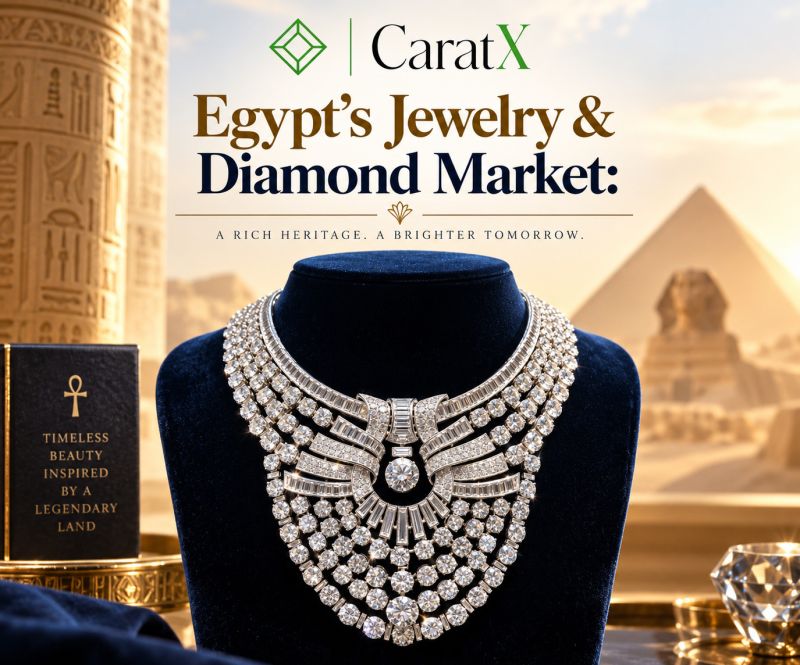
Egypt stands as one of the world’s most enduringjewelrymarkets, a civilization that has worked gold for more than five millennia and continues to treat jewelry as both adornment and financial security. Today, the country’s gold and diamond market is evolving rapidly, shaped by soaring precious metal prices, a growing middle class, digital transformation, and deeply rooted cultural traditions.
This guide examines Egypt’s jewelry landscape from every angle: its historical foundations, current market dynamics, diamond segment opportunities, regulatory environment, and the pathways for international sellers to reach Egyptian buyers through modern B2B and B2C marketplaces.
A Civilization Built on Gold:
Egypt’s relationship with gold is as old as organized civilization itself. The country is a land rich in gold, and ancient miners were thorough in exploiting economically viable sources. In addition to the resources of the Eastern Desert, Egypt had access to the riches of Nubia, reflected in the ancient Egyptian word for gold,nbw, which is also the name of the region itself.
The hieroglyph for gold appears with the beginning of writing in Dynasty 1, though the earliest surviving gold artifacts date to the preliterate fourth millennium B.C..
Gold jewelry intended for daily life or use in temple and funerary ritual was produced throughout Egypt’s long history. The gold used by the Egyptians generally contained silver, often in substantial amounts, and for most of Egypt’s history, gold was not refined to increase its purity, the natural alloy’s color varied from bright yellow to paler grayish yellow depending on silver content. This technical sophistication, combined with symbolic and religious meaning, made Egyptian goldwork the envy of the ancient world.
The goldsmith’s craft was hereditary in ancient Egypt passed from father to son and this tradition of artisan families transmitting skills across generations has persisted in various forms into the modern era.
The traditional jewelry of Egypt, as documented by scholars, reveals that for many women of Egypt, their jewelry is their bank, they wear their wealth in their gold. From the farms and villages of the Nile Valley to the oases of the Western Desert, from Nubia to the crowded traditional neighborhoods of Cairo, jewelry has served as personal seal, ceremonial object, and portable savings account.
This historical depth matters for today’s market because it explains the unique psychology of the Egyptian jewelry consumer: gold is not merely a luxury purchase, it is a store of value, a family asset, and a cultural necessity.
The Modern Egyptian Gold Market: Size, Structure, and Trends
Market Size and Growth -
Egypt’s plain gold jewelry market was valued at USD 1.55 billion in 2025 and is projected to expand to USD 2.55 billion by 2034, growing at a compound annual growth rate of 5.82% during the 2026–2034 forecast period. Chains held the leading position among product types in 2025, whilebraceletsare projected to post the fastest growth rate.
The broader Egypt jewelry market is projected to grow at a CAGR of 5.8% during 2025–2031, driven by rising disposable incomes, increasing consumer preference for luxury items, and a strong cultural affinity forgoldandgemstones.
Egypt contributed approximately 0.7% to the global plain gold jewelry market size in 2025, a figure that understates the country’s strategic importance given its position as a gateway to Middle Eastern and North African markets.
Gold Demand Data:
The World Gold Council’s data provides the most authoritative picture of Egyptian gold demand. In 2025, total Egyptian gold purchases reached 45.1 tonnes, a decline of 10% from 2024. This overall figure masks important compositional shifts: gold jewelry purchases totaled 21.5 tonnes in 2025, down 18% from 26.1 tonnes in 2024, while gold bars and coins purchases reached 23.6 tonnes, a more modest 2% decline.
The divergence between jewelry and investment demand tells a critical story. As gold prices surged the global gold price rose more than 64% during 2025. Egyptian consumers shifted decisively away from jewelry (which carries manufacturing premiums) and toward bars and coins as pure value storage. In the fourth quarter of 2025 alone, total gold purchases hit 12.6 tonnes the highest quarterly level since Q2 2024 but jewelry demand within that total fell 18% to 5.1 tonnes, while bar and coin demand rose 27% to 7.4 tonnes.
This trend has profound implications for jewelry sellers: the Egyptian consumer remains deeply committed to gold as an asset but is becoming more price-sensitive and value-conscious about the form in which they hold it.
Lightweight Innovation:
Egypt’s jewelry manufacturers have responded to price pressure with remarkable innovation. As one Cairo retail manager explained, manufacturers have introduced new designs featuring lighter-weight pieces with larger and more voluminous shapes combining aesthetic appeal with affordability.
Wedding bandsthat once weighed six grams are now available in styles starting at two grams.Necklacesthat were previously produced only in heavier weights can now be found at just two grams or less. Even iconic designs that traditionally required six grams of gold are being replicated in versions as light as three grams or even a gram and a half.
The traditionalshabkathe gold gift given by the groom to his bride has also transformed. Once a full set weighing between 30 and 50 grams, today most couples opt for just two wedding bands and a ring, with even those seeking a necklace tending to choose lighter pieces rarely exceeding 20 grams.
Lighter-weight bars and coins have also entered the market, with weights starting from a quarter gram and extending to bars ranging from one gram up to half a kilogram, making gold accessible to younger and lower-income buyers who can purchase small amounts from monthly salaries.
For sellers looking to tap into this market,CaratXoffers a specialized marketplace where lightweight and affordable jewelry pieces can reach Egyptian buyers alongside premium collections.
Sellers can register on CaratX to start listing products for the Egyptian market - www.caratx.com/register
The Diamond Segment: Premium, Personalization, and Lab-Grown Disruption
Market Characteristics -
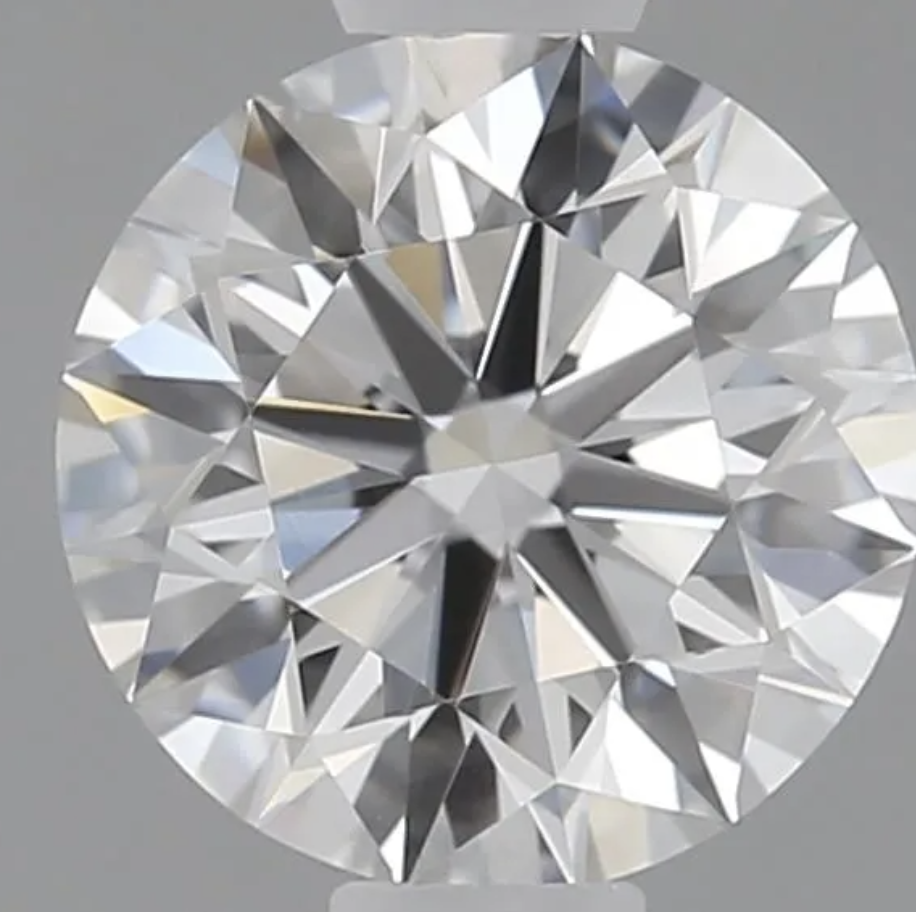
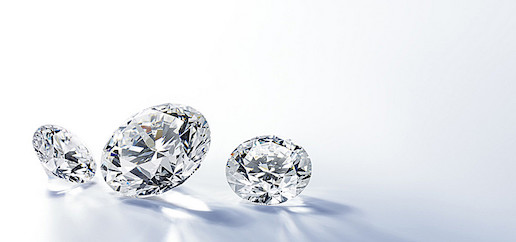
Diamondsin Egypt occupy the premium and luxury tier of the jewelry market, primarily associated withengagement rings, bridal jewelry, and special-occasion pieces. The Egypt luxury fashion and jewelry market is valued at USD 3.5 billion, with jewelry emerging as the leading sub-segment driven by cultural significance and consumer preference for gold and diamond pieces. Demand for unique and personalized jewelry items has surged, reflecting a trend toward individual expression and luxury investment.
The diamond market in Egypt is primarily supplied through imports from major trading hubs including Belgium, India, and the United Arab Emirates. Local retailers and jewelry stores cater to a range of customers, from affluent individuals to tourists seeking unique pieces. However, the market faces significant challenges: the prevalence of counterfeit diamonds, lack of consumer awareness and trust, high import duties and taxes, and limited availability of certified diamonds.
These factors create a complex environment requiring enhanced consumer education, stronger regulations against counterfeiting, and streamlined import processes.
The Lab-Grown Diamond Opportunity -
One of the most significant developments in Egypt’s diamond market is the rapid rise oflab-grown diamonds. The Egypt lab-grown diamonds market reached USD 205.11 million in 2025 and is estimated to attain USD 600.32 million by 2034.
Industry leaders have noted that lab-grown diamonds are priced 75–80% belownatural diamonds, making them an attractive alternative for budget-conscious couples, particularly for engagement rings and bridal jewelry.
The head of Egypt’s Gold Division at the Federation of Chambers of Commerce has described lab-grown diamonds as a “magic solution” to theshabkacrisis, the challenge of affording traditional gold and diamond bridal gifts amid soaring prices. This represents both a competitive threat to natural diamond sellers and a market-expansion opportunity for those who can offer both categories effectively.
CaratX’s marketplace supports both natural and lab-grown diamonds, giving sellers the flexibility to serve different customer segments within the Egyptian market. Sellers can explore CaratX’s seller plans to determine the best approach for their product mix.
Cultural Drivers of Demand: Weddings, Festivals, and Savings
The Shabka Tradition -
Theshabkaremains the single most important driver of jewelry demand in Egypt. Historians trace the tradition of theshabka, a present given to a bride from the bridegroom, usually jewelry and especially engagement and wedding rings back to the ancient Egyptians. Today, theshabkaencompasses a bridal ring triad: a gold band, a diamond eternity ring, and a solitaire ring, reflecting both tradition and modern aspiration.
However, theshabkais evolving. As gold prices have soared, the traditional expectation of a full gold set has given way to more symbolic and practical arrangements. Some couples now opt for lighter pieces, while others incorporate lab-grown diamonds to maintain the visual impact of adiamond ringat a fraction of the natural diamond cost. Theshabkatradition remains non-negotiable in most Egyptian marriages but what it contains is becoming more flexible.
Jewelry as Savings and Investment -
For many Egyptian families, jewelry serves as a liquid savings account. Gold purchased at marriage can be sold decades later to fund a child’s education, a home purchase, or a business venture. This investment motive explains why Egyptian consumers are so sensitive to manufacturing premiums (musna’iya) and why demand for bars and coins has surged even as jewelry demand has declined.
Sellers who can articulate the investment value proposition of their jewelry not just its aesthetic appeal will find a receptive audience in Egypt. CaratX’s marketplace allows sellers to list products with detailed specifications that help buyers evaluate both beauty and value.
Seasonal and Event-Driven Demand -
Retail demand in Egypt is concentrated around weddings, festivals (particularly Eid and Ramadan), anniversaries, and other life events. The wedding season drives the highest volume of bridal jewelry purchases, while Ramadan and Eid generate demand for gifts and personal adornment. Sellers should time their inventory and marketing efforts to align with these seasonal peaks.
Regulatory Environment and Consumer Protection -
Egypt maintains a rigorous regulatory framework for precious metals and gemstones. The Egyptian Organization for Standardization and Quality (EOS) oversees the assay and hallmarking of gold, silver, platinum, and precious stones. The Assay Department is responsible for testing and analyzing precious metals to determine their purity, controlling all exports and imports of precious metals and gemstones, and granting licenses to jewelry craftsmen.
Egyptian law (Law No. 68 of 1979) mandates that no jewelry or gold bars can be traded in the Egyptian market without being stamped with the official assay office hallmark, which serves as the sole guarantee of purity and quality. Legal fineness standards for gold include 23.5K (979/1000), 22K (875/1000), 21K (875/1000), 18K (750/1000), 14K (583/1000), 12K (500/1000), and 9K (375/1000).
For international sellers, understanding these standards is essential. Products listed on CaratX for the Egyptian market should clearly display their purity and, where applicable, reference Egyptian hallmarking requirements. The CaratX seller dashboard provides tools for managing product specifications and compliance information.
E-Commerce and Digital Transformation -
Egypt’s jewelry market is undergoing a digital transformation. The adoption of e-commerce platforms is enabling wider accessibility and convenience for consumers, particularly among younger, tech-savvy demographics. Online retail platforms and innovative marketing strategies are expected to attract a more diverse customer base.
CaratX’s marketplace is purpose-built for this opportunity. Unlike general e-commerce platforms where jewelry gets lost among electronics and clothing, CaratX provides a specialized environment where serious buyers shop for diamonds, gemstones, and fine jewelry.
The platform handles international shipping, payments, and currency conversion, and offers bank-level security for every transaction. Sellers can choose from multiple plans ranging from a free loose diamond listing tier to enterprise-level solutions with custom domains and dedicated support.
Opportunities for International Sellers -
Egypt’s jewelry market presents several compelling opportunities for international sellers:
Lightweight Gold Jewelry: The demand for affordable, lightweight gold pieces is strong and growing. Sellers who can offer well-designed 18K and 21K gold jewelry at accessible price points will find a ready market.
Lab-Grown Diamonds: With the lab-grown diamond market projected to nearly triple in size by 2034, sellers who can offer certified lab-grown diamonds particularly for engagement rings and bridal jewelry are positioned for significant growth.
GIA-Certified Natural Diamonds: For the premium segment, GIA-certified natural diamonds remain the gold standard. Sellers with access to certified stones in the 0.30-carat and above range can target affluent Egyptian buyers and tourists.
Personalized and Custom Jewelry: The demand for unique, personalized pieces is surging. Sellers who can offer customization engraving, bespoke design, and unique settings will differentiate themselves in a crowded market.
CaratX’s seller plans are designed to accommodate businesses of all sizes. The free tier for loose diamonds allows sellers to test the market with minimal risk, while the Jewelry Seller plan at $795 per year provides 150 listings and a 12% transaction fee. For high-volume sellers, the Go-To-Market plan offers 1,000 listings at a 6.5% fee.
Frequently Asked Questions -
What is the current size of Egypt’s gold jewelry market?
Egypt’s plain gold jewelry market was valued at USD 1.55 billion in 2025 and is projected to reach USD 2.55 billion by 2034, growing at a CAGR of 5.82%. The broader Egypt jewelry market is projected to grow at 5.8% CAGR through 2031.
How much gold do Egyptians buy each year?
In 2025, total Egyptian gold purchases reached 45.1 tonnes, comprising 21.5 tonnes of jewelry and 23.6 tonnes of bars and coins. This represented a 10% decline from 2024, driven primarily by record-high gold prices.
Are lab-grown diamonds gaining popularity in Egypt?
Yes. The Egypt lab-grown diamonds market reached USD 205.11 million in 2025 and is projected to reach USD 600.32 million by 2034. Lab-grown diamonds are priced 75–80% below natural diamonds, making them increasingly attractive for engagement rings and bridal jewelry.
What certification should diamonds sold in Egypt have?
GIA certification is the most widely recognized and trusted standard in Egypt, particularly for stones of 0.30 carats or more. Local retailers increasingly require GIA certificates to establish consumer trust.
What is the shabka and how has it changed?
Theshabkais a traditional bridal gift of gold jewelry from the groom to the bride, dating back to ancient Egypt. While the tradition remains central to Egyptian weddings, the average weight and composition have decreased significantly due to rising gold prices from full sets of 30–50 grams to lighter pieces rarely exceeding 20 grams.
How can international sellers reach Egyptian buyers?
International sellers can reach Egyptian buyers through specialized B2B/B2C marketplaces like CaratX, which handles international shipping, payments, and currency conversion. Sellers can register on CaratX and choose from plans ranging from free listings to enterprise solutions.
What purity standards apply to gold sold in Egypt?
Egyptian law mandates hallmarking for all gold traded in the market. Legal fineness standards include 23.5K (979/1000), 22K (875/1000), 21K (875/1000), 18K (750/1000), 14K (583/1000), 12K (500/1000), and 9K (375/1000).
Is e-commerce growing in Egypt’s jewelry market?
Yes. The adoption of e-commerce platforms is enabling wider accessibility, particularly among younger consumers. Online retail platforms and digital marketing are expected to attract a more diverse customer base.