
Introduction:
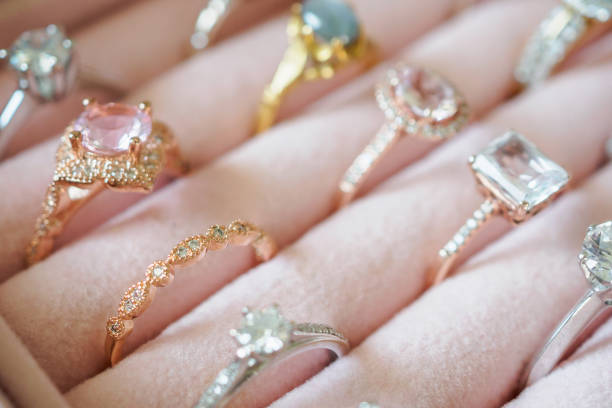
A diamond's beauty isn't defined solely by its center stone. The accent diamonds that flank it , known as side stones or accent stones can transform a simple solitaire into a breathtaking statement piece.
Side stonesadd width, brilliance, and architectural interest toengagement rings,earrings, pendants, andbracelets. They can make the center diamond appear 15–30% larger visually while adding only a fraction of the cost of upgrading the main stone.
The global diamond market in 2026 is witnessing a pronounced shift toward fancy shapes and multi-stone designs, with elongated fancy shapes such asovals,marquises, andemeraldcuts significantly outperforming traditionalroundsin the 2-carat-and-above category. This trend has elevated the importance of side stone selection, the right accent shape can harmonize with or dramatically contrast your center stone, creating a look that is uniquely yours.
In this guide, we'll explore every major side stone shape, explain how to match accents to your center diamond, review setting styles that showcase side stones, and provide expert guidance on sourcing certified accent stones from trusted suppliers.
What Are Side Stones? A Definition
Side stones are smaller diamonds orgemstonesplaced on either side of a center stone to enhance its appearance and the overall design of the jewelry piece. They typically range from 0.10 to 0.50 carats each and are usually sold in matched pairs to ensure symmetry.
The most common configurations include:
Three-stone rings (1 center + 2 side stones).
Five-stone rings (1 center + 2 side + 2 additional accents).
Halo settings (a ring of small diamonds surrounding the center stone).
Side stones are typically selected to match or complement the center stone's color grade. According to theGemological Institute of America(GIA), designers often pick side stones that have color grades identical or close to the grade of the center diamond to create a harmonious look. However, intentional contrast using a slightly warmer or cooler side stone, can also create striking visual effects.
The Complete Guide to Side Stone Shapes -
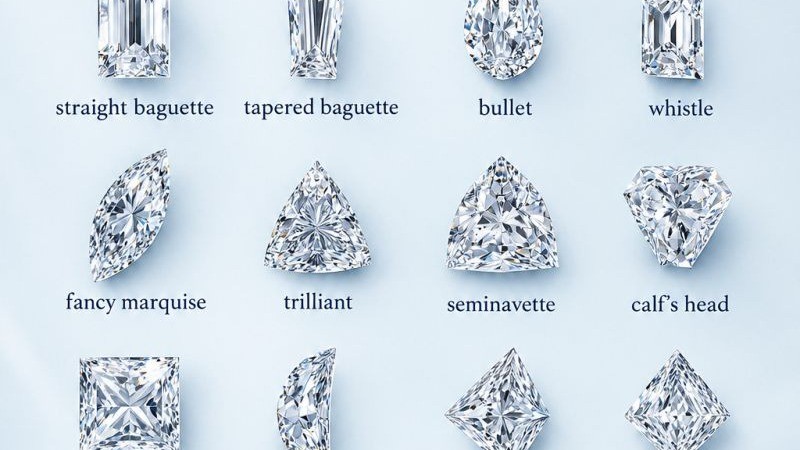
1. Straight Baguette
Shape Profile: Long, rectangular, step-cut with straight parallel edges.
The straightbaguetteis the quintessential side stone, a hallmark of Art Deco design that has remained popular for over a century. Baguettes are small, usually rectangular, step-cut diamonds with straight edges, and they are among the most popular side stones inengagement rings. Their clean, linear facets create a "hall of mirrors" effect that contrasts beautifully with the brilliant sparkle of a round or oval center stone.
Best Pairings: Straightbaguetteswork exceptionally well with emerald-cut and Asscher-cut center stones, where the shared step-cut faceting creates a harmonious, architectural aesthetic. They are also a classic choice for three-stone rings with round brilliant centers.
Why Choose Straight Baguettes: They offer a sleek, understated elegance that doesn't compete with the center stone. Theirelongatedshape draws the eye along the finger, creating a slimming effect.
2. Tapered Baguette -
Shape Profile: A modified baguette whose width gradually decreases toward one end, forming a trapezoidal silhouette.
The tapered baguette is arguably the most versatile side stone shape in fine jewelry. A tapered baguette diamond has long sides that angle inward, with the wider end abutting the center stone and the narrower end pointing toward the shank. This graceful tapering creates a natural transition from a larger center stone to a thinner band, making the entire ring look more fluid and balanced.
Best Pairings: Tapered baguettes are the go-to choice for emerald-cut, oval, andcushion-cutcenter stones. They are also widely used in five-stone rings, where they are paired with bullets or trapezoids.
Why Choose Tapered Baguettes: They are the most popular side stone shape for three-stone engagement rings because they naturally frame the center diamond while creating a more fluid, balanced silhouette. Their step-cut faceting provides a subdued, sophisticated sparkle that complements rather than competes with a brilliant-cut center.
3. Bullet -
Shape Profile: Pointed top with straight sides, resembling the profile of a bullet. Essentially a baguette that terminates in a point.
Bullet-cut diamonds are a modified rendition of the baguette with an added narrowing V at one end, creating a shape that transitions seamlessly to the shank of a ring. Their distinctive silhouette is a perfect way to make a band look thinner while adding architectural interest.
Best Pairings: Step-cut bullets work exceptionally well with Asscher and emerald-cut center diamonds. Brilliant-cut bullets, on the other hand, are better suited to brilliant-cut center stones, particularlycolored gemstonesand fancy-colored diamonds. Bullets combined with half-moons or trapezoids create the two most popular five-stone ring styles.
Why Choose Bullets: They add a modern, architectural touch that feels both contemporary and timeless. When used as side stones, they create smooth transitions and architectural flow, making them ideal for designer side settings.
4. Whistle -
Shape Profile: A sleek, elongated shape with a distinctive notch or "whistle" profile, typically step-cut.
The whistle cut is a less common but highly distinctive side stone shape that creates a clean, modern look. Its streamlined silhouette works best in contemporary jewelry designs where geometric precision is valued. Whistle-cut side stones are often used in custom pieces where the designer wants to achieve a specific architectural effect.
Best Pairings: Whistle cuts pair well with rectangular center stones such as emerald and radiant cuts, as well as with other step-cut fancy shapes.
5. Trilliant (Trillion) -
Shape Profile: Triangular with three equal or slightly curved sides, featuring 31 or 50 facets depending on whether they are intended as solitaires or accent stones.
The trilliant cut (also spelled "trillion") is a striking triangular shape that adds dramatic geometric contrast to traditional round or oval centers. Trilliant cut diamonds are most often used as side stones to complement larger solitaire stones in engagement rings. When cut for use as accent stones, trilliants typically feature 31 facets with an uncurved or concave cut, while those intended as solitaires have 50 facets.
Best Pairings: A trilliant cut diamond on either side of a marquise, oval, or princess-cut diamond frames the center stone beautifully. The triangular shape echoes the pointed ends of a marquise or the corners of a princess cut.
Why Choose Trilliants: They add a gorgeous sparkle and their tapered edges suit most settings. The triangular form creates a bold, contemporary look that is both eye-catching and elegant.
6. Seminavette -
Shape Profile: A half-marquise shape with one pointed end and one rounded end, characterized by curved sides.
The seminavette (from the French "semi-navette," meaning half-boat) is a rare and elegant side stone shape that combines the graceful curves of a marquise with a more compact profile. Its curved sides and pointed end create a softer, more romantic aesthetic than angular cuts.
Best Pairings: Seminavettes work beautifully alongside oval, pear, and marquise center stones, where their curves echo and extend the center stone's silhouette.
Why Choose Seminavettes: They are ideal for designs that emphasize fluidity and femininity. Their curved profile creates a seamless visual flow from center stone to band.
7. Calf's Head -
Shape Profile: A cut-corner triangle diamond, also known as a "calf head" or "calf cut," with a shape that resembles the head of a calf.
The calf's head diamond is one of the more distinct and effective side stones available today. Its name originates from its striking resemblance to two calf heads, and it is most commonly implemented on two opposing sides ofthree-stone diamond rings. This historic cut has connections to British royal jewelry history and symbolizes wealth, nobility, and royalty.
Best Pairings: Calf's head cuts are best suited for three-stone rings with triangular or pear-shaped centers, where their angular geometry creates a cohesive design language.
Why Choose Calf's Head: It is a rare, unique, and alluring choice for jewelry that demands something truly different. The brilliant calf cut is one of the more distinct side stone options available, offering a bold geometric statement.
8. Keystone -
Shape Profile: A trapezoidal shape with a narrower top and wider base, resembling the keystone of an arch.
The keystone cut is a specialty shape that brings architectural elegance to side stone arrangements. Its graduated width creates a natural visual transition from a larger center stone to a smaller band, similar to the tapered baguette but with more pronounced geometric angles.
Best Pairings: Keystones pair particularly well with emerald-cut and Asscher-cut centers, where their step-cut faceting and angular profiles create a unified aesthetic.
9. Half-Moon (Demilune) -
Shape Profile: One straight edge and one curved edge, essentially a round or oval diamond cut in half.
The half-moon diamond, sometimes called a demilune, is a classic side stone shape that has been used in fine jewelry for generations. Half-moon diamonds look great with rectangular center stones such as princess, radiant, or emerald cuts because their straight edge abuts the center stone perfectly. They are typically used as side stones inthree-stone engagement rings, where their curved outer edge creates a soft, elegant finish.
Best Pairings: Half-moon diamonds echo the shape of oval and round center stones, making them an attractive choice for those silhouettes. They are also stunning alongside cushion-cut centers.
Why Choose Half-Moons: They are the perfect bridge between a curved center stone and a straight band. Their smooth, elegant profile adds sophistication without overpowering the center diamond.
10. Kite -
Shape Profile: A four-sided form, usually step-cut, that resembles a child's kite outline, an elongated diamond shape with four straight sides.
The kite-shaped diamond is a rising star in the side stone world. It has a graphic quality that lends itself really well for use as side stones, as well as being an original choice for more classic designs. Kite cut diamonds are one of the oldest fancy cuts, and their elongated shape is created by four lines that meet at distinct angles.
Best Pairings: One of the most popular and stunning combinations is using kite-cut diamonds as side stones for oval and pear-shaped center stones. The kite's elongated geometry mirrors the curves of these center shapes while adding a modern, geometric edge.
Why Choose Kites: They offer a contemporary aesthetic that feels both vintage-inspired and thoroughly modern. Customers love the distinctive kite-shaped side diamonds and how they make the center stone sparkle from every angle.
11. Fan -
Shape Profile: A fan or wedge-shaped cut, typically with a curved outer edge and a narrower inner edge, resembling a folding fan.
The fan cut is a specialty shape that brings a unique, artistic flair to side stone arrangements. Its graduated width and curved profile create a dynamic visual effect that draws the eye outward from the center stone.
Best Pairings: Fan cuts work well in vintage-inspired designs and can be paired with round, oval, or pear-shaped centers.
12. Lozenge -
Shape Profile: A rhombus or diamond-shaped cut with four straight sides of equal length forming two acute and two obtuse angles, the same shape you see on playing cards.
The lozenge cut diamond feels vintage and modern at once. It belongs to the step cut family, meaning its facets run in long, straight, parallel rows descending from the table like a staircase. This faceting style creates a subtle, sophisticated sparkle that is distinctly different from brilliant cuts.
Best Pairings: Lozenge cuts are ideal for the modern couple who wants something truly unique. They can be paired with other step-cut centers (emerald, Asscher) for a cohesive look, or with brilliant-cut centers for dramatic contrast.
Why Choose Lozenges: They are exceptionally rare in fine jewelry, making them a conversation-starting choice for those who want to stand out from the crowd.
How to Match Side Stones to Your Center Stone -
Color Harmony -
The GIA recommends that side stones should have color grades identical or close to the grade of the center diamond to create a harmonious look. If you want your diamond side stones to match the center stone, choose side stones that are within one or two color grades of the larger stone.
However, intentional contrast can also be effective. Using different colored metals yellow gold or rose gold alongside white gold or platinum can accentuate and create contrast between the center stone and side stones.
Proportion and Scale -
The side stones should not be too large or too small in comparison to the center stone. A general guideline is that side stones should total approximately 20–50% of the center stone's carat weight. For a 2-carat center, side stones in the 0.30–0.50 carat range each are typical.
Shape Synergy -
The most harmonious designs often use side stones that enhance the center diamond by mimicking its reflective pattern. For example:
Emerald cut center → Straight baguettes or tapered baguettes.
Oval center → Half-moons or tapered baguettes.
Round center → Tapered baguettes or trilliants.
Princess cut center → Trilliants or trapezoids.
Marquise center → Trilliants or kites.
Faceting Style -
Step-cut side stones (baguettes, bullets, trapezoids, lozenges) pair best with step-cut center stones (emerald, Asscher). Brilliant-cut side stones (trilliants, half-moons, rounds) pair best with brilliant-cut centers (round, oval, princess, cushion). This matching of faceting styles creates a cohesive visual experience.
Setting Styles for Side Stones -
The way side stones are set dramatically affects the overall look and durability of your jewelry.
Channel Setting -
In a channel setting, accent stones are set into a grooved channel and laid edge-to-edge in a row. This design protects the gemstones, making it ideal for daily wear and a good option for an active person. The smooth metal surface creates a sleek, modern appearance.
Pave Setting -
Pavé is a type of bead setting where gemstones are set into recessed holes in the mounting and held in place by small beads of metal. Many small gems are placed close together in a honeycomb pattern, creating the appearance that the jewelry has been "paved" with diamonds. While elegant, pavé-set diamonds can be vulnerable to falling out if the wearer is extremely active.
Invisible Setting -
Invisible settings have multiple square-cut stones set edge-to-edge so none of the binding metal shows from the top, giving the appearance of a seamless diamond surface. This style is used to enhance a center stone with invisible-set side stones, or to cluster smaller diamonds together to create the illusion of a larger solitaire.
Prong Setting -
Prong settings hold each side stone securely with small metal claws, allowing maximum light to enter the diamond for optimal brilliance. This is the most traditional and versatile setting style for side stones.
Sourcing Certified Side Stones:
Side stones should be selected with the same care as center stones. While side stones typically do not come with individual grading reports (due to their smaller size), they should be matched for color, clarity, and cut quality. When selecting side stones, aim for well-matched color and clarity so the stones look cohesive when set together.
For buyers seeking certified natural diamonds and gemstones, the CaratX marketplace connects discerning buyers with a curated selection of certified stones from trusted sellers across 18+ countries. Whether you are sourcing tapered baguettes, trilliants, half-moons, or rare lozenge cuts, CaratX provides access to a global network of suppliers and artisans.
Shop certified natural diamonds on CaratX →https://caratx.com/search?query=Natural
Browse our collection of fancy shape diamonds →Fancy Shape Diamond: An In-Depth Analysis
Explore our diamond guide and education hub →CaratX Diamond Guide
Selling Side Stones and Jewelry on CaratX -
For jewelers, diamond dealers, and jewelry brands, CaratX offers a professional marketplace to list and sell diamonds, gemstones, and fine jewelry to B2B and B2C buyers in over 18 countries. Sellers register on CaratX marketplace here to start selling to B2B and B2C buyers.
Follow CaratX for more insightful and educational content on diamonds, gemstones, and fine jewelry.
Shop gemstones from our CaratX marketplace at unbeatable prices →https://caratx.com/search?query=gemstones
Register as a seller →www.caratx.com/register
Sellers register to start selling to 18+ buyers now →www.caratx.com/register
More details about our pricing →Launch Your Products on CaratX
Frequently Asked Questions -
What are side stones on a ring?
Side stones are smaller diamonds or gemstones placed on either side of a center stone to add sparkle, width, and design interest. They are a defining feature of three-stone and five-stone engagement rings, as well as halo settings.
Do side stones make the ring look bigger?
Yes. Side stones add width and brilliance around the center, so the whole ring reads as larger and more elaborate. They can boost the visual scale of the center stone by 15–30%.
What shapes work well as side stones?
Tapered baguettes, half-moons, trilliants, bullets, and small rounds are the most popular choices. Baguettes give a clean, classic frame; rounds add extra sparkle; trilliants add geometric drama.
Should side stones match the center stone?
For a harmonious look, side stones should be within one or two color grades of the center stone. However, intentional contrast — using colored gemstones or differently faceted accents — can create a striking design statement.
Do side stones need special care?
Yes. There are a few more stones to keep an eye on, so a yearly check keeps them secure — a small trade-off for the added brilliance. Pavé and channel settings require particular attention because small stones can loosen over time.
What is the difference between a trilliant and a trillion?
"Trillion" is a trademarked term for a specific triangular cut, while "trilliant" is the generic name for any triangular brilliant cut. Both refer to the same fundamental shape — a three-sided diamond that is most commonly used as a side stone.
Can I use colored gemstones as side stones?
Absolutely. Rubies and sapphires are cherished for their beauty and are commonly used as side stones in three-stone engagement rings. Colored stones can be side stones in a three-stone engagement ring, adding a pop of color and personalization.
Recommended Reads from CaratX -
Expand your diamond knowledge with these in-depth guides and market analyses from CaratX:
The 2026 Diamond Market: How Fancy Shapes and a US-India Trade Deal Are Redefining the Industry — Explore how fancy shapes are outperforming rounds and what it means for buyers and sellers.Read more
Fancy Shape Diamond: An In-Depth Analysis of Market Trends, Value, and Consumer Preferences — A comprehensive look at the fancy shape diamond segment and its growing dominance.Read more
The Evolving Market of Fancy Shape Diamonds: A Deep Dive into Trends, Value, and Demand — Understand how oval, marquise, and emerald cuts are commanding premium prices.Read more
Market Insight: Small Diamonds (0.30 ct, 0.50 ct) — Price movements and market data for the small diamond category, essential for side stone sourcing.Read more
Global Diamond Markets Show Strength in Premium Categories — An analysis of premium diamond market trends and what they mean for traders.Read mor