

Fancy Shape Diamonds: A Deep Dive into Market Trends, Consumer Preferences, and Strategic Insights
Home
Education Blog Fancy Shape Diamonds: A Deep Dive into Market Trends, Consumer Preferences, and Strategic Insights SHOP NOWHome
Education Blog Fancy Shape Diamonds: A Deep Dive into Market Trends, Consumer Preferences, and Strategic Insights SHOP NOWDec, 25, 2025 by Archit Mohanty 0 Comments
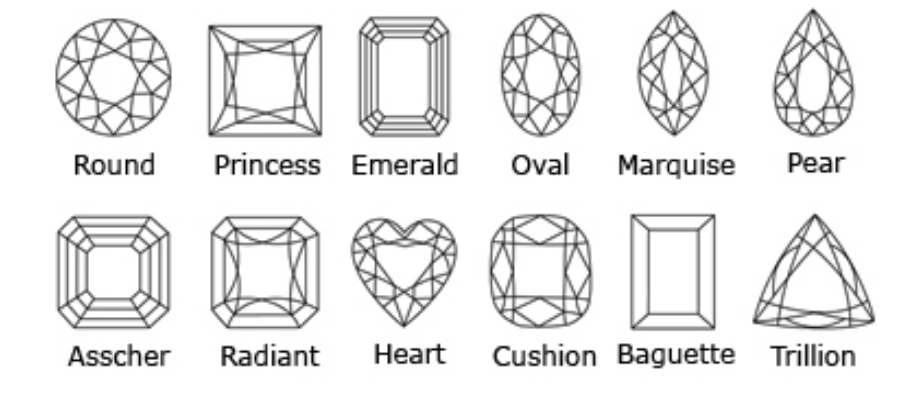
The diamond market is experiencing a significant transformation, with fancy shapes moving from niche alternatives to mainstream favorites. While the classic round brilliant maintains its foundational role, consumer preferences have dramatically shifted toward elongated and distinctive shapes that offer greater visual impact and personal expression.
This market evolution isn't merely about aesthetics, it reflects deeper changes in consumer psychology, fashion influences, and value perceptions within the jewelry industry. For jewelers, retailers, and investors, understanding these shifts is crucial for inventory management, pricing strategy, and customer engagement.
This analysis examines what's driving demand for specific shapes, why certain stones command substantial premiums, and how industry professionals can navigate this evolving landscape to maximize opportunities in both B2B and B2C markets.
The most pronounced trend across global markets is the strong preference for elongated diamond shapes. Ovals, marquise, and emerald cuts are consistently outperforming round diamonds, particularly in sizes above 2 carats. This preference stems from several interconnected factors:
Visual Perception: Elongated stones create the illusion of greater size on the finger compared to round stones of equal carat weight. The length draws the eye along the finger, enhancing perceived scale.
Fashion Alignment: Contemporary jewelry design increasingly favors streamlined, elegant silhouettes that complement elongated shapes. This trend is amplified through social media and celebrity endorsements.
Value Proposition: Consumers recognize that elongated shapes often retain more of the original rough crystal, potentially offering better value per carat compared to rounds, which lose more weight during cutting.
Marquise Diamonds: Currently commanding the highest premiums among fancy shapes, the marquise cut combines historical allure with modern appeal. Its distinctive boat-like shape maximizes carat weight appearance, making it particularly desirable for center stones in engagement rings. The scarcity of well-proportioned, high-quality marquise diamonds further intensifies demand and price pressure.
Oval Diamonds: Sustaining remarkable popularity in the U.S. market, ovals offer a versatile blend of brilliance and elongation. The most sought-after specimens feature length-to-width ratios between 1.35 and 1.50, with premium prices for stones in the D-I color range and VS-SI clarity. Their rounded edges make them more practical for daily wear than sharper shapes.
Elongated Cushions and Radiants: These modified shapes are experiencing renewed interest, particularly in their elongated forms. Long cushions trade at a 20-25% premium compared to square cushions, indicating clear consumer preference for the stretched aesthetic. Long radiants face particularly tight supply, as cutters must find rough with appropriate crystal structure to produce this demanding shape without compromising brilliance.
Princess Cuts: Once a dominant fancy shape, princess cuts now face persistent weakness across most sizes. Market analysts attribute this decline to shifting fashion trends and consumer perception that the shape appears "boxy" compared to more fluid elongated alternatives. Recovery will likely require innovative design applications or recutting initiatives.
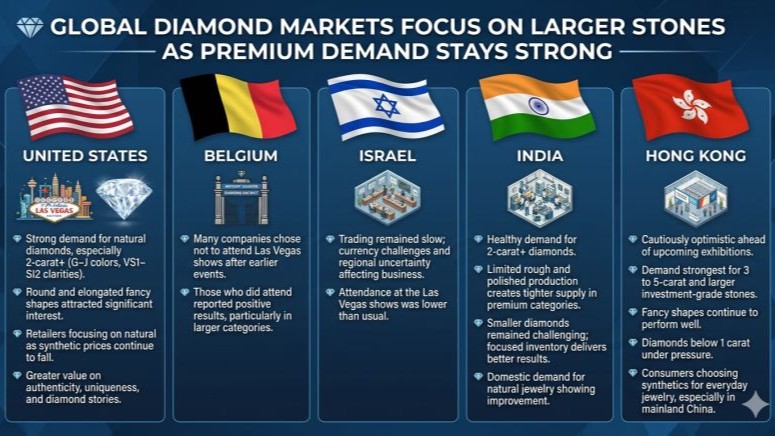
The American market demonstrates sophisticated selectivity, with buyers showing pronounced preference for well-proportioned ovals in specific quality parameters. Demand concentrates in the 2+ carat range with D-I colors and VS-SI clarities, indicating that consumers prioritize visual perfection over flawless technical grades. This market segment is less price-sensitive regarding premium shapes, focusing instead on overall appearance and light performance.
India's market reveals divergent trends based on size categories. For smaller stones (0.30 to 0.79 carats), prices for ovals and pears show softening except for stones with ideal long proportions.
This suggests a bifurcated market where knowledgeable buyers recognize and pay premiums for superior proportions, while mainstream consumers exhibit more price sensitivity. The preservation of value for ideally proportioned stones even in smaller sizes highlights the growing consumer education regarding cut quality.
In fancy shape diamonds, cut quality transcends technical grading to become the primary determinant of beauty, value, and marketability. Unlike round brilliants with standardized ideal proportions, fancy shapes require cutters to make complex trade-offs between preserving carat weight, maximizing brilliance, and achieving pleasing proportions.
Well-Cut Stones: Command significant premiums due to their scarcity and superior light performance. These diamonds exhibit balanced proportions, appropriate length-to-width ratios, and precision faceting that maximizes their optical properties. According to the Gemological Institute of America (GIA), cut quality is the most complex diamond characteristic to assess, yet it has the greatest influence on a diamond's beauty.
Poorly Proportioned Stones: Face extended market resistance and often require substantial discounting. Common issues include bow-tie effects in ovals and marquise, windowing in emerald cuts, and lumpy silhouettes in cushions. These visual flaws become immediately apparent to educated consumers, rendering such stones commercially challenging.
Navigating the current fancy shape market requires adaptive inventory approaches:
Prioritize Elongated Proportions: Focus sourcing on stones with length-to-width ratios above 1.15 for ovals, 1.85-2.10 for marquise, and 1.30-1.50 for cushions. These proportions align with current consumer preferences.
Embrace Quality Over Quantity: Given the price premiums for well-cut stones and market resistance to poorly cut ones, maintaining a smaller inventory of premium stones often proves more profitable than extensive inventories of mediocre quality.
Consider Recutting Opportunities: Identify diamonds with good material but poor proportions that might be candidates for recutting into more marketable shapes. This strategy requires expertise but can unlock significant value.
Highlight Elongation Benefits: Educate consumers about how elongated shapes maximize visual size and complement hand proportions. Visual aids comparing finger coverage of different shapes prove particularly effective.
Demystify Cut Quality: Develop simple explanations of fancy shape cut principles. Rather than technical jargon, focus on visual outcomes how light moves through the stone, absence of dark areas, and overall sparkle pattern.
Leverage Digital Platforms: Utilize high-quality video to showcase fancy shape diamonds' unique light performance. The CaratX marketplace provides excellent digital showcasing capabilities that allow buyers to appreciate stones from multiple angles before purchasing.
The fancy shape diamond market's fragmentation across regions and specialties creates both challenges and opportunities. CaratX addresses these through its global marketplace infrastructure, connecting sellers with qualified buyers across 18+ international markets. This expanded reach is particularly valuable for moving specialized stones that might have limited appeal in local markets but command premiums internationally.
CaratX offers tiered solutions that align with various business models in the diamond industry:
For Loose Diamond Specialists: The CaratX Loose Diamonds plan provides essential tools for trading fancy shapes with features like 75 listings, local currency conversion, and inventory analytics all at no upfront cost with dedicated email support.
For Jewelry Retailers and Designers: The CaratX Jewelry Seller plan ($98/year) adds e-commerce capabilities specifically for finished jewelry featuring fancy shape diamonds. This includes complete checkout functionality, custom jewelry leads from buyers, and featured placement opportunities.
For Established Businesses Seeking Growth: The CaratX Go-To-Market plan ($1,900/month) offers comprehensive support including dedicated account management, marketing services, premium blog placements, advanced analytics, and favorable commission rates.
The digital transformation of diamond trading presents unprecedented opportunities. CaratX's platform facilitates this transition through:
Enhanced Visibility: Premium placements and featured listings increase exposure for desirable fancy shapes
Market Intelligence: Analytics tools help identify emerging trends in shape preferences and price points
Streamlined Operations: Integrated systems reduce friction in international transactions and logistics
The fancy shape diamond market has evolved from a specialty segment to a dynamic driver of industry trends. Success in this environment requires specialized knowledge, adaptive strategies, and technological integration. The divergence between highly sought-after elongated stones with superior cuts and stagnant inventory of poorly proportioned diamonds creates both challenges and opportunities.
For industry professionals, developing expertise in fancy shape evaluation, focusing inventory on trending proportions and quality parameters, and leveraging digital platforms for market access will be critical. Platforms like CaratX provide essential infrastructure for navigating this specialized market through global reach, tailored business solutions, and technological capabilities.
As consumer preferences continue to evolve, staying informed about market dynamics, maintaining flexibility in inventory strategy, and prioritizing cut quality will separate market leaders from followers in the fascinating world of fancy shape diamonds.
Q1: Why are elongated diamond shapes becoming more popular than round brilliants? A1: Elongated shapes like ovals, marquise, and emerald cuts create the visual illusion of larger size on the finger, align with contemporary fashion trends that favor elegant silhouettes, and often offer better value per carat since they retain more of the original rough crystal during cutting compared to rounds.
Q2: What exactly makes a "well-cut" fancy shape diamond? A2: A well-cut fancy shape diamond exhibits balanced proportions appropriate to its specific shape, an attractive length-to-width ratio, precision faceting that maximizes light return, and minimal optical imperfections like bow-ties (in ovals and marquise) or windowing (in step cuts). Cut quality significantly impacts both beauty and value.
Q3: How much premium do elongated cushions command compared to square cushions? A3: Currently, elongated cushion cuts are trading at a 20-25% premium compared to square cushions of similar quality and carat weight. This premium reflects strong consumer preference for the stretched aesthetic and the greater skill required to cut elongated proportions effectively.
Q4: Are princess cut diamonds completely out of fashion? A4: While princess cuts currently face weak demand across most sizes, they're not obsolete. They may appeal to buyers seeking geometric precision or contemporary designs. Market recovery might occur through innovative setting designs or as part of cyclical fashion trends, but currently they move slower than elongated alternatives.
Q5: How can jewelers source high-quality fancy shape diamonds given current supply constraints? A5: Professional networks and digital marketplaces are increasingly important. Platforms like CaratX provide access to global inventory of fancy shapes. Focusing on stones with excellent proportions rather than perfect color/clarity grades, considering recutting opportunities, and developing relationships with specialty cutters can also help secure quality inventory.
Gemological Institute of America (GIA). "Fancy Shape Diamonds: A Guide to Cut Quality." GIA.edu
International Gem Society. "Understanding Diamond Proportions and Cut Quality." Gemsociety.org
CaratX. "Launch Your Products on CaratX: Service Tiers and Features." CaratX.com
Industry market analysis based on current trading data and inventory trends from diamond trading platforms and exchanges.
Image Credit - Bario Neal
Aug, 06, 2022
Aug, 06, 2022

0 Comments
Please login to leave a reply.