

Year-End Global Diamond Market Analysis: Regional Trends and 2026 Outlook
Home
News And Media Year-End Global Diamond Market Analysis: Regional Trends and 2026 Outlook SHOP NOWHome
News And Media Year-End Global Diamond Market Analysis: Regional Trends and 2026 Outlook SHOP NOWDec, 25, 2025 by Archit Mohanty 0 Comments

The final weeks of the year traditionally signal a period of reflection and recalibration in the global diamond industry. As holiday inventory moves through retail pipelines and traders assess the year's performance, distinct regional narratives emerge. From steady post-holiday sales in the United States to cautious pauses in manufacturing hubs, the market presents a complex but navigable landscape.
This analysis delves into the year-end trends across key diamond centers, examines the overarching forces of lab-grown diamonds and economic factors, and provides a forward-looking perspective for industry participants aiming to leverage these dynamics in the new year.
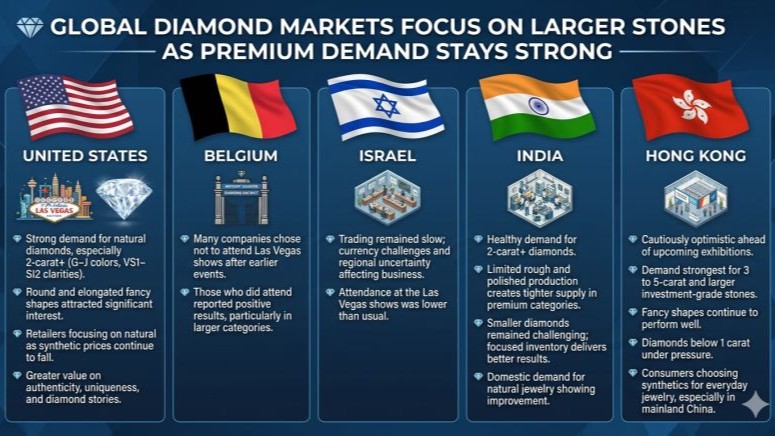
The U.S. market, the world's largest consumer of diamond jewelry, has entered a phase of measured evaluation following the critical holiday season. Retailers report steady sales volumes, particularly for items like tennis bracelets and necklaces in the popular F-H color and VS-SI clarity ranges, indicating resilient consumer appetite for accessible luxury.
A notable trend is the sustained demand for long oval-shaped diamonds, a preference driven by fashion and celebrity influence. Beyond specific cuts, the broader market is influenced by macroeconomic factors. Rising gold prices, as tracked by authorities like the World Gold Council, have a dual effect: they increase the cost base for jewelry but also stimulate investment buying sentiment among consumers viewing precious goods as a hedge against inflation. Currently, activity is easing as the industry heads into a seasonal break, with dealers closely watching the performance of memo goods placed before the holidays.
Antwerp's diamond bourses are closed until January 5, but market sentiment is contemplative. Trading in larger stones diamonds of 3 carats and above has shown relative strength, suggesting sustained demand from high-net-worth individuals and collectors. However, this positivity is tempered by significant industry-wide concerns.
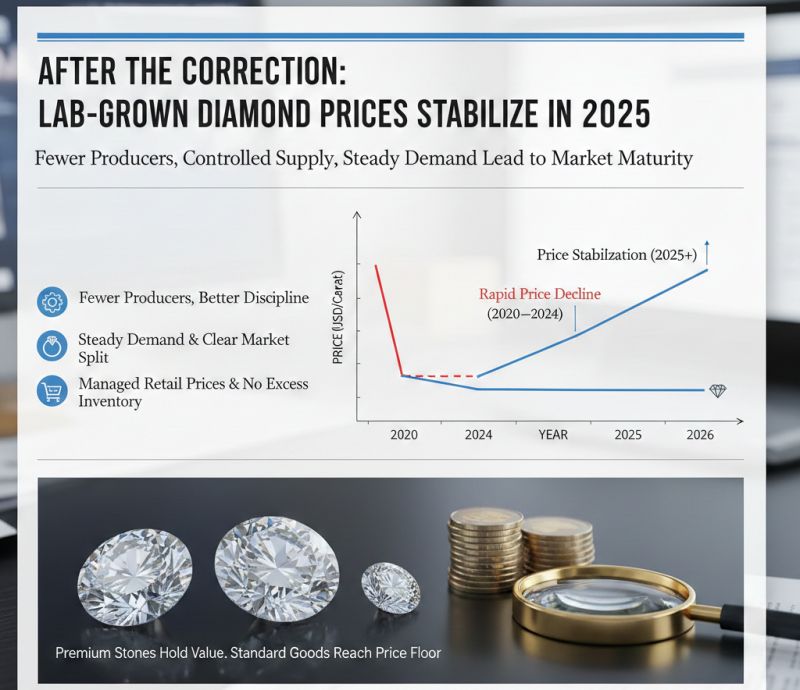
Two major points of uncertainty loom. First, the accelerating penetration of lab-grown diamonds in the US market continues to pressure the natural diamond value proposition in certain segments. Second, the ongoing discussions around the potential sale of De Beers by Anglo American PLC create fundamental questions about the future structure of diamond supply and marketing. The industry awaits clarity on both fronts.
Following Hanukkah and the conclusion of the U.S. peak season, trading in Israel has slowed. The local industry's attention is sharply focused on geopolitics and trade. A primary topic is the pursuit of a trade agreement that could exempt diamonds from US tariffs.
Such an exemption, as discussed in reports by international trade bodies, would be a significant boost for Israeli exporters by enhancing competitiveness. This period of slower trading is being used for strategic planning and negotiations, setting the stage for 2024's export landscape.
As the world's leading diamond manufacturing center, India's market rhythm is intrinsically tied to demand from the West. The current quiet period is directly attributed to holiday slowdowns in the U.S. and Europe. Indian buyers are purchasing rough and polished goods strictly on demand, with no significant large-volume deals occurring.
Domestically, high gold prices are dampening local jewelry demand, an interesting trend noted by the Gem & Jewellery Export Promotion Council (GJEPC). This high cost is inadvertently pushing a segment of price-sensitive consumers toward synthetic diamond alternatives for fashion jewelry, mirroring a global trend but within a specific local context.
The Hong Kong market demonstrates resilience, maintaining stability despite global economic headwinds. There is consistent demand for 2 to 5-carat diamonds in VS clarity, encompassing both classic colorless stones and fancy yellow diamonds.
Buyer interest remains balanced between round brilliants and long fancy shapes (like ovals and marquise), indicating a mature market with diverse clientele. This steadiness positions Hong Kong as a reliable trading hub even when other regions experience volatility.
The Lab-Grown Diamond Factor: The impact of lab-grown diamonds is no longer a future concern but a present reality, especially in entry-level and fashion jewelry segments. Their growth, documented by research from institutions like the Gemological Institute of America (GIA), is reshaping consumer expectations and forcing natural diamond dealers to emphasize rarity, provenance, and value retention.
Economic and Geopolitical Influences: Global inflation, fluctuating currency exchange rates, and geopolitical tensions directly affect both consumer purchasing power and the cost of operations (e.g., gold for settings, energy for manufacturing). Traders must now account for a more complex set of variables beyond the traditional "4Cs."
The Supply Chain Evolution: Uncertainty around the future of major producers like De Beers hints at potential shifts in the decades-old system of rough diamond distribution. This could lead to new opportunities for digital marketplaces and auction platforms to increase market efficiency and transparency.
In a fragmented and nuanced market, success depends on access, efficiency, and adaptability. CaratX is designed to empower businesses at every level of the diamond and jewelry pipeline.
For Loose Diamond Dealers: Whether you specialize in the popular 2-5 carat VS stones trending in Hong Kong or the long ovals in demand in the U.S., our CaratX Loose Diamonds plan provides a free, powerful platform to list your inventory.
With features like local currency conversion and inventory analytics, you can easily connect with a global B2B and B2C buyer base. Launch your diamond listings today and reach international buyers.
For Jewelry Manufacturers and Retailers: Capturing value from trends like tennis bracelets or yellow diamond demand requires a direct sales channel.
The CaratX Jewelry Seller plan offers a complete e-commerce checkout, dedicated support, and most importantly, custom jewelry leads from buyers. This allows you to build your brand and sell finished pieces internationally. Explore the Jewelry Seller plan to start selling your creations.
For Brands Seeking Major Growth: If your goal is to build a dominant online presence and capitalize on 2024's opportunities, the CaratX Go-To-Market plan delivers an expert-led strategy.
It includes premium advertising, social media growth, dedicated account management, and priority access to exclusive buyer leads, providing the tools needed to thrive in a competitive landscape. Accelerate your growth with our premium Go-To-Market plan.
The year 2026 is poised to be a defining period for the diamond industry. Key aspects to watch include:
The resolution of trade policy discussions, particularly regarding US tariffs.
The market's continued segmentation between natural and lab-grown diamonds.
The potential restructuring of major rough diamond suppliers.
Q1: Why are long oval diamonds so popular right now? A1: Oval diamonds have gained immense popularity due to their brilliant sparkle similar to rounds, while their elongated shape creates a flattering, finger-lengthening effect. This trend is heavily influenced by celebrity engagement rings and sustained promotion on social media and fashion platforms.
Q2: How are high gold prices affecting the diamond jewelry market? A2: High gold prices increase the total cost of manufacturing diamond jewelry, as gold is the primary metal for settings. This can squeeze manufacturer margins and increase retail prices. In some markets, like India, it is also shifting some consumer spending toward gemstone alternatives or lab-grown diamonds set in lighter gold weights or silver.
Q3: What is the "memo" goods system mentioned in the U.S. market analysis? A3: Memo or consignment is a common practice in the diamond trade where a seller (e.g., a dealer) places goods with a buyer (e.g., a retailer) without an immediate sale. The retailer only pays for what they sell and returns the rest. The post-holiday period is when accounts are settled, making it a critical time for assessing true consumer demand.
Q4: As a small or medium-sized seller, how can I compete in this global market? A4: Digital marketplaces are the great equalizer. Platforms like CaratX allow smaller sellers to launch their products and gain instant global reach without the overhead of traditional international sales networks. Using a plan like CaratX Jewelry Seller, you can access tools for e-commerce, marketing, and customer leads that were previously only available to large firms.
Gemological Institute of America (GIA). Lab-Grown Diamond Reports and Identification Services. https://www.gia.edu/
World Gold Council. Gold Price Data and Research. https://www.gold.org/
Antwerp World Diamond Centre (AWDC). Diamond Trade Statistics and News. https://www.awdc.be/
Gem & Jewellery Export Promotion Council (GJEPC). Indian Gem and Jewelry Market Reports. https://www.gjepc.org/
CaratX Marketplace. Seller Plans and Platform Features. https://caratx.com
Aug, 06, 2022
Aug, 06, 2022
Apr, 01, 2026
0 Comments
Please login to leave a reply.