
People with birthdays in June are uniquely fortunate: they can claim two of the world’s most extraordinary gemstones as their birthstones. On one hand, the pearl, the only gem created by a living organism, has captivated humanity with its natural glow for millennia. On the other, alexandrite, a color‑changing marvel so rare that it rivals the finest diamonds, provides a touch of magic few other gems can match.
In this guide we explore the science, history, value, and symbolic meaning of June’s two birthstones. By the end, you will understand exactly why these two gems have become treasured across cultures and you will discover where you can find them for your own collection or business.
Pearl – The Ocean’s Organic Treasure
Unlike any other gemstone, the pearl begins its life inside the soft tissue of a living mollusk. This organic origin gives the pearl a unique luster that has been associated with purity, wisdom, and calmness for thousands of years.
How Pearls Form – The Science Behind the Luster
A pearl forms when a microscopic irritant a grain of sand, a small parasite, or a piece of tissue enters the mantle of a mollusk (oyster, mussel, or clam). To protect itself, the mollusk secretes a substance called nacre, which is composed of thin layers of aragonite (a crystalline form of calcium carbonate) and conchiolin (an organic protein).
Over time, these layers build up around the irritant, gradually forming a pearl. The fine, overlapping nacre layers not only create the pearl’s signature iridescence but also contribute to its durability.
Natural vs. Cultured Pearls -
Natural pearls occur spontaneously in the wild without any human intervention. Because they are so rare, natural pearls command extremely high prices and are seldom found in modern jewelry.
Cultured pearls are produced with human assistance. In 1896, Japanese entrepreneur Kokichi Mikimoto patented the first reliable method for culturing pearls. He inserted a small bead made of mother‑of‑pearl into an Akoya oyster’s mantle, triggering the same natural nacre‑secreting process. This revolutionized the pearl industry, making pearls accessible to a wider audience.
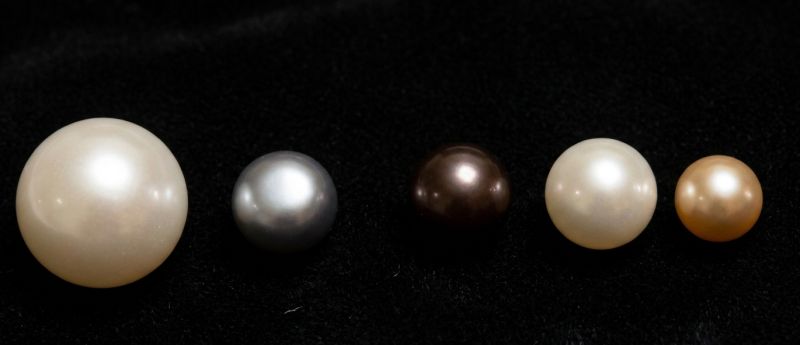
Today, cultured pearls come from many sources. Akoya pearls are the classic white or cream pearls often associated with June; South Sea pearls (grown in Australian and Indonesian waters) are known for their large size and golden or silver tones; and Tahitian pearls display natural dark grey, green, and peacock shades. Freshwater pearls are primarily produced in China, with most cultivation taking place in ponds and lakes using the mussel Hyriopsis cumingii.
The United Nations Food and Agriculture Organization (FAO) further notes that over 98% of freshwater pearls now come from China, with smaller quantities produced in Japan, Australia, and Vietnam.
Historical and Cultural Significance -
Pearls have been treasured for millennia. Ancient Chinese historians wrote about pearls as early as 2206 BC, believing they fell from the sky when dragons fought. Christopher Columbus and his contemporaries thought mollusks formed pearls from dew drops. The Ancient Romans associated pearls with wealth and social status, while medieval European knights often wore pearls into battle because they believed the gems would protect them from harm. In many cultures, pearls have traditionally been given as wedding gifts, symbolizing purity and a happy union.
The U.S. Federal Trade Commission (FTC) requires sellers to clearly label whether pearls are natural, cultured, or imitation. “Cultured pearl” must be used for human‑assisted pearls, while “pearl” alone is reserved for natural pearls. This protects consumers and helps maintain trust in the industry.
Pearl Meanings and Modern Symbolism -
Pearls are often linked with:
Purity – Because of their clean, unblemished surface.
Wisdom – In Hindu tradition, pearls are associated with the moon and intuitive knowledge.
Calmness – The soft, diffused light reflected from a pearl is said to have a soothing effect on the emotions.
Loyalty – Historically, pearls have been given to mark significant anniversaries, especially the 3rd and 30th.
How to Evaluate Pearl Quality -
The Gemological Institute of America (GIA) rates pearls using a specific set of value factors:
Luster – The sharpness and brightness of the reflections on the surface. High‑luster pearls appear almost mirror‑like.
Surface – The cleanliness of the pearl’s surface; fewer blemishes increase value.
Shape – Perfectly round pearls are the most desirable, but symmetrical teardrops and baroque (irregular) shapes also have their own appeal.
Color – Body color (white, cream, gold, silver, black, etc.) and overtone (the delicate secondary hue that floats on the surface).
Nacre Quality – The thickness and regularity of the nacre layers, which affects both durability and luster.
Alexandrite –
If the pearl represents timeless elegance, alexandrite is pure magic. This rare variety of the mineral chrysoberyl possesses the extraordinary ability to change color depending on the light source, a phenomenon so distinctive that gemologists call it the “alexandrite effect.”
Discovery in the Russian Ural Mountains -
Alexandrite was first discovered in 1830 in the Ural Mountains of Russia, in an emerald mine near the Tokovaya River. The gem was found on the day of the future Tsar Alexander II’s 12th birthday.
Since the stone displayed a dramatic change from green in daylight to red in incandescent light the imperial colors of Russia, it was named in his honor. It quickly became the darling of Russian nobility and was soon adopted as June’s birthstone by the American National Association of Jewelers in 1912.
The Science of the Alexandrite Effect -
The color change in alexandrite is caused by the presence of trace amounts of chromium ions (Cr³⁺) that replace aluminum ions in the chrysoberyl crystal lattice. These chromium ions absorb a broad band of yellow light wavelengths. In daylight, which is rich in blue and green components, the stone transmits green and bluish‑green hues.
Under incandescent (tungsten) light, which is richer in red wavelengths, the alexandrite shifts to purplish‑red or raspberry red. The stronger the chromium concentration, the more pronounced the color change.
Rarity and Value -
Fine alexandrite is rarer than ruby, sapphire, or emerald. Large, natural alexandrites with a clear, complete color change are considered true collector’s items. The most valuable stones display a 100% shift from pure green (or bluish‑green) in daylight to pure red (or purplish‑red) under incandescent light; weaker or partial color shifts are less valuable. Top‑quality alexandrite can command prices exceeding $15,000 per carat, with exceptional stones from the now‑depleted Russian mines fetching far more at auction.
Modern Sources -
Although the original Russian mines were exhausted by the early 20th century, alexandrite is now found in several other locations:
Brazil – The Hematita and Malacacheta mines produce stones with a strong color change, often from greenish‑blue to reddish‑purple.
Sri Lanka – Sri Lankan alexandrites may show a more yellowish‑green to brownish‑red shift, which is desirable for some collectors.
East Africa (Tanzania, Madagascar) – Newer deposits produce alexandrite with rich colors and good transparency.
India – Small quantities of alexandrite are also found in the Vishakhapatnam district.
Symbolism of Alexandrite -
Because of its dual nature, alexandrite has come to represent:
Good luck – Wearing the stone is believed to attract fortune.
Balance – The gem embodies the harmony between opposing forces (day/night, green/red, sun/moon).
Transformation – Its ability to change color symbolizes personal growth and adaptability.
Joy – The bright, contrasting colors are associated with celebration and positive energy.
Pearl vs. Alexandrite: Which June Birthstone Suits You?
Pearls are organic gemstones formed within mollusks and are prized for their timeless elegance, appearing in shades such as white, cream, silver, gold, black, pink, and lavender. With a Mohs hardness of 2.5 to 4.5, pearls are relatively soft and require careful handling.
While natural pearls are exceptionally rare, cultured pearls are more widely available, with prices ranging from approximately $50 to over $5,000 per carat, while rare natural pearls can exceed $50,000 per carat. Pearls are especially popular in bridal jewelry, classic designs, and special-occasion pieces.
Alexandrite, on the other hand, is a rare variety of chrysoberyl known for its remarkable color-changing effect, appearing green to blue-green in daylight and red to purplish-red under incandescent light. With a hardness of 8.5 on the Mohs scale, it is durable enough for everyday wear.
Fine natural alexandrite is considered one of the rarest gemstones in the world, with high-quality stones typically priced between $1,500 and $15,000 or more per carat. Its rarity, durability, and unique optical phenomenon make it highly sought after by collectors and ideal for statement jewelry.
Caring for Your June Birthstones -
Pearl Care
Pearls are relatively soft (Mohs 2.5–4.5) and can be damaged by acids, harsh chemicals, and even the natural acidity of your skin if worn constantly. To keep pearls lustrous:
Wipe them with a soft, damp cloth after each wear to remove body oils and perspiration.
Store pearls separately from other gemstones to prevent scratching.
Avoid exposing pearls to perfume, hairspray, or household cleaners.
Have pearl necklaces re‑strung periodically, as the silk thread can weaken over time.
Alexandrite Care
Alexandrite is much harder (Mohs 8.5) and more robust than pearl, but it is not indestructible:
Clean alexandrite with warm soapy water and a soft brush. Ultrasonic cleaners are generally safe, but steam cleaning should be avoided.
Although alexandrite is tough, sharp blows can still chip or fracture the stone, so remove alexandrite rings before vigorous activities.
Store away from harder gems like diamond or sapphire to prevent scratches on other jewelry.
Adding June Birthstones to Your Collection or Business -
Whether you are a gem enthusiast, a jewelry retailer, or a wholesale buyer, the June birthstones offer unique opportunities. Pearls remain a staple of bridal and evening wear, while alexandrite’s rising popularity among collectors ensures strong demand for high‑quality specimens.
Frequently Asked Questions (FAQs)
Q1: Are cultured pearls considered “real” pearls? Yes. Cultured pearls are produced by a living mollusk and consist of the same nacre as natural pearls. The only difference is that the initial irritant was deliberately inserted by humans.
Q2: Can alexandrite change color completely from green to red? Rarely. The most valuable alexandrites show a near‑complete color shift, but many stones change partially (e.g., greenish‑yellow to brownish‑red). Stones with a 100% shift from pure green to pure red are extremely rare and command premium prices.
Q3: Why is alexandrite so expensive? Fine natural alexandrite is one of the rarest gemstones on Earth. The original Russian source is depleted, and new deposits produce only small quantities of gem‑quality material. Additionally, the unique color‑change phenomenon is highly sought after by collectors.
Q4: How can I tell a real pearl from a fake? The simplest home test is the “tooth test.” Gently rub the pearl against the edge of your front tooth. A real pearl feels slightly gritty, while an imitation feels smooth. For definitive identification, always rely on a professional gemological laboratory.
Q5: Is alexandrite suitable for engagement rings? Yes, because of its high hardness (8.5) it is durable enough for daily wear. Many couples appreciate the symbolism of a stone that changes color, representing the adaptability and growth of a relationship.
Explore More Gemological Guides at CaratX
Shop natural diamonds – https://caratx.com/search-results/Natural
Shop gemstones at unbeatable prices – https://caratx.com/search-results/gemstones
Register as a seller to reach B2B and B2C buyers in over 18 international countries – https://www.caratx.com/register
Sell jewelry internationally through our CaratX seller plan – https://www.caratx.com/register
Learn more about our pricing and plans – https://caratx.com/generic-pages/launch-your-products-on-caratx
Follow CaratX for more insightful and educational content about diamonds, gemstones, and pearls.