
Introduction:
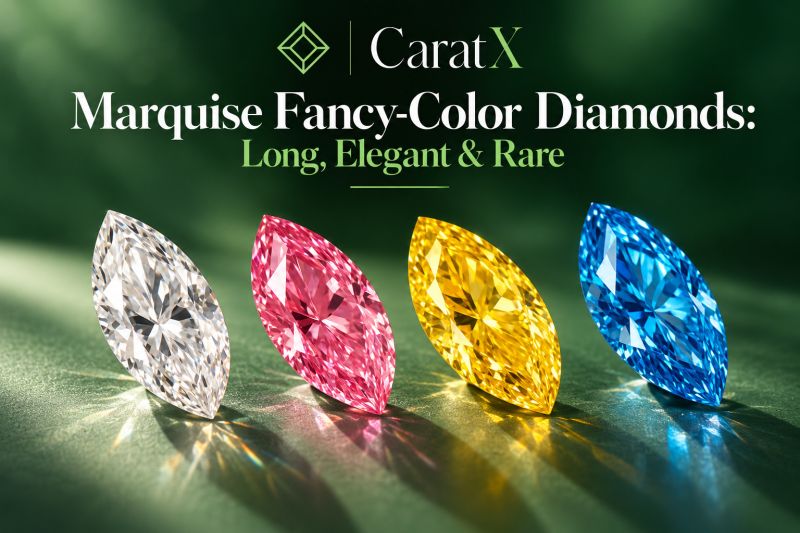
Themarquise cut diamondis one of the most dramatic and flattering shapes in the gemstone world. With its elongated silhouette and pointed ends, it evokes the glamour of French royalty and commands attention like no other cut. When you combine themarquise shapewith a natural fancy color pink, blue, green, yellow, or the impossibly rare red, you enter a realm of diamond collecting that represents the absolute pinnacle of rarity, beauty, and investment potential.
In this guide, we'll explore everything you need to know about marquise fancy-color diamonds: their royal history, the science behind their rarity, the specific colors that matter most, and how to evaluate and acquire these extraordinary stones. Whether you're a seasoned collector, a jewelry professional, or someone who simply appreciates the extraordinary, this guide will give you the knowledge to navigate this elite market.
The Royal Origins of the Marquise Cut -
Themarquise cut diamondwas born in the opulent court of King Louis XV of France in the 1740s. Legend has it that the King commissioned his court jeweler to create a diamond shape that resembled the alluring smile of his mistress, Jeanne Antoinette Poisson, the Marquise de Pompadour.
The resulting shape an elongated brilliant cut with curved sides and pointed ends was named "marquise" after her title. The cut is also known as the "navette" (French for "little ship"), reflecting its boat-like silhouette.
This origin story is not merely romantic trivia; it shaped the cultural significance of themarquise cutfor centuries. During the late 18th and early 19th centuries, the marquise became a symbol of status and elegance among European nobility. It experienced a resurgence during the Art Deco period of the 1920s and 1930s, when its geometric boldness perfectly complemented the era's design aesthetic.
The Marquise in Modern Times -
Themarquise cutexperienced another surge in popularity during the 1970s and 1980s, becoming a favorite forengagement rings. Today, it is experiencing a spectacular renaissance in the luxury market. According to industry reports, marquise diamonds currently command the highest price per carat among all fancy shapes, driven by high demand, relatively lower supply due to cutting complexity, and their strong performance in the 2-carat and larger category.
One of the marquise's most compelling advantages is its ability to maximize perceived size. Its elongated shape creates the illusion of greater carat weight, making a 1.50-carat marquise appear as large as a 2.00-carat round diamond. It also has the remarkable effect of elongating the finger, making it one of the most flattering cuts available.
For a deeper dive into the technical aspects of the marquise cut, explore our detailed guide: All You Need to Know About Marquise Cut Diamond (https://caratx.com/blog/all-you-need-to-know-about-marquise-cut-diamond).
Understanding Fancy-Color Diamonds -
What Makes a Diamond "Fancy"?
In the world of diamonds, the term "fancy color" refers to any natural diamond that falls outside the conventional D-to-Z color scale used for colorless stones. While colorless diamonds decrease in value as color becomes more obvious, the opposite is true for fancy-color diamonds: their value generally increases with the strength and purity of the color.
The rarity of fancy-color diamonds cannot be overstated. According to the Gemological Institute of America (GIA), only one in every 10,000 diamonds mined has a fancy color. Some experts estimate that only 2% of total rough diamond production is fancy colored. Within this already minuscule category, certain colors are vastly rarer than others.
The Nine-Point Color Grading Scale -
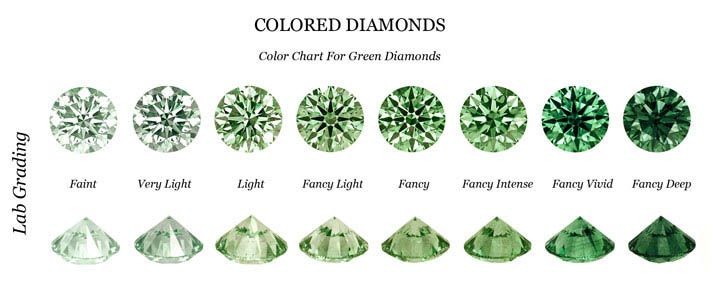
The GIA classifies fancy-color diamonds on a nine-point scale, from least to most intense: Faint, Very Light, Light, Fancy Light, Fancy, Fancy Intense, Fancy Vivid, Fancy Dark, and Fancy Deep. The most valuable grades Fancy Intense, Fancy Vivid, and Fancy Deep represent diamonds with the strongest color saturation and are exceptionally rare.
Why Color Rarity Matters -
The rarity of a fancy-color diamond depends on several factors: the specific hue, the intensity of that color, the size of the stone, and the available supply in the market. Large, vivid fancy-color diamonds are extremely rare and very valuable. In pink, blue, green, and orange, even fancy-color diamonds below one carat are rare and valuable.
To understand the full spectrum of natural diamond colors, read our guide: The Types of Natural Diamond Colors: A Complete Guide (https://caratx.com/blog/the-types-of-natural-diamond-colors-a-complete-guide).
The Rarest Fancy Colors, A Deep Dive -
Pink Diamonds: The Argyle Legacy
Pink diamondsare among the most sought-after and emotionally resonant of all fancy colors. The overwhelming majority of naturalpink diamondsapproximately 90% were mined from the Argyle Diamond Mine in Western Australia before its closure in late 2020. Argyle's own estimates revealed the staggering rarity of these stones: for every half-million carats of rough produced, only one carat was suitable for tender.
According to the GIA, of all pink diamonds, only a tiny fraction achieve the "Fancy Intense" or "Fancy Vivid" grades. Fancy intense and fancy deep pink diamonds are significantly rare, and their average weight decreases to less than one carat. The closure of the Argyle mine has only intensified demand, making pink diamonds an increasingly scarce and valuable commodity.
Explore pink diamonds on CaratX: Browse our marketplace for pink marquise diamonds (https://caratx.com/search-results/Marquise) and other fancy-color stones.
Blue Diamonds:
Blue diamondsowe their color to trace amounts of boron less than one boron atom per million carbon atoms can produce a blue hue. This geological rarity makesblue diamondsexceedingly scarce; they constitute less than one-tenth of a percent of all fancy-color diamonds.
The most famous blue diamond in the world is the Hope Diamond, a 45.52-carat Fancy Dark grayish blue stone housed at the Smithsonian Institution. Its estimated value is between $200 and $250 million. In a GIA study of over 462 blue diamonds, only 1% were graded as Fancy Vivid Blue.
Green Diamonds:
Naturalgreen diamondsare among the rarest and most sought-after of all fancy-color diamonds. Their color is typically caused by exposure to naturally occurring radiation over millions of years, creating structural defects in the diamond lattice. Pure hues of green account for less than 0.07% of all diamonds examined by GIA.
According to Sotheby's, naturalgreen diamondsmake up only 0.07% of all diamonds submitted to the GIA over the last ten years, making their study particularly challenging. For every 10,000 fancy-color diamonds graded by major laboratories, fewer than 10 are green. Of those, Fancy Vivid Green diamonds represent the rarest tier of all.
For an in-depth exploration, read our guide: The Guide to the Green Diamond Color Scale: Rarity, Valuation, and Market Trends (https://caratx.com/blog/the-guide-to-the-green-diamond-color-scale-rarity-valuation-and-market-trends).
Red Diamonds: The Rarest of Them All
Red diamondsare the rarest color on Earth. According to the GIA, red diamonds are so rare that over a 30-year period from 1957 to 1987, there was no mention of a GIA lab report issued for a diamond with "red" as the only descriptive term. Only 20 to 30 natural red diamonds are known to exist worldwide.
The largest known red diamond is the Moussaieff Red, a 5.11-carat modified triangular brilliant discovered in Brazil in 1989. It is one of fewer than thirty known red diamonds in the world and is considered a once-in-a-lifetime geological phenomenon. Red diamonds exist in only one color intensity, Fancy and it is difficult to find them in sizes over one carat.
For a complete analysis, read: Red Diamonds: The World's Rarest and Most Valuable Fancy Color Diamonds (https://caratx.com/blog/red-diamonds-the-worlds-rarest-and-most-valuable-fancy-color-diamonds).
Yellow Diamonds:
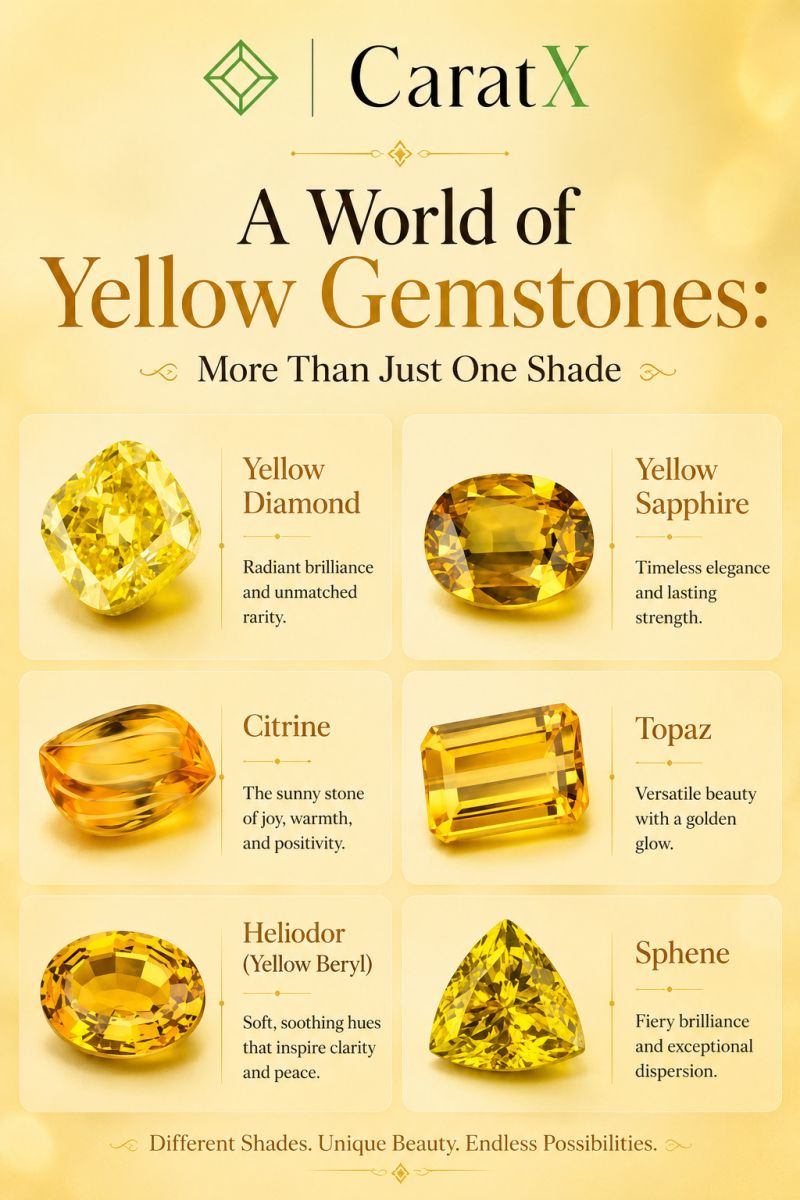
Yellow diamondsare the most commonly found fancy-color diamonds, but "common" is a relative term. A naturally occurring Fancy Intense yellow diamond is very rare only one is found among every 10,000 yellow diamonds. Fancy Vivid Yellow diamonds of significant size and quality are widely regarded as the holy grail of yellow diamonds, ranking at the very top of the rarity spectrum alongside Fancy Blue and Fancy Pink.
For collectors entering the fancy-color market, yellow diamonds offer the most accessible entry point while still providing exceptional beauty and investment potential. Explore our marketplace for yellow diamonds (https://caratx.com/search-results/Diamonds).
The Marquise Fancy-Color Combination -
Why Marquise Cuts Are Ideal for Color -
The marquise cut offers unique advantages for fancy-color diamonds. The elongated shape allows cutters to maximize the intensity of the color by preserving more of the original rough diamond crystal than is typically possible with a round brilliant cut.
The brilliant faceting pattern typically 57 facets is designed to maximize both fire (the dispersion of light into rainbow colors) and brilliance (the return of white light to the eye).
When amarquise cutis applied to a colored diamond, the result is a stone that combines dramatic silhouette with rich, saturated color. The shape adds elegance, while the color creates its personality. This combination is exceptionally rare because marquise cuts make up only about 3% of all diamond shapes, and fancy-color diamonds represent only 0.01% of total production. The intersection of these two rare categories produces a stone of extraordinary scarcity.
Market Performance of Marquise Fancy-Color Diamonds -
The market for marquise fancy-color diamonds is exceptionally strong. According to trade data, high-quality marquises are now the most expensive fancy shape, commanding a significant premium as manufacturers struggle to keep up with demand for well-proportioned stones. Long fancy shapes such as ovals, marquises, and emeralds are performing better than rounds in the 2-carat and larger category, with high-quality marquises in short supply.
The global supply of natural rough diamonds is forecast to fall below 95 million carats in 2026, the lowest output since 1987. This supply contraction is most acute in large and fancy-color categories, makingmarquisefancy-color diamonds increasingly scarce and valuable.
To understand the broader market dynamics, read: The 2026 Diamond Market: How Fancy Shapes and a US-India Trade Deal Are Redefining the Industry (https://caratx.com/blog/the-2026-diamond-market-how-fancy-shapes-and-a-us-india-trade-deal-are-redefining-the-industry).
How to Evaluate a Marquise Fancy-Color Diamond -
The Four Cs for Fancy-Color Marquise Diamonds -
Color: For fancy-color diamonds, color is the most important value factor. The GIA grades color based on hue (the dominant color), tone (lightness or darkness), and saturation (intensity). The most valuable hues are pink, blue, and green, with red being the rarest and most valuable of all. Even diamonds with low clarity grades are prized by connoisseurs if their color is attractive.
Clarity: While clarity is important, it is secondary to color in fancy-color diamonds. The GIA notes that even diamonds with a low clarity grade are prized by connoisseurs if their color is attractive. For marquise cuts, special attention should be paid to inclusions near the points, as these areas are more vulnerable to damage.
Cut: Unlike round brilliants, there are no universally accepted cut grading standards for fancy shapes like the marquise. The GIA provides clarity, color, and carat grades but does not issue a cut grade for marquise diamonds. Therefore, the evaluation of cut quality falls to individual retailers. A well-cut marquise should have a length-to-width ratio between 1.75:1 and 2.25:1, with symmetrical proportions and no "bow-tie" effect, a dark area that can appear across the center of the diamond.
Carat Weight: In pink, blue, green, and orange, even fancy-color diamonds below one carat are rare and valuable. Large, vivid fancy-color diamonds are extremely rare and very valuable. Size and color strength can strongly affect rarity and value.
For a detailed guide on evaluating marquise diamonds, explore our Marquise Shape Diamonds: History, Cut, and Why They're Trending in 2026 (https://caratx.com/blog/marquise-shape-diamonds-history-cut-and-why-theyre-trending-in-2026).
Girdle Thickness and Point Protection -
The girdle of a marquise diamond functions as the setting edge, and its thickness is critical for durability. Since the most vulnerable areas of a marquise are its points, it is acceptable to have slightly greater girdle thickness there.
Some cutters use "French tips" small facets added to the points to reduce the risk of chipping. When evaluating a marquise fancy-color diamond, ensure the points are well-protected without sacrificing the elegance of the silhouette.
The Bow-Tie Effect -
The "bow-tie" effect is a dark, bow-shaped area that can appear across the center of a marquise diamond due to improper cutting. While a slight bow-tie is common and often acceptable, a pronounced bow-tie significantly detracts from the diamond's beauty and value. High-quality marquise cuts minimize this effect through precise facet alignment and optimal proportions.
Investing in Marquise Fancy-Color Diamonds -
Why Rarity Drives Value -
The investment case for marquise fancy-color diamonds rests on a simple principle: extreme rarity combined with growing demand. Fancy-color diamonds represent only 0.01% of global diamond production. Within that fraction, marquise cuts represent a small minority of shapes. And within marquise cuts, the rarest colors pink, blue, green, and red are vanishingly scarce.
The closure of the Argyle mine in 2020 removed the source of approximately 90% of the world's pink diamonds, creating an immediate and permanent supply shock. Similar supply constraints affect blue and green diamonds, which come from a limited number of mines worldwide. As global diamond production continues to decline, the scarcity premium on marquise fancy-color diamonds is likely to increase.
Market Trends and Price Performance -
The Fancy Color Research Foundation (FCRF) reports that as of Q4 2025, pink diamonds have risen by 390.9% and yellow diamonds by 47.4% over the past decade. While the overall fancy-color market showed minimal change in 2025, blue diamonds showed momentum, and the high-value segment including rare fancy-color diamonds is witnessing a resurgence not seen since before the pandemic.
For collectors and investors, marquise fancy-color diamonds offer a unique combination of aesthetic appeal and tangible asset value. Unlike colorless diamonds, whose prices are more closely tied to market cycles, rare fancy-color diamonds have demonstrated remarkable resilience and long-term appreciation.
For Sellers: Reaching Buyers in 18+ Countries
If you're a diamond dealer, jeweler, or gemstone seller, CaratX offers a powerful platform to reach B2B and B2C buyers across more than 18 international countries. Our seller plans provide dedicated storefronts, global logistics support, and competitive transaction fees.
Register as a seller (https://www.caratx.com/register) to start listing your inventory and connecting with buyers worldwide.
For detailed pricing and plan information, visit: Launch Your Products on CaratX -https://caratx.com/sell-on-caratx
Frequently Asked Questions -
What makes a marquise fancy-color diamond so rare?
Marquise fancy-color diamonds are rare for three compounding reasons. First, fancy-color diamonds represent only about 0.01% of all diamonds mined roughly one in 10,000. Second, marquise cuts account for only about 3% of all diamond shapes due to the cutting difficulty and rough wastage involved.
Third, within fancy-color diamonds, the rarest hues pink, blue, green, and red are found in only a tiny fraction of stones. The combination of these three factors makes marquise fancy-color diamonds exceptionally scarce.
Which color is the rarest in a marquise diamond?
Red is the rarest fancy color for any diamond shape, including marquise. Only 20 to 30 natural red diamonds are known to exist worldwide, and the largest is just 5.11 carats (the Moussaieff Red). After red, green, blue, and pink are the rarest colors. Yellow is the most commonly found fancy color, though Fancy Intense and Fancy Vivid yellow diamonds are still very rare.
How does the marquise cut affect the value of a fancy-color diamond?
The marquise cut can enhance the value of a fancy-color diamond by allowing the cutter to preserve more of the original rough crystal, which is particularly important for rare colored stones. The elongated shape also creates a larger face-up appearance, making the diamond appear more substantial. However, the value ultimately depends on the intensity and purity of the color, the clarity, and the overall cut quality.
Are marquise fancy-color diamonds a good investment?
Rare fancy-color diamonds have demonstrated strong long-term appreciation, particularly pink diamonds, which have risen by nearly 400% over the past decade. The closure of the Argyle mine and declining global diamond production have created a supply squeeze that is likely to support prices for years to come. As with any investment, diversification and expert guidance are recommended.
How do I verify the authenticity of a fancy-color diamond?
Always purchase fancy-color diamonds that come with a grading report from a reputable laboratory such as the GIA, IGI, or AGS. The report should specify the color grade (e.g., Fancy Vivid Pink), the clarity, the carat weight, and whether the color is natural or treated. For marquise diamonds, the report should also include measurements and proportions.
Can I sell my marquise fancy-color diamond on CaratX?
Yes. CaratX provides a global marketplace for sellers of diamonds, gemstones, and jewelry. Register as a seller (https://www.caratx.com/register) to create your storefront and list your inventory to buyers in 18+ countries. Our platform is designed to make international selling seamless and cost-effective.
Recommended Reads from CaratX -
Expand your knowledge with these in-depth guides from our blog:
All You Need to Know About Marquise Cut Diamond — The complete guide to the marquise cut, from its royal origins to modern buying advice. (https://caratx.com/blog/all-you-need-to-know-about-marquise-cut-diamond)
Red Diamonds: The World's Rarest and Most Valuable Fancy Color Diamonds — A deep dive into the rarest color on Earth, including famous stones and market data. (https://caratx.com/blog/red-diamonds-the-worlds-rarest-and-most-valuable-fancy-color-diamonds)
The Guide to the Green Diamond Color Scale: Rarity, Valuation, and Market Trends — Everything you need to know about natural green diamonds. (https://caratx.com/blog/the-guide-to-the-green-diamond-color-scale-rarity-valuation-and-market-trends)
Demand for Large and Fancy-Color Diamonds Continues to Rise — Market analysis of the growing demand for large and fancy-color diamonds. (https://caratx.com/blog/demand-for-large-and-fancy-color-diamonds-continues-to-rise)
The 2026 Diamond Market: How Fancy Shapes and a US-India Trade Deal Are Redefining the Industry — A comprehensive look at the forces shaping the diamond market. (https://caratx.com/blog/the-2026-diamond-market-how-fancy-shapes-and-a-us-india-trade-deal-are-redefining-the-industry)