
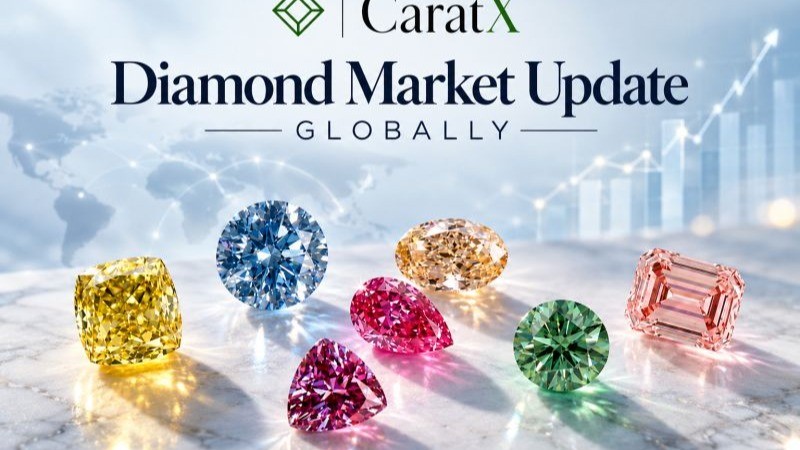
The global diamond market in 2026 is anything but monolithic. From the trading floors of Antwerp to the bustling bourses of Mumbai, from New York's 47th Street to Hong Kong's jewellery shows, the industry is navigating a complex landscape defined by shifting consumer preferences, supply chain recalibrations, and a decisive move toward fancy-shaped diamonds.
Understanding these regional nuances and shape-specific trends is essential for retailers, wholesalers, and investors looking to make informed decisions in an increasingly polarized market.
This update breaks down the latest regional dynamics, explores the booming fancy-shape segment, and explains what buyers are actually looking for in today's natural diamond market.
The Global Picture: A Market of Contrasts
The natural diamond market in 2026 is projected at approximately $112 billion, withnatural diamondscontinuing to lead premium segments. Yet beneath this headline figure lies a market characterized by stark regional and category-level divergence.
According to the Diamond Index, 1-carat diamond prices stabilized in July 2026, ending 13 straight months of declines, a significant signal that the market may have found its floor. Meanwhile, the Natural Round Index edged up 0.44%, even as the Natural Fancy Index declined by 7.2%, making fancies the primary source of price pressure in the natural diamond category.
This divergence tells a crucial story: the diamond market is no longer a single market. Success in 2026 depends on understanding which shapes, sizes, and regions are outperforming and why.
Regional Deep Dive: What's Happening in Each Major Market
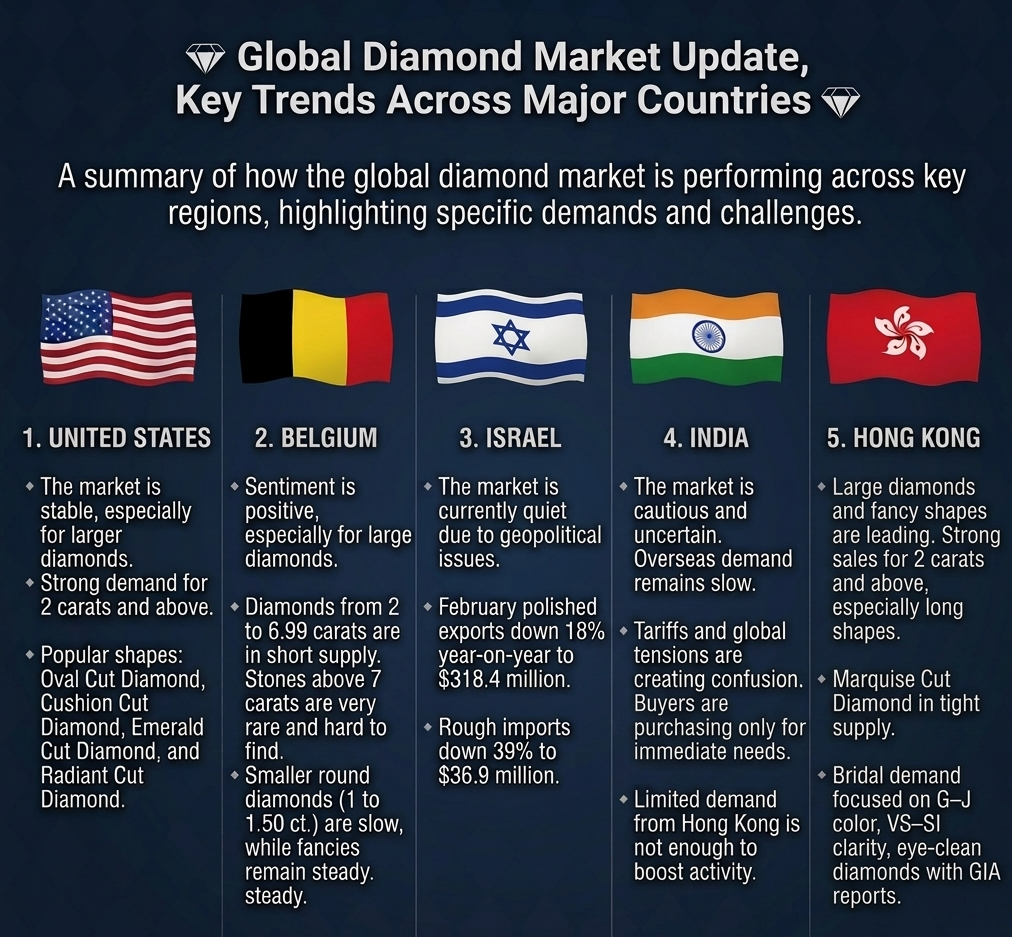
United States: Rounds Outperform Fancies in Trading, But Retail Demand Tells a Different Story
In New York, the wholesale trading floor presents a paradox.Roundsare outperforming fancies in trading activity, as manufacturers have increased output of fancy shapes to meet retail demand. US retailers are actively buying, and low supply of certain categories is making some stones difficult to restock, leading dealers to pay firm prices.
However, the retail narrative is more complex. According to the Gem & Jewellery Export Promotion Council (GJEPC), elongated silhouettes,ovals, andemerald cutsare gaining ground, while warmer-toned diamonds, champagne and soft yellow hues are being integrated into mainstream assortments rather than treated as niche.
The US market also shows strong advance orders for round and fancy-shape, D-F, IF-VS diamonds for high-end designers, with a positive trend emerging in the 1 to 1.99 ct., F-J, VS-SI range broadening demand that had been concentrated in 2 ct. and larger stones.
Key takeaway for US buyers: Round diamondsremain the backbone of bridal, but fancy shapes are the growth engine. For those seeking certified natural diamonds,CaratX's curated marketplaceoffers access to a wide range of carat weights and shapes from trusted sellers across 18+ countries.
Belgium: Improving Mood, Strong Demand for 2 ct+ Rounds and Fancies
The Antwerp diamond trade is showing signs of renewed confidence. Sentiment is positive as prices rebound and discounts improve, with round diamonds of 2 ct. and larger moving well. Fancy shapes are seeing strong orders, led byovals and pears,with traders reporting a palpable sense of demand.
Belgium's competitive position has also been strengthened by a 0% US tariff rate on its exports, positioning Antwerp as a more competitive manufacturing hub for large diamonds. This tariff advantage could reshape sourcing decisions for US buyers in the coming months.
Israel:
The Israeli diamond market is currently quiet during the Jewish festival period, with many US clients on vacation and ongoing uncertainty about the security situation contributing to subdued activity. Despite the seasonal lull, prices remain steady for nice 3 ct+ fancy shapes, especially ovals, in the Israeli market.
India: Limited Round Supply Supports Prices, Fancy Inventory Pressure Persists
India's diamond industry, the world's largest cutting and polishing hub is navigating a delicate balance. Limited availability of rounds, combined with a manufacturer shift toward fancy shapes, is actually supporting round prices by constraining supply. Meanwhile, excess inventory is squeezing prices for dossiers in fancy shapes.
Domestic demand in India is improving across selected categories. India's Titan reported fiscal 1Q jewellery sales up 39% year-over-year, with mid-30s growth for studded pieces, a strong indicator of domestic consumption strength.
However, the Indian market also faces a significant structural shift: in 2026, for the first time in history,polished lab-grown diamondexports have surpassed natural diamonds in export volume from Surat and Mumbai, though LGDs still account for less than 9% of India's wholesale diamond export value.
Hong Kong:
The Hong Kong market is active but cautious, with buyers focusing on price discovery rather than committing to deals. Natural diamonds performed better above 2 ct., especially well-cut stones and fancy shapes.
Fancy pink diamondsdrew solid interest at recent shows, while yellows and blues required competitive pricing to move. Synthetics continued putting pressure on naturals, especially smaller sizes, and traffic in the diamond section was lighter than in pearls and synthetics.
Dubai and US buyers were the most active, with Europeans mostly browsing and Chinese attendance limited. This shift in buyer demographics reflects broader geopolitical and economic currents reshaping the diamond trade.
Fancy-Shaped Diamonds: What Buyers Are Looking For
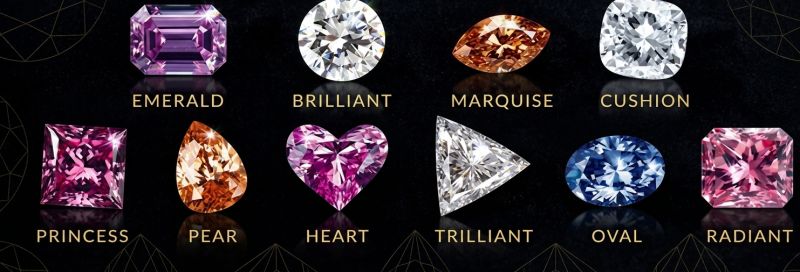
Fancy-shaped diamonds are experiencing a renaissance in 2026, driven by consumer desire for individuality, visual size advantage, and a departure from the traditionalround brilliant. But within the fancy-shape category, performance varies dramatically by shape.
Ovals, Marquises & Emeralds: The Clear Winners
Long fancy shapesovals, marquises, and emeraldsare doing better than rounds in 2 ct. and larger, according to multiple market reports. These elongated shapes offer a visual size advantage that appeals to consumers seeking maximum impact from their diamond purchase.
The GJEPC's US market analysis confirms that elongated silhouettes, ovals, and emerald cuts are gaining ground, with vintage-leaning design cues emphasizing geometry and strong lines drawing interest across bridal and commercial categories.
For buyers looking for certified natural diamonds in these high-demand shapes,CaratX's marketplaceconnects you with sellers offering a curated selection of elongated fancy shapes in the 2 ct+ range.
Marquises, Long Radiants & Long Cushions: Supply Constraints Create Opportunities
High-quality marquises, long radiants, and long cushionsare in short supply globally. This scarcity is creating pricing premiums for well-made stones in these categories.
The marquise cut is currently the most expensive fancy shape, commanding a premium over other fancy cuts due to its unique visual properties and limited supply of high-quality stones. For sellers, this represents a significant opportunity to achieve better margins on well-proportioned marquise inventory.
Long Cushions: The 20-25% Premium
Long cushionsdeserve special attention. These elongated versions of the classic cushion cut are easy to sell and trading at a 20% to 25% premium over square cushions. This premium reflects both consumer preference for elongated shapes and the relative scarcity of well-cut long cushions.
The antique cushion cut essentially the original version of the modern cushion has become one of the most requested diamond shapes of 2026. As jeweler Stephanie Gottlieb explains inVogue: "People are over perfect. There's a real shift toward individuality, and antique cushions are the opposite of mass-produced. No two are exactly the same, and that's the appeal".
This trend has been amplified by celebrity influence, particularly Taylor Swift's engagement ring, which triggered a 30% surge in demand for antique cuts. For those looking to source these rare stones,CaratX's natural diamond marketplacefeatures antique and elongated cushion diamonds from trusted sellers.
Princess Cuts:
Princess cutsare showing some renewed demand after a long period of weakness, but prices remain low. This creates a value-buying opportunity for retailers who can position princess cuts as an affordable alternative for budget-conscious consumers who still want a brilliant-cut look.
Antique Cuts: Strong Interest, Limited Supply, Higher Prices
Antique cuts and styles are described as "hot" in current market reports. Demand for old-cut diamonds, especially elongated old mine and cushion cuts, has surged over the past decade, boosted by high-profile endorsements.
The scarcity of genuine antique stones which were hand-cut between the 1700s and early 1900s means these diamonds are genuinely rare and can command significant premiums. As one industry report notes: "Demand is up and supply is fixed, so the best stones move quickly".
The Supply-Side Story:
Understanding supply dynamics is crucial to navigating the 2026 diamond market. Global natural diamond production has declined from a peak of approximately 170 million carats to around 100 million carats, representing a significant contraction that is supporting prices in premium categories.
De Beers has adjusted its sightholder list from 70 to 45-50 under its new contract, and significantly cut rough prices at its July 2026 sight, especially for goods under 0.75 ct.. These adjustments reflect a mining sector aligning supply with a market that has undergone significant price corrections since 2022.
The Diamond Price Index, a major global benchmark, peaked near 155 in 2022 and has since fallen sharply, with year-on-year losses of 17.9% in 2023. However, the stabilization of prices in 2026 suggests that supply-side discipline is beginning to have an effect.
What This Means for Buyers and Sellers -
For Retailers and Wholesale Buyers
Prioritize elongated fancy shapes (ovals, marquises, emeralds, long cushions) in 2 ct+ categories, where demand is strongest and supply is tightest.
Look for antique cuts as a differentiation strategy, these stones command premium prices and appeal to consumers seeking individuality.
Consider princess cuts as a value offering for budget-conscious consumers.
Source certified natural diamonds from trusted marketplaces likeCaratXto ensure quality and provenance.
For Diamond Sellers -
Register on CaratXto reach B2B and B2C buyers across 18+ international countries. The platform connects you with serious buyers in a specialized marketplace dedicated to diamonds, gemstones, and fine jewelry.
Highlight fancy shape inventory especially long cushions, marquises, and ovals, where demand is strongest.
Explore the CaratX seller planto sell jewelry internationally through a dedicated storefront that won't get lost among non-jewelry listings.
For Investors -
Focus on quality over quantity: Well-cut stones in premium shapes are commanding significant premiums, while poorly proportioned fancies are illiquid.
Consider the 2 ct+ segment as the sweet spot for both demand and value retention.
Monitor traceability developments: GIA's acquisition of a 30% stake in the Tracr blockchain platform signals a push toward provenance verification that could reshape consumer trust and pricing.
Recommended Reads from CaratX -
Explore these in-depth analyses and market reports from our blog to deepen your understanding of the trends shaping the diamond industry in 2026:
The 2026 Diamond Market: How Fancy Shapes and a US-India Trade Deal Are Redefining the Industry— A deep dive into the geopolitical and consumer shifts driving the rise of fancy shapes, including the impact of the landmark US-India trade agreement.
Fancy Shape Diamonds Are Leading the Premium Market— Analysis of why elongated shapes like ovals, marquises, and emeralds are outperforming rounds in the 2-carat-and-larger segment, and what it means for buyers and sellers.
The Fancy Shape Diamond Market Report 2026: Why Shape + Proportion is the New 4Cs— A definitive guide to the 2026 fancy shape market, explaining why liquidity is now tied to proportions and how the "Value Index" is changing.
The Fancy Shape Diamond Market: Navigating the Polarization of Demand in 2026— Insight into the bifurcated market where large, well-cut fancies command premiums while mid-size commercial goods face softness.
Global Diamond Markets Show Strength in Premium Categories in 2026— A regional analysis covering the US, Belgium, Israel, India, and Hong Kong, with data on supply dynamics and search-demand imbalances.
Natural Diamond Market 2026: Signs of Recovery, Stability & Premium Demand Growth— An in-depth look at price trends, regional demand acceleration, and why premium stones are finding their footing faster than commercial goods.
India's Diamond Market in 2026: Domestic Growth and the Rise of Premium Natural Diamonds— A focused analysis of the world's largest diamond manufacturing hub, covering manufacturing slowdowns, supply discipline, and the 2+ carat safe haven.
The Fancy Diamond Market Report: Why Elongated Shapes Are Dominating 2-Carat+ Sales in 2026— Regional breakdowns and strategic insights for buyers and sellers, with a focus on the Marquise, Long Cushion, and Oval cuts.
Navigating the 2026 Diamond Market: A Strategic Guide to Bifurcation, Geopolitics & Consumer Shifts— A strategic guide covering US tariffs, Belgian market recovery, Israeli resilience, and the fundamental changes in consumer preferences.
Frequently Asked Questions -
What are the best-performing diamond shapes in 2026?
Ovals, marquises, emeralds, and long cushions are the strongest performers, particularly in 2 ct+ categories. Marquise is currently the most expensive fancy shape, while long cushions trade at a 20-25% premium over square cushions.
Are fancy-shaped diamonds more expensive than rounds?
Generally, fancy shapes are 20-30% less expensive than round brilliants of equivalent quality. However, this varies significantly by shape and market conditions. Premium shapes like marquises and long cushions can command higher prices due to supply constraints.
Where can I sell diamonds internationally?
CaratXprovides a specialized B2B and B2C marketplace for diamonds, gemstones, and fine jewelry. Sellers can register to reach buyers in 18+ countries through a professional storefront dedicated to the jewelry trade.
What is driving the demand for antique cut diamonds?
Consumer desire for individuality, uniqueness, and a departure from mass-produced perfection is driving antique cut demand. Celebrity influence particularly Taylor Swift's engagement ring has amplified this trend, with searches for antique diamond engagement rings surging since late 2025.
Is the diamond market recovering in 2026?
Yes, there are signs of stabilization and selective recovery. The RAPI™ for 1-carat diamonds stabilized in July 2026, ending 13 straight months of declines. However, recovery is uneven across shapes and regions, with premium categories outperforming commercial goods.
Ready to start selling? Register on CaratXto reach B2B and B2C buyers in 18+ countries. Shop natural diamonds at unbeatable prices on ourmarketplace. For detailed pricing information, check ourseller plans.