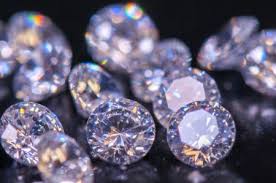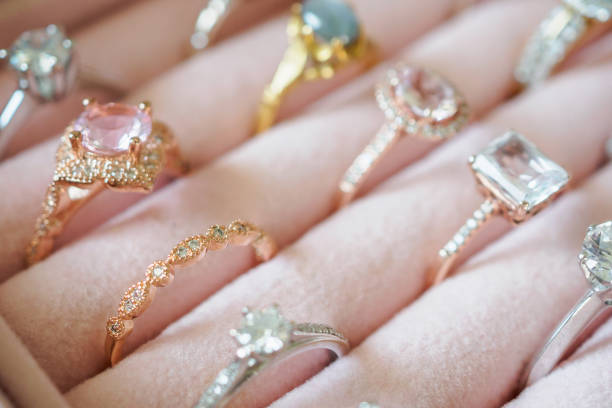

Diamonds are not merely sparkly rocks, they are precise optical instruments. Every angle, every facet, and every proportion is engineered to manipulate light in ways that create the dazzling brilliance, fire, and scintillation we associate with the world's most treasured gemstone.
Among the countless cutting styles that have emerged over the past six centuries, two families dominate the market:round cutsand square cuts. While they may appear to be simple variations in outline, the differences between them run deep from the number and arrangement of facets to the way they interact with light, their weight retention during manufacturing, and ultimately, their market value.
This guide will explore every dimension of round and square diamond cuts, drawing on research from theGemological Institute of America (GIA)and other authoritative sources. Whether you are a B2B seller looking to optimize your inventory or a B2C buyer seeking the perfectengagement ringcenter stone, understanding these fundamental differences will empower you to make informed decisions. Let's explore the anatomy of a diamond and understand the factors that determine its value before diving into the cuts themselves.
Understanding Diamond Cut: The Fourth C
Before examining specific cutting styles, it's essential to clarify what "cut" actually means in gemology. In the famous 4Cs framework Carat, Color, Clarity, and Cut the term "cut" does not refer to the shape (round, square, oval, etc.) but rather to the quality of craftsmanship: how well the diamond's facets are proportioned, polished, and aligned to maximize light performance . The shape is the outline, but the cut is the artistry.
The GIA Cut Grading System evaluatesround brilliant diamondsbased on seven key factors: brightness (white light reflection), fire (spectral light dispersion), scintillation (light-and-dark pattern when the diamond moves), weight ratio, durability, polish, and symmetry . Each factor receives a grade, culminating in an overall cut grade ranging from Excellent to Poor .
The importance of cut cannot be overstated. A poorly cut diamond of impeccable color and clarity can appear dull and lifeless, while a well-cut diamond of modest specifications can exhibit breathtaking brilliance. As GIA researchers T. Scott Hemphill and colleagues demonstrated in their landmark 1998 study, "there are many combinations of proportions with equal or higher weighted light return (WLR) than 'Ideal' cuts" a finding that revolutionized how the industry approaches cut analysis.
For a foundational understanding of all the 4Cs and how they interact to determine diamond value, explore theCaratX Diamond Educationresource center.
The Round Brilliant Cut:
Origins and Evolution -
Theround brilliant cutis the result of centuries of optical engineering. Its predecessor, the Old European cut, dominated the 19th and early 20th centuries but was designed for weight retention rather than maximum brilliance . The true revolution came in 1919, when mathematician Marcel Tolkowsky calculated the precise angles and proportions required to maximize light return from a round diamond . His "Ideal Cut" became the foundation for modern brilliant cut design.
Anatomy of the Round Brilliant -
The modernround brillianttypically features 57 or 58 facets, depending on whether a culet (the tiny flat facet at the bottom) is present . The crown alone contains 33 facets: the table, eight star facets, eight bezel facets, and 16 upper girdle facets . The pavilion contains 24 facets, and the girdle may be polished, faceted, or bruted.
This intricate arrangement of facets is not arbitrary. Each facet type serves a specific optical function. Star facets, for instance, are strategically positioned around the table to enhance the dispersion of white light into spectral colors . The bezel facets, which angle downward from the table to the girdle, are primarily responsible for the bright, bold flashes of white light (brilliance) that define the round brilliant's appearance.
Light Performance and the Science of Brilliance -
A round brilliant's exceptional light performance stems from its rotational symmetry. Light entering through the crown reflects off multiple pavilion facets before returning to the viewer's eye.
The critical angle of diamond approximately 24.5° ensures that light striking the pavilion facets at the correct angles undergoes total internal reflection rather than leaking out the bottom . This creates the characteristic brightness that has made the round brilliant the world's most popular diamond shape.
GIA's research on weighted light return (WLR) has shown that crown angle, pavilion angle, and table size are the three most critical proportions affecting brilliance. The ideal relationship between these parameters creates a "sweet spot" where light return is maximized. For a deeper dive into how individual facets contribute to a diamond's fire and brilliance, explore our guide toDiamond Facets.
Types of Round Cuts -
While the Round Brilliant dominates the modern market, several other round cutting styles have historical and contemporary significance:
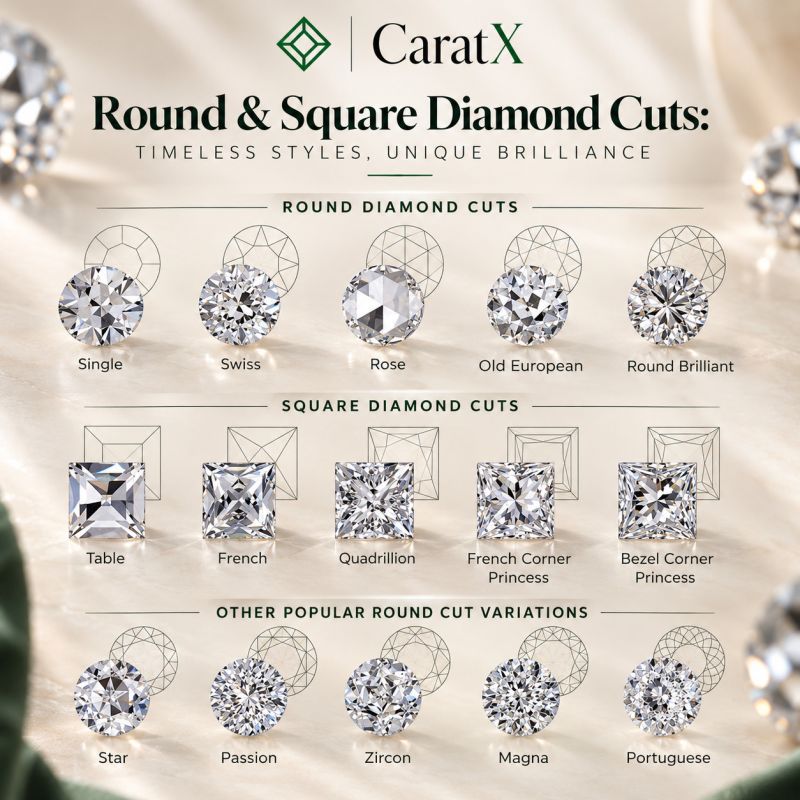
Old European Cut: Predominant from 1890 to 1930, the Old European cut features a round outline but with a smaller table, higher crown, and larger culet compared to the modern brilliant. It was cut primarily for weight retention and exhibits a distinctive, softer sparkle .
Single Cut: With only 17 or 18 facets, the single cut is a simpler, older style typically used for small melee diamonds under 0.10 carats. Its larger, broader facets produce crisp flashes of light that can outperform modern full cuts in small sizes .
Swiss Cut: An intermediate style between the single cut and full cut, the Swiss cut has 8 upper girdle facets (unsplit) rather than the 16 of a full cut . It evolved with a shallower pavilion and offers a vintage aesthetic.
Rose Cut: Originating in 15th-century India, the rose cut features a flat bottom and a dome-shaped crown with anywhere from 3 to 24 triangular facets . It was the precursor to the brilliant cut and remains popular in antique and vintage-style jewelry.
Portuguese Cut: A modified old-mine cut with 16 extra facets (eight on the crown and eight on the pavilion), totaling 74 facets. It appeared around the 1850s and is associated with Brazilian diamond sources .
Square Cuts: Geometry, Structure, and Modern Elegance
The Appeal of Straight Lines -
Square cuts offer a fundamentally different aesthetic from their round counterparts. Where round brilliants emphasize curved brilliance and soft outlines, square cuts create a structured, geometric appearance with clean edges and sharp corners. This architectural quality has made them particularly popular in modern and Art Deco-inspired jewelry designs.
The Princess Cut:
ThePrincess cutis the most popular square diamond shape, second only to the round brilliant in overall market share . Developed in Israel in 1979 by Betzalel Ambar, Israel Itzkowitz, and Igal Perlman, it was originally inspired by the Radiant Cut and registered under the trademark "Quadrillion" .
The Princess cut is technically a "modified square brilliant," featuring an inverted pyramid shape with chevron-shaped pavilion facets . Its crown comes in two primary styles:
French Corners: Star facets point toward the stone's corners, extending about 50% of the distance from the table corner to the girdle corner .
Bezel Corners: A small diamond-shaped facet runs from the table corner to the stone corner, adding durability and a slightly different light pattern .
The number of chevron tiers on the pavilion can vary typically two, three, or four with larger stones sometimes featuring even more. Additional chevron tiers generally increase brilliance .
Weight Retention:
One of the most significant differences between round and square cuts lies in manufacturing efficiency. A well-cut round brilliant typically retains only 40–50% of the original rough diamond, as the cutting process sacrifices significant material to achieve the circular outline . In contrast, aPrincess cutcan retain 80–90% of the rough stone .
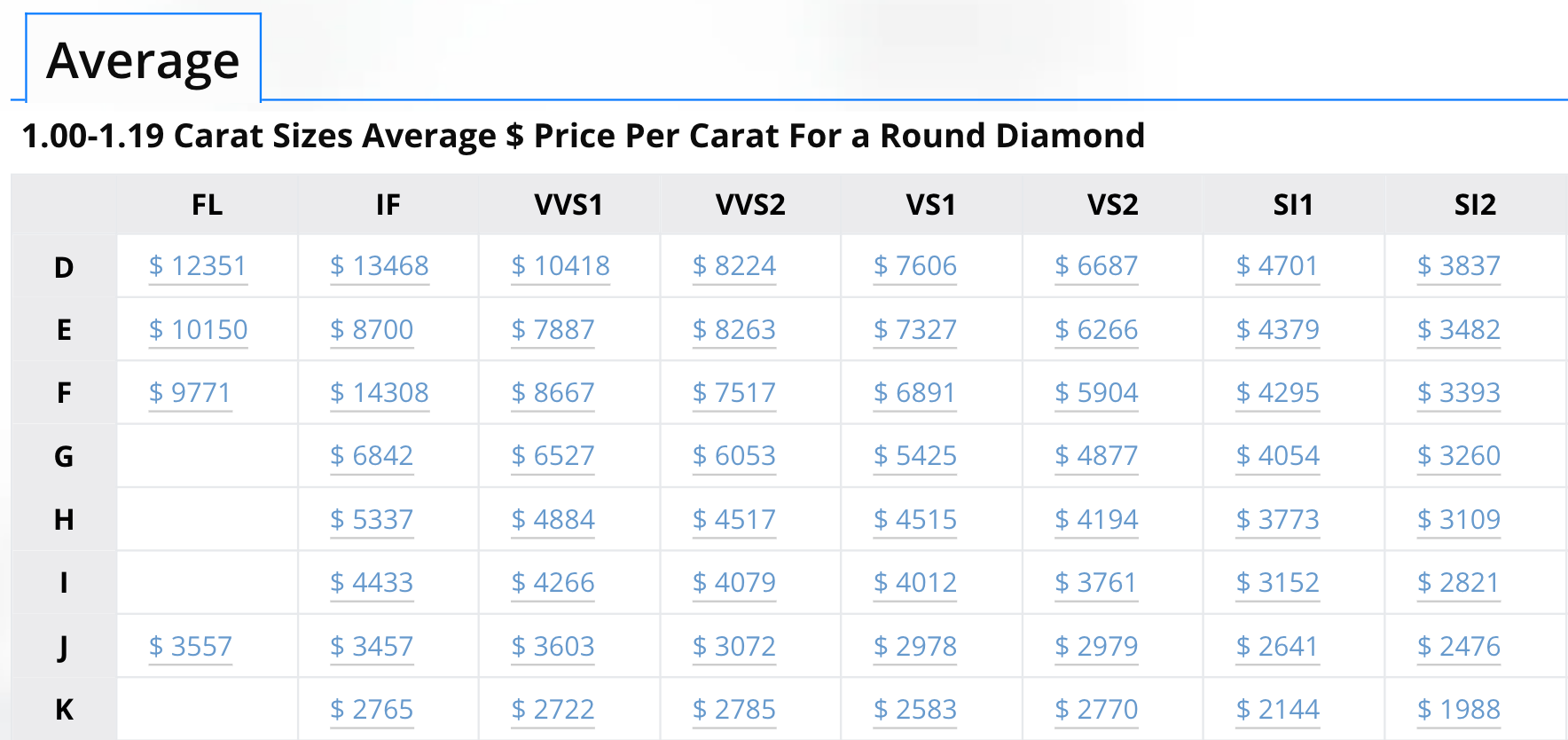
This dramatic difference in yield directly affects pricing. A one-caratPrincess cut diamondis almost always more economical than a one-carat round brilliant of comparable quality . For B2B sellers, this translates to better margins; for buyers, it means more carat weight for the budget.
Face-Up Size and Visual Perception -
Despite their weight advantage, square cuts often appear slightly smaller face-up than round brilliants of the same carat weight. This is because square cuts are typically deeper, meaning more of their carat weight is hidden below the girdle. A round brilliant is engineered to maximize surface spread relative to weight, while a Princess cut's weight is distributed more vertically.
That said, the setting can dramatically influence perceived size. Ahalo settingadds visible width to any center stone, and a thinner band makes the diamond appear proportionally larger.
Other Square and Rectangular Cuts -
Table Cut: Dating to the 14th century, the table cut was the first widely recognized diamond cut. It features a flat top (the table) with faceted sides and evolved from the earlier point cut .
French Cut: Popular in the Art Deco era, the French cut is square or rectangular with a high crown and a criss-cross pattern of triangular facets . It typically has fewer facets than modern brilliant cuts, resulting in a clean, elegant appearance.
Asscher Cut: A step-cut square diamond with concentric rows of facets, the Asscher cut creates a distinctive "hall of mirrors" effect with broad, watery flashes of light rather than pin-fire scintillation . The originalAsscherwas the world's first patented diamond cut, introduced in 1902 .
Cushion Cut: Often described as a "pillow cut," thecushioncombines a square or rectangular outline with rounded corners and a brilliant facet pattern . It bridges the gap between round and square aesthetics, offering a soft, romantic silhouette with substantial brilliance.
Quadrillion Cut: A branded square brilliant with 49 facets, created by Bez Ambar and trademarked in the early 1980s. It was designed with ideal proportions to maximize brilliance rather than weight retention .
The Science of Facet Arrangement and Light Performance -
The difference between round and square cuts ultimately comes down to how their facets are arranged and how that arrangement affects light behavior. A diamond's appearance depends on several factors: clarity, color, quality of finish, arrangement of facets, proportions, and lighting conditions .
In a round brilliant, the symmetrical arrangement of 57–58 facets creates a predictable, even pattern of light return. The rotational symmetry ensures that regardless of how the diamond is viewed, the light performance remains consistently brilliant.
In square cuts, the geometry is more complex. The straight edges and corners create different light paths, and the chevron facets on the pavilion (in the case of Princess cuts) produce a distinctive "crushed ice" or "needle" pattern of light return. The French or bezel corner style further modifies how light behaves at the corners.
Modern computational tools now allow diamond designers to model and optimize facet arrangements for specific light performance outcomes . The concept of "virtual facet patterns"the complex shifting patterns of polygons that observers see as a moving diamond reflects light has become fundamental to understanding and comparing different cuts .
Market Trends and Consumer Preferences -
The round brilliant has dominated the diamond market for over a century, and it remains the most stable asset class among diamond shapes. Its universal appeal, maximum sparkle, and consistent grading standards make it the safest choice for both sellers and buyers.
However, the market for fancy shapes including square cuts has evolved significantly. Recent CaratX market analysis shows that while Princess cuts are experiencing notable market pressure, demand has softened relative to elongated alternatives like oval and marquise cuts.
Cushion cuts, which blend square and round aesthetics, have gained considerable popularity for their romantic, vintage-inspired appearance.
For sellers, understanding these trends is essential for inventory planning. For buyers, they represent opportunities fancy shape diamonds often offer better value per carat than round brilliants. Explore the full range of shapes and cuts on theCaratX marketplaceto find the perfect stone for your needs.
Practical Buying Considerations -
For B2C Buyers
When choosing between round and square cuts, consider the following:
Aesthetic Preference: Round brilliants offer maximum sparkle and a classic look; square cuts provide a modern, geometric elegance.
Budget: Square cuts typically offer better value per carat due to higher manufacturing yields.
Durability: Round brilliants have no corners to chip; square cuts with sharp corners require protective settings.
Setting Compatibility: Square cuts work beautifully in channel and bezel settings; round brilliants are versatile in virtually any setting style.
For B2B Sellers -
CaratXprovides a global marketplace connecting diamond, gemstone, and jewelry sellers with buyers in over 18 international countries. Whether you specialize in round brilliants or fancy shapes,CaratXoffers the tools and reach to grow your business:
Register as a seller to access a global network of B2B and B2C buyers -https://www.caratx.com/register
List your inventory of certified natural diamonds, gemstones, and jewelry -https://www.caratx.com/register
Access market insights and pricing data to optimize your listings -https://caratx.com/
Start selling on CaratXtoday and join thousands of successful sellers on the premier marketplace for diamonds and gemstones.
Frequently Asked Questions -
Which is more brilliant: round or square cut diamonds?
Round brilliant cuts are generally considered more brilliant because their 57–58 facets and symmetrical arrangement maximize light return. However, well-cut square diamonds like Princess cuts can exhibit nearly comparable brilliance, particularly in larger sizes with additional chevron facets.
Are square cut diamonds cheaper than round?
Yes, square cuts are typically less expensive per carat because they retain 80–90% of the rough diamond, compared to only 40–50% for round brilliants. This manufacturing efficiency translates directly to lower prices.
Do square diamonds look bigger than round diamonds?
No, round brilliants usually appear slightly larger face-up at the same carat weight because they are cut to maximize surface spread. Square cuts are typically deeper, with more weight hidden below the girdle.
What is the most popular square diamond cut?
The Princess cut is the most popular square diamond shape, followed by the cushion cut. The Asscher and emerald cuts are popular for vintage and Art Deco-inspired designs.
Are square diamond corners prone to chipping?
Yes, the sharp corners of square cuts—particularly Princess cuts—are the most vulnerable part of the stone. Protective settings like bezels or V-prongs are recommended to minimize the risk of damage.
Does GIA grade the cut of square diamonds?
GIA's Cut Grading System currently applies only to standard round brilliant diamonds. Square and other fancy shape diamonds are not assigned a cut grade by GIA, though their color, clarity, and carat weight are graded.
Recommended Reads from CaratX
Continue your diamond education with these insightful articles from the CaratX blog. Each link points directly to the full article:
The Anatomy of Asscher Cut Diamonds: A Deep Dive into Geometry, Light, and Value— Explore the square step-cut that revolutionised Art Deco jewelry and learn how its 58-facet "hall-of-mirrors" pattern differs from brilliant cuts.
The Science Behind a Diamond's Unique Shape— Understand how natural diamonds form as octahedrons deep in the mantle and how resorption creates the rounded edges and trigons that influence final cutting decisions.
All You Need to Know About Cushion Cut Diamond— The definitive guide to the "pillow cut," covering its Old Mine heritage, 58-facet brilliant pattern, and why its broad facets produce sweeping flashes of fire rather than pin-point scintillation.
Diamond Facets— A deep technical dive into the crown and pavilion facet roles, including the table, star, bezel, and upper girdle facets that control how light enters, reflects, and exits a diamond.
The Geometry of Desire: A Deep Dive into How Diamond Shapes Influence Global Markets and Consumer Psychology— Examines why round brilliants dominate global markets, how the princess cut became the #2 engagement ring choice in the US, and the psychological drivers behind shape preferences.
Beyond the Round Brilliant: Why 2025 is the Year of the Fancy Shape Diamond— Market intelligence on the shift toward elongated shapes, including why long cushions now command 20–25% premiums over square cushions.
The Ultimate Guide to Diamond Carat Size and Cut— Detailed carat-to-millimeter comparisons across popular shapes, helping you understand why round brilliants appear larger face-up than princess cuts of the same weight.
Additional Technical Deep Dives:
Why the Same Diamond Colour Looks Different Across Cuts: A Gemologist's Guide— Brilliant cuts (round, cushion) conceal body color better than step cuts (Asscher, emerald). Essential reading for buyers comparing shapes.
The Diamond Table: The Architectural Marvel Controlling Light, Fire, and Brilliance— Learn how table percentage acts as the "aperture" of a diamond, balancing fire against brightness differently in round vs. square cuts.
Hearts & Arrows Diamonds: The Definitive Guide to Optical Symmetry— Extreme precision cutting in round brilliants produces a repeatable eight-heart, eight-arrow pattern unseen in square cuts.