
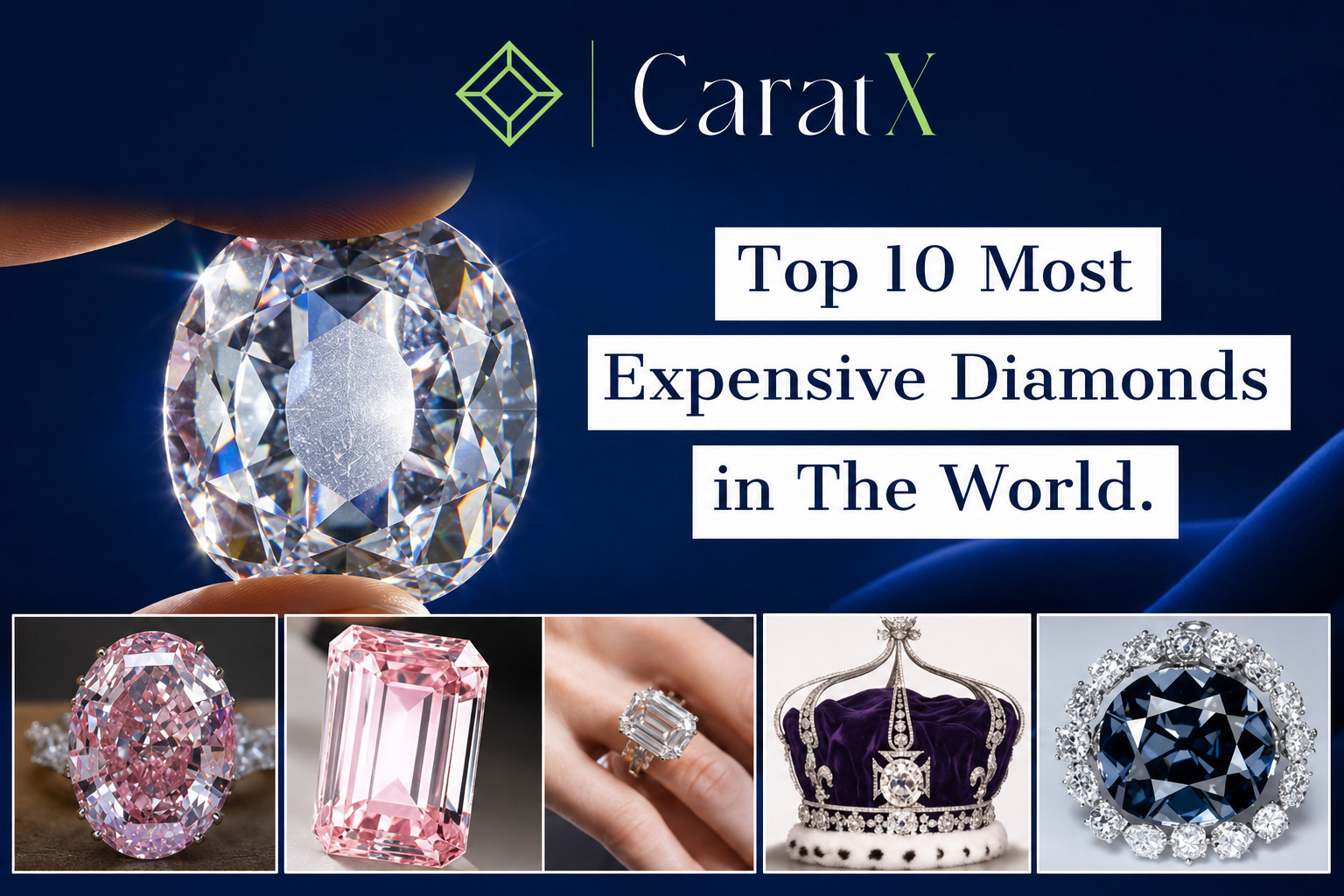
Diamondshave captivated humanity for millennia, serving as symbols of power, wealth, and eternal love. Among the countless diamonds discovered throughout history, a select few have achieved legendary status not just for their breathtaking beauty, but for their staggering value and the fascinating stories they carry.
This guide explores the world's top 10 mostexpensive diamonds, delving into their origins, histories, and the astronomical prices they command.
Understanding Diamond Valuation: What Makes a Diamond Priceless?
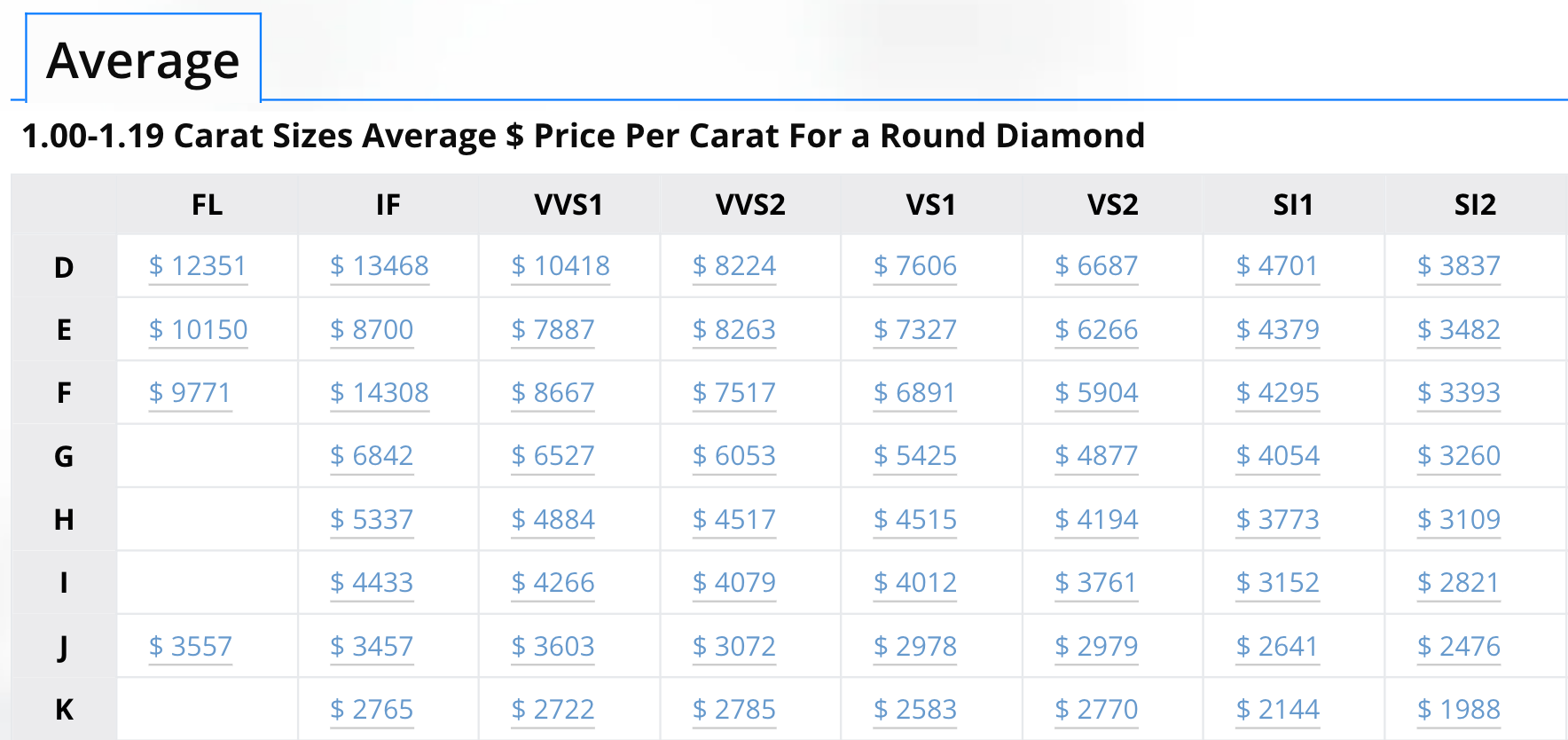
Before exploring these legendary gems, it's essential to understand what determines a diamond's value. TheGemological Institute of America (GIA), the world's foremost authority on diamonds, evaluates diamonds based on the 4Cs: Carat weight, Color, Clarity, and Cut. Beyond these technical specifications, factors like historical significance, provenance, rarity of color, and market demand play equally crucial roles.
Fancy colored diamonds, those exhibiting hues beyond the traditional colorless range are particularly valuable. As GIA experts note, red, green, purple, and orange diamonds are the rarest, followed by pink and blue varieties. The presence of trace elements or structural anomalies during formation creates these spectacular colors, making each colored diamond a unique geological masterpiece.
For those interested in understanding diamond quality grading in depth, CaratX offers acomprehensive guide to diamond colorthat explains the GIA color scale from D (colorless) to Z.
1. The Koh-i-Noor –
Value: Priceless
The Koh-i-Noor, meaning "Mountain of Light" in Persian, stands as perhaps the most famous and controversial diamond in human history. Mined in India's legendary Golconda region, its exact discovery date remains shrouded in mystery. Some sources claim the stone was discovered 5,000 years ago, while others place it in the 1300s or 1500s.
The diamond's documented history begins in the Mughal Empire, where it adorned the legendary Peacock Throne of Shah Jahan. In 1739, Persian ruler Nader Shah invaded Delhi and claimed the diamond, reportedly exclaiming "Koh-i-noor" upon seeing it for the first time.
The diamond eventually returned to India in 1813 under Ranjit Singh's rule but was surrendered to the British in 1849 following the annexation of Punjab. Today, it resides in the Queen Mother's Crown as part of the British Crown Jewels, displayed at the Tower of London.
Fascinating Facts:
Originally weighed 186 old carats before being recut in 1852 to 105.60 carats.
Legend claims the diamond brings bad luck to any man who wears it.
It has been worn by Queen Victoria, Queen Alexandra, Queen Mary, and Queen Elizabeth.
Learn more about historic diamonds and their fascinating journeys in CaratX's Top 10 Rarest Diamonds in the World guide.
2. The Cullinan –
Value: Estimated Over $2 Billion
Discovered in 1905 at South Africa's Premier Mine (now the Cullinan Mine), the Cullinan Diamond remains the largest gem-quality rough diamond ever found. Weighing an astounding 3,106 carats about the size of a human fist, this extraordinary find was named after Thomas Cullinan, the mine's owner.
The rough stone was presented to King Edward VII and subsequently cut by master jeweler Joseph Asscher & Co. in Amsterdam. The cutting process, which took eight months with three people working 14 hours daily, produced 105 polished diamonds.
The two largest cuts Cullinan I (the Great Star of Africa) at 530 carats and Cullinan II (the Second Star of Africa) at 317 carats remain part of the British Crown Jewels.
Fascinating Facts:
The cutting required weeks of planning before Master Asscher made a single, precise blow to split the diamond.
Legend says Asscher fainted from excitement, though he denied this, stating "no Asscher would ever faint while working on a diamond"
The Cullinan Mine has produced 750 stones weighing over 100 carats.
Discover the journey from rough to remarkable in CaratX's article From Rough to Remarkable: The Meticulous Art of Diamond Assorting .
3. The Hope Diamond –
Value: $200 – $250 Million
Few gems carry as much mystique as the Hope Diamond. This rare deep-blue diamond, weighing over 45 carats, has been the subject of fascination and fear for centuries. The Smithsonian Institution, where it now resides, notes that French monarchs, an heiress, and at least one unlucky postman have met misfortune after possessing it.
The diamond's journey began in 17th-century India before it was acquired by French gem merchant Jean-Baptiste Tavernier. Smithsonian folklorist Richard Kurin has extensively researched the diamond's history, debunking the myth that Tavernier stole it from a Hindu idol's eye.
After passing through French royalty and various owners, jeweler Harry Winston donated the Hope Diamond to the Smithsonian Institution in 1958. Today, approximately six million visitors view it annually at the National Museum of Natural History.
Fascinating Facts:
Also known as the French Blue.
Arrived at the Smithsonian via regular U.S. postal service.
The curse legend made it more famous than ever in the 20th century.
Explore the science behind diamond formation in CaratX's article Diamonds: Why Are They Forever? .
4. De Beers Centenary Diamond –
Value: $100 Million
Discovered in July 1986 at De Beers' Premier Mine in South Africa, the rough stone weighed 599 carats. De Beers unveiled the diamond during their 100th-anniversary celebrations in 1988, giving it the name "Centenary".
The cutting process, entrusted to master cutter Gabi Tolkowsky, took three years of meticulous work. The result was a 273.85-carat modified heart-shaped diamondwith 247 facets 75 on the crown, 89 on the pavilion, and 83 on the girdle.
The Centenary Diamond holds the distinction of being the largest modern-cut, top-color, apparently flawless diamond in the world. It received GIA's highest color grade of D, signifying completely colorless, and is internally and externally flawless.
Fascinating Facts:
Only the third-largest diamond produced from the Premier Mine.
The heart shape was chosen in March 1990 after extensive planning.
Represents the pinnacle of diamond cutting artistry.
Browse natural diamonds and gemstones at CaratX's marketplace for exceptional quality.
5. The CTF Pink Star – The Most Expensive Diamond Ever Sold at Auction
Value: $71.2 Million
The CTF Pink Star (originally known as the Steinmetz Pink) holds the record as the most expensive diamond ever sold at auction. This 59.60-carat internally flawless, Fancy Vividpink diamondwas discovered in Botswana in 1999.
The cutting process required two years to transform the 132.50-carat rough into its final masterpiece. In April 2017, Hong Kong jeweler Chow Tai Fook purchased the diamond for $71.2 million at Sotheby's Hong Kong.
GIA graded this extraordinary gem as Fancy Vivid Pink, the highest color grading possible for a pink diamond with Internally Flawless clarity. Its combination of size, color, and clarity is so rare that it "defies statistical probability".
Fascinating Facts:
Set the record for the most expensive work ever sold at auction in Asia.
The diamond arrived in Hong Kong with "an army of security guards".
Represents the pinnacle of pink diamond rarity and value.
Discover why pink diamonds are so rare and valuable in CaratX's in-depth guide.
6. The Oppenheimer Blue – The Largest Fancy Vivid Blue Diamond
Value: $57.5 Million
Named after Sir Philip Oppenheimer, the renowned diamond magnate, the Oppenheimer Blue is a 14.62-carat Fancy Vivid Blue diamond, the largest of its grade ever to come to auction.
Christie's Geneva sold this rectangular gem in May 2016 for $57.5 million, then the highest price ever paid for any gemstone at auction. The bidding lasted only 25 minutes, with the final price exceeding the pre-sale estimate of approximately $45 million.
GIA graded the Oppenheimer Blue as Fancy Vivid Blue, representing the most intense and desirable blue color grade. The diamond's exceptional color intensity, combined with its significant size, makes it one of the rarest blue diamonds ever discovered.
Fascinating Facts:
Belonged to the Oppenheimer family, who controlled De Beers for decades.
Type IIb diamond, a classification that includes only the rarest blue diamonds.
The auction achieved $57.4 million in just 25 minutes of bidding.
For those interested in the diamond market's evolution, read CaratX's 2025 Diamond Market Decoded analysis.
7. The Regent Diamond – Napoleon's Legendary Gem
Value: $60+ Million (Priceless Historical Value)
Discovered in India, the Regent Diamond has a history intertwined with European royalty and empire. Napoleon Bonaparte purchased the diamond in 1801 and had it set in the blade of his ceremonial sword, crafted by goldsmith Marie-Etienne Nitot.
The diamond later adorned the crowns of Louis XVIII, Charles X, and Napoleon III. Today, this magnificent gem resides in France's Louvre Museum, where it remains one of the institution's most prized possessions.
Fascinating Facts:
Napoleon firmly believed in the good fortune attracted by diamonds.
The diamond was once mortgaged to help finance Napoleon's rise to emperor.
It has been displayed at the Louvre since 1894.
Explore the US jewelry market trends and how historic gems influence modern luxury.
8. Graff Pink –
Value: $46.2 Million
The Graff Pink, weighing 24.78 carats, is a rare Fancy Intense Pink diamond that once belonged to American celebrity jeweler Harry Winston. In November 2010, London jeweler Laurence Graff purchased it at Sotheby's Geneva for $46,158,674 then a record for any gemstone sold at auction.
What makes the Graff Pink particularly remarkable is Graff's decision to recut the stone. After weeks of painstaking work, the 23.88-carat internally flawless Fancy Vivid Pink diamond emerged a masterpiece of diamond cutting artistry. The diamond belongs to the Type IIa category, placing it in the top 1-2% of diamonds in terms of purity.
Fascinating Facts:
Sold for more than $1.8 million per carat.
Represented the most expensive gem ever sold at auction at the time.
Laurence Graff is renowned for dealing in the finest quality large stones.
Discover fancy diamonds and their growing dominance in the luxury market.
9. Princie Diamond – A 300-Year-Old Golconda Treasure
Value: $40+ Million
The Princie Diamond is a 34.65-carat Fancy Intense Pink cushion-cut diamond originating from India's legendary Golconda mines. It belonged to the Nizam of Hyderabad in the 18th century and displays a rare orange-red fluorescence associated with Golconda-type diamonds.
In April 2013, Christie's New York sold the Princie Diamond for $39,323,750, setting a record for Christie's at the time. The diamond received its name when it was christened in honor of the 14-year-old Prince of Baroda.
GIA graded the Princie as Type IIa, the most chemically pure type of diamond, possessing exceptional optical transparency. At the time of sale, it was the largest Golconda-type Fancy Intense Pink diamond ever graded by GIA.
Fascinating Facts:
First offered at auction in 1960 as "Property of a Gentleman" (revealed to be the Nizam of Hyderabad).
Believed to be the third-largestpink diamondin the world.
Represents the finest example of Golconda pink diamonds.
10. The Orange – The Largest Fancy Vivid Orange Diamond
Value: $35.5 Million
The Orange is a 14.82-carat pear-shaped Fancy Vivid Orange diamond, the largest of its kind ever offered at auction. Christie's Geneva sold this extraordinary gem in November 2013 for $35,540,612, achieving $2.4 million per carat then a world record price per carat for any diamond sold at auction.
The diamond's vivid orange color is exceptionally rare, as orange is one of the most uncommon colors in natural diamonds. Christie's had estimated the diamond would sell for $17-20 million, making the final price more than double expectations.
Fascinating Facts:
Type Ia diamond with exceptional clarity.
Only a handful of orange diamonds over 5 carats are known to exist.
The appearance of such a gem at auction is "so scarce" that it represents "the ultimate possession for diamond collectors"
Explore CaratX's colored gemstone valuation guide to understand what makes colored diamonds so valuable.
The Science Behind Diamond Rarity -
Understanding why these diamonds command such astronomical prices requires appreciating the geological and scientific factors that make them extraordinary. Diamonds form deep within the Earth's mantle under extreme conditions temperatures around 2,200°F and pressures of 725,000 pounds per square inch. Carbon atoms arrange themselves into a cubic crystal structure that gives diamonds their remarkable hardness.
Fancy colored diamonds derive their hues from specific conditions during formation:
Blue diamonds: Boron traces during crystal growth.
Pink diamonds: Crystal lattice distortions from immense pressure.
Yellow diamonds: Nitrogen impurities.
Orange diamonds: Complex nitrogen-related defects.
The Argyle mine in Australia, which closed in 2020, was responsible for over 90% of the world'spink diamonds. This closure has dramatically increased pink diamond values, as supply has essentially ceased while demand continues to grow.
For a deeper understanding of diamond inclusions and quality, read CaratX's Diamond Inclusions Explained .
The Diamond Market: Investment and Value -
The world's most expensive diamonds serve not only as objects of beauty but also as alternative investments. The diamond market has demonstrated remarkable resilience, with rare colored diamonds consistently appreciating in value. According to industry analysis, the US jewelry market reached approximately $77.5 billion in 2025, with 80% of that share held byfine jewelry.
For those interested in entering the diamond market whether as collectors, investors, or jewelry enthusiasts understanding the fundamentals of diamond grading and valuation is essential.
Recommended Reads from CaratX -
Expand your diamond knowledge with these carefully curated resources:
Top 10 Rarest Diamonds in the World– Discover nature's rarest masterpieces and what makes them unique
Understanding Diamond Color – A Comprehensive Guide– Learn the GIA color scale and how it affects diamond value
From Rough to Remarkable: The Meticulous Art of Diamond Assorting– Follow a diamond's journey from mine to masterpiece
Diamonds: Why Are They Forever?– Explore the science, history, and symbolism behind diamonds.
The World of Pink Diamonds: Why Pink Diamonds are so rare and valuable– An in-depth look at the most romantic colored diamonds.
Fancy Diamonds Are Outshining the Rest: The 2025 Diamond Market Deep Dive– Current trends in the fancy diamond market.
The US Jewelry Market: Structural Shifts and Opportunities– Understand the evolving jewelry industry landscape.
Start Your Diamond Journey with CaratX -
Whether you're looking to purchase a stunning natural diamond, explore exquisite gemstones, or sell jewelry to international buyers,CaratXprovides a trusted global marketplace for all your diamond needs.
Shop Natural Diamonds– Browse certified, high-quality diamonds at competitive prices.
Shop Gemstones– Discover extraordinary gemstones from around the world.
Sellers Register– Start selling to B2B and B2C buyers in 18+ international countries.
Seller Plans– Access turnkey solutions for reaching global jewelry markets.
Pricing Information– Learn about our transparent pricing and seller benefits.
Additional Related Content from CaratX Blog -
To further enrich your understanding of diamonds and the jewelry market, here are more relevant articles -
The Types of Natural Diamond Colors: A Complete Guide– Explains the science, rarity, and characteristics behind every natural diamond hue, including the fancy colors featured in the list (pink, blue, orange, etc.).
The Ultimate Diamond Quality Masterclass: 10 Expert Rules to Judge Like a Gemologist & Maximize Value– A practical guide for evaluating diamonds using the 4Cs and beyond, directly relevant to understanding why stones like the Centenary and Graff Pink command such high prices.
When the Ordinary Becomes Extraordinary: A Deep Dive into Cubic Zirconia's Rare Phosphorescence– A gemological exploration that, while focused on synthetic stones, helps illustrate the scientific methods used to authenticate rare natural diamonds.
Diamond Inclusions Explained: Types of Diamond Inclusions– Clarifies clarity grading, which is crucial for appraising flawless gems like the De Beers Centenary.
The Ultimate Guide to Colored Gemstone Valuation: Beyond Carats and Into the Rainbow– Offers a parallel perspective on valuing colored stones, directly applicable to fancy diamonds
Frequently Asked Questions -
1. What is the most expensive diamond in the world?
The CTF Pink Star holds the record as the most expensive diamond ever sold at auction, fetching $71.2 million in 2017. However, the Koh-i-Noor is considered "priceless" due to its historical and cultural significance.
2. Why are pink diamonds so expensive?
Pink diamonds are extremely rare, the Argyle mine in Australia, which produced over 90% of the world's pink diamonds, closed in 2020. Their color results from rare crystal lattice distortions during formation, making them geologically exceptional.
3. Is the Hope Diamond really cursed?
While the Hope Diamond has a legendary "curse" associated with misfortune befalling its owners, Smithsonian folklorist Richard Kurin has debunked many of these myths. The curse legend, however, has made the diamond more famous and continues to fascinate millions of visitors annually.
4. Where can I buy natural diamonds?
You can explore a wide selection ofnatural diamondsandgemstonesat CaratX's global marketplace, which connects buyers with certified, high-quality stones.
5. What makes a diamond "flawless"?
A flawless diamond has no internal inclusions or external blemishes visible under 10x magnification by a trained gemologist. GIA grades diamonds on a clarity scale from Flawless (FL) to Included (I).
6. How are diamonds valued?
Diamonds are valued based on the 4Cs: Carat weight, Color, Clarity, and Cut, as established by the Gemological Institute of America. For fancy colored diamonds, color intensity is the most significant value factor.
7. Can I sell diamonds internationally?
Yes! CaratX enablessellers to register and sell to buyers in 18+ international countriesthrough their global marketplace platform.