

From Rough to Radiant: The Complete History of Diamond Cuts & How They Changed Jewelry Forever
Home
Education Blog From Rough to Radiant: The Complete History of Diamond Cuts & How They Changed Jewelry Forever SHOP NOWHome
Education Blog From Rough to Radiant: The Complete History of Diamond Cuts & How They Changed Jewelry Forever SHOP NOWFeb, 12, 2026 by Archit Mohanty 0 Comments
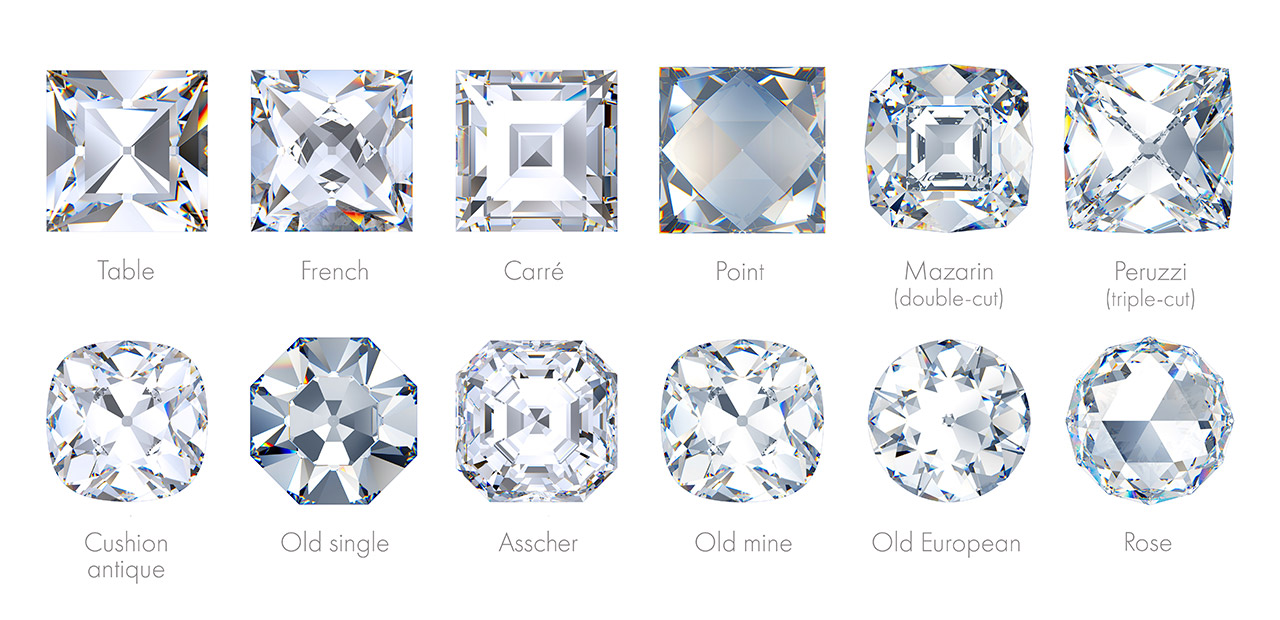
Diamonds are billions of years old, but the diamond cut, the single most important factor in a stone’s beauty is a purely human invention. Before the lasers and computer simulations of the 21st century, master cutters worked by candlelight, relying on instinct, muscle, and iron tools to unlock a diamond’s inner fire.
Today, the CaratX Marketplace connects modern buyers with certified diamonds from every era, from Edwardian Old European cuts to lab-grown precision stones. But to understand where diamonds are going, we must understand where they began.
In this guide, we will explore the historical progression of diamond cutting, referencing authoritative resources from the Gemological Institute of America (GIA) and The American Gem Society , while linking you directly to inventory available for B2B and B2C buyers on CaratX .
For centuries, humanity believed diamonds were unbreakable. In fact, the word "diamond" comes from the Greek adamas, meaning "invincible." It wasn’t until the late Middle Ages that European lapidaries discovered that diamonds could be cut using diamond powder (a technique still used today).
The Point Cut was not technically a "cut" in the modern sense. It utilized the diamond’s natural octahedral crystal form. Cutters simply polished the natural facets. These stones were set as points in rings and worn as talismans.
Visual ID: Looks like two pyramids glued at the base.
Why it matters: It proved diamonds were malleable, sparking 700 years of innovation.
The Table Cut represents the first time a human deliberately removed mass from a diamond. By grinding down the sharp tip of an octahedron, cutters created a flat "table" on top.
This seemingly simple act revolutionized optics. Light could now enter the stone and bounce off the bottom facets. If you are shopping for historical jewelry on CaratX , you may find Table Cuts in Renaissance-style revival pieces.
The Rose Cut emerged in India and later flourished in Europe. Unlike Table Cuts which were boxy, the Rose Cut featured a flat bottom and a domed top covered in triangular facets (usually 12 or 24).
The "Romantic" Sparkle: Rose Cuts do not have the fiery brilliance of modern cuts. Instead, they emit a soft, candlelit glow.
Modern Relevance: Designers today love Rose Cuts for their vintage aesthetic. Shop vintage-style rose cut jewelry on CaratX .
A cousin to the Rose Cut, the Briolette is fully faceted and elongated, often used in pendants. It was the pinnacle of luxury during the French monarchy. The Briolette requires sacrificing significant carat weight, making antique originals exceptionally rare.
Cardinal Mazarin, the de facto ruler of France, is often credited (perhaps apocryphally) with standardizing the first "brilliant" cut. The Mazarin Cut featured 17 facets on the crown.
Venetian cutter Vincent Peruzzi took the Mazarin concept and doubled the facet count to 33 facets. This was the first time a diamond displayed what we now call "dispersion" or fire the rainbow flashes you see when the stone moves.
This era established the round shape as the ideal form for maximizing light return.
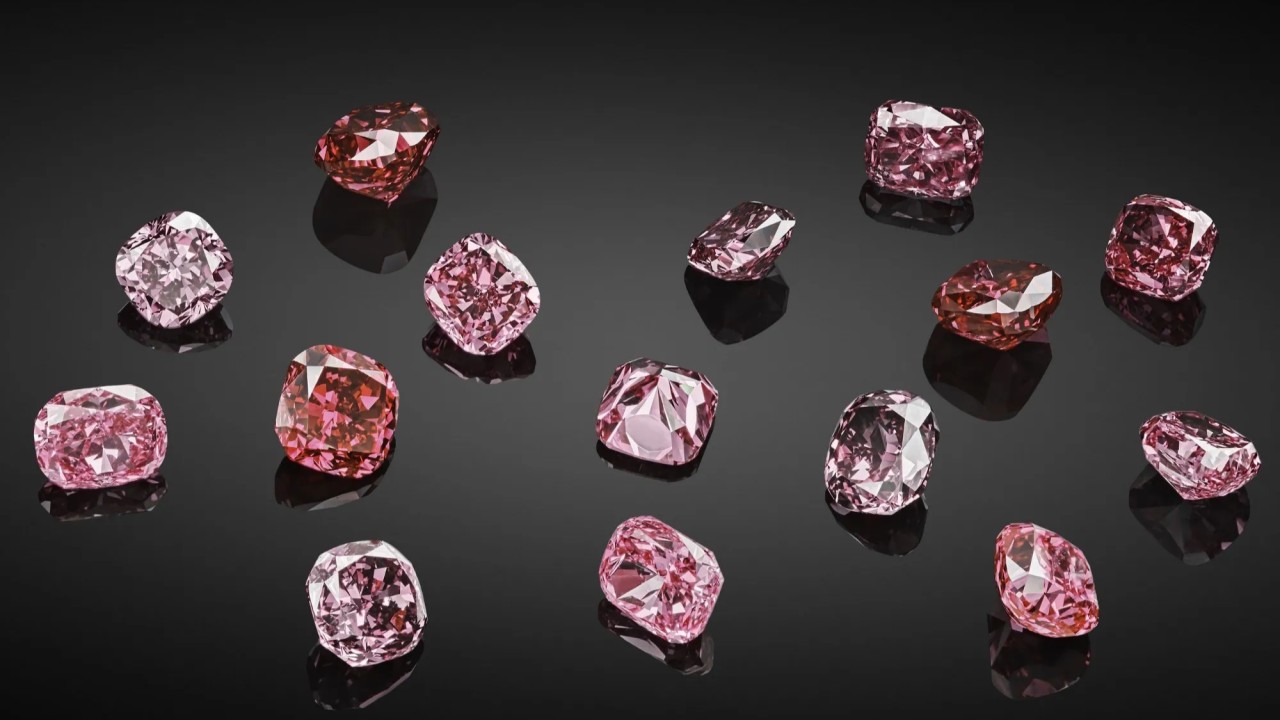
The Old Mine Cut is the quintessential diamond of the Georgian and Victorian eras. If your great-grandmother left you a diamond ring set in silver, it is likely an Old Mine Cut.
Characteristics:
Shape: Cushion or rounded square.
Crown: Extremely high.
Table: Very small.
Culet: Large (often visible to the naked eye).
Why did they cut them this way? Pre-industrial cutters followed the rough. They were trying to save weight, not maximize brilliance. However, collectors today pay premiums for Old Mine Cuts because of their "chunky" aesthetic and hand-made charm.
Are you a dealer looking to source antique diamonds? Register as a seller on CaratX to access global inventory .
The invention of the bruting machine allowed cutters to create perfectly round shapes for the first time. This gave birth to the Old European Cut the direct ancestor of the modern Round Brilliant.
Key Differences from Modern Brilliants:
Smaller Table: Old Europeans have a pinhole-like table.
Higher Crown: Creates a "pillowy" look.
Open Culet: Often chipped or faceted at the bottom tip.
The Old European Cut represents the peak of hand craftsmanship. By the 1930s, mathematical models began to replace human intuition. The GIA’s research division provides extensive documentation on the round diamonds, noting that the Old European Cut was the first to prioritize brilliance over carat weight.
In 1902, the Asscher brothers of Holland patented the Asscher Cut. This was a radical departure from the rounded, "chunky" cuts of the 1800s.
Style: Square with deeply cropped corners. Facets: Step-cut (parallel lines), creating a hall-of-mirrors effect. Era: Iconic of the Art Deco movement.
While the original patent expired long ago, the "Royal Asscher" cut remains a trademarked style. Browse square-cut and Asscher diamonds on CaratX .
In 1919, mathematician and gemologist Marcel Tolkowsky published Diamond Design: A Study of the Reflection and Refraction of Light in Diamond. He calculated the "ideal" proportions for maximum brilliance:
Crown Angle: 34.5°
Pavilion Angle: 40.75°
Facets: 57 (58 if including the culet)
This became the blueprint for the Modern Round Brilliant. While technology has tweaked the numbers (allowing for slight variances to save weight), Tolkowsky’s physics remain the gold standard.
Today, the Round Brilliant accounts for over 75% of diamond sales globally. However, historical cuts are seeing a massive resurgence among collectors and fashion-forward millennials.
Sustainability: Buying an antique diamond is the ultimate form of recycling. No new mining is required.
Uniqueness: No two Old Mine Cuts are exactly alike. Modern rounds are manufactured to micron-perfect symmetry.
Value: Antique cuts often sell at a discount per carat compared to equivalent D-Flawless modern brilliants, despite being significantly rarer.
Sell with CaratX: Do you have a collection of antique diamonds? CaratX allows you to sell to 18+ international countries with streamlined logistics. Check our seller pricing plans here .
To help you navigate the diamond market, here are direct links to essential CaratX pages:
Start Selling Globally: Reach B2B and B2C buyers in over 18 countries. Register your business here .
Shop Natural Diamonds: Browse certified loose diamonds, including fancy shapes and antique cuts. Shop natural diamonds .
Shop Gemstones: Beyond diamonds, explore our inventory of colored gemstones for jewelry setting. Shop gemstones .
Seller Pricing: Detailed breakdown of commission, listing fees, and premium plans. View pricing .
Q: How can I tell if my diamond is an Old Mine Cut or a modern Cushion Cut? A: Look at the culet (bottom tip). Old Mine Cuts almost always have a large, flat facet at the bottom. Modern cushions often have a pointed or very small culet. You can also check the girdle; antique stones have a "pitted" or "facetted" girdle, whereas modern lasers leave a smooth, polished girdle.
Q: Are antique diamonds cheaper? A: Generally, yes on a pure $/carat basis, antique cuts are often 20-40% less expensive than top-tier modern rounds. However, extremely rare historical cuts (like a 17th-century Briolette) can command auction-house prices.
Q: Can I insure an antique cut diamond? A: Yes. You should have the stone re-appraised by a GIA or AGS certified gemologist. CaratX provides certification verification for all stones sold on our platform.
Q: Does CaratX sell lab-grown diamonds in historical cuts? A: Yes. The CaratX marketplace includes both natural and lab-grown diamonds. You can filter by "Cut Style" to find Rose Cuts, Old European, and Asscher cuts in both categories.
Follow CaratX for daily insights on diamond markets, vintage jewelry trends, and B2B sourcing tips.
Image credit - Diamond Rocks

Aug, 06, 2022
Aug, 06, 2022


0 Comments
Please login to leave a reply.