

The 10 Diamond Shapes: A Complete Guide
Home
Education Blog The 10 Diamond Shapes: A Complete Guide SHOP NOWHome
Education Blog The 10 Diamond Shapes: A Complete Guide SHOP NOWJun, 18, 2026 by Archit Mohanty 0 Comments
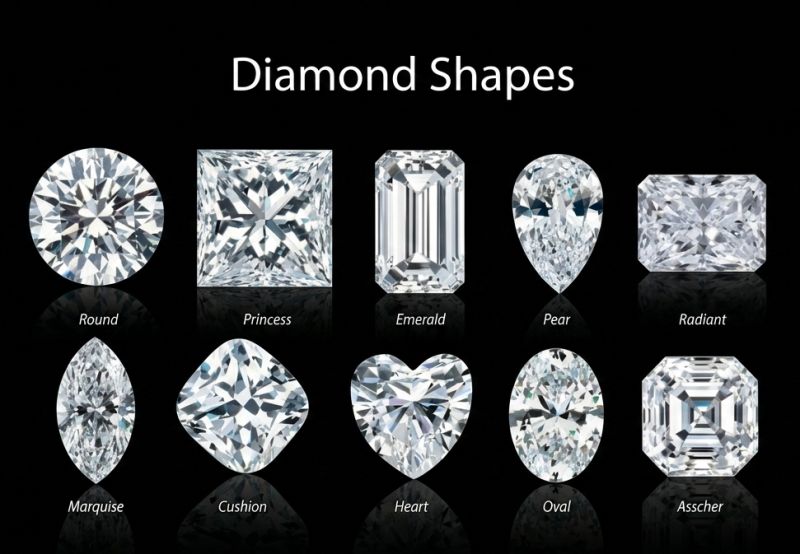
Choosing a diamond shape is one of the most personal and consequential decisions in any jewelry purchase. Beyond aesthetics, the shape of a diamond influences how light interacts with the stone, how large it appears on the finger, and even the overall price you'll pay.
With round brilliants dominating approximately 70% of global diamond sales and fancy shapes claiming the remaining 25–30%, understanding the unique characteristics of each shape is essential for making an informed decision.
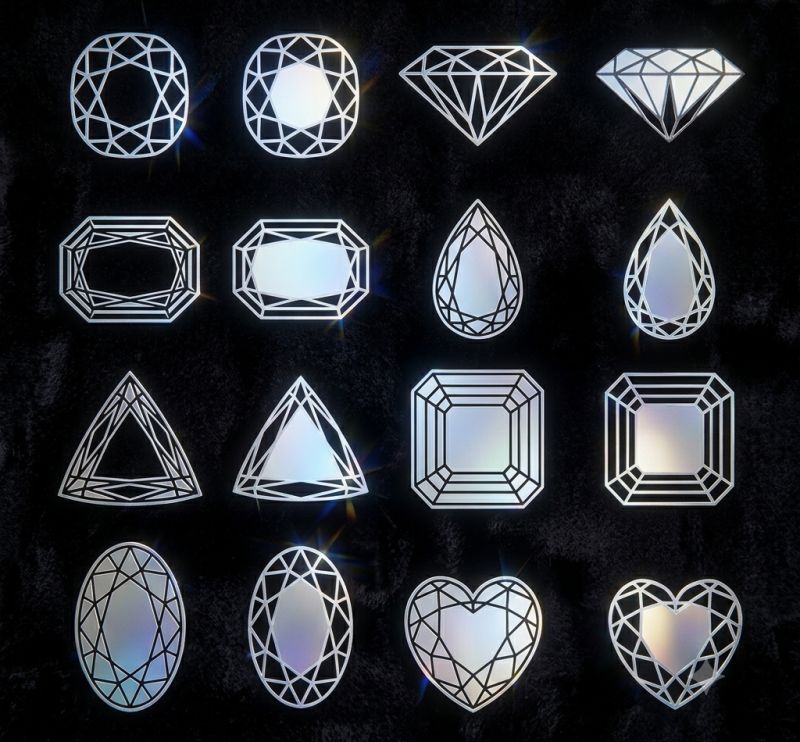
Before diving into individual shapes, it's crucial to understand the distinction between a diamond's shape and its cut style. Shape describes the outline or silhouette of the diamond when viewed from above round, oval, square, pear, and so forth. Cut style, however, refers to how the stone's facets are arranged and angled, which determines how light reflects and refracts inside the diamond.
The two most common cut styles are:
Brilliant Cut: Characterized by numerous small, kite-shaped and triangular facets that gather and reflect light to create incredible brilliance and fire. Brilliant cuts have a busier facet pattern that can help mask inclusions and color imperfections.
Step Cut: Features concentric, trapezoidal facets that create a mesmerizing "hall of mirrors" effect. Step cuts are known for their elegant gleam rather than intense brilliance, and they tend to reveal color and clarity grades more visibly.
All diamond shapes other than round are classified as "fancy shapes". Notably, fancy-shaped diamonds such as pear, heart, and marquise do not receive official GIA cut grades, as there are wider parameters for their proportions and facet arrangements.
The round brilliant is the undisputed king of diamond shapes, accounting for the majority of all diamond engagement ring sales globally. Its modern form was mathematically refined in the early 20th century with one goal: to create a cut that returns as much light as possible.
The modern round brilliant cut features a symmetrical round girdle with 56 symmetrically placed triangular and kite-shaped facets, a table facet, and an optional culet facet, for a total of 57 or 58 facets. This precise arrangement is designed to produce maximum brightness, fire, and sparkle in a colorless diamond.
Shop Round Brilliant Diamonds: Explore our collection of natural round brilliant diamonds and loose diamonds for sale.
Oval diamonds offer the brilliance of a round cut with an elegant, elongated silhouette. Typically cut with 56–58 facets, the oval is a modified brilliant cut that reflects light similarly to round diamonds.
The oval's elongated shape creates the illusion of longer, more slender fingers a universally flattering effect that works on virtually every hand shape. Additionally, oval diamonds often appear larger than round diamonds of the same carat weight.
Length-to-Width Ratio: The ideal ratio typically falls between 1.30:1 and 1.50:1. A ratio of 1.30–1.40 offers a gently elongated look that flatters most fingers, while 1.41–1.50 provides a more dramatic slimming effect.
The Bow-Tie Effect: Like other elongated fancy shapes, oval diamonds can exhibit a "bow-tie" effect dark, connected triangular areas at the center of the stone. A well-cut oval should minimize this effect as much as possible.
Shop Oval Diamonds: Browse our selection of oval cut diamonds and engagement rings.
The cushion cut named for its pillow-like shape with soft, rounded corners combines vintage charm with modern brilliance. With roots tracing back to the 18th century and the old mine cut, cushion diamonds evoke a sense of timeless elegance and historical romance.
Cushion cuts are available in two primary faceting styles: standard (chunky facets) and modified (crushed-ice pattern). While they generally produce less brilliance than round brilliants, cushions often deliver more fire the colorful flashes of light that make a diamond come alive.
What to Look For: Cushion cuts have a soft, romantic appeal that works beautifully in halo settings and vintage-inspired designs. Their rounded corners make them more durable than sharp-cornered shapes like princess cuts.
Shop Cushion Diamonds: Find your perfect cushion cut diamond and diamond jewelry.
The princess cut is essentially a square version of the round brilliant cut, boasting the stunning fire and brilliance that diamond lovers desire. It is technically known as a "square modified brilliant cut".
First created in the 1960s, the princess cut quickly became the second most popular diamond shape after the round brilliant. Princess cuts can have anywhere from 57 to 78 facets, delivering more light dispersion than any other square-shaped diamond.
Advantages: Princess cuts are typically more affordable than round brilliants of equivalent carat weight, as less rough material is lost during cutting only 20–25% compared to up to 60% for a round brilliant. Their sharp, modern aesthetic pairs well with a variety of settings.
Considerations: The princess cut's sharp corners can be vulnerable to chipping, so protective settings (such as V-prongs) are recommended.
Shop Princess Diamonds: Explore our princess cut diamonds and diamond rings.
The emerald cut is instantly recognizable for its long, linear step facets and rectangular outline with cropped corners. Unlike brilliant-cut diamonds that maximize sparkle, the emerald cut features parallel step-like facets that create a mesmerizing "hall of mirrors" effect.
Emerald cuts typically have 57 or 58 facets. The large, open table and step cuts produce dramatic flashes of light rather than scattered sparkle, giving the diamond an understated, sophisticated look.
Clarity and Color Considerations: Because step cuts have larger, more open facets, they reveal color and clarity grades more visibly than brilliant cuts. For an emerald cut, experts recommend selecting higher color grades (D–F) and clarity grades (VS2 or better) to ensure a clean, elegant appearance.
Length-to-Width Ratio: Preferred ratios typically fall between 1.30 and 1.50 for a classic rectangular shape.
Shop Emerald Diamonds: Discover our emerald cut diamonds and loose diamonds.
Also known as the teardrop shape, the pear cut combines the rounded brilliance of an oval with the pointed elegance of a marquise. Typically cut with 56 to 58 facets, the pear is a modified brilliant cut that reflects light similarly to round diamonds.
The pear shape's asymmetrical form gives it unique charm, though it requires greater attention to balance and symmetry. The ideal length-to-width ratio typically falls between 1.50 and 1.75.
Styling: Pear-shaped diamonds create an elongated silhouette that enhances visual size and flatters the finger. They are particularly popular in pendants and engagement rings where the point can be oriented toward or away from the wearer.
The Bow-Tie Effect: Like oval and marquise cuts, pear shapes can exhibit a bow-tie effect in the center of the stone.
Shop Pear Diamonds: Browse our pear shaped diamonds and diamond jewelry.
The marquise cut is defined by its elongated, boat-like shape with pointed ends. This elegant cut is known to flatter the wearer by making the finger appear longer and slimmer.
Maximized Carat Weight: The marquise's elongated shape maximizes face-up size, often appearing larger than other diamonds of the same carat weight. This makes marquise cuts an excellent choice for buyers seeking maximum visual impact per carat.
Historical Significance: The marquise cut traces back to royal origins, adding to its refined and beautiful reputation.
What to Look For: Marquise diamonds require protective V-prongs at both pointed ends to prevent chipping. Like other elongated fancy shapes, they can exhibit a bow-tie effect depending on cutting precision.
Shop Marquise Diamonds: Find your ideal marquise cut diamond and engagement rings.
The radiant cut is a brilliant hybrid, combining the sparkle of a round brilliant with the shape and structure of an emerald or princess cut. Invented by Henry Grossbard in 1977 in New York, the radiant features 70 facets designed to maximize light return.
The radiant cut shares its shape outline with the emerald cut square or rectangular with clipped corners but features a brilliant facet pattern that delivers high-impact sparkle. This makes the radiant an ideal choice for those who love the elegant silhouette of an emerald but want the intense brilliance of a round diamond.
Durability: The radiant's clipped corners make it less prone to chipping than other square or rectangular shapes like the princess cut.
Color Consideration: Radiant cuts show more color than round brilliants, so selecting a slightly higher color grade (H or I) may be advisable.
Shop Radiant Diamonds: Explore our radiant cut diamonds and natural diamonds.
The Asscher cut, first introduced in 1902, is a square step-cut diamond with cropped corners and a distinctive Art Deco appeal. It is sometimes described as a square emerald cut, featuring larger step facets, a higher crown, and a smaller table than its rectangular counterpart.
Most Asscher diamonds are cut with 58 step facets arranged to create a "hall of mirrors" effect, drawing light inward and producing flashes of brilliance across the stone.
Clarity Considerations: Because of their open tables and step-cut design, Asscher cut diamonds are less forgiving of flaws. Higher clarity grades (VS2 or better) and color grades (D–F) are recommended for optimal appearance.
Shop Asscher Diamonds: Discover our asscher cut diamonds and loose diamonds.
The heart shape is the ultimate symbol of love and romance. Essentially a pear-shaped diamond with a cleft at the top, the heart requires exceptional cutting precision to achieve perfect symmetry.
Heart-shaped diamonds are typically cut with between 56 and 58 facets. The skill of the cutter determines the beauty of the cut look for a stone with an even shape, well-defined outline, and balanced lobes.
Symmetry is Everything: For a heart-shaped diamond to be beautiful, the two lobes must be perfectly balanced in height, width, and curvature. The ideal length-to-width ratio is approximately 1:1.
The Bow-Tie Effect: Like other elongated fancy shapes, heart cuts can exhibit a bow-tie effect in the stone's center.
Note: Heart-shaped diamonds, like other fancy cuts, do not have GIA cut grades. Visual inspection is highly recommended prior to purchase.
Shop Heart Diamonds: Browse our heart shaped diamonds and diamond jewelry.
Round brilliant diamonds represent approximately 70% to 75% of global diamond demand. Fancy shapes collectively account for approximately 25% to 30% of the market, with oval and elongated shapes gaining significant popularity in recent years.
According to GIA research, oval, pear, and marquise diamonds display more complex face-up appearance patterns than standard round brilliants. GIA recognizes more than 40 distinct categories of fancy-shaped diamonds, each with unique characteristics and continuously evolving facet arrangement variations.
The growing preference for fancy shapes reflects a broader consumer desire for personalization and individuality in jewelry. As the International Gem Society notes, previously out-of-style shapes like the pear have made a notable comeback.
Whether you're a buyer searching for the perfect diamond or a seller looking to reach international markets, CaratX provides the platform and expertise you need.
Shop natural diamonds from our curated marketplace at https://caratx.com/search-results/Natural
Shop gemstones at unbeatable prices from https://caratx.com/search-results/gemstones
Sellers: Register to start selling to B2B and B2C buyers in 18+ international countries at caratx.com/register
Sell jewelry internationally through our CaratX seller plan at caratx.com/register
Learn more about our pricing at caratx.com/generic-pages/launch-your-products-on-caratx
Short fingers: Oval, marquise, and emerald cuts can elongate the appearance of shorter fingers.
Long, slender fingers: Almost any diamond shape will look great.
Wider fingers: Elongating shapes like oval, marquise, pear, and emerald are most flattering.
Active lifestyle: Choose shapes with protected corners like round, oval, or cushion.
Vintage lover: Cushion, Asscher, and emerald cuts offer timeless appeal.
Modern aesthetic: Princess, radiant, and marquise cuts feel contemporary.
Round brilliants typically command the highest price-per-carat due to greater rough diamond wastage during cutting.
Fancy shapes often offer better value, as they retain more of the rough diamond during cutting.
Elongated shapes like marquise and oval can appear larger than round diamonds of the same carat weight.
Created by GIA, the 4Cs Cut, Color, Clarity, and Carat Weight are the global standard for assessing diamond quality.
Cut: The most crucial of the 4Cs. Cut determines the amount of brilliance, sparkle, and fire a diamond shows. For round brilliants, GIA provides cut grades from Excellent to Poor. Fancy shapes do not receive official GIA cut grades.
Color: Measures a diamond's absence of color on a D-to-Z scale. D–F diamonds are colorless and rare; G–H offer good value.
Clarity: Measures inclusions and blemishes. Grades range from Flawless to Included. Brilliant cuts conceal inclusions better than step cuts.
Carat Weight: Refers to a diamond's weight. Prices increase exponentially at "magic sizes" like 0.5, 1.0, and 1.5 carats.
Learn more about the 4Cs of diamond quality and explore our diamond education resources.
The round brilliant is the most popular diamond shape, accounting for approximately 70% of global diamond sales.
Elongated shapes like marquise, oval, and pear often appear larger than round diamonds of the same carat weight due to their greater face-up surface area.
Fancy shapes generally offer better value than round brilliants because they retain more of the rough diamond during cutting. Princess cuts, in particular, are known for their excellent value-to-sparkle ratio.
The bow-tie effect refers to dark, shadowy areas resembling a bow tie that can appear in the center of elongated diamond shapes like oval, pear, and marquise. It occurs when light entering the diamond is not optimally reflected.
No. Fancy-shaped diamonds such as pear, heart, and marquise do not receive GIA cut grades because there are wider parameters for their proportions and facet arrangements.
For smaller hands, diamonds in the 0.5 to 1.5 carat range tend to sit in better proportion. Elongated shapes like oval, pear, and marquise can create a flattering lengthening effect.
Shape refers to the diamond's outline when viewed from above (round, oval, square, etc.). Cut style refers to how the facets are arranged and angled, which determines light performance.
The round brilliant is designed to produce maximum brightness, fire, and sparkle. Among fancy shapes, princess and radiant cuts offer excellent brilliance.
Aug, 06, 2022
Aug, 06, 2022


0 Comments
Please login to leave a reply.