
Theengagement ringlandscape is shifting. In 2027, women are not simply asking for a diamond, they are asking for a point of view. The ring on her finger is expected to say something about who she is: artistic, intentional, modern, rooted, bold, or quietly confident. The eight styles below are not fleeting runway moments.
They are the designs gaining real traction with buyers, jewellers, and trend forecasters across the global market and they are the styles retailers and sellers should be stocking, listing, and talking about right now.
This guide goes deep into each trend, explainswhyit is resonating, and shows you how to evaluate the diamond underneath the design. It also connects you to the gemological standards that protect your purchase, because a beautiful setting should never come at the expense of a well-cut, properly graded stone.
Selling diamonds or jewellery? CaratX connects you to B2B and B2C buyers in 18+ international countries.Register as a seller on CaratXto list your inventory and reach buyers actively searching for 2027’s most in-demand styles.
Sculptural Rings:
Sculptural engagement rings abandon the straight line. Curved, twisted, contoured, and asymmetrical bands turn the ring itself into a piece of wearable architecture. In 2027, the band is no longer a supporting actor, it is part of the design language. Brilliant Earth’s 2027 trend report describes sculptural bands as trading “the straight line for a gentle curve, a contour that traces a stone, or a silhouette that reads differently from every angle”.
This trend is being driven by a broader cultural appetite for design that feels shaped rather than manufactured. Brides are increasingly drawn to rings that look intentional, not interchangeable. Sculptural bands also pair naturally with bezel settings and elongated stones, creating a coherent visual story from every angle.
What to look for: A sculptural band should feel balanced on the hand and comfortable between the fingers. Because the band often curves around the centre stone, check how a straight wedding band will sit alongside it. Ask your jeweller for a side-profile photograph and a video of the ring on a hand not just a face-up image.
Diamond consideration: Sculptural designs often expose more of the diamond’s profile. That makes cut quality and symmetry more visible. A stone with a GIA Excellent cut grade will hold its own in a design where the diamond is seen from multiple angles. Learn how cut grade is assessed in theGIA 4Cs guide.
Shop the look: Explore certified diamonds for sculptural settings onCaratX’s diamond marketplace.
Bold Band Rings:
Delicate shanks are taking a back seat. Wider, heavier bands with eye-catching designs and diamond details are moving intobridal jewellerywith real momentum. The 2027 bold band is not just about millimetres, it is about presence. Multi-row diamond bands, cigar-style gold bands, and substantial yellow-gold shanks are all part of the same shift toward jewellery that feels substantial and intentional.
Industry projections support the direction. The global jewellery market is expected to accelerate to 4–6% growth by 2027, with luxury and diamond-led categories leading the recovery. Consumers are gravitating toward pieces that feel like long-term investments rather than trend-chasing purchases.
What to look for: Band width and thickness are separate measurements. A 4 mm band can feel very different from a 4 mm band with a thicker profile. Ask for both dimensions and try the ring on if possible. If the band is diamond-set, confirm the total carat weight and the setting style (pave, channel, or flush).
Diamond consideration: A bold band can visually compete with the centre stone. If you want the diamond to remain the focal point, prioritise a stone with strong spread and brightness.Ovaland elongated shapes are particularly effective at holding their own against a wider band.
Shop the look: Browseoval diamonds on CaratXfor bold-band designs.
3. Cluster Diamond Rings:
Cluster rings group several smaller diamonds together to create the visual impact of a larger stone or a floral, starburst, or mosaic composition in its own right. This is not a compromise trend.
Cluster settings are enjoying a genuine revival as couples move away from the conventional solitaire and look for designs with character and texture. Search data reflects the shift: cluster settings have seen a reported 112% increase in interest, alongside a broader return to intricate, vintage-leaning detailing.
Cluster designs are also a smart entry point for buyers who want visible sparkle without paying for a single large stone. The stones work together to create surface brilliance, and the composition can be tailored to the wearer’s style, symmetrical and classic, organic and floral, or geometric and modern.
What to look for: The quality of a cluster ring depends on how the stones relate to one another. Check for consistent colour and clarity across the cluster, and ask whether the stones are matched for cut and brilliance. A well-made cluster should look intentional, not accidental.
Diamond consideration: Smaller diamonds are still diamonds. Every stone in the cluster should be graded, and the overall ring should come with a clear specification. Review theGIA clarity scaleto understand what you are buying across multiple stones.
Shop the look: Explore cluster-style rings andcertified melee diamondsonCaratX.
4. Vintage-Inspired Rings:
Vintage-inspired engagement rings are not about reproduction, they are about borrowing the vocabulary of the past and applying it with modern craftsmanship. Art Deco geometry, milgrain edges, filigree detailing, and old-cut-inspired faceting are all part of the 2027 vintage revival. Bridebook’s 2027 style guide notes that vintage styles “will continue to reign supreme,” with Art Deco step-cuts and cluster settings leading the way.
Milgrain, the fine beaded border applied along the edges of a setting or band is one of the most recognisable hallmarks of this trend. It catches light subtly and adds texture without overwhelming the design. Combined with engraved shoulders or a geometric halo, it creates a ring that feels like it has a story.
What to look for: Intricate detailing requires skilled finishing. Inspect the milgrain for evenness and ask how the ring should be cleaned and maintained. Vintage-inspired rings can require more careful care than a simple solitaire, but the trade-off is a design with real character.
Diamond consideration: Step-cut stones like emerald cuts and Asschers are natural partners for vintage-inspired settings because their clean lines echo Art Deco geometry. Emerald cuts reveal clarity and colour more openly than brilliant cuts, so choose an eye-clean stone with good colour.
Shop the look: Browseemerald-cut diamonds on CaratXand explorevintage-style ring settingsin the CaratX collection.
5. Bezel-Setting Rings:
A bezel setting wraps a rim of metal around the diamond’s girdle, securing it without prongs. In 2027, the bezel is gaining the most ground of any setting style. It is praised for its clean silhouette, its low profile, and its practicality: there are no claws to snag on clothing, and the metal rim protects the stone’s edge during daily wear.
The bezel’s rise is also aesthetic. In a market moving toward sculptural bands and bold proportions, a smooth metal rim creates a seamless visual line from band to stone. It reads as modern without trying too hard, and it pairs exceptionally well with elongated stones and east-west orientations.
What to look for: The evenness of the bezel rim is a mark of craftsmanship. A well-cut bezel should follow the outline of the stone consistently, without gaps or uneven thickness. Ask how the stone is secured beneath the rim and how the ring should be cleaned—bezel settings can trap dirt along the edge.
Diamond consideration: Because a bezel covers the girdle, the diamond’s spread and face-up appearance matter more than ever. Choose a stone with strong brightness and a well-proportioned outline. TheAmerican Gem Society’s diamond education resourcesexplain how light performance and cut quality affect the stone’s appearance in a closed setting.
Shop the look: Discoverbezel-set diamond rings on CaratXand browse certified stones suited to bezel designs.
6. East-West Rings:
The east-west setting turns an elongated diamond oval, marquise, emerald cut, pear, or elongated cushion horizontally across the finger instead of pointing it up the hand. It is one of the most visually distinctive choices in 2027, and it has moved from niche design studios into the mainstream conversation. The Natural Diamond Council calls it “a fresh, gender-neutral take on traditional diamond styles,” noting that it transforms classic stones into something modern and unexpected.
The east-west orientation is not simply a rotated setting. It changes the ring’s entire footprint on the hand. A stone that reads vertically as elegant and lengthening reads horizontally as bold, architectural, and contemporary. It also sits lower on the finger, which many wearers find more comfortable and practical.
What to look for: The total width of the east-west head should be proportionate to the finger. If the stone extends too far across the hand, it can interfere with adjacent fingers. Ask for a side-view photograph and, ideally, a video of the ring being worn. For marquise and pear shapes, check that the points are protected V-prongs or a bezel are common solutions.
Diamond consideration: Elongated shapes are essential to the east-west look. Oval and emerald cuts are the most popular choices, while marquise delivers the most dramatic horizontal line. Exploreoval,marquise, andemerald-cutdiamonds on CaratX.
7. Elongated Diamond Shapes: The New Standard of Elegance
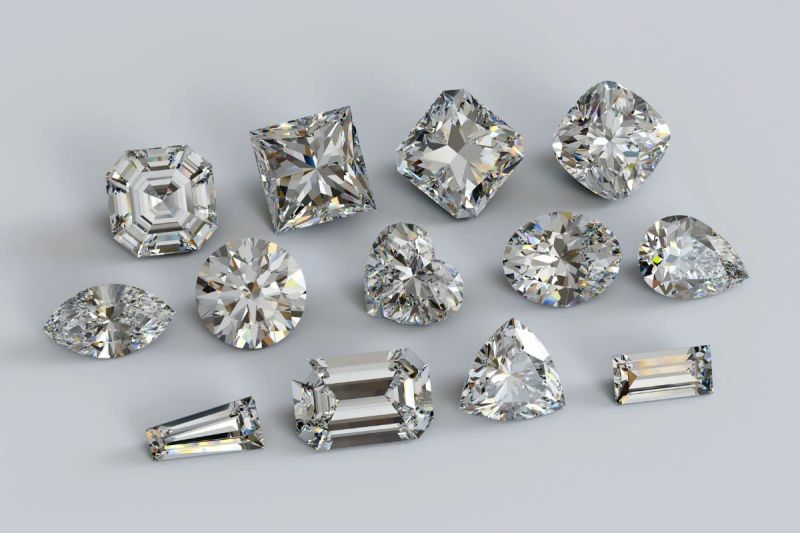
Elongated shapes oval, marquise, emerald cut, and elongated cushion are the defining diamond story of 2027. Industry data shows fancy shapes outperformingroundsin the 2-carat-and-larger segment, with long ovals, marquises, and emeralds leading the premium market. The appeal is both visual and practical: an elongated stone can appear 10–15% larger than a round of comparable weight, and its silhouette flatters the hand.
Each elongated shape brings a distinct character. Theovalis soft and continuous, with brilliant faceting that offers exceptional fire. Themarquiseis dramatic and regal, with pointed ends that maximise carat weight and create a striking horizontal or vertical line. The emerald cut is architectural and understated, with step facets that produce a “hall of mirrors” effect. Theelongated cushioncombines vintage softness with a modern stretch, and has become one of the most sought-after shapes in celebrity and bridal jewellery.
What to look for: Elongated shapes are not graded for cut by GIA in the same way as round brilliants, which means the buyer must evaluate proportions, symmetry, and brightness more carefully. Ask for the length-to-width ratio, a video of the stone in motion, and a detailed grading report. Avoid stones with a pronounced “bow-tie” shadow across the centre.
Diamond consideration: Fancy shapes reward buyers who do their homework. A well-proportioned oval or marquise can be breathtaking; a poorly cut one can look dull or unbalanced. Review theGIA’s guidance on diamond shapes and cutting stylesbefore you buy.
Shop the look: Browseoval diamonds,marquise diamonds, andemerald-cut diamondson CaratX.
8. The Metal Matters: Yellow Gold, Warm Tones, and Intentional Contrast
The 2027 story is not only about shape and setting. Metal choice is part of the design language. Yellow gold has returned with renewed confidence, particularly in wider, sculptural bands and bezel settings. Data from BriteCo’s appraisal records shows yellow gold leading individual metal categories at 38.2%, ahead of white gold at 32.4%.
Yellow gold frames a diamond warmly and gives sculptural and bold-band designs a richer, more substantial feel. It also pairs naturally with vintage-inspired detailing and east-west settings. White gold and platinum remain the choice for cool, sleek, and minimal designs, while rose gold offers a softer contrast.
What to look for: Confirm the metal content and construction. Solid gold is not the same as gold-plated silver, and the description should tell you what sits beneath the surface. Ask about rhodium plating on white gold and how often it may need refinishing.
The universal constant across every trend is the 4Cs: cut, colour, clarity, and carat weight. These are the global standard for assessing diamond quality, created by GIA. No setting can compensate for a poorly cut stone, and no trend justifies skipping the grading report. TheNatural Diamond Council’s Diamond Learning Centeroffers free education on natural diamond facts and sourcing, and theInternational Gemological Institute (IGI)provides independent grading for both natural and lab-grown diamonds.
Recommended Reads from CaratX -
The Guide to the Anatomy of an Oval Diamond: Cut, Clarity, and Carat Insights— A deep dive into table percentage, crown angle, girdle thickness, and the bow-tie effect. Essential for anyone considering an oval for a sculptural, bezel, or east-west setting—the three 2027 trends where the stone is seen from multiple angles .
The Diamond Market Shift: Why Long Fancy Shapes Are Outperforming Rounds in 2026— Data-backed analysis of the oval, marquise, and long-cushion surge, including length-to-width ratio sweet spots and the "face-up size" advantage that is driving the elongated-shape trend .
The Ultimate Guide to Diamond Ring Settings: How a Setting Defines Your Style— Covers prong, bezel, pavé, and channel settings in detail, including the bezel's security advantages and light-performance trade-offs directly relevant to the bezel-setting and bold-band trends .
The Ultimate Guide to the Anatomy of a Ring: Understanding Every Part Before You Buy— Explains the bridge, gallery, shank, and prong count, which matters for sculptural bands and bold-band rings where the band itself is a design feature .
Marquise Cut Diamonds: The Shape That Maximizes Size & Elegance— A complementary guide focused on proportions, pricing, and buying tips for the marquise—useful for sellers stocking east-west and elongated-shape inventory .
Anatomy of Emerald Cut Diamond: Clean Lines, Deep Clarity, and Hall-of-Mirrors Elegance— The definitive CaratX resource on emerald-cut proportions, clarity visibility, and the step-cut aesthetic—the natural partner for vintage-inspired and bezel settings .
Coloured Gemstones in 2026: Rising Demand, Shrinking Supply, and the New Rules of a Rarer Market— The market backdrop for vintage-inspired cluster rings that incorporate sapphires, rubies, or emeralds, with pricing and sourcing insight .
Birthstones by Month: A Complete Guide to Colors, Meanings & History— For buyers considering coloured accent stones in cluster or vintage-inspired designs, this guide covers symbolism, hardness, and sourcing for every month .
The 2026 Fancy Shape Diamond Market Revolution: Global Shifts Are Redefining the 2-Carat+ Landscape— Additional market context on why elongated shapes are outperforming in the premium segment, with shape-by-shape demand data .
Understanding Diamond Color – A Comprehensive Guide— A foundational read for cluster-ring buyers who need to match colour across multiple stones, and for anyone choosing a warm-toned diamond for a yellow-gold setting .
The Ultimate Guide to Jewelry Care: Keeping Your Treasures Sparkling— Practical maintenance guidance for bezel settings (which can trap dirt along the rim) and vintage-inspired milgrain detailing .
Ready to source the styles shaping 2027? Whether you are a buyer searching for an elongated oval, a vintage-inspired emerald cut, or a certified stone for a bezel or east-west design,CaratXconnects you to a global marketplace of diamonds, gemstones, and jewellery.
Sellers canregister hereto reach B2B and B2C buyers in 18+ countries.
Frequently Asked Questions -
What is the biggest engagement ring trend for 2027?
The defining trend is the shift toward design-led rings sculptural bands, bold proportions, bezel settings, east-west orientations, and elongated diamond shapes. These styles reflect a broader move away from the generic solitaire and toward rings that express personal style.
Are elongated diamonds a passing trend?
Elongated shapes have been gaining market share for several years and are now a structural part of the premium diamond market. Ovals, marquises, and emerald cuts are outperforming rounds in larger sizes, and elongated cushions are gaining celebrity and bridal momentum. They are not a short-term fad.
Is a bezel setting practical for everyday wear?
Yes. The bezel is one of the most protective settings because the metal rim shields the diamond’s girdle and there are no prongs to catch on clothing. It sits lower on the hand and is a strong choice for active lifestyles.
What should I check before buying an east-west ring?
Check the total width of the ring head against the finger, confirm that the stone’s points are protected (especially for marquise and pear shapes), and ask for a side-view photograph or video. Because east-west rings sit horizontally, the comfort and balance of the design matter as much as the stone itself.
Do cluster rings use lower-quality diamonds?
Not necessarily. A well-made cluster ring uses matched, graded diamonds that are selected for consistent colour, clarity, and brilliance. The quality depends on the maker, not the style. Always ask for the specification of the stones in the cluster.
How do I verify a diamond’s quality?
Ask for a grading report from a recognised laboratory such as GIA or IGI, and review the 4Cs. TheGIA 4Cs guideis the global reference for cut, colour, clarity, and carat weight.
Can I sell 2027 trend pieces on CaratX?
Yes. CaratX connects sellers to B2B and B2C buyers in 18+ international countries.Register as a sellerto list diamonds, gemstones, and finished jewellery on the marketplace.