
Birthstones have captivated humanity for thousands of years. These specialgemstones, each associated with a specific month, carry deep symbolic meaning, rich histories, and breathtaking beauty.
Whether you're searching for the perfect birthday gift, exploringgemstone jewelry, or simply curious about the birthstone for your month, this guide covers everything you need to know about each month's birthstones.
The Ancient Origins of Birthstones -
The tradition of birthstones traces back to biblical times. According to the Book of Exodus, the breastplate of Aaron the first high priest of the Israelites was adorned with 12 different gemstones, each representing one of the 12 tribes of Israel. This sacred breastplate, described in Exodus 28, was believed to possess divine powers and the ability to foretell fate.
Around the first century CE, the historian Josephus drew a connection between these 12 stones, the 12 months of the year, and the 12 zodiac signs. By the fifth century, St. Jerome began encouraging Christians to wear these stones, establishing a tradition that would evolve over centuries.
The modern tradition of wearing one specific stone for one's birth month didn't emerge until the 16th century, originating in either Germany or Poland. The official standardized list we recognize today was established in 1912 by the National Association of Jewelers (now Jewelers of America), with later updates adding more options.
Interestingly, thestoneswe associate with each month today bear only a slight relationship to ancient beliefs, as the list has been tempered by availability and cost. In ancient times, color was more important than chemical composition, little distinction was made betweenrubyandgarnet, or betweenemeraldand chrysoprase. Even the names used anciently don't always match modern stones; the "sapphire" of the Bible was likely lapis lazuli.
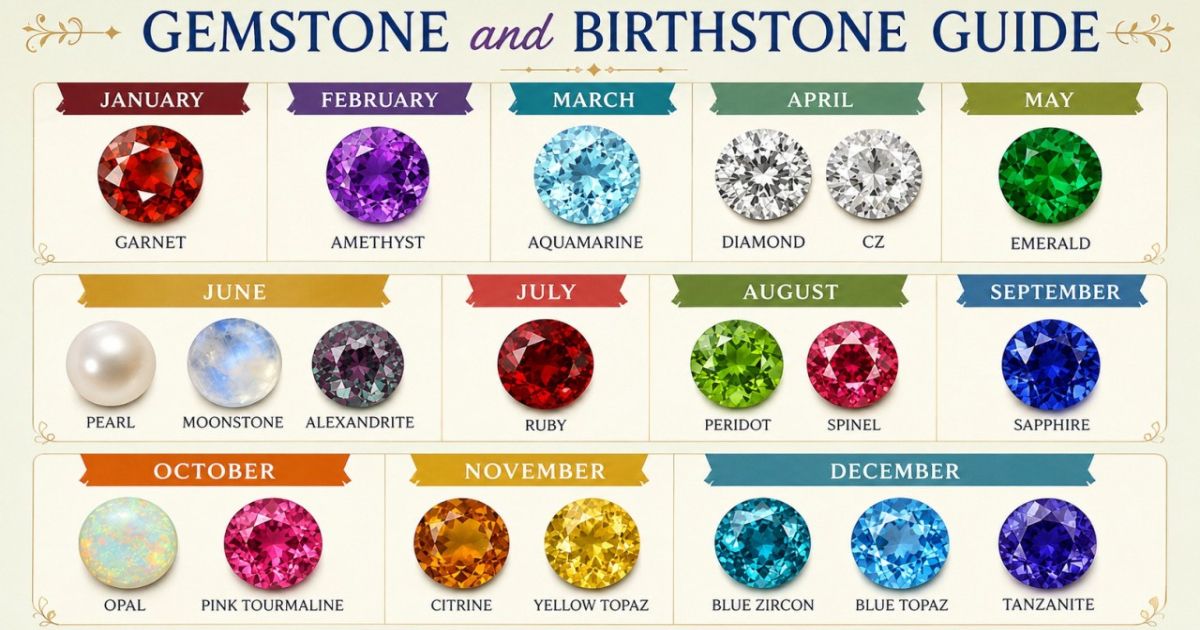
January – Garnet
Color: Red, green, orange, yellow, purple, and other shades
The name "garnet" originates from the medieval Latingranatus, meaning "pomegranate," in reference to the similarity of the red color.Garnetshave been used since the Bronze Age as both gemstones and abrasives.Necklacesstudded with red garnets adorned the pharaohs of ancient Egypt.
Garnet is actually a group of several minerals. Five important gem varieties include pyrope (purple to red), almandine (purple to red), spessartine (orange to yellow), grossular (colorless to yellow to vibrant green tsavorite), and andradite (yellow to green, including demantoid).
Symbolism: Protection, safe travel, good health, wealth, and happiness. In Indian astrology, garnet helps eliminate negative feelings like depression and guilt, instilling greater self-confidence and mental clarity.
Sources: Bohemia (historic), Africa (Namibia, Kenya, Tanzania, Madagascar), Myanmar, Brazil, Iran, Afghanistan, Pakistan, India, and Sri Lanka.
Hardness: 6.5 to 7.5 on the Mohs scale.
February – Amethyst
Color: Purple (lilac to deep violet)
Amethystis the purple variety of quartz that has captivated mankind for millennia. The name derives from the Greekamethystos, meaning "a remedy against drunkenness," a benefit long ascribed to this purple gemstone. Because of its wine-like color, early Greek mythology associated amethyst with Bacchus, the god of wine.
Historically, royals have admired the deep purple hue of the February birthstone since at least the days of Alexander the Great. Catherine the Great of Russia had a particular penchant foramethyst, decking herself in amethyst necklaces and earrings. At one time, only royalty could wear the gem.
Symbolism: Courage, clarity, sobriety, personal empowerment, and inner strength.Amethystwas also believed to convey strength and wit to its wearer.
Sources: Russia (historic), Brazil, Zambia (Kariba mine), Bolivia (Anahí mine), and Africa. The Anahí mine in Bolivia is famous for producing unusual bicolored amethyst-citrine crystals called ametrine.
Hardness: 7 on the Mohs scale.
Shop Amethyst Jewelry at CaratX
March – Aquamarine
Colors: Aquamarine, Light blue to blue-green; Bloodstone, Dark green with red spots.
Aquamarine'sname comes from the Latin for seawater (aqua marina). Ancient mariners claimed the gem would calm waves and keep sailors safe at sea. This March birthstone was also thought to bring happiness in marriage.
The March birthstone evokes the colors of the sea, from deep green-blue to light, slightly greenish blue hues. Faceted aquamarines are often free from inclusions and as clear as water, symbolizing purity of spirit and soul.
Shop Aquamarine Jewelry at CaratX
April – Diamond
Color: Usually colorless, but also found in many natural colors (blue, pink, yellow, green, red)
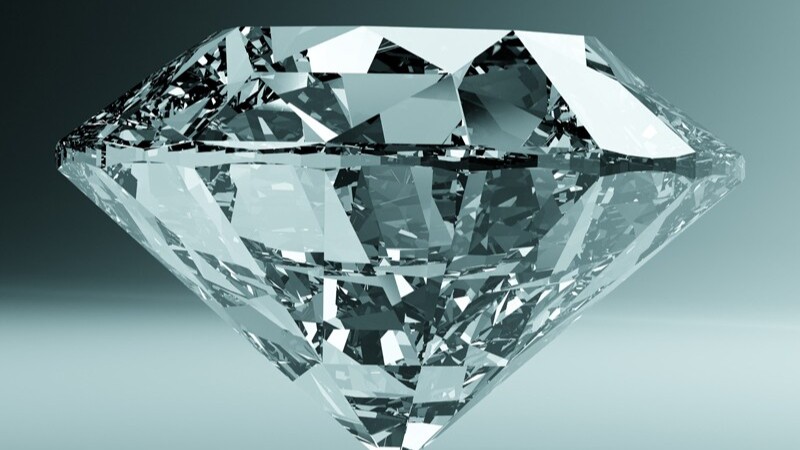
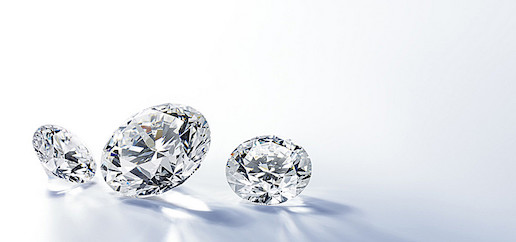
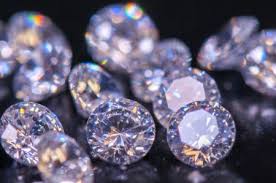
Thediamondis the hardest natural material on Earth, ranking 10 on the Mohs scale. It is the only gem made of a single element typically about 99.95 percent carbon. The name comes from the Greekadamas, meaning "invincible".
Our love for diamonds started in India, where they were gathered from rivers and streams as early as the fourth century BCE. Caravans brought Indian diamonds to medieval markets in Venice by the 1400s. In the early 1700s, Brazil emerged as an important source, dominating the market for more than 150 years. The 1866 discovery of diamonds in Kimberley, South Africa, marked the beginning of the modern diamond market.
Symbolism: Love, strength, courage, and everlasting love. In Sanskrit, diamond is calledvajra, meaning "lightning," and in Hindu mythology, it was the weapon of Indra, king of the gods.
Fancy-colored diamonds come in hues like blue, pink, yellow, and green and can be even more valuable than colorless counterparts.
Sources: India, Brazil, South Africa, and many other countries worldwide.
Shop Natural Diamonds at CaratX|Sell Diamonds Internationally
May – Emerald
Color: Green
Emerald, the birthstone for May, has been beloved for millennia, evoking rebirth and renewal. Widely regarded as the definition of green, emerald is the perfect color for spring.
Emeraldis the green variety of beryl, a mineral species that also includes aquamarine. Its green color comes from trace amounts of chromium, vanadium, and iron.
Cleopatra was known to have a passion foremeraldand used it in her royal adornments. The legendary Crown of the Andes, fashioned in colonial South America, is one example of how the Spanish revered the May birthstone. The word "emerald" comes fromsmaragdos, the ancient Greek word for a green gem.
Symbolism: Growth, fertility, wisdom, rebirth, and renewal. Legend has it that emerald has the power to make its wearer more intelligent and quick-witted; it was once believed to cure diseases like cholera and malaria.
Sources: Colombia (Muzo, Chivor, Coscuez), Brazil (Minas Gerais), Zambia, Pakistan, Afghanistan. Colombia has been the source of the finest emeralds for more than 500 years.
Hardness: 7.5 to 8 on the Mohs scale.
Shop Emerald Jewelry at CaratX
June – Pearl, Alexandrite & Moonstone
June is one of only three months with three birthstones, offering variety in color and price point.
Pearl -
Colors: White, cream, pink, silver, and other colors.
Pearlsare organic gems that grow inside the tissue of a living saltwater or freshwater mollusk. Naturalpearlsform when a mollusk secretes a substance called nacre around an irritant. Today, cultured pearlsaccount for the vast majority of pearl sales.
Ancient beliefs about pearls varied widely: Middle Eastern cultures thought they were teardrops fallen from heaven; the Chinese believed they came from the brain of a dragon; Christopher Columbus thought mollusks formed pearls from dew drops.
Symbolism: Purity, innocence, humility, "sweet simplicity".
Alexandrite -
Color: Green in daylight, reddish-purple to red under incandescent light
Alexandriteis a color-changing gemstone first discovered in 1830 in Russia's Ural Mountains. It was named after the young Alexander II, heir apparent to the Russian throne.
Moonstone -
Colors: Soft white, blue, or other glowing effects.
Moonstonehas been valued for millennia and is especially popular in Germany and Scandinavia. It was added to the modern birthstone list in 1912.
Symbolism: Love, passion, fertility, and good luck.
Shop Pearl & Gemstone Jewelry at CaratX
July – Ruby
Color: Pinkish-red to deep red
Rubyis the July birthstone, one of the most coveted of all gems. The name derives from the Latinruber, meaning "red", the color of love and passion.
A variety of the mineral corundum,rubygets its color from trace amounts of the element chromium. The finest color is a deep red with a hint of purple, called "pigeon's blood" in the trade.
In ancient India, ruby was called the "king of precious stones" for its rarity, hardness (second only to diamond), beauty, and mystical powers. Burmese warriors believed rubies made them invincible in battle. Medieval Europeans maintained that rubies bestowed health, wisdom, wealth, and success in love.
Symbolism: Passion, protection, love, courage, and vitality.
Sources: Myanmar (Mogok), Vietnam, Mozambique, Thailand, Cambodia, Afghanistan, Tajikistan, Pakistan, Sri Lanka, Kenya, Tanzania, Madagascar.
Hardness: 9 on the Mohs scale (second only to diamond).
August – Peridot, Spinel
August has two birthstones: peridot and spinel.
Peridot -
Color: Yellowish-green to olive green
Peridotis theyellowish-green to greenish-yellow gemvariety of the mineral olivine. It is known for being formed under extreme conditions found in hardened lava from deep within Earth's mantle as well as in meteorites.
The word"peridot"comes from the Arabicfaridat, meaning "gem". The Egyptian island of Zabargad is the oldest recorded source, with mining dating back to around 340–279 BCE. Ancient Egyptians called it the "gem of the sun" and believed it had protective powers against evil spirits.
Symbolism: Strength, good fortune.
Spinel -
Color: Red, pink, blue, purple, orange, and more
Spinelcomes in a wealth of colors intense red, vibrant pink, orange, purple, violet, blue, and bluish green. For centuries,spinelwas mistaken for other gemstones, particularly ruby.
Shop Gemstone Jewelry at CaratX
September – Sapphire
Color: Most famous in blue, but available in many colors.
The September birthstone is sapphire, a gem cherished for thousands of years. Although "sapphire" usually refers to the blue variety of corundum (ruby is the red variety), this birthstone comes in a rainbow of other colors.
"Sapphire" comes from the Greek wordsappheiros. Ancient Persians believed the earth rested on a giantsapphire, which made the sky blue. The elite of ancient Greece and Rome believed blue sapphires protected their owners from harm and envy.
Symbolism: Sincerity, truth, faithfulness, nobility, wisdom, and loyalty.
Sources: Kashmir, Myanmar, Sri Lanka, Australia, Thailand, Cambodia, Madagascar, and the United States (Montana).
Hardness: 9 on the Mohs scale.
Shop Sapphire Jewelry at CaratX
October – Opal & Tourmaline
Those born in October enjoy two spectacular birthstones: opal andtourmaline.
Opal -
Colors: White, black, and many body colors with flashes of changing colors.
Opal's name is believed to have originated in India (from Sanskritupala, meaning "precious stone"). Most opals are valued for their shifting colors in rainbow hues, a phenomenon known as "play-of-color". The October birthstone's dramatic play-of-color has inspired writers to compare it to fireworks, galaxies, and volcanoes.
Symbolism: Confidence, hope, purity, and truth.
Sources: Australia (world's most productive), Ethiopia, Mexico, Brazil, Central Europe, Honduras, Indonesia, Madagascar, Peru, Turkey, and the United States.
Tourmaline -
Color: Available in a wide range of colors.
Tourmalinewas officially added to theOctober birthstonelist in 1952. The name comes from the Sinhalese wordtoramalli, meaning "stone with mixed colors," because it often has multiple colors in one crystal.
Sources: Sri Lanka, Brazil, Africa, and many other regions.
Shop Opal & Tourmaline Jewelry at CaratX
November – Topaz & Citrine
November birthdays have two beautiful birthstones to choose from:topazand citrine.
Topaz -
Colors: Yellow, blue, pink, and other colors.
Topazhas an exceptionally wide color range, including brown, blue, green, yellow, orange, red, pink, and purple. The most prized topaz color is Imperial, which has a bright orange hue with pink undertones.
The word"topaz"may come from the Sanskrittapas, meaning "fire". Ancient Greeks believed topaz gave them strength. In India, topaz worn above the heart is believed to assure long life, beauty, and intelligence.
Symbolism: Affection, strength.
Citrine -
Color: Yellow to golden orange
Citrineis the transparent yellow to brownish-orange variety of quartz. Named after the French word for lemon,citron, citrine is known for its warm yellow to golden-orange color.
Sources: Brazil (Minas Gerais), Pakistan, Namibia, Nigeria, Madagascar, Mexico, Myanmar, Sri Lanka, and the United States.
Shop Topaz & Citrine Jewelry at CaratX
December – Turquoise, Zircon & Tanzanite
December has three birthstones, all offering beautiful blue hues.
Turquoise -
Color: Blue to blue-green.
Turquoise has been cherished for millennia. The pharaohs of ancient Egypt adorned themselves with it; Chinese artisans carved it more than 3,000 years ago. Turquoise adorns the funerary mask of King Tut, who ruled Egypt more than 3,000 years ago.
Symbolism: Protection, success, health, and good fortune.
Sources: Iran (Nishapur), United States (Arizona, Nevada), China (Hubei Province), Tibet.
Zircon -
Colors: Blue, yellow, brown, red, and other colors.
Zirconis the oldest known mineral on Earth more than 4 billion years old, predating the moon.
Tanzanite -
Color: Blue to violet-blue.
Tanzaniteis the newest addition to the birthstone list. It was discovered in 1967 by Maasai herders in the Merelani Hills near Arusha, Tanzania. It was named in honor of its country of origin.
Shop Turquoise, Zircon & Tanzanite at CaratX
Choosing the Right Birthstone Jewelry -
When selecting birthstone jewelry, consider these factors:
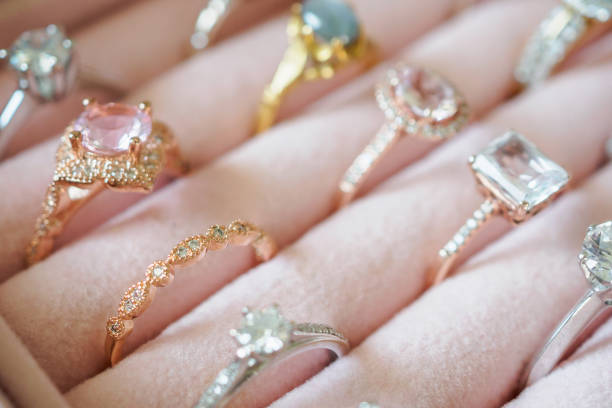
Hardness and Durability: Diamonds (10) and rubies/sapphires (9) are the most durable for daily wear. Garnets (6.5-7.5) and opals are more delicate and better suited forearringsorpendants.
Color Preferences: Many birthstones come in a wide range of colors beyond their traditional hues. Garnets, sapphires, andtourmalinesoffer exceptional color variety.
Budget: Some birthstones like diamonds and rubies are premium-priced, while amethyst, citrine, and peridot offer beautiful options at more accessible price points.
Where to Buy Birthstone Jewelry & Gemstones -
CaratXis the premier marketplace for diamonds, gemstones, and fine jewelry. Whether you're looking to:
Shop natural diamondsat unbeatable prices.
Shop gemstonesfrom our curated marketplace.
Sell jewelry internationallyto buyers in 18+ countries.
Register as a sellerto access B2B and B2C buyers.
Explore seller plansfor jewelry businesses.
CaratXconnects the diamond, gemstone, and jewelry industry on one platform, bringing thousands of unique jewelry pieces, loose diamonds, gemstones, and pearls from over 16 countries and 200+ artisan sellers.
Start Selling on CaratX Today|View Pricing Plans
Recommended Reads from CaratX -
Diamond Market Analysis & Trends -
- Global Diamond Markets Show Growing Confidence After Las Vegas: The 2026 Recovery Takes ShapeAn in-depth analysis of the 2026 global diamond market recovery, including post-Las Vegas Jewelry Week sentiment, regional performance (US, Belgium, Israel, India), and the surging demand for fancy-cut diamonds.
- 2026 Natural Diamond Market Report: Premium Demand Surges as Millennials and Gen Z Redefine Luxury GiftingMillennials now account for 32% of natural diamond buyers and 55% of total demand value, while Gen Z represents 18% of buyers and 23% of value. Natural diamonds remain the top choice for luxury gifting.
- Diamond Market Outlook 2026: Recovery, Supply Shifts, and the Rise of Lab-Grown AlternativesCovers structural supply adjustments (De Beers production cuts, Alrosa sanctions, Angola's Luele mine expansion), the recovery of Indian polished diamonds, and deep-dive market data across the 0.30ct to 3.00ct segments.
- The State of the Fancy Diamond Market 2026: Why Elongated Shapes Command PremiumsA comprehensive analysis of why fancy shapes—such as oval, marquise, and emerald cuts—are outperforming round brilliants in the 2+ carat category, with marquise being the most expensive fancy shape to produce.
- Exclusive: 2026 Fancy Color Diamond Market Deep Dive – Prices, Rarity, and the Smart Money's Move on Rare HuesAn exclusive look at the fancy color diamond market: pink diamonds have appreciated 389% since 2005, while Fancy Vivid Yellow and Fancy Intense Yellow continue to show strong performance.
- The Diamond Market Shift: Why Long Fancy Shapes Are Outperforming Rounds in 2026How long fancy shapes (oval, marquise, radiant) are overtaking round diamonds, becoming the preferred investment for savvy buyers in the 2+ carat category, with elongated cushions commanding a 20-25% premium over square cushions.
- Diamond Market Deep Dive: July 2025 – Strategic Insights for the Modern Jewelry ProfessionalStrategic insights from July 2025, including the impact of US tariff policies (projected $1.2 billion annual cost increase), dynamics in India's Surat market, and a detailed price matrix across carat weights.
- The Fancy Shape Diamond Market: Navigating the Polarization of Demand in 2026Navigating the polarized demand in the fancy shape diamond market—how marquise, oval, and emerald cuts are outperforming traditional rounds.
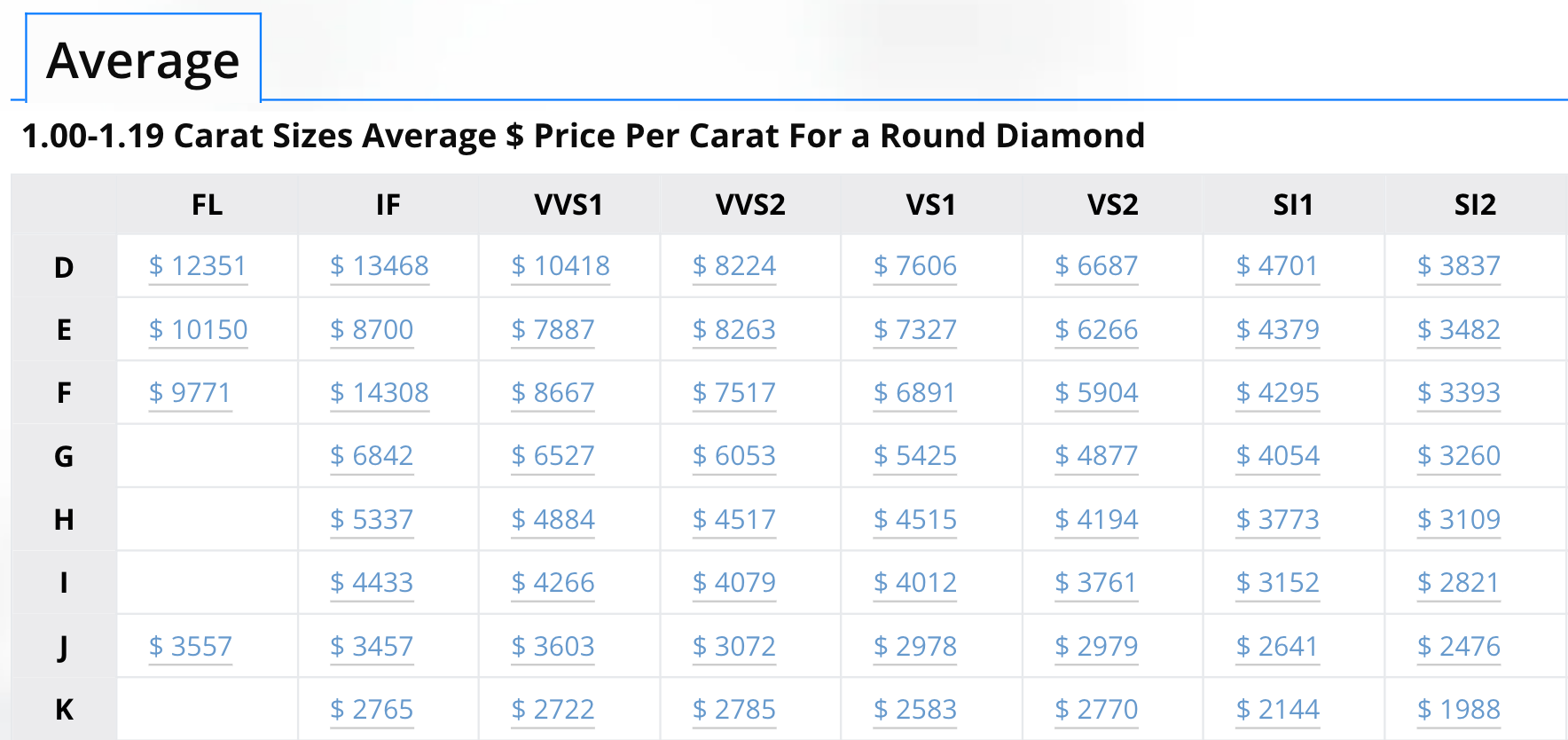
- The 1-Carat Diamond Market Deep Dive: Price Corrections, Quality Shifts, and Strategic Buying in 2026A deep dive into the 1-carat diamond market, covering price corrections, quality shifts, and strategic buying strategies for 2026.
- The Most Sold Diamond in the World: Why 1-Carat Stones Dominate the Global MarketAn analysis of why 1-carat diamonds are the best-selling diamonds globally, dominating the international market.
- Small Diamond Prices Show Early Signs of RecoverySmall diamond prices show early signs of recovery, with global natural diamond supply expected to rebound modestly to approximately 105 million carats in 2026.
- Premium Natural Diamonds Are Showing Stronger StabilityPremium natural diamonds demonstrate stronger stability as the industry emerges from the "three-year brutal correction" (2023-2025) and enters 2026.
Jewelry Trends & Culture -
- Cultural Currents: How Global Heritage is Defining Jewelry Trends in 2026How global cultural heritage including Japanese wabi-sabi aesthetics, revived Iranian traditional craftsmanship, Brazilian gemstones, and Turkish influences is shaping jewelry trends in 2026.
- Sapphires Shine While Diamond Market Faces Mixed Signals: A Deep Dive into Q1 2026A Q1 2026 trend analysis showing how sapphires are shining brightly while the diamond market receives mixed signals.
Educational Content -
- Beyond the Hope: Geological Rarity, Market Dynamics, and Billion-Year Journey of the World's Rarest DiamondsThe geological formation, billion-year journey, and market dynamics of the world's rarest diamonds.
- Diamond Cut Trends 2026: Round vs Oval, The Closest Race in Diamond HistoryThe closest race in diamond history—round vs. oval diamond cut trends in 2026.
- Beyond the Round Brilliant: Why Customization and Simplicity Are Dominating the Diamond Ring MarketHow customization and minimalist simplicity are dominating the diamond ring market beyond the traditional round brilliant.
- Beyond Volume: How Australia Dominates the Premium Tier of Diamonds, Pearls, and GemstonesHow Australia secures dominance in the premium tier of diamonds, pearls, and gemstones.
More Blog Categories -
CaratX's blog also offers the following categories and featured articles:
News And Media– Industry news and media updates.
Our Favorite Articles– A curated collection of standout reads, including:
Follow CaratX for more insightful and educational content about diamonds, gemstones, and fine jewelry.
Frequently Asked Questions -
Q: What is the rarest birthstone? A: Alexandrite, tanzanite, and natural diamonds in fancy colors are among the rarest birthstones. Alexandrite is particularly rare due to its unique color-changing property.
Q: Can I wear a birthstone that isn't mine? A: Absolutely! While birthstones traditionally correspond to birth months, anyone can wear any gemstone they find beautiful or meaningful. There's no rule restricting birthstones to specific months.
Q: Are birthstones valuable? A: Value varies widely. Diamonds, rubies, emeralds, and sapphires are typically the most valuable. Amethyst, citrine, and peridot offer beautiful options at more affordable prices.
Q: What is the difference between traditional and modern birthstones? A: Traditional birthstones date back centuries, while modern birthstones were standardized by the jewelry industry in 1912 and later updated. Some months (like June, August, and December) have multiple options.
Q: How are birthstones determined? A: The modern list was established by the National Association of Jewelers (now Jewelers of America) in 1912, with later additions in 1952 and updates in 2002.
Q: Where can I buy authentic birthstone jewelry? A: Trusted marketplaces likeCaratXoffer GIA-certified and authenticated gemstones and jewelry from verified sellers.