
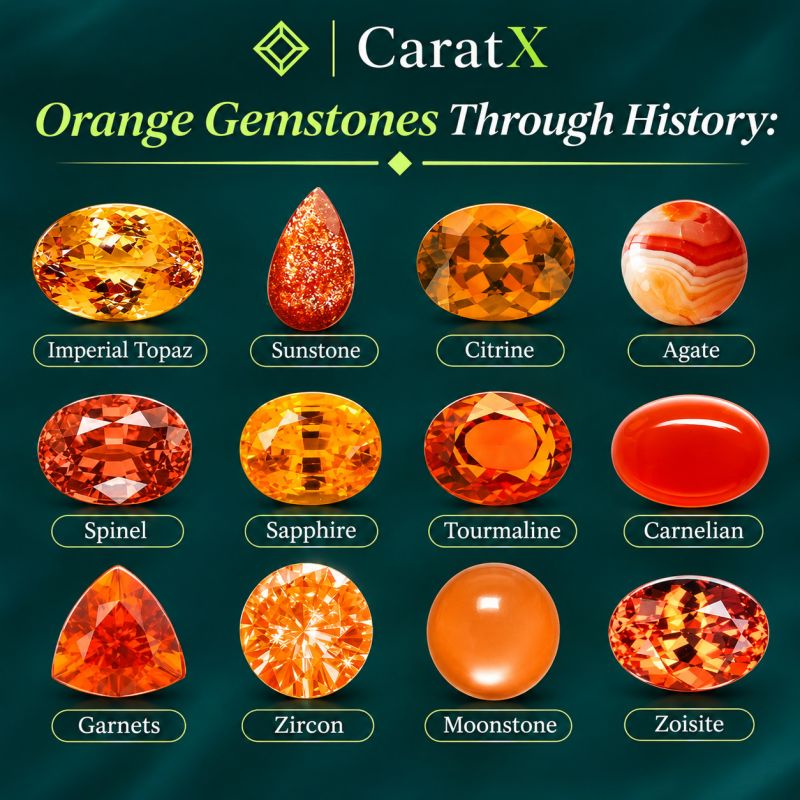
Orange gemstonesoccupy a unique place in the human imagination. They are the color of fire, sunset, and harvest warm, energetic, and impossible to ignore. For thousands of years, these stones have been carved into protective amulets, set into royal regalia, and traded across continents. Today, they represent one of the most dynamic and accessible segments of the colored stone market.
This guide traces the full arc of orange gemstones through history, examines the science behind their color, and provides a detailed buying and selling framework for the modern trade. Whether you are a collector, a jeweler, or a seller looking to expand your inventory on an international marketplace, understanding the stories and properties of these stones is essential.
The Deep History of Orange Gemstones -
Ancient Egypt:
The use of orange-yellow quartz in Egypt predates the common era by millennia. Egyptians gathered ornately striped agates from the shore and used them as talismans, andnatural citrinerare even then was valued for its warm, sun-like hue. In Egyptian belief, citrine was associated with Sekhmet, the lion-headed goddess of healing and vengeance, and was worn as a protective charm. The stone was believed to calm tempers, soothe anger, and manifest desires, particularly prosperity.
Ancient Greece:
The Greeks were among the first to treatcitrineas a canvas for artistry. As early as 300 to 150 BC, they carved iconic images and symbols into the surface of the stone, believing that these engravings enhanced its mystical abilities. The Greeks also associated citrine with Demeter, the goddess of agriculture and the harvest, a fitting link for a stone the color of ripe grain.
Ancient Rome:
Rome adoptedcitrinewith characteristic enthusiasm. Roman priests fashioned citrine into rings, and lapidaries used intaglio techniques to engrave designs and symbols into the stone for use as signets and seals. The Romans called itlapis citrinus, or “lemon stone,” from the Latincitrus, a name that survives in the modern term. Roman carvedcitrinecameos from the Republican period, including a first-century BCE example depicting a theatre mask, demonstrate the stone’s integration into high-status personal adornment.
The Victorian Era:
The nineteenth century gave orange gemstones a new cultural home. In Scotland, a variety of citrine quartz with an amber or brown color, traditionally mined in the Cairngorm Mountains, became known as cairngorm. Queen Victoria’s purchase of Balmoral Castle in the 1860s and her frequent visits to the Scottish Highlands spawned a thriving tourist trade in Scottish pebble jewelry.
Cairngorms were extensively used in traditional Scottish ornaments kilt pins, bonnet brooches, and carved thistle shapes and Scottish pebble jewelry, already fashionable in the eighteenth century, became a popular souvenir. The Victoria and Albert Museum holds examples of bracelets made in Scotland using “Scottish pebbles” of agate and citrine, a testament to the era’s taste for local, romantic materials.
Mesoamerica:
Far from Europe, the fire opal held a sacred place in pre-Columbian Mexico. The Aztecs and Mayas loved the gemstone and used it in mosaics and for ritualistic purposes. They called itquetzalitzlipyollitli, the “stone of the bird of paradise,” a name that evoked the iridescent plumage of the quetzal.
A head of the Mexican Sun God carved in fire opal, now in the Field Museum of Natural History in Chicago, is believed to be the work of an Aztec lapidary, a direct material link to the stone’s ritual significance. Mexico has remained the preeminent source of fire opal for over a century, with the states of Querétaro and Jalisco among the most important producing regions.
The Modern Era:
The late twentieth century delivered one of the most dramatic discoveries in the modern colored stone trade. In the remote northwest of Namibia, near the Kunene River along the Angolan border, the first mandarin garnets were discovered in 1991. The deposit was found in mica and mica schist, and the crystals were of an unusually fine, intensely radiant orange more beautiful and more radiant than any spessartine that had come before.
The find was quickly recognized as a variety of spessartine garnet, the manganese-rich member of the garnet family. Until then, spessartines had been found in Sri Lanka, Burma, Madagascar, Brazil, Australia, Kenya, and Tanzania, but specimens with really good color and quality were found only very rarely. The Namibian material changed that. The trade name “mandarin garnet” prevailed over alternatives such as “Kunene spessartine” and “hollandine,” and the stone shot into the international jewelry scene “like a rocket”.
The original Namibian deposit was exhausted after a short while, but further discoveries in Nigeria (1998) and Tanzania (2007) ensured a continued, if limited, supply of gem-quality orange spessartine. The Mandarin garnet remains a benchmark for vivid, pure orange in the colored stone world.
The Science of Orange: What Creates the Color?
Orange in gemstones is rarely a simple matter of one element. It is a transitional hue, sitting between yellow and red on the visible spectrum, and it can arise from several different mechanisms.
Iron (Fe): In citrine, trace iron within the quartz crystal structure produces yellow to orange colors. Most commercialcitrineis heat-treated amethyst, a process that alters the oxidation state of iron and shifts the color from purple to yellow-orange.
Manganese (Mn): In spessartine garnet, high manganese content is responsible for the striking orange color. The purest orange mandarins are those with the highest manganese and the lowest iron contamination.
Chromium and Iron: In sapphire,orangehues can arise from a combination of chromium and iron, sometimes with color zoning that produces pinkish-orange padparadscha stones.
Structural Defects: In fire opal, the color is not caused by trace elements in the same way but by the interaction of light with the silica sphere structure; the orange body color can occur with or without play-of-color.
Understanding these mechanisms matters for buyers and sellers alike. A natural, unheated citrine with strong orange saturation is far rarer than a heat-treated stone, and a mandarin garnet with pure orange hue commands a premium over brownish or reddish spessartine.
The Major Orange Gemstones: A Detailed Guide
Citrine:
Citrineis the transparent, pale yellow to brownish orange variety of quartz. Its mineral identity is simple SiO₂ and its hardness of 7 on the Mohs scale makes it durable enough for everyday jewelry. Natural citrine is rare; most of the market supply is heat-treated amethyst, primarily from Brazil.
Historical note: The name “citrine” was used to refer to yellow gemstones as early as 1385, and the stone has been a popular alternative to topaz for centuries. In 1952, the National Association of Jewelers (now Jewelers of America) added citrine as an alternative birthstone for November, alongside topaz.
Buying considerations: Because most citrine is heat-treated, disclosure is important. The American Gem Society recommends shopping with a qualified jeweler who can explain treatments. Citrine is available in large sizes at affordable prices, making it an excellent entry point for orange gemstone jewelry.
Explore citrine on CaratX: Browsenatural citrine gemstonesandcitrine jewelryon the CaratX marketplace. For a deeper dive, read our guide toNovember’s two birthstones: citrine and topaz.
Fire Opal:
Fire opal is an anomaly in the opal family. While most opals are opaque and mined in Australia, fire opal is often transparent, cut in a faceted manner, and mined in Mexico. Its body color ranges from yellow to orange to red, and it may or may not exhibit play-of-color.
Historical note: The Aztecs and Mayas used fire opal in mosaics and rituals, calling itquetzalitzlipyollitli, the “stone of the bird of paradise”. Mexico has been the dominant source for centuries, and the stone is the unofficial national gemstone of Mexico.
Buying considerations: Fire opal is softer than quartz or sapphire, and care should be taken to avoid scratching. Some Mexican opals may show crazing (fine surface cracks) due to water loss, so stable stones are preferred. The best facet-grade material is transparent and free of visible inclusions.
Explore fire opal on CaratX: Discoveropal jewelry and gemstoneson our marketplace. Read ourdeep dive into opal: October’s birthstonefor care and buying advice.
Mandarin Garnet (Spessartine):
Mandaringarnetis a trade name for vivid orange spessartine garnet, originally from the Namibian discovery of the early 1990s. Spessartine is the manganese-rich member of the garnet family, and its color ranges from yellowish orange to reddish orange.
Historical note: The Namibian deposit was exhausted quickly, but subsequent finds in Nigeria and Tanzania have maintained supply. The original material remains highly prized for its pure, “Fanta-orange” hue.
Buying considerations: The purer the orange, the more valuable the stone. Mandarin garnets are rarely treated, and laboratories have not synthesized them, though orange glass and synthetic yttrium aluminum garnet (YAG) can serve as simulants. Hardness is approximately 7–7.5, making them suitable for most jewelry.
Explore garnet on CaratX: Shopgarnet gemstones and jewelryon CaratX. Learn more in ourcomplete guide to birthstones by month, which covers garnet’s properties and symbolism.
Imperial Topaz:
Imperialtopazis the rare and valuable orange-yellow to reddish-orange variety of topaz, mined for over 200 years from a small district near Ouro Preto in Minas Gerais, Brazil. The deposits have been worked since the mid-1700s, and by the early 1800s Brazilian topaz crystals were widely known among lapidaries and jewelers in Europe.
Historical note: The term “imperial” is often linked to the Russian Czars of the 1800s, who prized the stone for its magnificent orange body color with pinkish undertones. An alternative legend traces the name to a visit by Brazilian Emperor Pedro II to Ouro Preto in 1881.
Buying considerations: Imperial topaz is scarcer than blue or white topaz, and prices reflect that rarity. The stone has a hardness of 8 and good toughness, making it suitable for rings, but care should be taken to avoid harsh knocks.
Explore topaz on CaratX: Browsetopaz gemstones
Orange Sapphire and Padparadscha:
Sapphire is a variety of the mineral corundum, with a hardness of 9 second only to diamond. Orange sapphires range from pure orange to pinkish-orange, and the most famous orange-pink variety is padparadscha, named after the Sinhalese word for the lotus flower.
Historical note: Sri Lanka (Ceylon) was the original and primary source of padparadscha sapphire, with mining dating back at least 2,000 years. The name was first coined in Sri Lanka in the nineteenth century, and purists still associate the term with Ceylonese stones.
Buying considerations: Fine orange and padparadscha sapphires can command prices equal to their fine blue counterparts. Sri Lanka and East Africa are major sources, and heating is common but should be disclosed. Sapphire’s exceptional durability makes it ideal for everyday and bridal jewelry.
Explore sapphire on CaratX: Discoverfancy sapphires: the colorful side of the sapphire familyon our blog, and browsesapphire gemstoneson the marketplace.
How to Evaluate and Care for Orange Gemstones -
The Four Cs in an Orange Context -
Color: For orange gemstones, hue purity is critical. A stone that is too brown or too red is less valuable than one with a vivid, saturated orange. In mandarin garnet and padparadscha sapphire, the ideal is a “pure” orange with minimal secondary hues.
Clarity: Fire opal and citrine can be eye-clean at affordable prices, while mandarin garnet and imperial topaz often contain inclusions that are acceptable if they do not detract from brilliance.
Cut: Faceted cuts maximize brilliance in garnet, sapphire, and topaz; cabochons are common for opal and some citrine.
Carat: Large mandarin garnets (over 10 carats) are exceptionally rare and command significant premiums. Citrine and fire opal are available in large sizes at more accessible prices.
Treatments and Synthetics -
Citrine: Most commercial citrine is heat-treated amethyst. Disclosure is required, and reputable sellers should provide it.
Sapphire: Heating is common and accepted; unheated stones command higher prices.
Garnet and Topaz: Mandarin garnet is typically untreated. Imperial topaz may be heated to improve color, and this should be disclosed.
Fire Opal: Generally untreated, but stabilization with resin may occur in lower-grade material.
Care and Durability -
Citrine (hardness 7): Safe for most jewelry; avoid ultrasonic cleaners if the stone has fractures.
Fire Opal (hardness 5.5–6.5): Softer and more fragile; protect from scratches and sudden temperature changes.
Mandarin Garnet (hardness 7–7.5): Good for everyday wear; avoid harsh chemicals.
Imperial Topaz (hardness 8): Durable but can cleave with a sharp blow; treat with care.
Sapphire (hardness 9): Excellent for daily wear; almost scratch-proof.
Buying and Selling Orange Gemstones on CaratX -
The orange gemstone segment is global, fragmented, and increasingly digital.CaratXconnects buyers and sellers across more than 18 international countries, providing a marketplace for diamonds, colored gemstones, jewelry, and pearls.
For buyers: You can shopnatural diamondsandgemstonesat competitive prices directly on the marketplace. Whether you are looking for a single mandarin garnet for a custom ring or a parcel of citrine for a collection, the platform allows you to compare offerings and source with confidence. Start browsing atwww.caratx.com.
For sellers: Registering on CaratX gives you access to a global network of B2B and B2C buyers. You can list your inventory, manage your storefront, and sell jewelry internationally through the CaratX seller plan. To request a seller account, first create a free customer account and then complete the seller application in the “Sell with CaratX” section.
Pricing and plans: CaratX offers transparent options for launching products on the marketplace. For full details on pricing and seller plans, visit theLaunch Your Products on CaratX page.
Start selling today: Register as a seller on CaratXto reach buyers in 18+ countries.
Recommended Reads from CaratX -
Nature’s Brightest Treasures: The Ultimate Guide to Orange Gemstones (2026)— A comprehensive overview of orange diamonds, Padparadscha sapphire, citrine, fire opal, imperial topaz, and more.
November’s Two Birthstones: Citrine and Topaz, A Complete Gemological, Buying, and Care Guide— A deep dive into the gemology, history, and buying criteria for these two key orange gemstones.
Fancy Sapphires: The Colorful Side of the Sapphire World— Explores the rarity and color science of orange sapphire and the legendary Padparadscha.
Opal: A Deep Dive into October's Captivating Birthstone— The essential guide to opal, providing context for the fire opal's history and characteristics.
The Ultimate Guide to Colored Gemstone Valuation: Beyond Carats and Into the Rainbow— Explains why color is the most critical factor in valuing colored gemstones.
Sri Lanka: The Island of Beautiful Gemstones— A look at a historically critical source for Padparadscha sapphire, garnets, and other fine gems.
Frequently Asked Questions -
Are orange gemstones rare? It depends on the species. Citrine and fire opal are relatively abundant and affordable. Mandarin garnet, imperial topaz, and fine padparadscha sapphire are scarce and can command high prices, especially in large sizes with pure color.
What is the difference between citrine and yellow topaz? Citrine is a variety of quartz (hardness 7), while topaz is a separate mineral species (hardness 8). Before modern gemology, the two were often confused because of their similar yellow-orange colors. Topaz is generally more expensive, especially in the imperial color range.
Which orange gemstone is best for an engagement ring? Sapphire (including orange and padparadscha varieties) is the most durable choice, with a hardness of 9. Mandarin garnet and imperial topaz are also suitable but require more careful wear. Citrine and fire opal are better suited to earrings, pendants, or occasional-wear rings.
How can I verify the authenticity of an orange gemstone? Look for certification from a reputable laboratory such as GIA, and buy from sellers who provide clear disclosure of treatments. The American Gem Society recommends working with qualified jewelers who can explain the stone’s characteristics and enhancements. CaratX’s marketplace connects you with sellers who can provide documentation.
What is the metaphysical significance of orange gemstones? Across cultures, orange stones have been associated with warmth, creativity, and prosperity. Citrine in particular was believed to calm tempers and manifest desires, while fire opal held ritual significance for the Aztecs and Mayas. These symbolic associations continue to influence modern jewelry design and consumer interest.