
Introduction
Theengagement ringhas always been more than a piece ofjewelry. It is a symbol of commitment, a reflection of personal style, and increasingly, a statement of values. But what actually shapes the decision when a couple chooses anengagement ringin 2026? Is it family tradition? Social media? Celebrity culture? Or is it something far more personal?
A new study from Jewelers Mutual Group, based on a May 2026 survey of 2,000 U.S. adults, sheds unprecedented light on this question. The findings reveal a generation of buyers who are more informed, more collaborative, and more design-conscious than ever before. They are researching earlier, involving their partners more deeply, and prioritizing uniqueness over brand names and stone size.
This blog explores the key findings from the 2026 Jewelers Mutual Engagement Ring Study, contextualizes them within broader industry trends from The Knot's Real Weddings Study and other sources, and provides practical guidance for anyone navigating the engagement ring journey. Whether you are a buyer, a seller, or simply fascinated by consumer behavior, this analysis will give you an understanding of where the engagement ring market is heading.
The Jewelers Mutual 2026 Engagement Ring Study: An Overview
The Jewelers Mutual study was conducted in May 2026 with a sample of 2,000 U.S. adults aged 18 and older who were responsible for making insurance decisions in their household, had purchased or received anengagement ringin the last five years, and were currently engaged or married within the past five years. This methodology ensures that the findings reflect the actual behaviors and preferences of recent ring buyers and wearers, not just hypothetical intentions.
The study covers a wide range of topics: who influences the decision, where people shop, what styles they prefer, how much they spend, and how they wear and protect their rings. The overarching theme is clear: engagement ring choices in 2026 are shaped by loved ones, changing trends, and deeply personal style preferences.
Who Influences the Engagement Ring Decision?
One of the most striking findings from the 2026 study is the hierarchy of influence. When asked what informed their ring style, respondents cited:
Friends and family: 48%
Jewelry trends: 47%
Social media: 28%
Celebrities: 15%
This data reveals that real-life input matters far more than digital or celebrity influence. While social media platforms like Instagram and TikTok are saturated with engagement ring content, they do not carry the same weight as a trusted friend's recommendation or a mother's advice.
Why Family and Friends Matter Most -
The dominance of friends and family as an influence reflects the deeply personal nature of theengagement ringpurchase. Unlike fashion or tech purchases, an engagement ring carries emotional weight that is often tied to family history. Many buyers seek validation from those who know them best, people who understand their relationship, their partner's taste, and their family traditions.
This finding also aligns with broader consumer psychology research. Studies on gift-giving behavior consistently show that when purchases carry symbolic meaning, buyers rely more heavily on interpersonal recommendations than on advertising or celebrity endorsements. For a deeper dive into the psychology of engagement ring consumption, the Journal of Consumer Psychology has explored how cultural expectations and traditions influence preferences for mined diamonds versus lab-grown alternatives.
The Role of Trends and Social Media -
While friends and family lead the way, trends still matter. Nearly half of respondents (47%) said they followed currentjewelrytrends whenselecting a ring. This suggests that buyers are not immune to the broader aesthetic currents shaping the market. Social media, cited by 28% of respondents, plays a supporting role users scroll, save, and share ring inspiration, but they ultimately make decisions based on more trusted sources.
Celebrity influence, at just 15%, has declined significantly from previous decades when royal weddings and Hollywood engagements drove massive spikes in demand for specific ring styles. The rise of personalized, anti-boring aesthetics has diminished the appeal of simply copying a celebrity's ring.
Where Are People Buying Engagement Rings?
The 2026 study provides clear data on purchasing channels:
Jewelry brand store: 43%
Retail store: 28%
Local business: 10%
Jewelry brand stores, whether physical boutiques or established online retailers with strong brand identities, remain the dominant channel. This preference reflects the importance of trust, certification, and after-sales support in a high-stakes purchase. Buyers want to know that the diamond is ethically sourced, that the grading report is legitimate, and that the ring can be serviced or resized if needed.
The rise of online marketplaces has not displaced brand stores but has expanded the options available to buyers. Platforms likeCaratXare connecting buyers directly with certified diamonds andfinished jewelryfrom artisan sellers across 16 countries, offering a level of access and price transparency that traditional retail channels often cannot match.
For buyers who prioritize value and selection, exploring a curated marketplace of certified natural diamonds andgemstonescan be a smart first step. CaratX offers a wide range of engagement rings and loose diamonds that can be filtered by cut, clarity, color, and carat weight, making it easier than ever to find a ring that matches both your budget and your personal style.
Mutual Ring-Wearing on the Rise -
One of the most culturally significant findings from the 2026 study is the rise of mutual ring-wearing. Overall, 61% of respondents said both partners wear an engagement ring. This figure rises dramatically among older adults: over 80% of couples aged 55–64 said both partners wear a ring, compared with just 43% of those aged 18–24.
This generational divide tells a story about evolving gender norms. Younger couples are still negotiating what engagement means and how it should be symbolized. Older couples, by contrast, have had decades to establish their own traditions and many have embraced the idea that commitment should be worn by both partners.
For couples considering matching or complementary engagement rings,CaratXoffers options for bothtraditionaland non-traditional designs, including men's bands and unisex styles that can be paired with a more elaborate center-stone ring.
Design Matters More Than Price, Size, or Brand -
Perhaps the most important trend in the 2026 data is the prioritization of design and uniqueness. More than half of U.S. consumers (52%) rank design or uniqueness as more important than price, stone size, or brand name when choosing an engagement ring.
This is a seismic shift from previous decades when the "four Cs" (cut, color, clarity, carat) and brand prestige dominated the conversation. Today's buyers are asking different questions: Does this ring feel likeus? Does it reflect our values? Will I still love it in 20 years?
Solitaire Rings Lead the Way -
The simplest of all settings, the solitaire is enjoying a major resurgence. In 2026, 37% of respondents preferred a simple ring with one center stone, up from just 22% in 2024. This represents a 68% increase in popularity in just two years.
Why the solitaire revival? Several factors are at play. First, the solitaire is timeless. It never goes out of style, making it a safe choice for buyers who want a ring their partner will wear forever. Second, it puts the diamond front and center, which appeals to buyers who have invested in a high-quality stone and want it to be the star of the show. Third, it is versatile, a solitaire can be dressed up with a wedding band or worn alone.
For buyers interested in solitaire settings,CaratXoffers a range of certified diamonds that can be set in a simple, elegant band. Exploring loose diamonds allows you to select the perfect center stone and then choose a setting that lets it shine.
White Gold Wins, But Yellow Gold Gains Ground -
When it comes to metal choice, white gold remains the most popular option, selected by 43% of respondents in 2026, up from 35% in 2024. White gold's bright, neutral finish complements diamonds of all colors and works well with both modern and vintage-inspired designs.
However, yellow gold is making a significant comeback. The Knot's 2026 Real Weddings Study found that 39% of couples chose yellow gold, a figure that has more than doubled over the past five years. Jewelry historians attribute this shift to celebrity influence most notablyMeghan Markle's yellow gold three-stone ringand the broader popularity of yellow gold in non-bridal jewelry.
For buyers exploringyellow gold engagement rings, CaratX offers pieces that combine warm gold tones with certified natural diamonds, creating a look that is both classic and contemporary.
Budget and Spending: What Are Couples Actually Paying?
The 2026 Jewelers Mutual study found that 62% of respondents ranked their engagement ring among their three most expensive possessions, behind only a home and a car. This underscores the significance of the purchase, it is not an impulse buy but a major financial decision.
Yet nearly half of respondents (47%) said the purchase was not financially stressful. Those who set a budget based on personal comfort reported the highest confidence and the lowest financial stress. This suggests that the "three months' salary" rule, a marketing creation from the De Beers era has been largely abandoned in favor of personalized budgeting.
According to The Knot's 2026 Real Weddings Study, couples married in 2025 spent an average of $4,600 on an engagement ring, down from $5,200 the previous year. The decline is partly attributable to the rising popularity oflab-grown diamonds, which offer similar visual characteristics at a significantly lower price point.
For buyers who want to maximize value without compromising on quality, CaratX provides access to certified diamonds at competitive prices, with the ability to filter by the 4Cs and compare options side by side. Understanding how to read a GIA grading report is essential for making an informed purchase, and CaratX's Diamond Guide provides a comprehensive education on carat, cut, color, and clarity.
The Rise of Lab-Grown Diamonds -
No discussion of the 2026 engagement ring market would be complete without addressing lab-grown diamonds. The Knot's 2026 Real Weddings Study found that 61% of consumers who purchased an engagement ring chose a lab-created diamond, a 239% increase since 2020.
Lab-grown diamondsare chemically, physically, and optically identical to natural diamonds. They possess the same crystalline carbon structure and can be graded using the same 4Cs system established by the Gemological Institute of America (GIA). The primary difference is origin: lab-grown diamonds are created in controlled laboratory environments using processes that replicate the natural diamond-forming conditions deep within the Earth.
For buyers who prioritize sustainability and value, lab-grown diamonds offer a compelling alternative. However, natural diamonds retain a strong emotional and investment appeal for many couples. As one industry analysis noted, demand below the $2,500 price point continues to weaken, while purchases in the $2,500–$5,000 range remain the market's core, suggesting that consumers with spending power are still choosing natural diamonds.
CaratXoffers both natural and lab-grown options, allowing buyers to make informed choices based on their personal values, budget, and aesthetic preferences.
CaratXis the premier international marketplace for diamonds, gemstones, and jewelry. Whether you are a seller looking to reach buyers in 18+ countries or a buyer seeking the finest natural diamonds, CaratX provides the platform, transparency, and global reach you need.
Sellers: Register on the CaratX marketplace to start selling to B2B and B2C buyers worldwide.www.caratx.com/register
Buyers: Shop natural diamonds at unbeatable prices.https://caratx.com/search?query=Natural
Learn More: Explore our pricing and seller plans -https://caratx.com/sell-on-caratx
How to Choose an Engagement Ring in 2026: A Practical Guide
Given the trends and insights from the 2026 study, here is a practical framework for choosing an engagement ring that balances personal style, budget, and long-term wearability.
Step 1: Start the Conversation Early
The 2026 study found that 84% of non-purchasing wearers researched rings before receiving one, and 38% began at least three months in advance up from just 13% in 2024. Early research allows you to understand your partner's preferences, explore different styles, and set a realistic budget.
If you are planning a surprise proposal, consider involving a trusted friend or family member who can discreetly gather information about your partner's taste.
Step 2: Prioritize Design and Uniqueness
With 52% of consumers ranking design over price and size, it is clear that personalization is the new standard. Look for rings that feel distinctive, whether through an unusual setting, a colored gemstone, or a custom engraving. A ring that reflects your partner's personality will be treasured far more than one that simply checks a size box.
Step 3: Understand the 4Cs
Even if you are prioritizing design, understanding the 4Cs carat, cut, color, and clarity is essential for making an informed purchase. The GIA's 4Cs guide provides an education on how these factors affect a diamond's appearance and value.
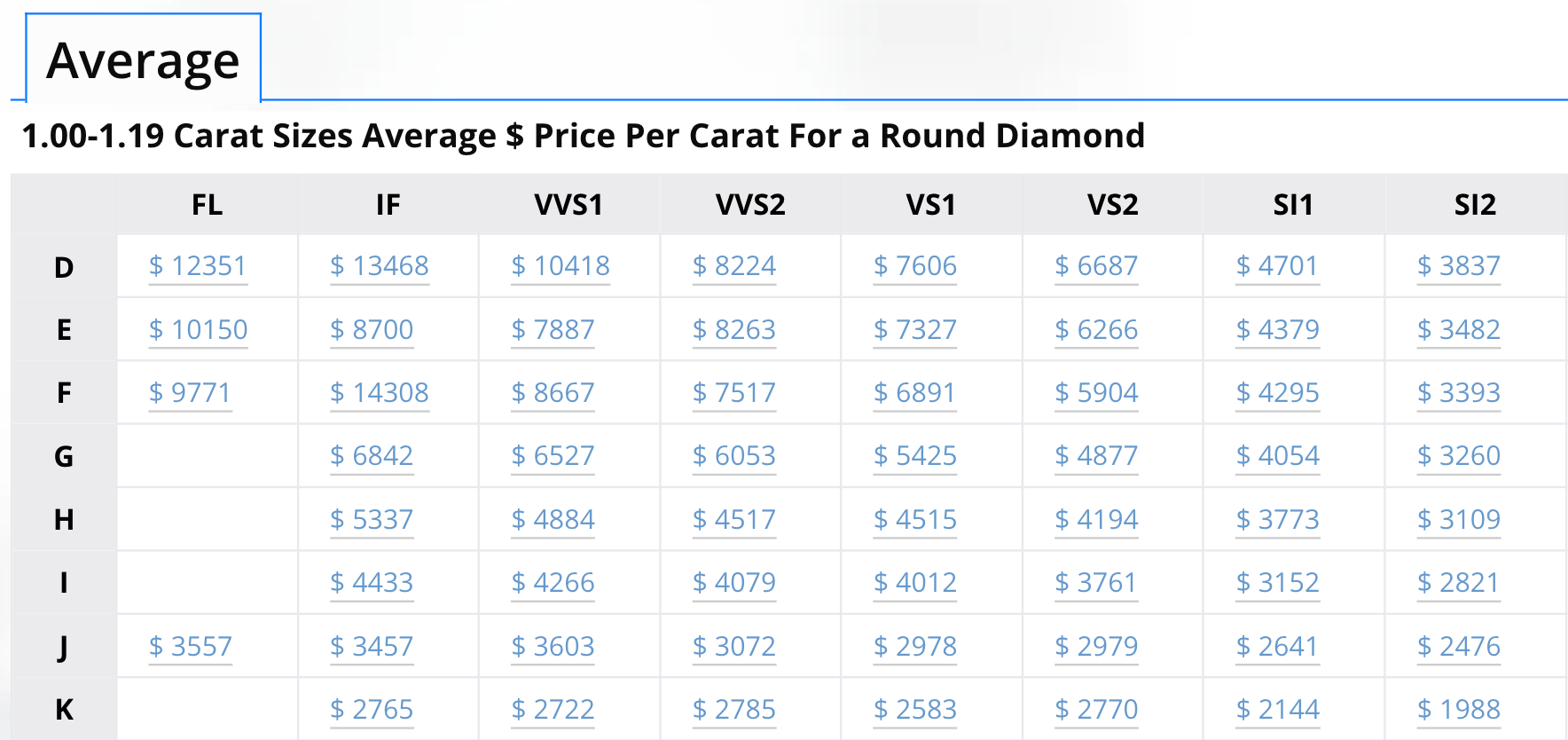
Use this knowledge to balance your budget: you might choose a slightly lower clarity grade (like VS2 or SI1) that appears eye-clean, and allocate more of your budget to cut, which has the greatest impact on sparkle.
Step 4: Choose the Right Metal
White gold remains the most popular choice, but yellow gold is gaining ground. Consider your partner's existing jewelry collection when selecting a metal. If they wear mostly silver-toned pieces, white gold or platinum is a safe choice. If they prefer warm tones, yellow or rose gold may be a better fit.
Step 5: Consider the Setting
The solitaire is making a comeback, but it is not the only option. Halo settings, three-stone rings, and vintage-inspired designs all have their devotees. The key is to choose a setting that enhances the center stone without overwhelming it. For a detailed exploration of diamond shapes and settings, see CaratX's guide to pear-shaped diamonds, one of the fastest-growing shapes in engagement ring design.
Step 6: Insure Your Investment
With 62% of respondents ranking their engagement ring among their three most expensive possessions, insurance is not optional. Jewelers Mutual offers jewelry insurance starting at $5 per month, providing coverage for loss, theft, and damage. Before insuring your ring, obtain an independent appraisal and keep your GIA grading report in a safe place.
Recommended Reads from CaratX -
The Ultimate Guide to Diamond Ring Settings: How a Setting Defines Your Style — Understand prong, bezel, and pavé settings and how they affect brilliance, security, and comfort.https://caratx.com/blog/the-ultimate-guide-to-diamond-ring-settings-how-a-setting-defines-your-style
The Solitaire Diamond Ring: A History of the World's Most Iconic Engagement Ring — Trace the solitaire from Ancient Rome to the Tiffany Setting and why it is surging in 2026.https://caratx.com/blog/the-solitaire-diamond-ring-a-history-of-the-world-s-most-iconic-engagement-ring
The Art of Buying Loose Diamonds: Your Buyer's Guide — Learn the 4Cs, certification standards, and the step-by-step process for buying loose diamonds.https://caratx.com/blog/the-art-of-buying-loose-diamonds-your-buyers-guide
The Guide to Pear-Shaped Diamonds: Anatomy, Cut Quality, and Why They Dazzle — A deep dive into pear shape anatomy, bow-tie effect, and why this cut is a top engagement ring choice.https://caratx.com/blog/the-guide-to-pear-shaped-diamonds-anatomy-cut-quality-and-why-they-dazzle
Engagement Rings, Jewelry, and the Real Price of Love: A 2025 Data for Retailers, Brands, and Buyers — Spending data, buyer psychology, and the quiet luxury movement in engagement rings.https://caratx.com/index.php/blog-post/engagement-rings-jewelry-and-the-real-price-of-love-a-2025-data-for-retailers-brands-and-buyers
Lab-Grown Diamonds in 2025: Fast Growth, Big Impact on Jewelry Trends — Market share data, adoption drivers, and what lab-grown diamonds mean for engagement ring buyers.https://caratx.com/blog/lab-grown-diamonds-in-2025-fast-growth-big-impact-on-jewelry-trends
Frequently Asked Questions -
What is the most popular engagement ring style in 2026?
The solitaire ring is the most popular style, preferred by 37% of respondents in the Jewelers Mutual 2026 study up from 22% in 2024. White gold is the most popular metal at 43%.
Who influences engagement ring decisions the most?
Friends and family are the most influential source, with 48% of buyers asking loved ones for advice. This is followed by jewelry trends (47%), social media (28%), and celebrities (15%).
How much do couples spend on engagement rings in 2026?
According to The Knot's 2026 Real Weddings Study, couples spent an average of $4,600 on an engagement ring in 2025, down from $5,200 the previous year. The decline is largely due to the rising popularity of lab-grown diamonds.
Are lab-grown diamonds real diamonds?
Yes. Lab-grown diamonds are chemically, physically, and optically identical to natural diamonds. They have the same crystalline carbon structure and can be graded using the same 4Cs system. The only difference is their origin.
Should both partners wear engagement rings?
The 2026 Jewelers Mutual study found that 61% of couples have both partners wearing an engagement ring. This figure is higher among older adults (over 80% for ages 55–64) and lower among younger adults (43% for ages 18–24).
Conclusion -
The engagement ring landscape in 2026 is defined by three powerful forces: the wisdom of loved ones, the evolution of trends, and the unmistakable rise of personal expression. Couples are no longer bound by rigid rules about how much to spend, which metal to choose, or whether both partners should wear a ring. Instead, they are making choices that reflect their unique relationship and values.
The data from the Jewelers Mutual 2026 Engagement Ring Study and The Knot's Real Weddings Study paints a picture of a market that is more informed, more collaborative, and more design-conscious than ever before. White gold remains the favorite metal, solitaire settings are surging, and lab-grown diamonds have captured a majority of the market by unit count.
For buyers, the message is clear: start early, involve your partner, prioritize design and uniqueness, and choose a ring that tells your story. For sellers and industry professionals, the message is equally clear: transparency, certification, and personalization are the keys to winning the modern engagement ring buyer.