
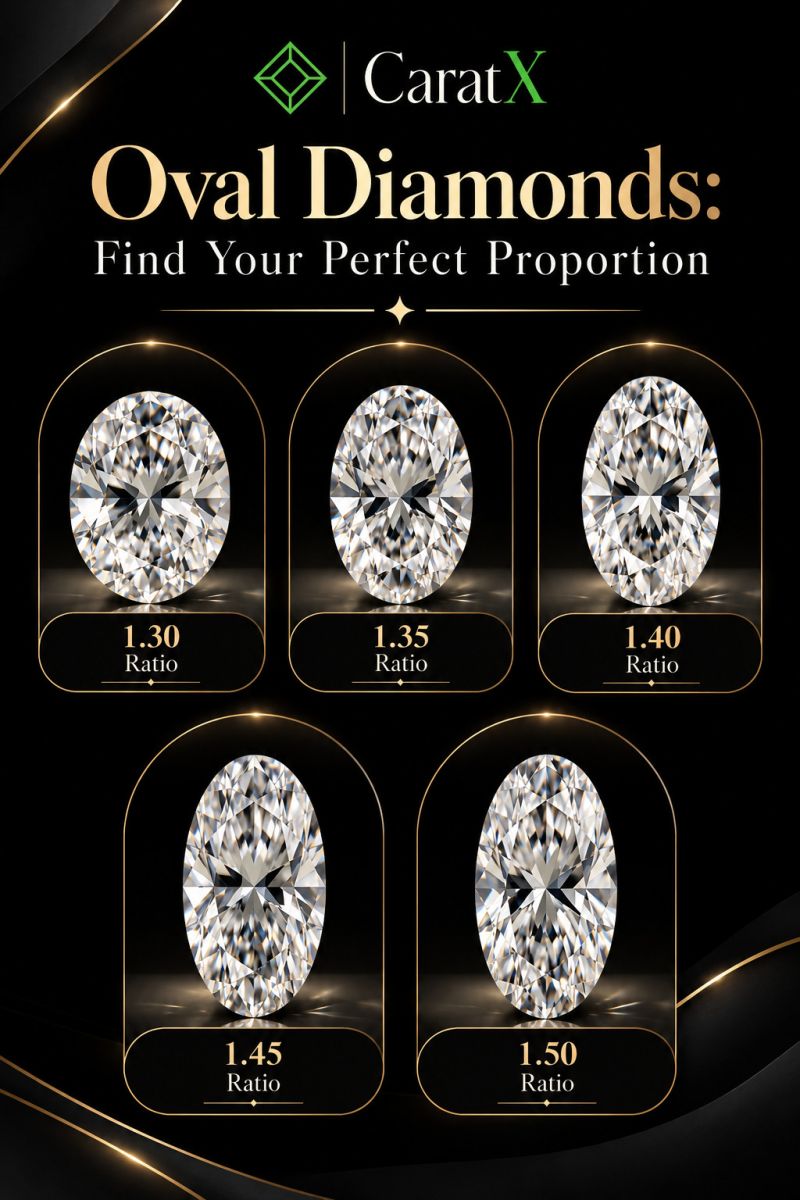
Why the Length-to-Width Ratio Is the Most Important Decision You'll Make
When you're shopping for anoval diamond, the 4Cs carat, color, clarity, and cut are only part of the story. For oval diamonds, there's a fifth dimension that arguably matters more than any single "C": the length-to-width ratio. This single measurement determines whether your diamond looks softly rounded, classically elegant, or dramatically elongated and it's the factor that most directly influences how the stone flatters your hand.
Unlikeround brilliants, which have a standardized shape and receive a formal cut grade from theGemological Institute of America (GIA), oval diamonds are classified as fancy shapes and do not receive a GIA cut grade.
This means the buyer must take on the responsibility of evaluating proportions, symmetry, and light performance independently. Understanding the length-to-width ratio is your most powerful tool for making that evaluation with confidence.
In this guide, we'll break down every ratio from 1.30 to 1.50, explain how each creates a distinct visual personality, and help you match your oval diamond to your personal style, hand shape, and setting preferences. Whether you're a first-time buyer or a seasoned trade professional, this guide will equip you with the knowledge to source, evaluate, and selloval diamondswith authority.
What Is the Length-to-Width Ratio -
The length-to-width ratio often abbreviated as L/W ratio is exactly what it sounds like: the diamond's length divided by its width. If an oval diamond measures 7.7 millimeters long and 5.5 millimeters wide, the ratio is 7.7 ÷ 5.5 = 1.40:1. GIA certificates display these measurements directly, making it straightforward to verify a stone's proportions before purchase.
A higher ratio produces a longer, more slender appearance. A lower ratio creates a broader, more rounded shape. Approaching 1.00:1, the stone begins to resemble a round brilliant; above 1.55:1, it edges toward the slender silhouette of a marquise cut. The sweet spot for most buyers, what the industry widely calls the "golden ratio" falls between 1.35:1 and 1.50:1.
To put this in perspective, a GIA survey found that consumers and trade professionals tend to prefer longer ovals, with the most popular theoretical ratio being 1.7:1. However, cutting such elongated stones from available rough is impractical, so ovals with ratios ranging from 1.3:1 to 1.4:1 are far more typical in the market.
Explore CaratX's curated selection of oval diamonds with verified length-to-width ratios and full certification details:Browse Oval Diamonds
The Complete Ratio Breakdown: From 1.30 to 1.50
Every ratio within the acceptable range produces a noticeably different visual effect. Let's examine each one in detail.
1.30:1 — Wider and More Rounded
A 1.30:1 ratio represents the most rounded oval option available. These stones sit between around brilliantand a standard oval, projecting a classical, understated character. The advantages of this ratio are notable: the broader proportions create more even brilliance across the stone's surface, and the bow-tie effect that dark, bow-shaped shadow that appears across the width of many ovals is typically less pronounced.
The trade-off is that a 1.30:1 oval lacks the dramatic elongation that gives the oval cut its signature visual identity. If you're drawn to theoval shapespecifically for its finger-lengthening effect, this ratio may feel insufficiently elongated.
However, for buyers with long, well-proportioned fingers who simply want a softer alternative to a round brilliant, the 1.30:1 oval can be an excellent choice.
1.35:1 — Soft and Balanced
The 1.35:1 ratio is where the oval shape truly begins to reveal its character. This is the entry point to what industry professionals consider the classic oval range. A diamond at this ratio combines generous width with noticeable length, creating a silhouette that is unmistakably oval without being aggressively elongated.
This ratio works exceptionally well for buyers who want an oval that feels substantial rather than narrow. It's a versatile proportion that performs beautifully in both understated solitaire settings and more elaborate designs with side stones or halos. For those with prominent knuckles, the slightly broader proportions of a 1.35:1 oval can redirect the eye to the center stone more effectively than a highly elongated stone would.
1.40:1 — Classic and Elegant
If there is a single ratio that represents the quintessential oval diamond, it is 1.40:1. This is the most popular and timeless proportion, striking a perfect balance between elongation and visual weight. It is neither too rounded nor too narrow, it simply looks "right" to the overwhelming majority of viewers.
The 1.40:1 ratio has historical pedigree as well. Some of the world's most famousengagement ringsfall within this band, including the Princess of Wales's iconic sapphire ring and Taylor Swift's engagement ring. When you purchase a 1.40:1 oval, you're choosing a proportion that has been validated by decades of consumer preference and gemological research. It is the safe, sophisticated default for any buyer who is undecided.
GIA's own consumer guidance supports this range, noting that for a more traditional oval shape, buyers should choose a length-to-width ratio between 1.40 and 1.50, describing this as "the most popular range".
1.45:1 — Longer and Slimmer
The 1.45:1 ratio represents the beginning of the elongated aesthetic that has driven the oval cut's recent surge in popularity. At this proportion, the diamond develops a distinctly modern, sophisticated character. The elongation is pronounced enough to create a dramatic finger-lengthening effect, yet the stone remains recognizablyovalrather than approaching marquise territory.
Contemporary celebrities have embraced this range enthusiastically. Hailey Bieber and Meghan Markle both wear ovals between 1.45:1 and 1.50:1. For buyers with short fingers, the 1.45:1 ratio delivers the strongest vertical extension, making it a strategic choice for maximizing the perceived length of the hand.
In the 2026 diamond market, demand for elongated ovals with ratios between 1.45 and 1.50 has been exceptionally robust, particularly in the US market.
1.50:1 — A More Elongated Look
The 1.50:1 ratio is the most elongated proportion within the widely accepted "golden ratio" range. At this point, the diamond's silhouette becomes dramatically slender, creating a striking vertical line along the finger. The visual impact is powerful and unmistakably modern.
For some buyers, this is the ideal, a maximum-elongation oval that commands attention and maximizes the finger-lengthening illusion. For others, the 1.50:1 ratio may feel too narrow, losing some of the soft, graceful curves that define the oval's romantic appeal. This ratio works best on longer fingers or in settings that add visual width, such as a halo or a wide band.
Industry analysis confirms that a 1.5:1 ratio is "almost universally considered a pleasing shape for ovals," though variations beyond 1.4:1 or 1.6:1 begin to become noticeable aesthetic issues.
Discover CaratX's oval diamonds across all ratio ranges, each with detailed proportion data and high-resolution imagery:Shop Oval Diamonds
How Length-to-Width Ratio Affects Visual Size and Sparkle -
One of the most compelling reasons to choose an oval diamond is its exceptional face-up size relative to carat weight. Because the oval shape distributes weight across a longer vertical axis, it creates a larger surface area than a round diamond of the same carat weight. This means an oval diamond can appear 10% to 15% larger than a comparably weighted round brilliant.
The length-to-width ratio directly influences this effect. A longer ratio emphasizes the visual size advantage because more of the diamond's mass stretches along the finger, creating the illusion of greater spread. However, choosing the longest possible oval is not automatically the smartest strategy.
The relationship between ratio and brilliance is nuanced stones with extreme elongation may sacrifice light performance for size, while moderately elongated ovals often strike the best balance between visual impact and sparkle.
The bow-tie effect also interacts with ratio. Every oval diamond displays some degree of the bow-tie effect, a dark central shadow caused by uneven light distribution across the pavilion facets.
GIA research has shown that observers consistently dislike diamonds with prominent windowing, but opinions on the bow-tie pattern are more varied. Generally, a well-cut oval with a ratio between 1.30 and 1.45 will have a more manageable bow-tie effect, as the proportions allow for better facet alignment.
For buyers seeking maximum brilliance, CaratX offers a range of oval diamonds with verified light performance characteristics. Explore our collection atCaratX Oval Diamonds.
Cut Grading for Oval Diamonds: What You Need to Know
Here's a critical fact that many buyers overlook: GIA does not assign a formal cut grade to oval diamonds. Unlike round brilliants, which receive a comprehensive cut grade based on a standardized set of proportions, oval diamonds are evaluated only for polish and symmetry. This places a significant burden on the buyer to assess cut quality independently.
The American Gem Society Laboratories (AGS) is the exception. AGS has developed a light performance based cut grading system that includes oval diamonds, making it the only major lab to offer a formal cut grade for this shape. The AGS system uses a 0–10 scale, with grades of 0–1 considered excellent. AGS Triple Zero diamonds represent the pinnacle of cut quality, but stones that fall slightly short of this standard can still offer outstanding beauty and value.
When evaluating an oval diamond's cut quality without a formal grade, focus on these key factors:
Symmetry: Draw an imaginary line down the center of the diamond. The shape and faceting of the two halves should mirror each other. Then draw a line across the middle again, the two halves should be identical.
Bow-Tie Effect: While some bow-tie is inevitable, a well-cut oval will minimize it. The bow-tie is caused by light leakage due to misaligned facets or poor proportions. When viewing a diamond, assess the bow-tie from a realistic viewing distance not with your face pressed against the stone, which exaggerates the effect.
Girdle Thickness: An overly thick girdle can contribute to a heavier diamond than its face-up appearance warrants, while a thin girdle increases the risk of chipping. GIA reports include girdle thickness measurements.
Shape Appeal: Beyond measurements, evaluate the diamond's overall outline. Look for even, well-rounded shoulders and a graceful, symmetrical shape.
For a deeper understanding of diamond grading standards, the GIA's 4Cs educational resources provide authoritative guidance:GIA 4Cs Diamond Buying Guide.
Matching Your Oval Diamond to Your Hand Shape -
The same oval diamond can look strikingly different depending on the hand it adorns. Understanding how different ratios interact with different hand types is essential for making a truly informed purchase.
For Short Fingers (Under 5.5 cm) -
The visual goal here is vertical extension. A ratio between 1.45:1 and 1.50:1 delivers the strongest elongation, creating the illusion of longer, more slender fingers. Pair this with a slim four- or six-prong setting and avoid heavier shanks that would visually widen the hand. A center stone of 0.7 to 1 carat is the sweet spot for this hand type.
For Prominent Knuckles -
When knuckles protrude, the styling strategy shifts toward redirecting the eye to the center stone. A ratio of 1.35:1 to 1.40:1 keeps the silhouette balanced without drawing attention to the joint. A six-prong setting is highly recommended, it anchors the eye on the center stone and lifts it visually. Avoid wide shanks, double-band designs, and heavy pavé, which can draw attention to the knuckle area.
For Long, Slim Fingers (Over 7 cm) -
Long fingers provide natural elegance, so the diamond can afford to be more dramatic. A ratio of 1.50:1 or even higher creates a striking, elongated look that complements the hand's natural lines. A larger center stone 1.5 carats or more can be worn beautifully without overwhelming the hand.
Settings That Enhance Your Oval Diamond -
The right setting can amplify the beauty of your oval diamond while providing practical benefits.
Prong Settings are a classic choice foroval diamonds, protecting the stone while adding height that draws the eye upward. A four-prong setting allows maximum light to enter the diamond from all angles, while a six-prong setting offers additional security and a slightly more substantial look.
Halo Settingsencircle the center stone with smaller diamonds, accentuating the oval shape and making the diamond appear larger. This setting is particularly effective for smaller center stones or for buyers who want maximum sparkle.
Bezel Settingscompletely enclose the perimeter of the diamond in metal, offering maximum protection for active lifestyles. The bezel also enhances the oval shape by creating a continuous, smooth outline.
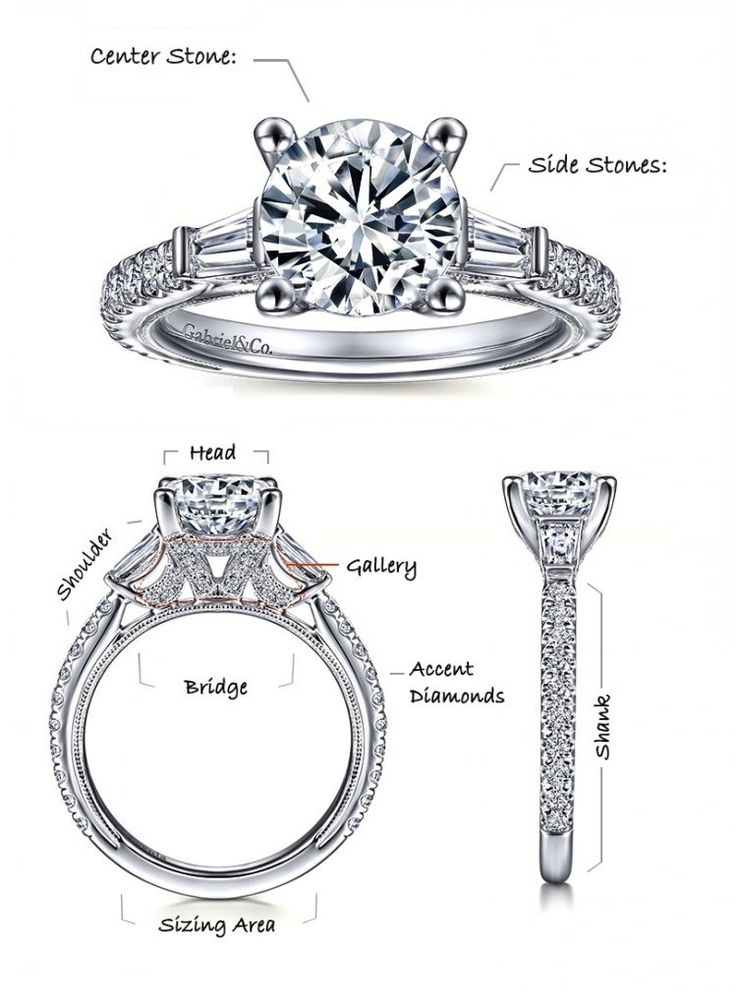
Side Stonescan dramatically change the character of an oval ring. Half-moon diamonds echo the oval's shape, while baguettes and tapered baguettes offer contrast. If you choose diamond side stones, select stones within one or two color grades of the center stone to avoid competition.
Explore CaratX's jewelry collection for settings that complement oval diamonds:Shop Jewelry.
The 2026 Oval Diamond Market: What Buyers and Sellers Need to Know
The oval diamond market has experienced remarkable growth in recent years. According to The Knot's 2026 Real Weddings Study, oval is now the second most popular engagement ring shape at 25% market share, up from just 14% in 2017. This surge in demand has significant implications for both buyers and sellers.
In the US market, demand remains exceptionally robust for elongated ovals in the D–I color range and VS–SI clarity, a sweet spot that offers exceptional brilliance and size perception without the premium of flawless stones. CaratX market analysis confirms that this demand is particularly strong for stones with length-to-width ratios between 1.45 and 1.50.
From a pricing perspective, oval diamonds currently trade at 5–10% premiums over pear shapes and approximately equivalent to rounds in the 1–2 carat range, while commanding 5–15% premiums in the 3+ carat category. For sellers, this represents a significant opportunity to capture premium pricing on well-proportioned stones.
The market is also exhibiting a clear polarization in quality perception.Very well-cutfancy shapes are rare and selling at significant premiums, while poorly proportioned stones are becoming extremely difficult to sell. This underscores a critical lesson: precision cutting is no longer a niche preference but a primary value driver.
For those looking to enter the diamond trade or expand their inventory, CaratX offers a streamlined marketplace connecting sellers with B2B and B2C buyers across 18+ international countries.
Register as a seller atCaratX Seller Registrationto start selling oval diamonds and other fancy shapes to a global audience.
Shop natural diamonds from CaratX's curated marketplace:Natural Diamonds.
Recommended Reads from CaratX -
Expand your diamond knowledge with these in-depth guides from the CaratX blog:
All You Need To Know About Oval Cut Diamond — An overview of the oval cut's history, anatomy, and grading considerations, including CaratX's own rigorous criteria for evaluating oval diamonds:Read More
The Geometry of Brilliance: Why Length-to-Width Ratio Dictates Diamond Beauty and Value — A technical deep dive into how the L/W ratio affects shape appearance, structural durability, and market demand across all fancy shapes:Read More
Diamond Shape Ratios: Why Proportion Matters More Than You Think — Why the L/W ratio is the most overlooked metric in diamond buying, and how it determines whether a diamond looks elegant or awkward:Read More
The Art of Buying Loose Diamonds: Your Buyer's Guide — Master the essentials of diamond quality, the 4Cs, and the step-by-step buying process:Read More
Diamond Carat Size Guide: Charts, Real-Life Examples & Buying Tips — Understand how carat weight translates to visual size, with charts for every shape and carat size norms by country:Read More
The 1-Carat Diamond Market Deep Dive: Price Corrections, Quality Shifts, and Strategic Buying in 2026 — Market analysis for trade professionals on the "quality rotation" reshaping the 1-carat segment:Read More
Prong Styles: Small Details That Protect a Diamond — How setting choice affects both beauty and durability, with specific guidance for oval diamonds:Read More
Start Your Oval Diamond Journey with CaratX -
Whether you're a buyer searching for the perfect engagement ring or a seller looking to connect with international buyers, CaratX is your trusted marketplace for oval diamonds and fine jewelry.
For Buyers:
Browse our curated selection of oval diamonds with verified proportions and certifications:Shop Oval Diamonds
Shop loose diamonds from our global marketplace:Loose Diamonds
Explore fine jewelry and gemstones:Shop Jewelry
For Sellers:
Register on the CaratX marketplace to start selling to B2B and B2C buyers in 18+ countries:Register as a Seller
Learn about our seller plans and pricing:CaratX Seller Plans
Sell jewelry internationally through our platform:Start Selling
Frequently Asked Questions About Oval Diamond Proportions -
What is the most popular length-to-width ratio for oval diamonds?
The most popular range is 1.35:1 to 1.50:1, with 1.40:1 to 1.45:1 being the sweet spot for most buyers. This range balances elongation with visual weight, creating a classic oval silhouette that flatters most hand shapes.
Is a higher ratio always better for oval diamonds?
No. While higher ratios create more elongation and a stronger finger-lengthening effect, they can also make the diamond appear narrower and may increase the visibility of the bow-tie effect. The "best" ratio depends on your personal style, hand shape, and setting preferences. There is no single perfect ratio, it depends entirely on what looks beautiful to you.
Do oval diamonds receive a cut grade from GIA?
No. GIA does not assign a formal cut grade to oval diamonds or any other fancy shapes. GIA evaluates and reports on polish and symmetry, but the overall cut grade is reserved for round brilliants. The American Gem Society Laboratories (AGS) is the only major lab that offers a cut grade for oval diamonds.
What is the bow-tie effect, and how do I avoid it?
The bow-tie effect is a dark, bow-shaped shadow that appears across the width of many oval diamonds. It is caused by light leakage due to misaligned facets or poor proportions. Every oval has some degree of bow-tie, but a well-cut stone will minimize it. To avoid a prominent bow-tie, look for diamonds with a length-to-width ratio between 1.30 and 1.45 and examine the stone from a realistic viewing distance.
How does the length-to-width ratio affect the diamond's price?
Well-proportioned ovals with ratios in the 1.35–1.50 range generally command higher prices than poorly proportioned stones. In the 2026 market, very well-cut fancy shapes are selling at significant premiums, while stones with poor proportions are becoming difficult to sell. The ratio itself is not typically a direct pricing factor, but it strongly influences the diamond's desirability and marketability.
Can I sell oval diamonds internationally through CaratX?
Yes. CaratX connects sellers with B2B and B2C buyers across 18+ international countries. Sellers can register on the CaratX marketplace to start selling loose diamonds, jewelry, gemstones, and pearls to a global audience. Register here to begin:CaratX Seller Registration.