
Precious metals are in the midst of one of their most punishing corrections in recent memory. Gold and silver have both tumbled to multi-month and in silver's case, multi-year lows, erasing hundreds of billions of dollars in market value in a matter of weeks. For jewelers, diamond traders, gemstone dealers, and B2B buyers across the global supply chain, understandingwhythis is happening matters far more than simply watching the headline numbers.
This deep-dive breaks down the data, the macro drivers, the divergence between gold and silver, and most importantly what this means for thediamondandjewelryecosystem. We also map out where opportunities are emerging and how platforms likeCaratXare helping sellers and buyers navigate the volatility.
The Numbers: A Sharp and Broad-Based Sell-Off
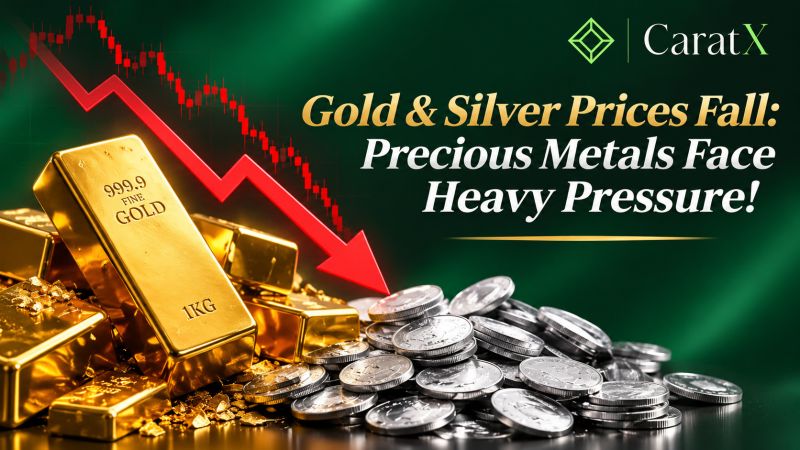
Gold prices fell more than 3% to $3,744.60 per ounce, after touching an intraday low of $3,731.10 the weakest level since September 2025. Silver was hit even harder, dropping more than 4.5% to $45.19 per ounce after reaching a low of $44.66.
The year-to-date picture is stark:
Metal YTD Decline Decline from Peak
Gold Down more than 13% Down more than 30% from its January 2026 peak
Silver Down more than 36% Down more than 60% from its all-time high earlier in the year
Silver's underperformance relative to gold has been dramatic. The gold-to-silver ratio a key gauge of relative value widened to 81.3, its widest reading in at least two weeks, signalling that industrial and speculative demand for silver is cracking faster than monetary demand for gold.
Why Are Gold and Silver Falling So Hard?
The sell-off is not the result of a single factor. It is a confluence of macro forces that have converged with unusual force in the fourth quarter of 2026.
1. A Surging US Dollar -
The US Dollar Index (DXY) climbed to a 19-month high of 103.43, making dollar-denominated commodities more expensive for holders of other currencies and suppressing demand. Gold and silver have long maintained an inverse relationship with the dollar, and that correlation has been on full display this quarter. As theWorld Gold Councilhas consistently documented, dollar strength is one of the most reliable short-term headwinds for precious metals.
2. Aggressive Fed Tightening Expectations -
Markets are now pricing in a greater than 90% probability of a Federal Reserve rate hike in December 2026. US consumer prices rose 0.4% in October, and Fed officials have responded with hawkish commentary rather than pushing back. The 10-year Treasury yield has climbed toward 5.15%, while the 10-year TIPS real yield rose to 2.78% up sharply in a matter of days.
For gold and silver, which generate no yield, rising real rates increase the opportunity cost of holding metal.
3. Silver's Industrial Demand Problem -
Silver is not just a monetary metal, it is an industrial one, and that dual identity has made it more vulnerable in this sell-off. According to Metals Focus research for the Silver Institute, total silver demand is set to fall about 5% in 2026 to 1.08 billion troy ounces, with industrial demand down 3% as solar installations (particularly in China) missed expectations and manufacturers substituted away from silver after January's record prices. Jewellery demand for silver is forecast to fall 22%, and silverware demand by 17%.
Silver-backed exchange-traded products (ETPs) are expected to see net outflows of 45 million ounces in 2026, a dramatic reversal from 278 million ounces of inflows in 2025. That swing from absorption to release of physical metal has removed a key source of tightness that had amplified silver's 2025 rally.
TheSilver Institutehas nonetheless flagged that the market remains in a structural supply deficit its sixth consecutive annual shortfall projected at 46.3 million ounces in 2026. That long-term deficit story has not disappeared; it has simply been overwhelmed by the macro trade.
4. The Unwinding of the AI Infrastructure Trade -
Perhaps the most underappreciated driver has been the unwinding of the artificial intelligence infrastructure trade. Even as Nvidia posted strong earnings, its signal toward greater discipline in AI portfolio investments prompted investors to unwind long positions across the metals complex. Copper plunged 5.4% to a seven-month low, aluminium hit a 52-week low, and the contagion spread to precious metals as risk appetite contracted across the board.
Gold vs Silver: Why the Divergence Matters
The gap between gold and silver's performance is not merely a statistical curiosity, it carries important signals for the jewellery trade.
Gold has retained more of a pure safe-haven bid. Central banks continue to buy aggressively: the World Gold Council reports that central bank gold buying jumped 42% year-on-year to 321 tonnes in Q3 2026, and total gold demand reached 1,369 tonnes during the quarter. While the WGC has lowered its full-year investment demand growth forecast to around 200 tonnes (from an earlier 400 tonnes), it still expects investment demand to be the principal source of annual demand growth.
Silver, by contrast, is being sold as both a monetaryandan industrial asset simultaneously. When traders grow nervous about growth and rate hikes at the same time, silver absorbs more selling than gold. That dynamic is likely to persist as long as the Fed tightening cycle remains in play.
What This Means for the Diamond, Gemstone & Jewellery Trade -
For those of us in the diamond and jewellery business, the precious metals correction is not a spectator sport. It flows directly into input costs, consumer pricing, inventory strategy, and cross-category demand.
Lower Gold Prices = Lower Metal Costs (But Not Necessarily Lower Jewellery Prices)
Goldis a primary input for jewellery settings, bands, and mountings. A 30% decline from peak should, in theory, reduce the metal component of finished jewellery costs. But the picture is more nuanced.
As industry analysis has noted, falling gold prices do not automatically translate into proportionally cheaper jewelry because the diamond orgemstonecomponent may represent a significant share of the final price, and the two components can move independently. TheNAJhas reported that while gold values fell 2.6% in Q3 2026, diamond values fell for the fifth consecutive quarter, hitting a Q3 2026 average index value of 82.0. The two inputs are moving in the same direction but at different speeds and for different reasons.
For jewellers, this creates both an opportunity and a risk: metal costs are easing, but inventory purchased at higher gold prices may need to be marked down. Disciplined buying and real-time pricing intelligence are essential. Platforms likeCaratXallow sellers to list and price inventory dynamically across 18+ international markets, reducing exposure to any single regional pricing environment.
The Substitution Effect: Diamonds and Gemstones Gain Relative Appeal
When gold becomes more expensive, consumers often shift toward lighter gold designs, alternative metals, or diamond-forward pieces where the stone not the metal dominates the value proposition. With gold now meaningfully cheaper than its January peak, that substitution pressure may ease slightly, but the broader trend toward diamond-led and gemstone-led designs remains intact.
Retailers are already responding. Reports from India the world's largest diamond polishing hub indicate that with gold prices correcting, diamond jewellery discounting has intensified, with some branded diamond products offered at 50% off or more, across both natural andlab-growncategories. Demand fornatural diamond jewelleryin India is projected to grow at least 15% in volume, even as gold jewellery demand weakens.
The takeaway is clear: lower gold prices do not automatically mean lower diamond demand, they often mean diamonds capture a larger share of the consumer's jewellery wallet.
Lab-Grown Diamonds and the New Price Architecture -
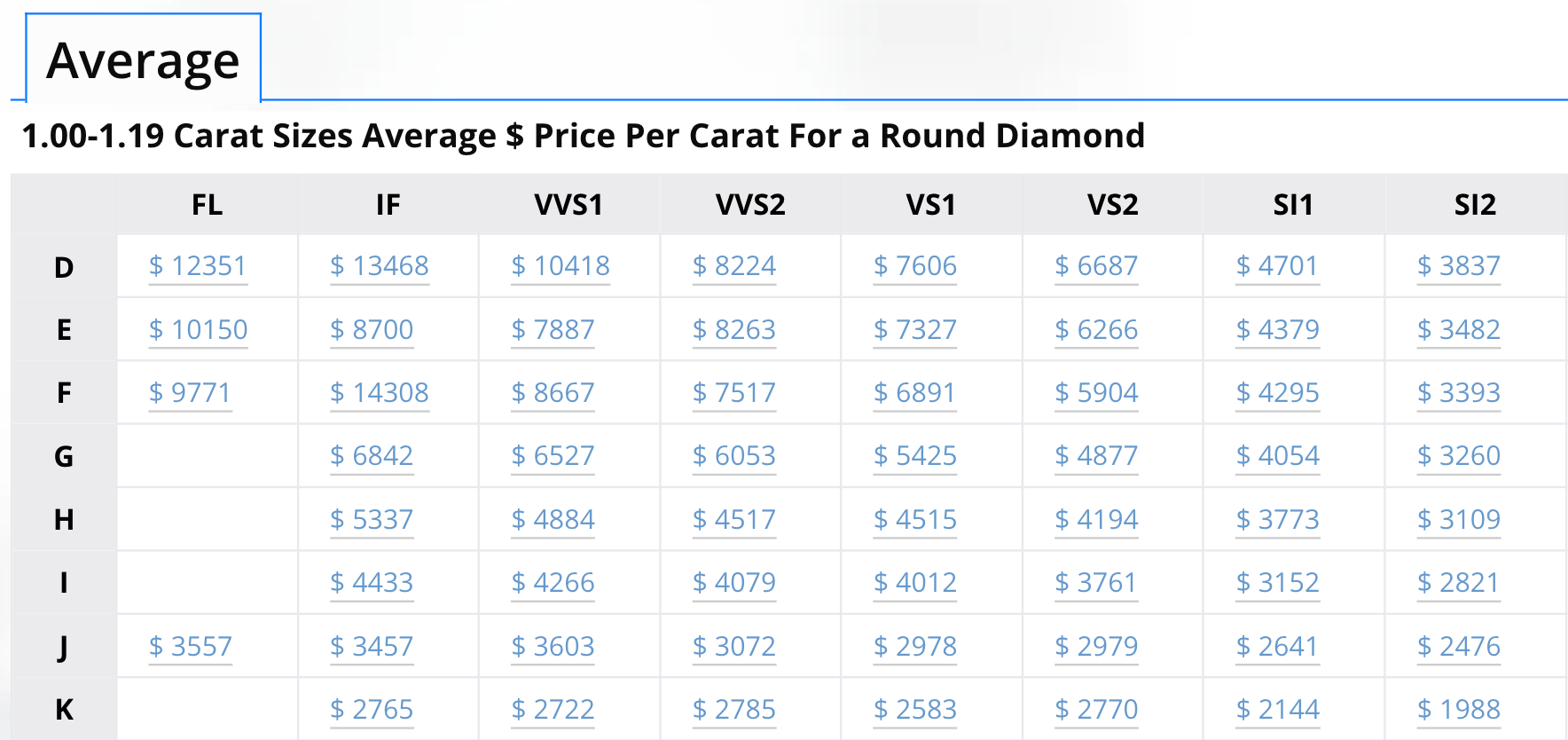
The gold correction is unfolding against the backdrop of a structural transformation in the diamond market itself.Lab-grown diamondsnow constitute approximately 52% of centre stones in US engagement rings, up from less than 3% just a few years ago, and about 42% of all diamond jewellery sold featureslab-grown stones. A 1-carat natural diamond averages around $4,200, while its lab-grown counterpart retails for $1,000 or less.
When gold was at record highs, the combined cost of a natural-diamond-and-gold engagement ring was pushing against consumer budgets. With gold now cheaper, the relative affordability gap between natural and lab-grown narrows slightly on the metal side but the stone-side gap remains enormous.
The strategic implication for jewellers is not to pick a side, but to segment inventory intelligently. CaratX supports bothnatural diamondandlab-grown diamondlistings, allowing sellers to meet demand across the full price and value spectrum.
B2B Buyers:
For B2B buyers retailers, wholesalers, and manufacturers the current environment may offer a strategic entry point. Gold and silver are cyclical. The same macro forces driving them down (dollar strength, Fed hawkishness) will eventually reverse. The World Gold Council still expects investment demand to grow in 2026, and central bank buying remains robust.
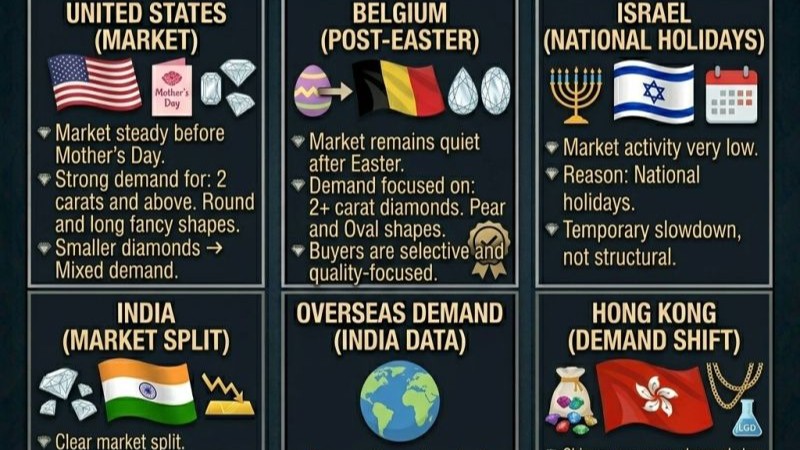
Diamond prices, meanwhile, have been under pressure for longer. TheDiamond Indexshowed that 0.30-carat and 0.50-carat diamonds posted their first significant monthly gains in over a year in April 2026, supported by aggressive supply reduction and a 23% year-on-year fall in rough imports into India. The recovery is selective 1-carat stones continued to decline but it signals that the diamond market is finding a floor in key segments.
Buying diamond and gemstone inventory while metal prices are depressed, and while diamond prices remain below cycle highs, is a classic counter-cyclical strategy. The key is sourcing from a trusted, transparent marketplace with global reach.CaratXconnects buyers with certified loose diamonds, gemstones, and finished jewellery from over 1200 artisan sellers across 16+ countries.
The Global Picture:
While the dollar and Fed policy are the proximate drivers, the gold and silver sell-off is global in scope.
In India, gold crashed nearly 29% from its early-2026 level of ₹1.81 lakh per 10 grams to ₹1.29 lakh, driven by aggressive Fed tightening and the knock-on effects of the US-Iran conflict, which sent crude oil above $120 per barrel and heightened inflation fears. MCX gold futures for December delivery were trading around ₹1,29,625 per 10 grams, while silver futures hovered near ₹1,62,000 per kilogram.
In China, the world's largest jewellery market by some measures, the gold price correction has coincided with intensified diamond discounting and a rotation toward diamond-led products. Chinese consumers, like their Indian counterparts, are increasingly value-conscious and willing to shift categories when relative prices change.
For sellers operating internationally, this divergence in regional pricing and demand creates arbitrage opportunities but only if you have access to a platform that reaches multiple markets simultaneously.
CaratX's seller network spans 18+ countries, enabling sellers toregister and list inventoryfor both B2B and B2C buyers across geographies.
Opportunities Beneath the Headlines -
It is easy to read a headline like "gold down 30%, silver down 60%" and conclude that precious metals and by extension, jewellery are in trouble. That would be a mistake.
1. Lower Input Costs for Jewellery Manufacturers -
Gold and silver are inputs. Cheaper inputs, all else equal, improve margins for manufacturers who can lock in prices and sell finished goods at stable retail price points. Jewellers who buy metal at current levels and hold it through the eventual recovery stand to benefit.
2. A Buyer's Market for Diamond Inventory -
Diamond prices have corrected across most categories. For retailers and brands with strong balance sheets, this is a generational buying opportunity in select segments. The key is selectivity: fancy shapes in the 2-carat-and-above segment are outperforming rounds, while 0.30-carat and 0.50-carat stones have shown supply-driven recovery.
CaratX's blog has covered these trends in depth, including the2026 diamond market outlookand thefancy diamond trends reshaping demand.
3. The Rise of Coloured Gemstones as a Diversification Play -
As gold and diamond prices have corrected,coloured gemstones sapphires, rubies, emeralds, tourmalines, and spinels have continued to attract attention from buyers seeking differentiation and value stability.
CaratX's marketplace includes a curated selection ofcoloured gemstonesfrom certified sellers worldwide. The platform's blog has explored topics ranging fromred gemstones.
4. International Expansion for Sellers -
With domestic markets experiencing uneven demand, sellers who can reach international buyers have a structural advantage.
CaratX's seller plans allow jewellers, diamond traders, and gemstone dealers to list products and sell to buyers in 18+ international countries, with pricing and logistics support built in.Registering as a sellertakes less than a minute, and the platform offers tiered plans to match different inventory sizes and sales volumes.
How CaratX Helps You Navigate Volatility -
In a market defined by macro-driven volatility, access, transparency, and reach are the three pillars of resilience.
Access:CaratXconnects you to thousands ofunique jewelrypieces,loose diamonds, gemstones, andpearlsfrom over 1200 artisan sellers across 16+ countries. Whether you are buying or selling, you can tap into global supply and demand without building international infrastructure from scratch.
Transparency: Every listing is structured around standardised attributes carat weight, clarity, colour, cut, certification so you can compare like-for-like and price with confidence. The platform'sblogpublishes regular market intelligence.
Reach: Sellers can list products for both B2B and B2C buyers across 18+ countries, with pricing plans designed for businesses of different sizes.Request a seller accountto get started, or exploreCaratX's pricing and seller plansfor more details.
Recommended Reads from CaratX -
Diamond Market Outlook 2026: Recovery, Supply Shifts, and the Rise of Lab-Grown Alternatives
De Beers Strategic Price Cut & The 2026 Diamond Market: A Survival Guide for Jewellers
Market Insight: Small Diamonds (0.30 ct, 0.50 ct) Rebound Sharply in April 2026 as Supply Tightens
Beyond Volume: How Australia Dominates the Premium Tier of Diamonds, Pearls, and Gemstones— The full story of the Argyle legacy and what it means for buyers and sellers of Australian pink diamonds.
Follow CaratX for more insightful and educational content on the diamond,gemstone, and jewelry trade.
Start selling to buyers in 18+ international countries register on CaratX today.
Shop natural diamonds, lab-grown diamonds, gemstones, and fine jewellery on the CaratX marketplace.
Frequently Asked Questions (FAQ) -
Q: Is now a good time to buy gold or silver jewellery? A: From a metal-cost perspective, yes gold and silver are significantly cheaper than their January 2026 peaks. However, jewellery pricing also depends on diamond/gemstone costs, labour, and brand margins. If you are buying for personal use, the current environment offers better value than at the start of the year. If you are buying as an investment, consult a financial advisor; precious metals remain volatile.
Q: Will lower gold prices make diamond jewellery cheaper? A: Not necessarily. Diamond prices have also been under pressure, but the two components move independently. In some cases, retailers may use lower gold costs to maintain margins rather than cut retail prices. The best way to assess value is to compare the total cost of the finished piece, not just the metal weight.
Q: Why is silver falling more than gold? A: Silver has a dual identity as both a monetary and an industrial metal. When growth concerns and rate-hike expectations rise simultaneously, silver tends to absorb more selling than gold because its industrial demand is more cyclical. The gold-to-silver ratio widening to 81.3 is a direct reflection of this dynamic.
Q: Should jewellers sell now or hold inventory? A: This depends on your cost basis, cash flow needs, and market view. If you purchased inventory at higher metal prices, selling now may crystallise losses. If you have flexibility, holding quality diamond and gemstone inventory through the cycle while using platforms like CaratX to reach international buyers may be a more resilient strategy. Consult your financial advisor for personalised guidance.
Q: How can I sell my jewellery or diamonds internationally? A: CaratX allows sellers to register and list products for buyers in 18+ countries. You canregister as a sellerand choose a plan that matches your inventory size and sales goals.
Q: Are lab-grown diamonds affected by the gold price decline? A: Lab-grown diamond prices are driven primarily by production costs and market competition, not gold prices. However, the metal component of a lab-grown diamond ring is the same as a natural one, so lower gold prices do reduce the total cost of lab-grown jewellery as well.