
Red gemstoneshold a unique place in the human imagination. They are the color of passion, vitality, and power and few things in nature rival the diversity of red hues found in the mineral kingdom. From the fiery crimson of a fine ruby to the warm, earthy glow of red jasper, each red gemstone tells a distinct geological story and offers its own kind of beauty.
Whether you are a collector, a jeweler, or a curious enthusiast, understanding these stones their science, their history, and their market realities is essential for making informed and confident choices.
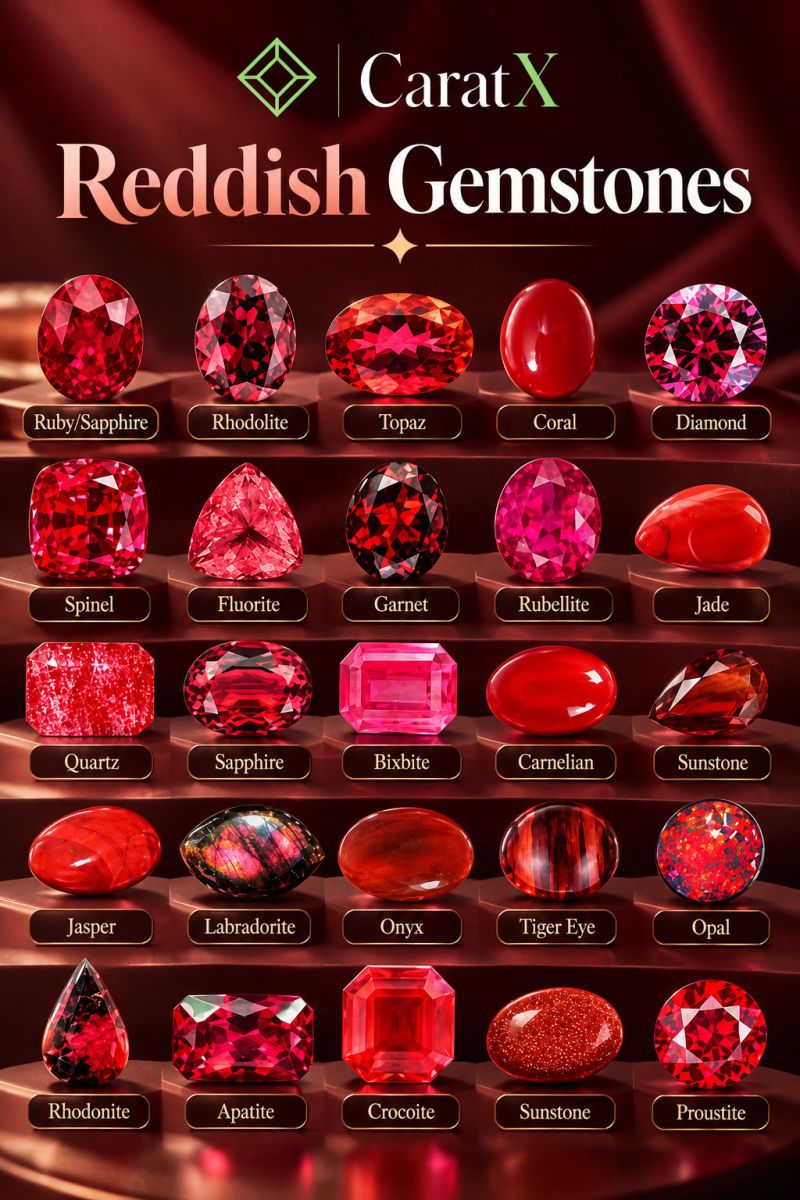
This guide explores six remarkable red gemstones:ruby,red spinel, rhodolite garnet, rubellite tourmaline, carnelian, and red jasper.
Along the way, we will look at what makes each stone unique, how to evaluate quality, and where to source them responsibly through theCaratX marketplace.
Ruby:
Rubyis the red variety of the mineral corundum (aluminum oxide, Al₂O₃). Its color comes from trace amounts of chromium, the same element that gives emerald its green hue. Ruby is the standard against which all other red gemstones are measured, and for good reason: it combines exceptional hardness (9 on the Mohs scale, second only to diamond) with a depth and saturation of color that few gems can match.
Rubyforms in metamorphic rocks, particularly marble, and in some igneous environments. Historically important sources include Myanmar (Burma), Sri Lanka, Thailand, and Cambodia, while Mozambique has emerged as a major producer in the 21st century.
The GIA explains that ruby identification and origin reports assess weight, measurements, shape, cutting style, and color, while also disclosing detectable treatments and, when possible, geographic origin. This matters because treatment disclosure is a cornerstone of ethical gem trading, most commercial rubies are heat-treated to improve color and clarity, and buyers should always ask for documentation.
For those seeking certified natural rubies,CaratXoffers a curated selection through itscolored gemstone inventory. The platform’smarket analysisnotes that red gemstones primarily rubies and tourmalines account for roughly 16% of colored gemstone sales across its international network, a figure that underscores ruby’s enduring commercial importance.
Red Spinel:
For centuries, red spinel masqueraded as ruby in the crown jewels of Europe and Asia. The famous “Black Prince’s Ruby” in the British Imperial Crown is, in fact, a red spinel. Spinel is a different mineral from ruby magnesium aluminum oxide (MgAl₂O₄) but it can display a remarkably similar red color because it is also colored by chromium.
The scientific distinction between the two minerals was not firmly established until 1783, when mineralogist Jean-Baptiste Louis Romé de l’Isle studied their crystal forms.
Today, spinel is appreciated in its own right. It is singly refractive, often very transparent, and offers a red that rivals ruby’s at a significantly lower cost per carat. With a Mohs hardness of 8, it is durable enough for everyday jewelry.
Importantly, fine red spinel is often untreated, making it an attractive option for buyers who prioritize natural, unenhanced stones. Spinel was officially added as an August birthstone in 2016, further raising its profile.
CaratX explores spinel in its guide to39 essential gemstones, noting that spinel crystallizes in the cubic system and forms in metamorphic rocks such as marble and schist.
Collectors can browse spinel and other red gems through the CaratXgemstone marketplace.
Rhodolite Garnet:
Rhodolite is not a mineral species in its own right but a variety of pyrope-almandine garnet that ranges from slightly purplish red to red-purple. The name comes from the Greekrhodon, meaning rose, and rhodolite’s color often evokes raspberry or cranberry tones that are distinct from the more orange-red of many other garnets.
Garnetsas a group are nesosilicates with the general formula X₃Y₂(SiO₄)₃, and the pyrope-almandine series is defined by varying proportions of magnesium and iron.
Rhodolite is valued for its good hardness (7 to 7.5 on the Mohs scale) and its lack of cleavage, which makes it suitable for daily-wear jewelry. Unlike ruby, rhodolite is typically not treated, and its affordability makes it an accessible entry point into the world of red gemstones. Redgarnetshave been found in metamorphic rocks on every continent, and rhodolite is a favorite among gemologists for its clean, saturated color.
CaratX’s birthstone guides highlight garnet as a symbol of protection and enduring friendship, and the platform’sgarnet jewelry collectionoffers rhodolite and other garnet varieties for buyers seeking a durable, untreated red gem.
Rubellite Tourmaline:
Tourmalineis often called the “rainbow gemstone” because it occurs in more colors than any other gem family. Rubellite is the trade name fortourmaline in the pink-to-red range, and it is among the most sought-after varieties.
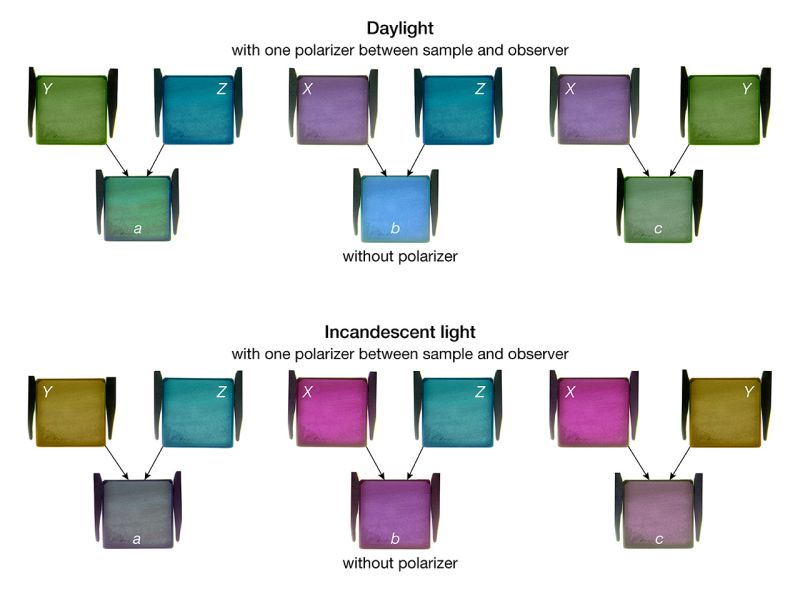
The color is primarily caused by manganese, sometimes with contributions from other trace elements, and rubellite is strongly pleochroic, meaning it can show different colors when viewed from different crystal directions.
With a Mohs hardness of 7 to 7.5, rubellite is durable enough for everyday wear, though it requires a bit more care than ruby or spinel. Large, clean rubellites are increasingly rare, and fine specimens can command high prices, particularly when the color remains vibrant under both incandescent and daylight illumination. The GIA’stourmalinequality factors note that rubellite is one of the most valued tourmaline colors, and gem-quality crystals often form in granitic pegmatites.
CaratX’stourmaline buying guideprovides an in-depth look at rubellite and other tourmaline varieties, and buyers can explore natural tourmaline inventory through theCaratX marketplace.
Carnelian:
Carnelian is a translucent to semi-translucent variety of chalcedony, the cryptocrystalline form of quartz (SiO₂). Its color ranges from pale orange to deep reddish-orange, and it is one of the oldest gem materials used by humans, carnelian beads have been found in archaeological contexts across Asia, the Levant, and Europe.
The red-orange color comes from iron oxide (hematite) inclusions, and the material is relatively soft (6.5 to 7 on the Mohs scale), making it better suited for pendants, earrings, and beads than for heavy-wear rings.
Carnelian is typically untreated in its natural form, though heating is sometimes used to deepen the color. Its warm, earthy tone and affordability make it a popular choice for ethnic and bohemian jewelry styles. Geological studies of carnelian from the Newark Basin in New Jersey show that it contains 97–98 wt.% SiO₂ with around 1 wt.% Fe₂O₃, confirming its simple quartz-based composition.
CaratX’sgemstone guideincludes carnelian and other quartz varieties for buyers interested in warm-toned, accessible gemstones.
Red Jasper:
Red jasper is an opaque, microcrystalline variety of quartz colored by fine inclusions of hematite (Fe₂O₃). Unlike carnelian, which is translucent, jasper is opaque and takes an excellent polish.
It has a Mohs hardness of 6.5 to 7 and has been used for tools, ornaments, and amulets since prehistoric times. Red jasper forms in sedimentary and hydrothermal environments, and its color can range from brick-red to deep brownish-red.
Because it is opaque and relatively inexpensive, red jasper is often used in cabochons, beads, and carved objects. It is a stone of grounding energy in many metaphysical traditions, and its durability makes it suitable for everyday wear in casual jewelry. For buyers seeking natural, untreated red gem materials, red jasper is an attractive and affordable option.
You can explore jasper and other quartz gems through the CaratXgemstone marketplace.
How to Evaluate and Buy Red Gemstones -
When shopping for red gemstones, color is king, but it is not the only factor. The GIA recommends evaluating colored stones across several dimensions: color (hue, tone, and saturation), clarity, cut, and carat weight. For red stones specifically, look for saturation and purity of hue brownish or overly dark modifiers can reduce value.
Clarity expectations vary by species:rubyand spinel are typically eye-clean to slightly included, while tourmaline and garnet are often cleaner.
Treatment status is equally important.Rubyis commonly heat-treated, and some stones undergo lattice diffusion or lead-glass filling; spinel, rhodolite garnet, and rubellite are more often untreated, though not always. Always request a reputable gemological report for higher-value purchases. A GIA Identification and Origin Report can disclose treatments and, for ruby and red spinel, provide an opinion on geographic origin.
Durability should guide your choice of setting and wear. Ruby (Mohs 9) and spinel (Mohs 8) are excellent for rings; rhodolite and rubellite (Mohs 7–7.5) are suitable for daily wear with reasonable care; carnelian and red jasper (Mohs 6.5–7) are best for earrings, pendants, and beads.
CaratX provides a B2B and B2C marketplace where buyers can source certified gemstones from sellers across 18+ countries. Sellers canregister on CaratXto list inventory, and buyers can browsenatural diamondsand colored gemstones.
Detailed pricing and seller-plan information is available on theCaratX launch page.
Frequently Asked Questions -
What is the difference between ruby and red spinel? Ruby is corundum (Al₂O₃) colored by chromium, with a Mohs hardness of 9. Red spinel is magnesium aluminum oxide (MgAl₂O₄), also colored by chromium, with a Mohs hardness of 8. Spinel is singly refractive and often untreated; ruby is commonly heat-treated. Historically, many “rubies” in royal collections were actually spinels.
Are red garnets treated? Rhodolite garnet is generally not treated. Its color is inherent to its chemical composition (a pyrope-almandine solid solution), and treatments are uncommon in the market.
Is rubellite the same as pink tourmaline? Rubellite is a trade term for tourmaline in the pink-to-red range, but not all pink tourmaline qualifies as rubellite. True rubellite typically retains its vibrant color under both incandescent and daylight illumination, whereas some pink tourmalines can appear brownish under incandescent light.
Can carnelian and red jasper be used in rings? Yes, but with care. Both are quartz-based with Mohs hardness of 6.5–7, so they are softer than ruby, spinel, or garnet. They are better suited for bezel settings or protected designs, and are more commonly used in earrings, pendants, and beads.
Why should I buy from a marketplace like CaratX? CaratX connects buyers with sellers across 18+ countries and provides access to a wide range of natural gemstones and diamonds. The platform’s market data and educational content help buyers make informed decisions, and sellers can reach a global B2B and B2C audience through a specialized gemstone marketplace.
Recommended Reads from CaratX
39 Gemstones to Know: A Colorful Guide for Gem Lovers— An overview of spinel, ruby, tourmaline, and dozens of other gems.
Tourmaline: The Rainbow Gemstone That Comes in Every Color— Deep dive into rubellite and the science of tourmaline color.
Market Deep Dive 2025: The Unstoppable Rise of Blue and Green Sapphires— Includes data on red gemstone sales and broader colored-stone market trends.
Ruby Value: Why Color Makes Such a Big Difference— Explains the factors that drive ruby prices and desirability.
The Enduring Power of Birthstones: Why Personal Gemstones Dominate Modern Jewelry
Market Deep Dive 2025: The Unstoppable Rise of Blue and Green Sapphires in Q4 Global Markets