
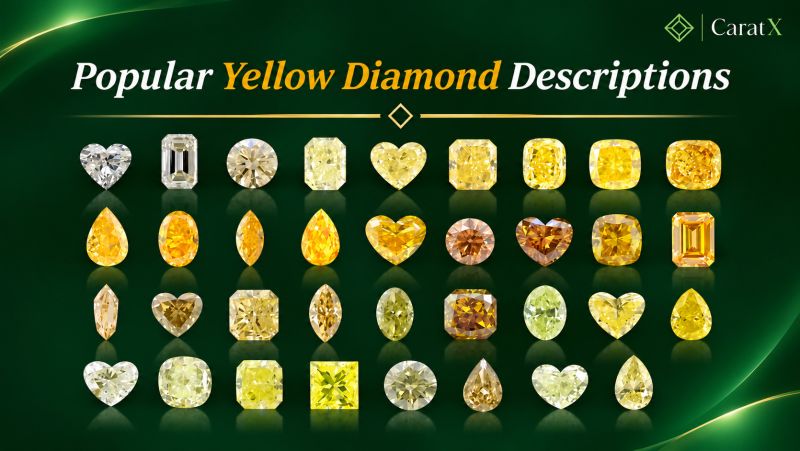
Walk into any high-end jeweller or scroll through a diamond marketplace, and you will quickly discover that “yellow diamond” is not a single product category. It is a spectrum of hues, tones, and trade descriptions lemon, canary, golden, orangy, greenish, and brownish each carrying different implications for beauty, rarity, and price.
For buyers, sellers, and collectors, understanding these descriptions is the difference between making an informed acquisition and relying on marketing language. This guide breaks down the seven most popular yellow diamond descriptions, explains how they relate to the formal GIA grading system, and shows you how to evaluate each type with confidence.
Why Yellow Diamonds Sit Outside the Normal Colour Scale -
Most consumers are familiar with the GIA D-to-Z colour scale, which grades colourless to near-colourless diamonds based on the absence of colour.Yellow diamondsare different. Once a diamond’s yellow saturation exceeds the “Z” masterstone, it enters the GIA Colored Diamond Grading System, where colour is evaluated on three dimensions: hue (the dominant colour), tone (lightness or darkness), and saturation (strength or intensity).
The GIA assigns fancy-colour yellow diamonds one of six grades: Fancy Light, Fancy, Fancy Dark, Fancy Deep, Fancy Intense, and Fancy Vivid. Crucially, the first three grades on the general coloured-diamond scale Faint, Very Light, and Light are not used for yellow diamonds, so the yellow scale begins at Fancy Light.
The colour itself comes from nitrogen atoms trapped in the diamond’s crystal lattice during formation. Nitrogen absorbs blue light, allowing yellow to dominate the reflected spectrum. The arrangement of those nitrogen atoms matters enormously: isolated nitrogen atoms (Type Ib) tend to produce intense, pure yellow, while aggregated nitrogen (Type Ia) often results in paler, more common tints. For a deeper scientific treatment, theGIA’s Gems & Gemology journalhas published extensive research on nitrogen-bearing yellow diamonds.
For a full walkthrough of the science, grading, and market dynamics of yellow diamonds, readThe Ultimate Guide to Yellow Diamonds: Types, Value & Market Insightson the CaratX blog.
The Seven Popular Yellow Diamond Descriptions -
The following descriptions are widely used in the trade. Some are formal GIA-linked concepts; others are descriptive or historical trade terms. Understanding which is which is essential for accurate communication and fair pricing.
1. Lemon Yellow -
What it means: A fresh, light yellow shade with a bright, citrus-like character. “Lemon” is a descriptive trade term rather than a GIA grade. In practice, a lemon-yellow diamond typically falls within the Fancy Light to Fancy range on the GIA scale, with a relatively light tone and moderate saturation.
Buying considerations: Lemon yellow diamonds are among the most accessible entry points into fancy-colour yellow diamonds. Because their saturation is lighter, they can appear elegant and wearable in white-metal settings, where the contrast enhances the yellow tint. However, buyers should be aware that lighter yellows can sometimes appear washed out under certain lighting conditions. Always view the stone in neutral lighting and request a certified grading report.
Explore certified yellow diamonds across the saturation spectrum on theCaratX yellow diamond search page.
2. Canary Yellow -
What it means: “Canary yellow” is one of the most recognisable terms in the trade and one of the most misunderstood. It is not an official GIA colour grade. Instead, it is a trade term used to describe bright, attractive, highly saturated yellow diamonds, traditionally those with pure yellow hue and strong intensity. On a GIA report, a stone described in the trade as “canary” would typically be graded Fancy Intense Yellow or Fancy Vivid Yellow, often with no secondary colour modifier.
Historical note: The term has a specific gemological lineage. GIA researchers have noted that “canary” historically referred to Type Ib fancy colour intense yellow diamonds with isolated nitrogen, used to distinguish them from diamonds with a “cape” spectrum. Today, however, the term is applied more loosely in retail.
Buying considerations: Because “canary” has no standardised definition, two stones described as canary by different sellers may look quite different. The only reliable way to compare is to look at the GIA (or AGS) grade on the report: Fancy Intense and Fancy Vivid are the grades most associated with the canary look. Pure yellows without brownish or greenish modifiers command the strongest premiums.
Related reading: A World of Yellow Gemstones: More Than Just One Shadecompares yellow diamonds with yellow sapphire, citrine, and other golden gems.
3. Golden Yellow -
What it means: A rich, warm golden appearance. “Golden” is a descriptive term that evokes depth and warmth rather than a specific GIA grade. Golden yellow diamonds often have a slightly deeper tone than lemon yellows and may carry a subtle brownish or orangy undertone that gives them a rich, honeyed character.
Buying considerations: Golden yellow stones can be exceptionally beautiful in yellow-gold or rose-gold settings, where the metal complements the warm hue. However, if the golden appearance tips too far toward brown, the stone may be graded as Brownish Yellow (see below), which can affect value. The key is to assess whether the warmth is attractive and balanced or whether it masks the yellow saturation.
CaratX lists natural and lab-grown diamonds with detailed specifications. Start with thenatural fancy colour diamond collectionto compare golden and canary-type stones.
4. Orangy Yellow -
What it means: Yellow with a noticeable orange touch. In GIA terminology, “orangy” is a hue modifier, a secondary colour that accompanies the dominant yellow hue. Orangy yellow diamonds are part of the yellow-orange colour family, and the orange modifier is generally considered desirable.
Value implications: The International Gem Society (IGS) notes that secondary green or orange hues may be present in yellow diamonds, and either will raise the price compared with a murky or brownish stone though orange hues are generally preferable. This is because orange adds warmth and vibrancy without creating the dullness sometimes associated with green modifiers. A well-balanced orangy yellow can be a standout stone.
Buying considerations: As with all modifiers, the strength of the modifier matters. A subtle orange touch can enhance a yellow diamond; an overwhelming orange presence may shift the stone into a different colour category altogether. Always read the GIA report’s colour description carefully.
5. Greenish Yellow -
What it means: Yellow with a slight green tone. “Greenish” is another GIA hue modifier. Greenish yellow diamonds are relatively common among natural yellow diamonds, particularly those formed in certain geological environments where additional defects accompany the nitrogen.
Value implications: IGS observes that green hues occur more commonly than orange hues and can impart a murky appearance to the stone. For this reason, greenish yellow diamonds often trade at a discount compared with pure yellows or orangy yellows of similar saturation. However, personal taste plays a role: some collectors appreciate the subtle olive or lime character of a greenish yellow, especially in vintage-inspired jewellery.
Scientific context: GIA research on canary yellow diamonds has noted that clear brownish and greenish hues are common among certain nitrogen-bearing diamonds, so most do not possess a “true” pure canary yellow colour. This reinforces why pure yellows command a premium.
6. Brownish Yellow -
What it means: A warmer yellow shade with a brownish appearance. Brown is a common modifier in yellow diamonds, and it can range from a faint warmth to a dominant brown tone. At the stronger end, brownish yellow diamonds may overlap with the champagne and cognac colour categories.
Value implications: IGS notes that while brown can give a yellow diamond warmth, a brown secondary hue will reduce price significantly. This is because brown is associated with lower saturation and can make the stone appear less vibrant. That said, brownish yellow diamonds can offer excellent value for buyers who appreciate earthy, warm tones and are less concerned with pure yellow saturation.
Buying considerations: If you are shopping for a brownish yellow diamond, look for stones where the brown modifier adds depth rather than dullness. Certification is essential, as the boundary between “warm yellow” and “brownish yellow” can be subjective without a laboratory report.
How Modifiers, Tone, and Saturation Drive Value -
The difference between a lemon yellow and a canary yellow or between a golden yellow and a brownish yellow is not merely semantic. It reflects the three-dimensional reality of diamond colour: hue, tone, and saturation.
Hue is the dominant colour (yellow) plus any modifiers (orangy, greenish, brownish).
Tone is the lightness or darkness of the colour. IGS suggests that a tone of about 20% is optimal for yellow hues, yielding a bright stone in well-saturated specimens.
Saturation is the strength or intensity of the colour. Higher saturation generally means higher value, but only when the hue is pure and the tone is balanced.
For a detailed explanation of how GIA evaluates these three dimensions, see theGIA’s coloured diamond grading resources.
For an independent buyer-focused perspective, theInternational Gem Society’s fancy coloured yellow diamond buying guideis an excellent .org resource.
TheGuide to Colored Diamonds: Rarity, Value, and Investment Potential of Every Huebreaks down how yellow diamonds compare with pink, blue, and other fancy colours in terms of rarity and market performance.
Famous Yellow Diamonds and the Market Context -
The most famous yellow diamond in the world is the Tiffany Yellow Diamond, a 128.54-carat cushion-cut fancy yellow stone discovered in South Africa in 1877. Its legacy has helped cement the desirability of saturated yellow diamonds in high jewellery. While stones of that size are museum-grade rarities, the market for fine fancy yellow diamonds at more accessible carat weights is active and liquid.
According to CaratX market analysis, yellow diamonds are the most common fancy colour, representing roughly 60–70% of the fancy colour market, and they have seen nearly a 50% increase in value since 2005. This combination of relative availability and strong long-term demand makes yellow diamonds a compelling category for both jewellery lovers and investors.
For sellers looking to reach international buyers, CaratX provides a B2B and B2C marketplace spanning 18+ countries.Sellers can register hereto list natural diamonds, lab-grown diamonds, and jewellery.
Buying Yellow Diamonds: A Practical Checklist
- Insist on a GIA or AGS report. The trade description (“canary,” “lemon,” “golden”) is not a substitute for a laboratory grade. The report will tell you the exact fancy colour grade and any modifiers.
- Distinguish natural, treated, and lab-grown. Natural fancy yellow diamonds are generally more valuable than treated stones, while lab-grown yellow diamonds offer an accessible alternative with identical optical properties. CaratX clearly categorises its inventory so buyers know what they are purchasing.
- Consider the shape. Yellow diamonds often display more intense face-up colour in shapes other than round brilliant. Cushion, radiant, and oval cuts are popular because they retain more colour weight. Browse the5 Carat+ collection, or explore specific shapes such ascushion,radiant, andovalcuts on CaratX.
- View the stone in person or request video. Lighting can dramatically affect the appearance of yellow diamonds. Ask for neutral-light video footage and, where possible, an in-person viewing.
- Understand the modifier premium or discount. Orangy modifiers tend to add value; greenish and brownish modifiers often reduce it. Use the GIA report as your anchor.
For a curated selection of yellow diamond jewellery, including theFancy Yellow Butterfly Cut Lab-Grown Diamond Pendant, visit the CaratX marketplace.
Recommended Reads from CaratX -
The Ultimate Guide to Yellow Diamonds: Types, Value & Market Insights
A World of Yellow Gemstones: More Than Just One Shade
Diamonds in Every Shade: The Complete Guide to Natural Fancy Color Diamonds
The Guide to Colored Diamonds: Rarity, Value, and Investment Potential of Every Hue
Ready to explore yellow diamonds or start selling internationally? Visit CaratX to browse certified inventory, or register as a seller to reach buyers in 18+ countries.
Frequently Asked Questions (FAQs) -
Q: Is “canary yellow” an official GIA grade? No. “Canary” is a trade term, not a GIA colour grade. A diamond described as canary will typically be graded Fancy Intense Yellow or Fancy Vivid Yellow on a GIA report.
Q: Which yellow diamond description is the most valuable? Pure yellow diamonds with Fancy Vivid saturation and no brownish or greenish modifiers command the highest prices. Among modifiers, orangy yellow is generally more desirable than greenish or brownish yellow.
Q: Are lemon yellow diamonds less valuable than canary yellow diamonds? Generally, yes. Lemon yellow typically corresponds to a lighter fancy grade (Fancy Light or Fancy), while canary implies Fancy Intense or Fancy Vivid. Higher saturation usually means higher value.
Q: Can yellow diamonds be lab-grown? Yes. Lab-grown yellow diamonds are created by introducing nitrogen during the growth process, and they are graded on the same GIA fancy-colour intensity scale as natural yellow diamonds. CaratX lists both natural and lab-grown options.
Q: How do I sell yellow diamonds internationally? CaratX allows sellers to register and list diamonds and jewellery for B2B and B2C buyers across 18+ countries.Register as a seller here.
Q: What is the difference between “golden yellow” and “brownish yellow”? Both are descriptive terms. Golden yellow suggests a rich, warm, attractive hue, while brownish yellow explicitly indicates a brown modifier, which typically reduces value. The GIA report provides the definitive grading distinction.