
The Unsung Heroes of Fine Jewellery -
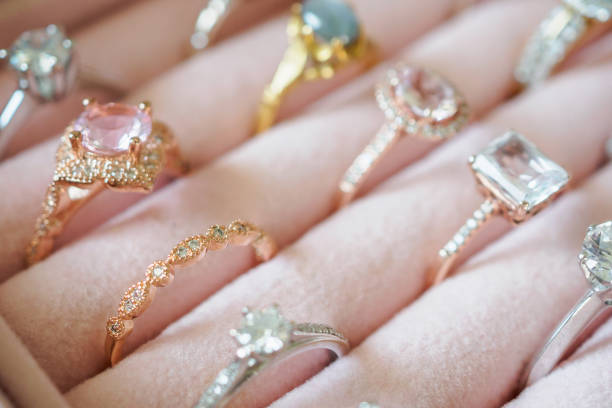
When you look at adiamond engagement ring, your eye is drawn immediately to the stone, its sparkle, its size, its cut. But the truth is, adiamondcannot display its brilliance without a carefully engineered structure holding it safely in place. That structure is the setting, and the most common and celebrated type of setting is the prong setting.
Prongs are small pieces of metal often gold, platinum, or palladium that grip the diamond's girdle (its widest edge) and lift it above the ring band, allowing light to enter from all angles. They are the unsung heroes of jewellery design: tiny in scale but enormous in responsibility. The right prong style can improve a ring's security, appearance, and overall design. It can also make a stone appear larger, enhance its light performance, and protect vulnerable corners from chipping.
This guide explores every major prong style in exhaustive detail, from the classic round prong to the sleek tab prong, and explains how each affects the diamond's beauty, durability, and long-term wearability.
What Are Prongs, Exactly?
Before diving into styles, it is worth understanding the anatomy. A prong setting sometimes called a claw setting is essentially a cradle for the diamond. The prongs extend upward from the base of the ring head, and their tips are bent over the diamond's girdle to hold it securely.
TheGIA (Gemological Institute of America), the world's foremost authority on diamonds, explains that prong settings leave most of the gemstone exposed, which showcases the stone's shape and brilliance particularly well.
The number of prongs varies. A four-prong setting maximizes light return and can make a center stone look 10–15% larger, while a six-prong setting holds the diamond more securely and is the safer choice for stones above 1.50 carats or for active hands. The choice between four and six prongs is one of the first decisions a buyer makes, and it directly influences both aesthetics and security.
But thestyleof the prong its shape, taper, and finish is equally important. Let us explore each style in depth.
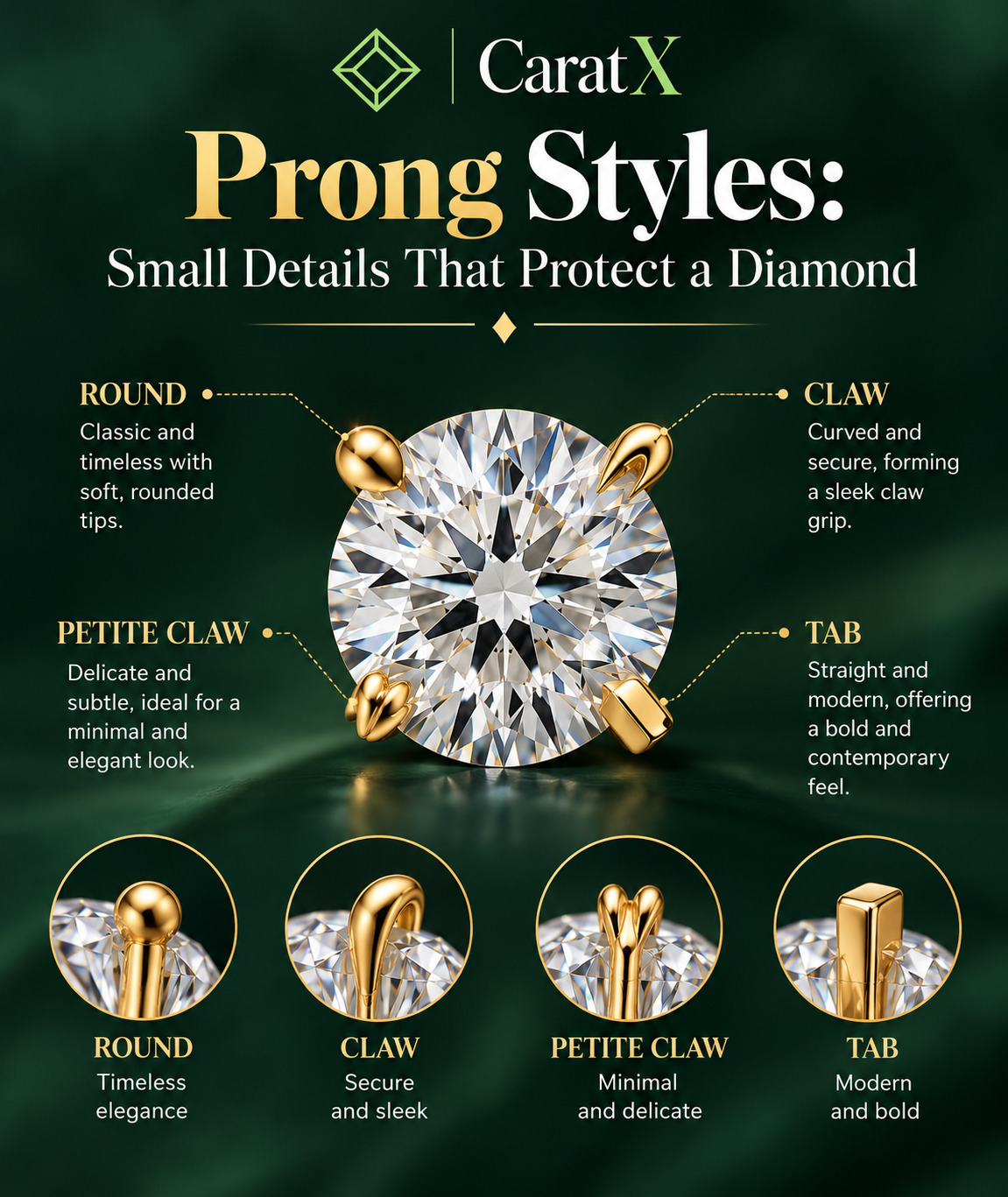
Round Prong:
The round prong is the most traditional and widely recognised prong style. Its tip is smooth, domed, and polished, offering a gentle, unobtrusive hold on the diamond. Because the tip is rounded rather than pointed, it is less likely to snag on clothing or catch on fabric, making it a practical choice for everyday wear.
Characteristics:
Smooth, dome-shaped tip.
Soft, classic appearance.
Less prone to snagging than pointed styles.
Compatible with virtually any diamond shape.
Best For: Round brilliant cuts,oval cuts, andcushion cuts, stones with gentle curves that complement a rounded prong. Buyers seeking a timeless, low-maintenance look.
The round prong is often the default choice for solitaire engagement rings, including the legendary Tiffany setting, which uses six round prongs to elevate the diamond and maximize light return. Its simplicity is its strength: it does not compete with the diamond for attention.
Claw Prong:
The claw prong also called the talon prong is a dramatic evolution of the round prong. Instead of a smooth dome, the tip tapers to a fine point and curves inward, resembling the claw of a bird of prey gripping the diamond. This style is favoured for its sleek, contemporary appearance and its ability to minimize the metal visible from above, making the diamond appear larger and more brilliant.
Characteristics:
Tapered, pointed tip that curves over the girdle.
Sleek, elegant profile.
Minimizes metal visibility.
Extremely secure when properly set.
Best For: Round,oval, andprincess cutsshapes that benefit from maximum light entry. Buyers who want a modern, refined look without sacrificing security.
Claw prongs are exceptionally secure because the pointed tips grip the diamond at precise points, applying equal pressure across the stone. However, they require a skilled setter to execute correctly.
If the claw is too sharp or improperly angled, it can catch on clothing or even chip the diamond's girdle. GIA's bench tips note that prong angle should be maintained at 70–80 degrees and that prong contact should cover 33–50% of the total crown distance for optimal security.
Petite Claw:
The petite claw is a refined version of the claw prong, made even thinner and more tapered to a fine point. Think of it as "little talons gripping the diamond" incredibly sleek and dramatic, especially on elongated shapes like pear and marquise cuts.
Characteristics:
Very thin, tapered tip.
Delicate, almost invisible from above.
Maximizes the diamond's visual size.
Requires precise setting and careful maintenance.
Best For: Pear,marquise, andoval diamondswhere the goal is to make the stone look as large and brilliant as possible. Buyers who prioritize elegance over ruggedness.
The trade-off with petite claws is durability. Because the prongs are so thin, their stability and longevity may be affected. They are more susceptible to bending or lifting if they catch on fabric, and they require regular professional inspection.
As one jewellery maintenance guide warns, "if a claw prong catches on an autumn wool sweater or jacket pocket, the tip can lift upward away from the diamond girdle". For this reason, petite claws are best suited to rings that are worn with care rather than worn daily in rugged conditions.
Tab Prong:
The tab prong is the minimalist of the prong world. Instead of a rounded dome or a tapered point, the tab prong is a flat, squared, or rectangular tab of metal that is bent flush over the edge of the diamond. It offers a clean, geometric look that appeals to buyers who prefer modern, architectural design over traditional ornamentation.
Characteristics:
Flat, squared, or rectangular profile.
Clean, straight lines.
Sits flush against the diamond's edge.
Strong and stable.
Best For: Emerald cuts,Asscher cuts, and princess cuts, stones with straight edges and sharp corners that complement a squared-off prong. Buyers who want a contemporary, understated aesthetic.
The tab prong can be placed on a spectrum that runs from an open prong at one end to a full bezel at the other. This means it offers more coverage and protection than a traditional prong while still allowing significant light to enter the stone. It is an excellent compromise for buyers who want the security of a bezel but the light performance of a prong setting.
Double Prong:
The double prong is not a shape in itself but a configuration: two prongs set side by side at each corner of the diamond, effectively transforming a four-prong setting into eight points of contact. This design provides exceptional security while also adding a distinctive, vintage-inspired detail.
Characteristics:
Two prongs at each corner or cardinal point.
Extra security without added bulk.
Intricate, vintage-inspired appearance.
Often used in three-stone rings and antique-style designs.
Best For: Large stones (2 carats and above) that need maximum security. Vintage-inspired designs. Buyers who want the assurance of eight points of contact without the visual weight of a traditional eight-prong setting.
Double prongs are particularly effective for protecting the corners of princess-cut and square-cut diamonds, which are vulnerable to chipping at their sharp points. By dividing the support into two smaller prongs, the setting distributes pressure more evenly and reduces the risk of the diamond shifting over time.
V-Prong:
The V-prong deserves special mention because it is not a general-purpose style but a specialized solution for diamonds with sharp corners or points. Pear, marquise,heart, and princess cuts all have vulnerable tips that can chip if struck. The V-prong shaped like the letter "V" cradles these points and protects them from impact.
Characteristics:
V-shaped profile that wraps around a corner or point.
Specifically designed to protect vulnerable areas.
Often used in combination with round or claw prongs.
Essential forpear,marquise, heart, and princess cuts.
Best For: Any diamond with a sharp point or corner. A pear-shaped diamond, for example, typically uses a V-prong at its point and four additional prongs to hold the stone securely. GIA's guidance on protecting diamonds from chipping explicitly notes that V-shaped prongs can protect vulnerable points and corners.
How Prong Style Affects Light Performance -
Prongs are not just structural; they are optical. The amount of metal that touches the diamond determines how much light can enter the stone. Prong settings allow approximately 92% light penetration, compared to about 75% for a bezel setting (which encircles the diamond with metal). This is why prong settings are the most popular choice for maximizing brilliance and fire.
The prongstyleaffects this further. A round or tab prong covers more of the diamond's girdle, while a claw or petite claw covers less. For buyers who want the absolute maximum light return, a four-prong claw or petite claw setting is the best choice. For buyers who want a balance of light performance and security, a six-prong round or tab setting is ideal.
How Prong Style Affects Security and Durability -
Security is where prong style becomes a serious consideration. GIA explains that a six-prong setting is more likely to retain the stone if one prong breaks, whereas a four-prong setting can lose the diamond entirely if a single prong fails. This makes six-prong settings the safer choice for large stones, active lifestyles, and rings that will be worn daily.
However, prongcountis only part of the equation. Prongthicknessandanglematter just as much. GIA's bench tips specify that 40–50% of the metal should be removed from the prong thickness at the bearing, that the diamond should be seated level just above the gallery wire, and that finished prong height should be 75–85% of table height. A skilled setter will follow these specifications regardless of the prong style chosen.
For buyers concerned about security, the MJSA (Manufacturing Jewelers and Suppliers of America) offers an authoritative introduction to prong, bezel, and channel settings that explains how prongs hold a gemstone securely while allowing maximum light to reach the stone.
How to Choose the Right Prong Style -
Choosing a prong style is a balance of aesthetics, security, and lifestyle. Here is a practical framework:
For maximum light and visual size: Choose a four-prong claw or petite claw setting. These styles cover the least amount of metal and make the diamond appear larger.
For maximum security: Choose a six-prong round or tab setting. These styles offer more points of contact and reduce the risk of stone loss.
For vintage elegance: Choose a double prong setting. The intricate detail adds a touch of old-world charm.
For modern minimalism: Choose a tab prong setting. Its clean lines and squared profile appeal to contemporary tastes.
For fancy shapes with sharp corners: Choose a V-prong in combination with round or claw prongs. This protects the vulnerable points from chipping.
For active lifestyles: Choose a six-prong setting with slightly thicker prongs. Avoid petite claws, which are more susceptible to bending.
You can browse CaratX's curated collection ofengagement ringsto see how different prong styles look on finished pieces. For buyers who prefer to design their own ring, CaratX also offersloose diamondsthat can be set according to your preferred prong style.
Maintaining Your Prong Setting -
Prongs are mechanical components. They bend, wear, and loosen over time. GIA recommends getting the prongs in your engagement ring checked every six months for potential damage. You can check if a prong is loose by gently pushing the stone, if it moves, the prong needs tightening.
Cleaning should be done carefully. Soak the ring in lukewarm water with a drop of mild detergent, then gently brush around each prong with a soft toothbrush. Never scrub aggressively, as this can weaken prongs and loosen settings.
If a prong catches on fabric, if the diamond moves when lightly touched, or if the band is cracked, stop wearing the ring and take it to a professional jeweller immediately. A loose diamond can fall out and be lost forever.
Frequently Asked Questions -
Q: Are prong settings secure? Yes when properly set and maintained. Prong settings are the most popular type of setting for engagement rings precisely because they balance security with light performance. A six-prong setting is more secure than a four-prong, and regular inspections every six months will catch any issues before they become problems.
Q: Which prong style makes the diamond look biggest? A four-prong claw or petite claw setting covers the least amount of metal and allows the most light to enter the stone, making the diamond appear larger and more brilliant. A four-prong setting can make a center stone look 10–15% larger.
Q: Can I change the prong style after I buy a ring? In many cases, yes. A skilled jeweller can re-tip or replace prongs to change the style. However, this is a delicate operation, and it is always better to choose the right style from the beginning. CaratX's seller registration allows jewellers and designers to source loose diamonds and create custom settings tailored to your preferences.
Q: Which prong style is best for a pear-shaped diamond? A pear-shaped diamond has a sharp point at one end, which is vulnerable to chipping. The best setting uses a V-prong at the point and four additional round or claw prongs to hold the stone securely.
Q: How often should prongs be checked? Every six months, or more frequently if you wear the ring daily or lead an active lifestyle. GIA recommends a professional inspection every six months.
Recommended Reads from CaratX -
The Ultimate Guide to Diamond Settings & Ring Profiles: How Design Dictates Brilliance, Durability, and Style— Compare prong settings against 13 other setting styles and understand how design dictates brilliance and durability.
The Ultimate Guide to the Anatomy of a Ring: Understanding Every Part Before You Buy— Learn how prongs, the shank, the gallery, and every other component work together to secure your diamond.
The Guide to Types of Diamond Rings: From Solitaires to Eternity Bands— Explore how solitaire, halo, three-stone, and pavé rings each use prong settings differently.
The Art of Buying Loose Diamonds: Your Buyer's Guide— Master the 4Cs and learn how to choose a diamond that will pair perfectly with your preferred prong style.
Diamond Setting Styles: The Ultimate Guide to Maximizing Your Sparkle— See the GIA light-penetration data that proves why prong settings outperform bezels for brilliance.
For wholesale inquiries, sellers can register on the CaratX marketplace to access a global network of B2B and B2C buyers across 18+ international countries. Shop natural diamonds, gemstones, and fine jewellery atCaratX.com, or explore our seller plans to start selling internationally.
Follow CaratXfor more insightful and educational content on diamonds, gemstones, and fine jewellery.