
Introduction:
Every diamond tells a story. Formed billions of years ago under extreme heat and pressure deep within the Earth's mantle, diamonds capture within their crystal structure a record of their incredible journey to the surface.
These internal records known as inclusions are far more than imperfections. They are nature's fingerprints, making every diamond utterly unique and providing gemologists with invaluable clues about a stone's origin, authenticity, and quality.
Whether you're a first-time diamond buyer, a seasoned jewelry professional, or a seller on a global marketplace, understanding inclusions is essential for making informed decisions. Inclusions directly influence a diamond's clarity grade, which in turn affects its beauty, durability, and value.
According to theGemological Institute of America (GIA), clarity is one of the 4Cs, alongside cut, color, and carat weight that determine a diamond's overall quality and price.
AtCaratX, we connect buyers and sellers across 18+ countries, offering a curated selection of certifiednatural diamonds,gemstones, andfine jewelry. Our platform is built on transparency and expertise, and this guide is designed to help you navigate the complex world of diamond inclusions with confidence.
What Are Diamond Inclusions?
Inclusions are internal characteristics trapped inside a diamond during its formation or created by stress as the crystal grew. They are distinct from blemishes, which are external surface features typically caused by the polishing process, wear, or handling.
Together, inclusions and blemishes are called clarity characteristics. Gemologists evaluate five key factors when assessing these characteristics: size, number, location, nature, and relief. The GIA Clarity Scale, the global standard for diamond grading consists of 11 grades, ranging from Flawless (FL) to Included (I3).
Key statistics:
Over 95% ofnatural diamondscontain some form of inclusion.
Less than 1% of all natural diamonds are graded as Flawless (FL).
Most diamonds sold injewelrystores fall into the VS (Very Slightly Included) or SI (Slightly Included) categories.
Inclusions are not necessarily negative. In fact, they can enhance a diamond's character, serve as proof of natural origin, and even help scientists study the Earth's deep mantle. As noted in GIA research, the presence of certain inclusions can add distinction and beauty to a stone.
The Complete Guide to Common Diamond Inclusions -
Let's examine the most common types of inclusions found innatural diamonds, their visual characteristics, and how they impact a diamond's clarity grade.
1. Clouds -
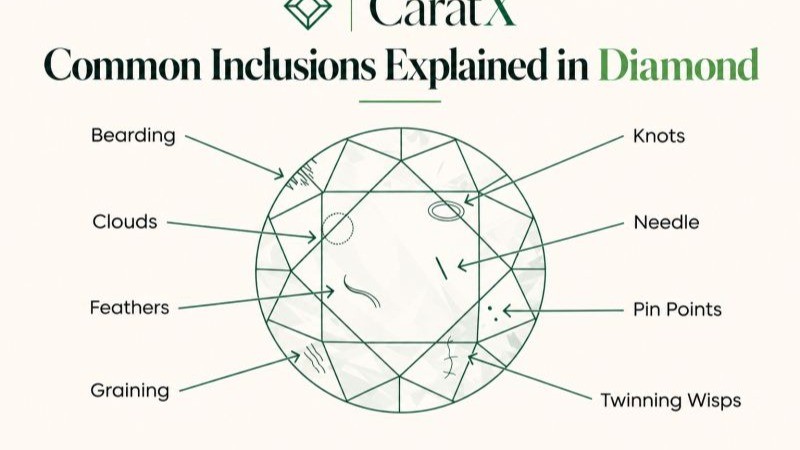
A cloud is a cluster of tiny pinpoint-sized inclusions often crystals or pinpoints that are so small they cannot be distinguished individually under magnification. Instead, they create a hazy, milky, or cloudy appearance within the diamond.
Impact on clarity: Small clouds have minimal impact and are often invisible to the naked eye. However, a large or dense cloud can spread across the stone and reduce its transparency and brilliance, giving it a dull appearance even if the cut is excellent.
Interesting fact: Inlaboratory-grown diamonds, cloud-like inclusions are a result of the growth process, growth remnants that form in distinct patterns. Natural clouds, by contrast, form from trapped minerals during the diamond's crystallization.
2. Feathers -
Feathers are internal fractures or cracks within the diamond. They are called feathers because they often display a feathery, wispy pattern when viewed under magnification.
Impact on clarity: Most feathers are harmless and have minimal impact on durability. However, feathers that reach the surface especially on the girdle (the widest edge of the diamond) can make the stone more susceptible to chipping if struck with significant force. Gemologists pay close attention to the size and position of feathers when assigning a clarity grade.
What to watch for: According to the American Gem Society (AGS), feathers and cleavages are the two inclusion types most likely to compromise a diamond's structural integrity.
3. Pinpoints -
Pinpoints are minuscule crystal inclusions that appear as tiny white or black dots under 10x magnification. They are the building blocks of clouds, when multiple pinpoints cluster together, they form a cloud.
Impact on clarity: Individually, pinpoints are almost always invisible to the naked eye and are considered minor inclusions. A single pinpoint has virtually no impact on clarity, but clusters of them form clouds that can affect transparency.
4. Needles -
Needles are thin, elongated crystal inclusions that resemble tiny rods or strands. They are similar to pinpoints but stretched out. White needles are usually diamond crystals, while black needles are often other minerals such as rutile.
Impact on clarity: Needles are typically not a durability concern. When found in parallel groups, they can create interesting phenomena like asterism (star-like effects) ingemstones, though in diamonds they are usually considered inclusions.
5. Knots -
A knot is a crystal inclusion that reaches the surface of the diamond. Unlike most inclusions that are entirely internal, knots break through the polished surface of the stone.
Impact on clarity: Knots can significantly affect both clarity and durability. Because they reach the surface, they can create weak points in the diamond's structure and are often more visible than fully internal inclusions. A knot can also create a raised area on a facet, which affects the diamond's polish and symmetry.
6. Twinning Wisps -
Twinning wisps are a series of pinpoints, clouds, or crystals that form along a twinning plane, an area in the crystal where the growth direction changed abruptly during formation. They appear as streaky, flat, wispy lines and are particularly common in fancy-shaped diamonds.
Interesting research: GIA studies have found that twinning wisps are atomic defects along the twinning plane, found in approximately 10% of type Ia diamonds. These inclusions tell a story of the diamond's interrupted growth, offering a unique window into its formation history.
7. Graining -
Graining appears as faint lines, curves, or patterns caused by irregular crystal growth. It is not a distinct inclusion in the traditional sense but rather a growth feature that can affect a diamond's internal appearance.
Impact on clarity: Graining can range from barely noticeable to significantly impacting transparency. In severe cases, it can give a diamond a hazy or milky appearance. Graining is often evaluated alongside other clarity characteristics when determining a grade.
8. Bearding -
Bearding refers to tiny hair-like marks or feathers that extend inward from the girdle of the diamond. It typically occurs during the polishing process when the girdle is bruted or shaped.
Impact on clarity: Bearding is usually confined to the girdle area and has minimal impact on overall clarity. However, extensive bearding can affect the diamond's appearance and may be noted on a grading report.
How Inclusions Affect Diamond Clarity and Value -
The presence and characteristics of inclusions directly determine a diamond's clarity grade, which is one of the most significant factors influencing its price. Here's how inclusions impact the five clarity grading factors:
Size -
Larger inclusions are exponentially easier to see and therefore have a greater negative impact on the clarity grade. A large, visible feather could drop a stone from VS1 to SI2 or even I1.
Number -
The more inclusions a diamond contains, the lower its clarity grade. A diamond with a single, small, transparent crystal will receive a much higher grade than one with multiple scattered inclusions.
Location -
Where an inclusion sits within the diamond matters enormously. Inclusions located directly under the table (the large flat facet on top) are the most visible because they reflect light back to the eye. Inclusions near the girdle or deep in the pavilion are often masked by the diamond's facets and have less visual impact.
Nature -
The type of inclusion matters. A colorless crystal has less impact than a black, opaque crystal. A feather that reaches the surface poses more of a durability risk than a fully internal one.
Relief -
Relief refers to how much an inclusion stands out from its surroundings. Inclusions with high relief (those that contrast strongly with the diamond) are more visible and have a greater impact on the grade.
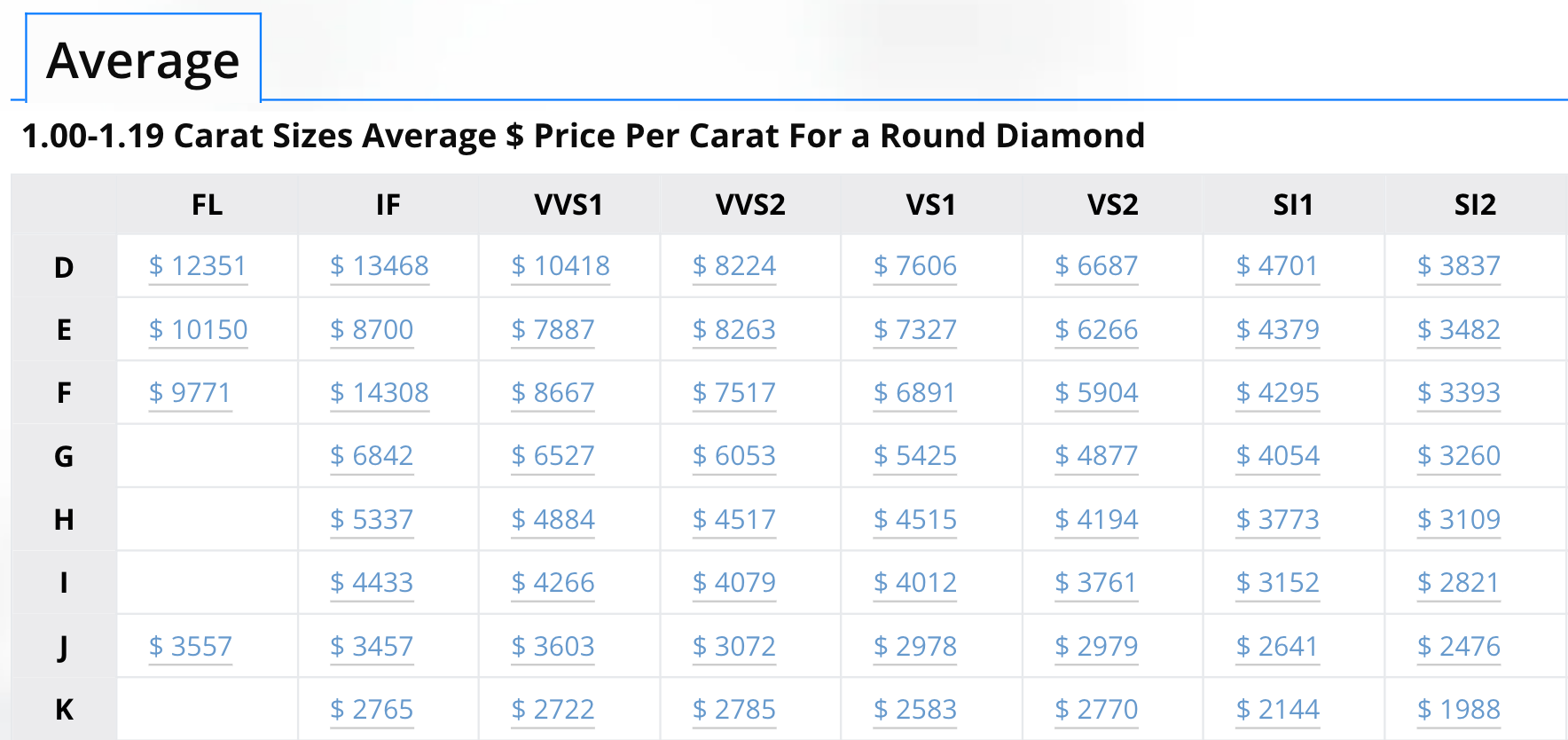
The value equation: A diamond with a clarity grade of FL or IF commands a significant premium because such stones are exceptionally rare. However, for most buyers, diamonds in the VS to SI range offer the best balance of beauty and value, their inclusions are difficult to see without magnification, yet they are considerably more affordable than flawless stones.
Inclusions as Proof of Authenticity and Origin -
Beyond grading, inclusions serve critical roles in diamond identification and scientific research:
Authentication: Inclusions are one of the key ways gemologists distinguish natural diamonds from laboratory-grown diamonds and simulants. Natural diamonds contain mineral inclusions that formed under specific conditions over millions of years, something that cannot be replicated in a lab.
Origin tracing: The chemical composition of inclusions can reveal where a diamond formed. Research from institutions like the Carnegie Institution for Science has shown how diamond inclusions map the Earth's carbon cycle over billions of years.
Geological research: Inclusions provide scientists with direct samples of the deep Earth's mantle. GIA research has documented rare minerals trapped inside diamonds that offer insights into geological processes that occurred billions of years ago.
Looking Beyond Inclusions: A Note on Blemishes
While inclusions are internal, blemishes are external surface features that also affect a diamond's clarity grade. Common blemishes include:
Scratches: Surface marks caused by wear or contact with other stones.
Nicks: Small chips or indentations on facet edges.
Abrasions: Worn areas along facet junctions.
Extra facets: Additional polished facets not part of the standard cut.
Natural: Original surface features from the rough crystal that remain on the polished stone.
Blemishes typically have less impact on clarity than inclusions, but significant blemishes can lower grades, particularly at higher clarity levels (VS and above). Together, inclusions and blemishes form a diamond's "clarity characteristic" profile, which is documented on its grading report.
Frequently Asked Questions About Diamond Inclusions -
What is the most common type of inclusion in diamonds?
Pinpoints and crystals are the most common inclusions in natural diamonds. Pinpoints are tiny dots that appear white or black under magnification, while crystals are mineral inclusions trapped during formation. Approximately 80–90% of natural diamonds contain some type of inclusion.
Do inclusions make a diamond less valuable?
Inclusions do affect value, but not always negatively. A diamond with no visible inclusions commands a premium, but most diamonds used in fine jewelry contain inclusions that are invisible to the naked eye. These diamonds offer excellent value. In some cases, certain inclusions can add character and distinction to a stone.
Can you see inclusions with the naked eye?
Most inclusions cannot be seen with the naked eye. Gemologists use 10x magnification the industry standard to identify and grade clarity characteristics. A diamond is considered "eye-clean" if no inclusions are visible to the naked eye, even if they are visible under magnification.
Do laboratory-grown diamonds have inclusions?
Yes, laboratory-grown diamonds also contain inclusions, but their types and patterns differ from natural diamonds. Lab-grown diamonds often have metallic flux inclusions or distinctive growth patterns that help gemologists identify their origin.
Which inclusion is the most dangerous for durability?
Feathers that reach the surface, particularly on the girdle, and knots pose the greatest durability risks. Feathers can propagate into cracks if struck at the right angle, and knots create weak points where the diamond's structure is interrupted. Feathers and cleavages are the two inclusion types most commonly associated with structural vulnerability.
How do inclusions affect the sparkle of a diamond?
Inclusions can affect sparkle by interfering with light transmission. Large or dark inclusions located under the table can block or distort light, reducing brilliance. Clouds, if dense, can create a hazy appearance that dulls the stone's overall brightness. However, small inclusions located near the edges or deep in the pavilion often have no visible impact on sparkle.
Are inclusions good or bad?
Neither they are simply natural features. Inclusions are valuable for identification and scientific research, and they make each diamond unique. From a commercial perspective, fewer and smaller inclusions generally mean a higher clarity grade and higher price. But for most buyers, the key is finding a diamond whose inclusions are not visible to the naked eye, offering the best combination of beauty and value.
Recommended Reads from CaratX -
Expand your diamond knowledge with these in-depth guides from our blog:
The 5 Factors That Decide a Diamond's Clarity Grade: The Ultimate GIA Guide— Learn how size, number, location, nature, and relief determine every clarity grade.
The Ultimate Guide to Diamond Inclusions— A comprehensive deep dive into every inclusion type, with expert insights for buyers and sellers.
Guide to Diamond Clarity: How Experts Identify Tiny Characteristics— Understand how gemologists use 10x magnification to map a diamond's internal world.
The Ultimate Guide to Diamond Blemishes: Types, Impact, and Clarity— Explore the external features that complete a diamond's clarity profile.
The Ultimate Diamond Quality Masterclass: 10 Expert Rules to Judge Like a Gemologist— Master the art of evaluating diamonds with professional techniques.
Start Buying or Selling Diamonds with Confidence -
Whether you're searching for the perfect certified natural diamond or looking to reach buyers in 18+ international markets, CaratX provides the platform, tools, and expertise you need.
Shop certified natural diamonds— Browse our curated selection of hand-selected stones with full grading reports.
Register as a seller— Join our global marketplace and start selling to B2B and B2C buyers today.
Explore our seller plans— Choose from flexible plans designed for businesses of all sizes, with competitive transaction fees and powerful analytics.
View our pricing and launch options— Get all the details you need to start listing your products internationally.
AtCaratX, we believe that understanding diamonds should be accessible to everyone. Inclusions are not flaws to fear, they are nature's signatures, stories written in carbon over billions of years. With the right knowledge, you can appreciate every diamond for what it truly is: a miracle of nature, unique and irreplaceable.