
When investing in a diamond, whether for an engagement ring or a fine jewelry piece, understanding the 4Cs (Cut, Color, Clarity, and Carat) is essential. Among these, Clarity is often the most misunderstood and technically complex. It is the map of a diamond’s journey from the depths of the Earth to your finger.
At CaratX, we connect global buyers and sellers with high-quality, natural diamonds. To help you make an informed purchase, let’s dive deep into the science of diamond clarity, how gemologists grade it, and why those tiny characteristics matter.
What is Diamond Clarity -
Diamond clarity refers to the absence of internal flaws (inclusions) and surface irregularities (blemishes). Because diamonds are formed under extreme heat and pressure deep within the Earth, nearly all of them contain unique birthmarks. These are known as clarity characteristics.
According to the Gemological Institute of America (GIA), the global authority on diamond grading, these characteristics are nature's fingerprints, no two diamonds are exactly alike. Understanding these features helps gemologists separate diamonds and determine their rarity and value.
Why Do Inclusions Occur -
Inclusions are trapped minerals, fractures, or irregularities that occur during the diamond's crystallization process. Some are remnants of other minerals, while others are caused by stress as the diamond is brought to the surface via volcanic eruptions.
The study of these inclusions, known as inclusion geology, helps scientists trace the origin of diamonds.
Common Clarity Characteristics Explained -
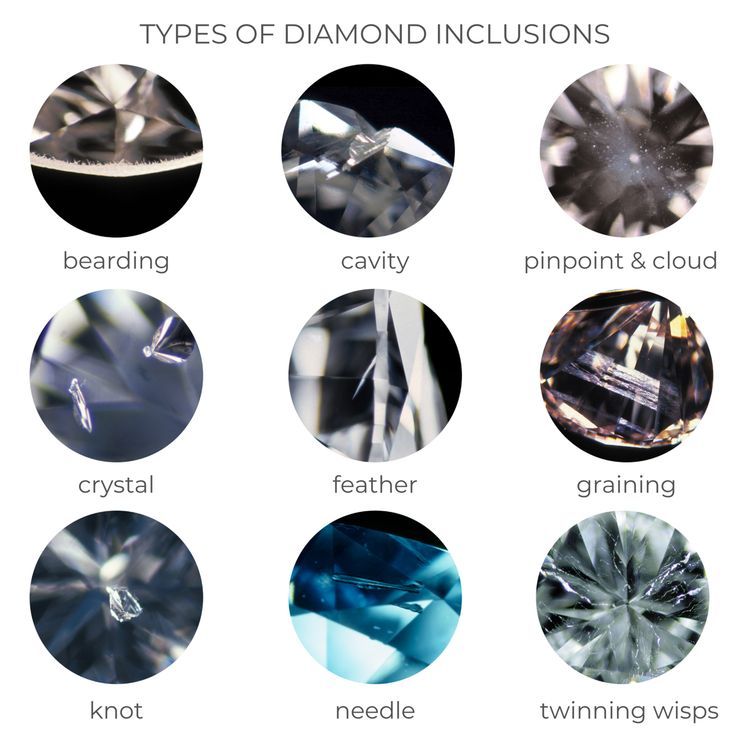
Gemologists use 10x magnification (the industry standard) to identify specific features. Here are the most common ones found in the market:
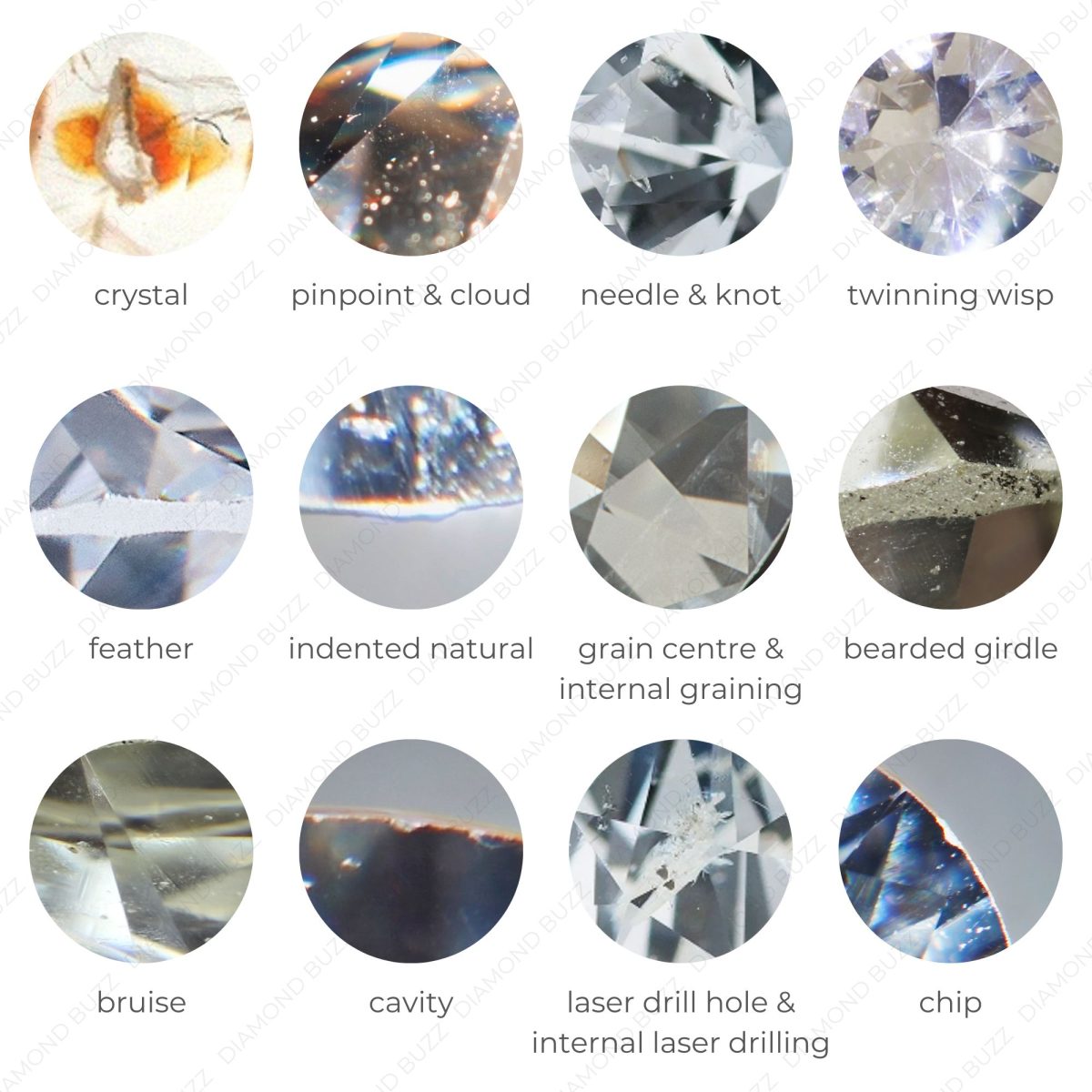
1. Crystals (Included Crystals)
These are mineral crystals trapped inside the diamond. They can be different colors; if the crystal is yellow, it might be a garnet; if it is black, it could be graphite or a sulfide.
Impact: Large, dark crystals are more visible and lower the clarity grade significantly.
2. Feathers
Feathers are internal cracks or fractures. They are called feathers because they often look like a feathery pattern inside the stone. While most feathers are harmless, if a feather reaches the surface and is struck at the right angle, it could pose a durability risk.
3. Clouds
A cloud is a grouping of three or more pinpoint-sized inclusions too close together to be distinguished individually. They create a hazy or milky appearance.
The "Milky" Diamond: If the cloud is dense, it can affect the transparency of the diamond, making it look dull even if the cut is excellent.
4. Needles
These are long, thin inclusions that resemble tiny rods. They are often elongated crystals of rutile or other minerals. When found in parallel groups, they can create interesting phenomena like asterism (star-like effects) in gemstones, though in diamonds they are usually considered inclusions.
5. Pinpoints
These are the most common inclusions. They are tiny white or black dots, often only visible under high magnification. A single pinpoint has almost no impact on clarity, but clusters of them form clouds.
6. Knots
A knot is an inclusion that reaches the surface of the diamond after polishing. Because the included crystal is harder than the surrounding diamond, it can create a raised area on the facet.
7. Cavities
When an internal inclusion is plucked out during the polishing process, or when a feather reaches the surface and breaks, it leaves a cavity. This is a surface-reaching clarity characteristic.
To see how these characteristics affect the price of a diamond, browse our selection of eye-clean stones at CaratX Marketplace .
The Grading Process:
Gemologists don't just count inclusions; they evaluate them based on a strict standard. The process requires years of training to master.
The 10x Magnification Standard -
The international standard for grading clarity is 10x magnification using a loupe or a microscope. The GIA states that any feature visible to the naked eye without magnification is considered "Eye Visible" and drastically affects the grade.
According to a study by the American Geological Institute, approximately 99% of all diamonds have inclusions detectable at 10x magnification.
The Five Factors of Clarity Grading -
When a gemologist looks at a diamond at CaratX or in a lab, they consider five key things:
Size: The larger the inclusion, the greater the impact.
Nature: Is it a dangerous feather or a stable crystal?
Number: How many inclusions are there?
Location: Is it under the table (center) or near the edge (pavilion)?
Relief: How much does it contrast against the diamond? A black crystal against a white diamond is high relief (bad), while a transparent crystal is low relief (better).
The Diamond Clarity Scale -
The GIA clarity scale is the universal language of diamond quality. It consists of 11 specific grades, ranging from Flawless to Included.
Flawless (F) – No inclusions or blemishes are visible under 10× magnification even to a highly skilled diamond grader. These diamonds are extremely rare.
Internally Flawless (IF) – No internal inclusions are visible under 10× magnification, but very minor surface blemishes may be present.
Very Very Slightly Included (VVS1, VVS2) – The diamond contains extremely tiny inclusions that are very difficult for a skilled grader to locate under 10× magnification.
Very Slightly Included (VS1, VS2) – The diamond has minor inclusions visible under 10× magnification, such as small crystals or feathers, but they typically do not affect the diamond’s overall appearance.
Slightly Included (SI1, SI2) – Inclusions are noticeable under 10× magnification. SI1 diamonds are often eye-clean, while SI2 diamonds may have inclusions visible to the naked eye.
Included (I1, I2, I3) – Inclusions are obvious under 10× magnification and usually visible to the naked eye. These inclusions can affect the diamond’s transparency and brilliance.
The "Eye-Clean" Threshold -
For most jewelry buyers, the goal is to find a diamond that is "eye-clean," meaning no inclusions are visible to the naked eye when viewed from about 6-12 inches away.
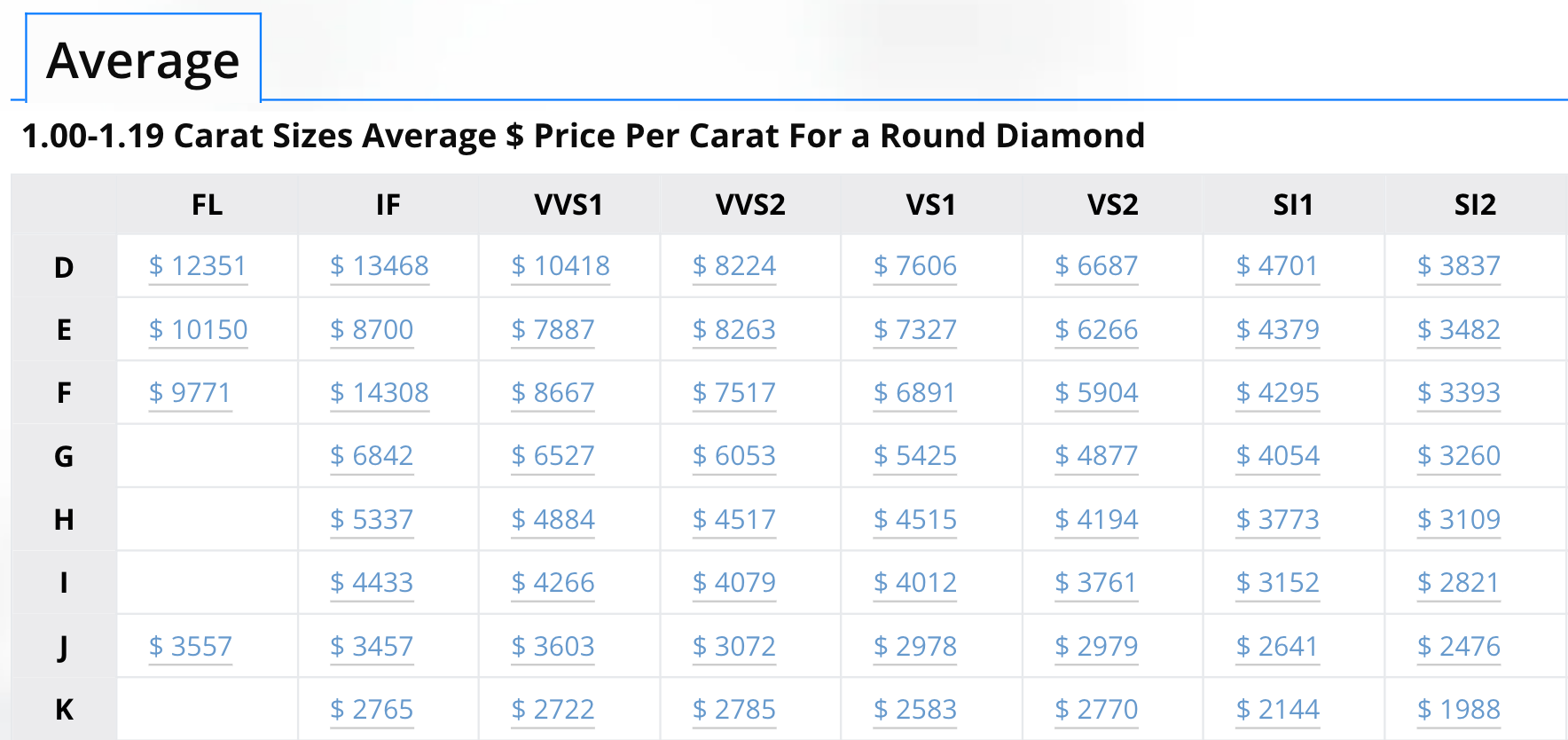
The Sweet Spot: Usually, VS2 and SI1 offer the best value. They are almost always eye-clean but cost significantly less than VVS or IF grades.
Shop our curated collection of eye-clean diamonds at CaratX . We help you find the perfect balance between budget and beauty.
Clarity Treatments and Synthetics -
In the modern market, it is vital to understand if a diamond has been treated to improve its clarity.
Laser Drilling
A tiny laser beam is used to drill a microscopic tunnel to a dark inclusion. Acid is then forced through the tunnel to whiten or remove the inclusion. These diamonds are less valuable than untreated ones.
Fracture Filling
A glass-like substance (lead glass) is injected into feathers or fractures to make them less visible. This is not a permanent treatment; the filler can be damaged by heat or acids during repair.
Ethical sellers like those on the CaratX marketplace require full disclosure of any treatments.
You can register as a seller committed to transparency here: Sell on CaratX .
HPHT and CVD Lab-Grown Diamonds -
Lab-grown diamonds have the same physical properties as natural diamonds, but they often have different clarity characteristics. Instead of natural mineral crystals, they may have metallic flux inclusions or graining patterns.
Why Clarity Matters for Your Purchase -
Brilliance: Inclusions can block the passage of light, reducing sparkle. A well-cut diamond with high clarity allows light to travel uninterrupted.
Durability: Large feathers or cavities near the girdle (the outer edge) can make a diamond vulnerable to chipping.
Rarity: Flawless diamonds are so rare that less than 1% of all gem-quality diamonds fall into this category, making them exponentially more expensive.
Resale Value: High-clarity diamonds (IF-VVS) retain value better over time, making them a solid investment.
Frequently Asked Questions (FAQs)
Q: Can I see inclusions with my naked eye? A: In most SI1 and higher grades, you cannot. However, SI2 and I-grade diamonds usually have inclusions visible to the naked eye.
Q: Do all diamonds have flaws? A: Approximately 98-99% of all natural diamonds have some form of inclusion. Truly flawless diamonds are museum-quality rarities.
Q: What is the best clarity grade for an engagement ring? A: For the best value, VS2 or SI1 is recommended. They are eye-clean and allow the diamond to sparkle beautifully without paying a premium for "invisibility under magnification."
Q: Does CaratX sell certified diamonds? A: Yes. All diamonds listed on our platform come with grading reports from reputable laboratories. Explore our collection: Shop Diamonds .
Q: I am a jeweler. How can I sell on CaratX? A: We invite jewelers and wholesalers to join our global B2B and B2C marketplace. Expand your reach to 18+ countries. Register here: CaratX Seller Registration .
References & Further Reading -
To ensure the accuracy of this information and to provide authoritative resources, the following sources were consulted:
Gemological Institute of America (GIA) Diamond Clarity. Retrieved from https://www.gia.edu/diamond-clarity
Gemological Institute of America (GIA) . (n.d.). Diamond Inclusions Defined. Retrieved from https://4cs.gia.edu/en-us/diamond-inclusions/
Ready to Find Your Perfect Diamond -
Understanding clarity is the first step. Finding the right diamond at the right price is the next.
For Buyers: Discover thousands of natural diamonds and gemstones at unbeatable prices. Shop Now at CaratX
For Sellers: Ready to take your jewelry business global? Access B2B and B2C buyers in over 18 countries. Register as a Seller
Pricing & Plans: Want to know more about launching your products? Check our detailed Seller Pricing and Plans
Follow CaratX for more insightful and educational content. We are your trusted partner in the diamond trade.
Image Credit - Diamond BUZZ