
Every October, as Halloween decorations begin to appear, gemologists, auction houses, and diamond collectors around the world are quietly reminded of a stone that embodies the season like no other: the Pumpkin Diamond.
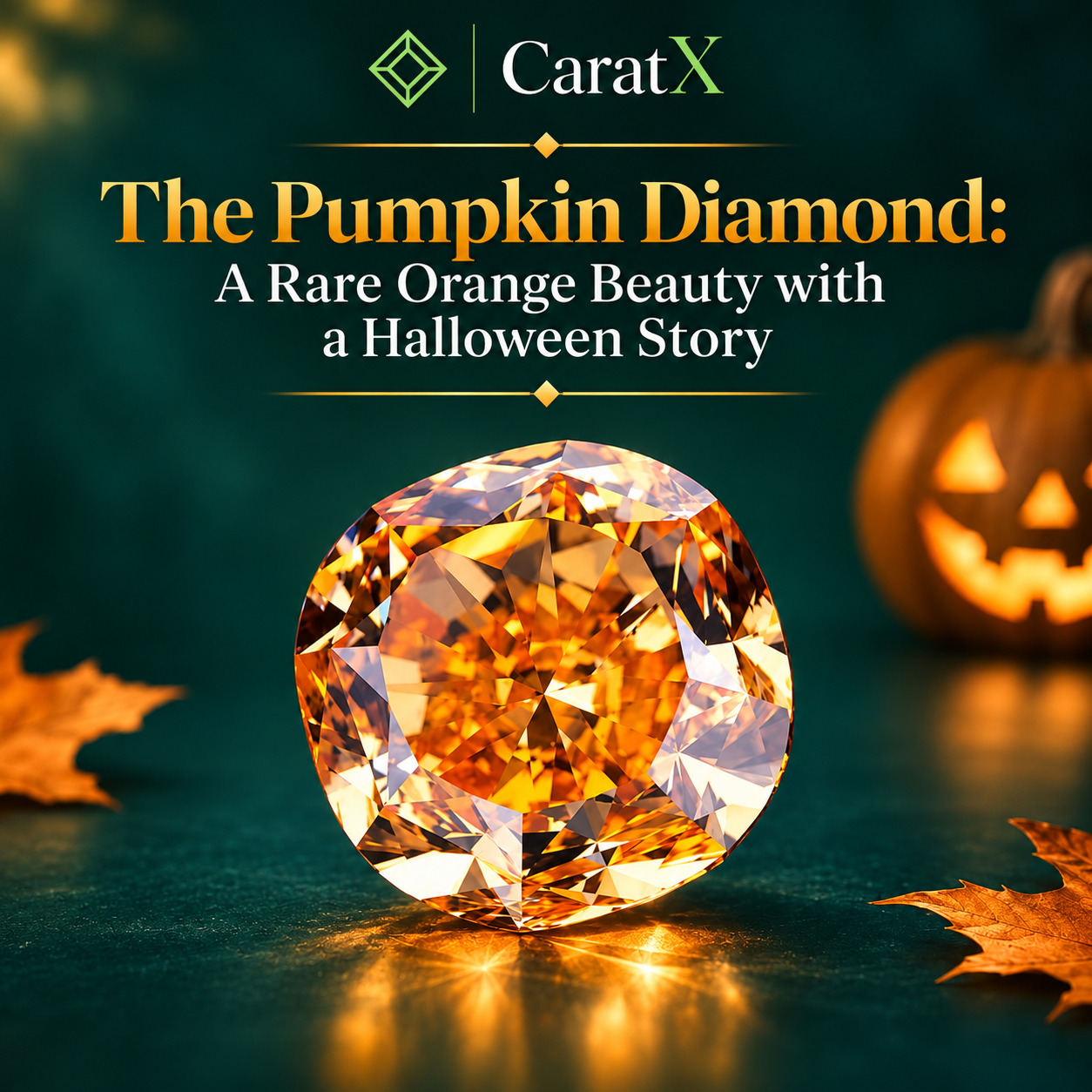
A 5.54-carat cushion-cut natural diamond graded Fancy Vivid Orange by theGemological Institute of America (GIA), the Pumpkin is not merely a famous gem, it is a geological anomaly, an auction landmark, and a cultural touchstone that connects the rarefied world ofhigh jewelryto the universal language of autumn color.
This guide explores the Pumpkin Diamond in depth: its discovery and cutting, the science that makes pureorange diamondsso extraordinarily rare, the GIA grading system that elevated it to the highest color grade, its journey through the Smithsonian and Hollywood, and what its legacy means for buyers and sellers of fancy color diamonds in today’s market.
Along the way, we connect the story to the broader universe of natural fancy color diamonds available throughCaratX’s global marketplace, where certified stones from trusted sellers reach buyers in 18+ countries.
Part One: The Origin Story of the Pumpkin Diamond
From an 11-Carat Rough to a 5.54-Carat Masterpiece -
The story begins in 1997, when a rough diamond was discovered in the Central African Republic. To an untrained eye, it appeared unremarkable: an 11-carat brownish-orange rough with no obvious promise. But to William Goldberg, the legendary New York diamond cutter and dealer, the stone radiated potential. Goldberg purchased the rough and entrusted his cutters with a singular mission: to maximize the intensity and purity of its color, even if that meant sacrificing significant weight.
The result was a 5.54-carat cushion-cut diamondless than half the original rough but a stone that the GIA would ultimately grade as Fancy Vivid Orange with no secondary color modifier. In the world of fancy color diamonds, that combination is almost unheard of. Most orange diamonds exhibit modifying hues such as brown, yellow, or pink; a pure, unmodified orange at vivid saturation is a rarity that the GIA encounters only a handful of times in a generation.
The GIA later declared the Pumpkin “one of the largest fancy vivid orange, naturally colored diamonds in the world,” a statement that remains central to its legend. While largerorange diamondshave since come to auction most notably a 14.82-carat Fancy Vivid Orange pear-shaped diamond that sold at Christie’s in 2013 for over $35 million, the Pumpkin’s combination of size, purity, and historical timing remains unmatched.
The Halloween Eve Auction:
On October 30, 1997 Halloween Eve Sotheby’s offered the stone at auction. Ronald Winston of the House of Harry Winston purchased it for just over $1.3 million amid competitive bidding. Winston, struck by both the stone’s fiery orange hue and the serendipity of the date, named it “The Pumpkin Diamond”, a name that would cement its place in popular culture.
Winston had the diamond set in a three-stone ring, flanked by two smaller crescent-shaped white diamonds. The finished ring was valued at over $3 million, and its design bold, autumnal, and unmistakably celebratory perfectly matched the stone’s character.
Part Two: The Science of Orange Diamonds
Nitrogen, Lattice Defects, and the Elusive 480 nm Band
All fancy color diamonds owe their hue to imperfections trace elements, structural distortions, or radiation damage that alter the way a diamond interacts with light. In the case of orange diamonds, the primary color mechanism is the presence of isolated nitrogen atoms within the diamond’s carbon lattice, often combined with a characteristic absorption feature known as the 480 nm band.
This is deceptively simple. Nitrogen is also responsible for yellow diamonds, the most common fancy color. Yet yellow diamonds are abundant by comparison, while orange diamonds with unmodified hues are among the rarest of all fancy colors.
The GIA explains that while yellow diamonds are colored by nitrogen aggregates known as N3 defects (“cape” diamonds), pure orange diamonds are linked to C-centers and H3 defects, and the precise geological conditions required to produce a saturated, unmodified orange bodycolor are exceptionally narrow.
Industry estimates underscore the scarcity: fewer than 0.05% of all natural color diamonds discovered show even a hint of orange, and pure orange stones without brownish or yellowish modifiers are rarer still. The GIA’s own research notes that “orange diamonds are among the rarest when they have unmodified hues”.
Orange in the GIA Color Hierarchy -
The GIA’s fancy color grading system ranks color rarity explicitly. On GIA Colored Diamond Grading Reports, colors are graded in order of increasing color strength: Faint, Very Light, Light, Fancy Light, Fancy, Fancy Intense, Fancy Vivid, Fancy Dark, and Fancy Deep. But rarity is not solely a function of intensity. The GIA identifies red, green, purple, and orange as generally the most rare fancy colors, followed by pink and blue. Yellows and browns are the most common.
Within the orange category, the Fancy Vivid grade represents the pinnacle of saturation and purity. The GIA rarely grants a pure orange grade without a modifier, which is precisely why the Pumpkin Diamond’s certificate, Fancy Vivid Orange, no secondary color is so significant.
For a deeper exploration of how the GIA evaluates fancy color diamonds across all hues, see CaratX’scomplete guide to natural fancy color diamonds, which breaks down the science, grading, and market for every major color category.
Part Three: From Hollywood to the Smithsonian—The Pumpkin’s Cultural Journey
Halle Berry and the 2002 Oscars -
The Pumpkin Diamond’s public profile exploded in 2002, when actress Halle Berry wore the ring to the 74th Academy Awards. Berry, who won Best Actress for her role inMonster’s Ball, displayed the vibrant orange stone on her pinkie during her acceptance speech, a moment that introduced fancy color diamonds to a global audience.
The choice was deliberate. Harry Winston recognized that the Pumpkin’s color was both rare and emotionally resonant: warm, optimistic, and entirely unlike the colorless diamonds that dominated red-carpetjewelryat the time. The appearance helped shift popular perception of colored diamonds from niche collectibles to aspirational luxury objects.
The Smithsonian’s “Splendor of Diamonds” Exhibition -
In 2003, the Pumpkin Diamond was removed from its setting and exhibited at the Smithsonian Institution as part ofThe Splendor of Diamonds, an exhibition showcasing seven of the world’s rarest and most valuable colored diamonds. The Pumpkin was the only orange diamond included in the exhibition, and the Smithsonian noted its “exceptional pure orange color, unlike most orange diamonds which have a brown undertone”.
The exhibition placed the Pumpkin alongside legendary stones such as the Hope Diamond, cementing its status not just as a commercial success but as a scientific and cultural artifact. After the exhibition, the diamond returned to private hands, and its current whereabouts are unknown, though its legacy continues to influence the fancy color diamond market.
Part Four: The Market Legacy of the Pumpkin Diamond
The 2013 Christie’s Sale and the New Benchmark -
The Pumpkin Diamond held the record as the largest known Fancy Vivid Orange diamond until 2013, when a 14.82-carat pear-shaped Fancy Vivid Orange diamond sold at Christie’s Geneva for $35.5 million approximately, $2.4 million per carat. That sale demonstrated the extraordinary premium that pure orange diamonds can command at auction, even decades after the Pumpkin’s debut.
The comparison is instructive. The Pumpkin sold for roughly $235,000 per carat in 1997. The 2013 sale represented a more than tenfold increase in per-carat value for top-tier orange diamonds, reflecting both the growing appetite for fancy colors among ultra-high-net-worth collectors and the extreme supply constraints in the category.
Why Orange Diamonds Remain a “Unicorn” Category -
In CaratX’s analysis of the colored diamond market, pure orange diamonds without brown modifiers are described as “unicorns” of the diamond world stones so rare that they are “almost exclusively found at high-profile auctions”. This scarcity has important implications for both buyers and sellers:
For collectors: Certified Fancy Vivid Orange diamonds are among the most defensible hard assets in the gemstone world. Their rarity is geological, not marketing-driven, and supply cannot be increased in response to demand.
For sellers: The premium commanded by pure orange stones creates opportunities for those who can source and certify them. However, the market is thin, and price discovery depends heavily on auction results and private sales.
For investors: The fancy color diamond market has matured significantly, with Fancy Vivid grades consistently achieving the highest prices per carat. According to CaratX’sinvestor and collector’s guide to fancy color diamonds, only one out of every 10,000 carats of fashioned diamonds displays a fancy color, and the odds of intense, vivid color drop to one in 25,000 carats. Orange sits at the extreme end of that rarity spectrum.
The GIA’sfancy color diamond quality factors guideprovides a detailed framework for understanding how hue, tone, and saturation interact to determine value in this rarefied market.
Part Five: What the Pumpkin Diamond Teaches Us About Buying Fancy Color Diamonds
The Pumpkin Diamond’s story offers several practical lessons for anyone considering a purchase in the fancy color diamond market, whether through auction, private sale, or a certified marketplace like CaratX.
Lesson 1: Certification Is Non-Negotiable
The Pumpkin’s value is inseparable from its GIA grading report. Fancy Vivid Orange, no secondary color is a precise, verifiable designation that distinguishes the stone from the vast majority of orange diamonds, which carry brownish or yellowish modifiers. When evaluating any fancy color diamond, insist on a report from an independent, internationally recognized laboratory such as theGIAorIGI.
Lesson 2: Color Purity Drives Premiums
Two orange diamonds of similar carat weight can differ in value by an order of magnitude depending on the presence of modifiers. A Fancy Vivid Orange with no secondary hue is fundamentally different from a Fancy Dark Orangy Brown or a Fancy Intense Yellowish Orange. The GIA’s grading system explicitly accounts for these distinctions, and the market prices them accordingly.
Lesson 3: Cut Matters But Differently
In colorless diamonds, cut is optimized for light return. In fancy color diamonds, cut is often optimized for color intensity. As the GIA notes, colored diamonds are “usually cut to maximize the intensity of their color rather than to maximize light return”. The Pumpkin’s cushion cut was chosen to concentrate its orange saturation, even at the cost of significant weight loss from the original rough.
Lesson 4: Rarity Is Geological, Not Manufactured
Unlike lab-grown diamonds, whose supply can be expanded, natural fancy color diamonds are finite. The geological conditions that produce pure orange diamonds specific nitrogen configurations, mantle conditions, and the 480 nm absorption band, cannot be replicated at scale. This fundamental supply constraint underpins the long-term value case for certified natural fancy colors.
Lesson 5: Liquidity Requires the Right Marketplace
The Pumpkin Diamond sold at Sotheby’s because that was the appropriate venue for a stone of its caliber. For buyers and sellers of certified fancy color diamonds at other price points, access to a trusted global marketplace is essential.
CaratX connects sellers with B2B and B2C buyers across 18+ international countries, providing a platform for certified natural diamonds, gemstones, and finished jewelry. Sellers canregister on CaratXto list inventory and reach a global audience, while buyers can browsecertified natural diamondsandfancy color stonesdirectly.
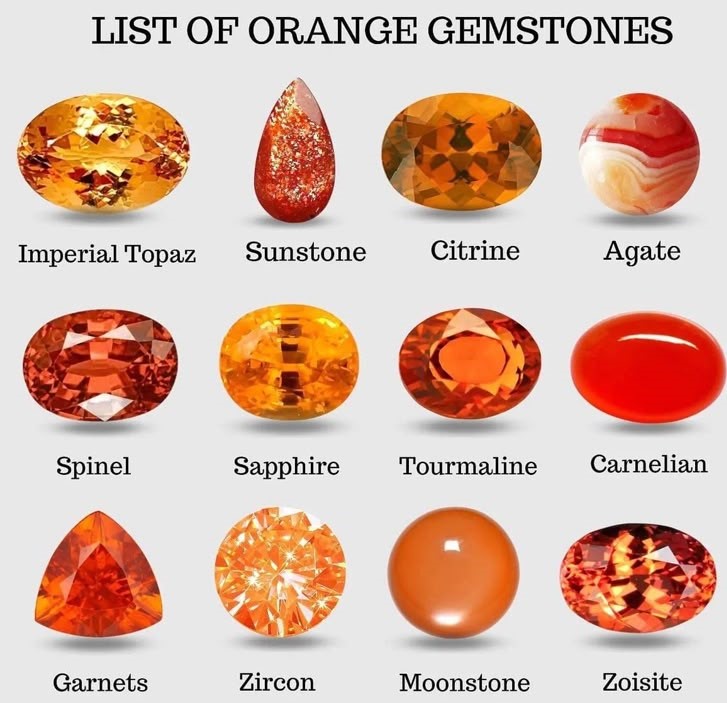
For a color-by-color breakdown of rarity, science, and market value, for a focused look at orange gemstones across all species including diamonds,sapphires,citrine, and fire opal, exploreNature’s Brightest Treasures: The Ultimate Guide to Orange Gemstones.
Recommended Reads from CaratX -
Diamonds in Every Shade: The Complete Guide to Natural Fancy Color Diamonds— The science, rarity, and market for every major fancy color, with direct links to certified inventory.
Why Fancy Color Diamonds Are Capturing Attention in 2026: The Complete Investor & Collector’s Guide— Scarcity data, grading insights, and the investment case for fancy colors.
Nature’s Brightest Treasures: The Ultimate Guide to Orange Gemstones (2026)— Orange diamonds, sapphires, citrine, fire opal, and more, with market context.
Shop certified natural diamonds on CaratX— Browse live inventory from trusted sellers.
Register as a CaratX seller— Start selling to international buyers in 18+ countries.
Frequently Asked Questions -
What is the Pumpkin Diamond?
The Pumpkin Diamond is a 5.54-carat cushion-cut natural diamond graded Fancy Vivid Orange by the GIA. It was cut from an 11-carat brownish-orange rough discovered in the Central African Republic in 1997 and purchased at Sotheby’s by Ronald Winston of Harry Winston on Halloween Eve 1997 for $1.3 million.
Why is the Pumpkin Diamond called “The Pumpkin”?
Ronald Winston named the diamond “The Pumpkin” because he purchased it on October 30, 1997, the day before Halloween and because its vivid orange color resembled a pumpkin.
How rare is a Fancy Vivid Orange diamond?
Pure orange diamonds without secondary color modifiers are among the rarest of all fancy color diamonds. Fewer than 0.05% of natural color diamonds show even a hint of orange, and stones graded Fancy Vivid Orange with no brown or yellow modifier are exceptionally scarce.
Who has worn the Pumpkin Diamond?
Actress Halle Berry wore the Pumpkin Diamond ring to the 2002 Academy Awards, where she won Best Actress forMonster’s Ball. The appearance brought widespread attention to fancy color diamonds.
Was the Pumpkin Diamond exhibited at the Smithsonian?
Yes. In 2003, the Pumpkin Diamond was featured in the Smithsonian’sThe Splendor of Diamondsexhibition, alongside other legendary colored diamonds. It was the only orange diamond in the exhibition.
What is the largest Fancy Vivid Orange diamond ever sold at auction?
A 14.82-carat pear-shaped Fancy Vivid Orange diamond sold at Christie’s Geneva in 2013 for over $35 million, surpassing the Pumpkin as the largest known orange diamond at auction.
How can I buy or sell certified fancy color diamonds?
Buyers can browse certified natural diamonds and fancy color stones on theCaratX marketplace. Sellers canregister for a CaratX seller accountto reach B2B and B2C buyers in 18+ international countries. For pricing and plan details, visitCaratX’s seller plans page.