
Colour is king in the world of gemstones. A slight shift in hue can turn a $500 sapphire into a $50,000 treasure or vice versa. Yet for decades, the trade relied on vague terms like “cornflower blue” or “hot pink,” leaving room for confusion and mispricing.
Enter the 31‑Hue Wheel, a precision tool adopted by leading gemmologists to pinpoint a stone’s colour with scientific accuracy. In this guide, we dissect every hue, explain how the system outranks traditional methods, and show you how CaratX integrates this standard to help you buy and sell with confidence.
What Is the 31‑Hue Wheel -
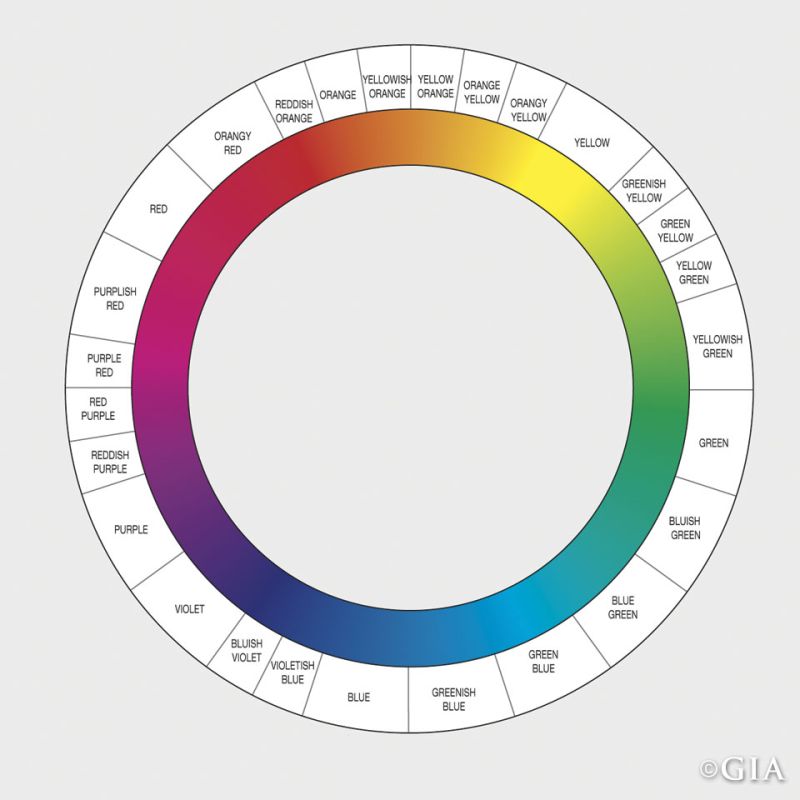
The 31‑Hue Wheel is a colour reference system that divides the visible spectrum into 31 distinct hue positions. Unlike a basic 12‑colour wheel, it captures subtle transitions such as orangy red versus red‑orange that are critical in high‑value gemstones.
Developed from the Munsell colour system and refined by gem laboratories, the wheel is now the de facto language for grading coloured stones like sapphire, spinel, tourmaline, and garnet.
Why 31 Hues -
Human eyes can distinguish millions of colours, but the gem trade needed a repeatable, commercial vocabulary. The 31 hues represent the smallest perceptible steps that remain consistent under controlled lighting (usually daylight equivalent, 5500‑6500K).
The Complete 31‑Hue Spectrum -
Below is the full list of hue codes used by professional graders. Each code represents a specific slice of the wheel.
R – Red
oR – Orangish Red
rO – Reddish Orange
O – Orange
yO – Yellowish Orange
OY – Orange-Yellow
YO – Yellow-Orange
Y – Yellow
gY – Greenish Yellow
YG – Yellow-Green
GY – Green-Yellow
G – Green
yG – Yellowish Green
gG – Greenish Green (if intended; original shows “gY greenish Yellow” twice)
bG – Bluish Green
BG – Blue-Green
gB – Greenish Blue
B – Blue
pB – Purplish Blue
bP – Bluish Purple
PB – Purplish Blue (duplicate position in original)
P – Purple
pR – Purplish Red
RP – Red-Purple
PR – Purple-Red
Note: Some hues appear twice because the wheel is a continuum; the precise position is determined by which side of the boundary the stone falls on.
How the 31‑Hue Wheel Transforms Gemstone Grading -
1. Eliminates “Trade Names”
“Ceylon sapphire” or “Paraíba‑like tourmaline” can mean different things to different sellers. A PB 6/6 (Purplish Blue, medium tone, strong saturation) is universally understood.
2. Enables Fair Comparison
Two sapphires may both be “blue,” but one might be B 5/4 (pure blue, medium tone, medium saturation) and the other pB 5/4 (purplish blue). The pure blue commands a premium. The wheel makes this difference transparent.
3. Supports Consistent Grading Across Labs
Major institutions like the Gemological Institute of America (GIA) use a similar 31‑hue framework for coloured stone reports. This alignment means a grade assigned in Bangkok means the same in New York.
The 31‑Hue Wheel vs. Other Colour Systems -
System: Munsell
Strengths: Scientifically precise; separates hue, value, chroma.
Limitations for Gemstones: Too complex for daily trade; over 1000 chips.
System: GIA GemSet
Strengths: 31 plastic colour standards; portable and trade-friendly.
Limitations for Gemstones: Requires physical set; subjective matching.
System: Digital Spectrophotometers
Strengths: Objective, numeric data (e.g., CIELAB).
Limitations for Gemstones: Expensive; not all sellers have access.
System: 31-Hue Wheel
Strengths: Standardised, easy to communicate, bridges visual and digital grading.
Limitations for Gemstones: Still relies on grader experience and lighting.
Summary:
The 31-Hue Wheel sits in the sweet spot: accurate enough for laboratory work, simple enough for everyday commerce.
Application by Gemstone Type -
Sapphire -
Sapphire’s value is heavily hue‑dependent. Royal blue (B 5/5) and cornflower (B 6/5) are classic, but pB (purplish blue) generally trades at a discount. Kashmir sapphires owe their legendary status to a velvety B 6/4 with exceptional transparency.
Shop certified sapphires on CaratX
Spinel -
Red spinel is often mistaken for ruby, but its hue leans oR (orangish red) or even R (pure red). The 31‑Hue Wheel helps separate the two; fine spinel in the R zone can command prices above rubies of similar appearance.
Tourmaline -
Paraiba tourmaline’s coveted “neon” blue‑green is usually BG or gB. Less saturated material slips into bG or even G. The wheel provides a benchmark for the premium paid for that electric glow.
Garnet -
Demantoid garnet’s rare green is a yG or G, while Tsavorite typically falls in GY. Hessonite garnet’s honey colour is squarely yO to OY.
How to Use the 31‑Hue Wheel When Buying on CaratX
At CaratX, every coloured gemstone listing includes a hue code whenever laboratory data is available. Here’s how to interpret it:
Check the primary hue code – e.g., PB for a purplish blue sapphire.
Look for modifiers – some stones have a secondary hue; e.g., bP/P indicates a purple stone with bluish modifier.
Combine with tone and saturation – a code like R 6/6 is a vivid, medium‑dark red, think fine ruby.
Browse gemstones by hue on CaratX – filter by your preferred colour zone.
Why Sellers Must Adopt the 31‑Hue Wheel -
1. Higher Buyer Confidence Listings with precise hue data sell faster. Buyers don’t have to guess “is this really peacock blue?”
2. Fewer Returns Colour disputes are the #1 reason for gemstone returns. A shared colour language minimises misunderstandings.
3. Premium Pricing Stones that can be accurately graded as B vs. pB justify their price tags. Sellers who master the wheel command higher trust and higher margins.
Ready to list your inventory? Sellers, register on CaratX today and start reaching B2B buyers in 18+ countries.
The Science Behind the Wheel: Munsell, GIA, and CIE
The 31‑Hue Wheel is not arbitrary; it is rooted in colour order systems developed over a century.
Munsell Color System (1905) – Albert Munsell was the first to separate hue, value (lightness), and chroma (saturation). His tree‑shaped model is the foundation of modern colour science.
GIA GemSet (1990s) – GIA adapted Munsell into 31 plastic colour standards specifically for coloured gemstones. Each standard represents a hue at a fixed tone and saturation. GIA’s official colour grading resources.
CIE L*a*b (1976)* – The International Commission on Illumination created a device‑independent colour space. Modern spectrophotometers convert readings into the nearest 31‑hue equivalent, bridging visual and digital grading. CIE technical introduction.
Connect with CaratX Ecosystem -
CaratX offers a full suite of tools for both buyers and sellers:
Page/Product: Gemstone Marketplace
URL: https://caratx.com/search-results/gemstones
Shop gemstones, browse gemstones by hue.
Page/Product: Natural Diamonds
URL: https://caratx.com/search-results/Natural
Page/Product: Seller Registration
Sellers, register on CaratX
Page/Product: Pricing & Seller Plans
URL: caratx.com/generic-pages/launch-your-products-on-caratx
Page/Product: Sell Jewelry Internationally
URL: https://caratx.com/search-results/Jewelry
Page/Product: B2B & B2C Marketplace
URL: www.caratx.com/shop
Step‑by‑Step: Grading a Gemstone with the 31‑Hue Wheel
For gemmologists and serious traders:
Environment – Use a 5500K daylight lamp in a neutral grey viewing booth.
Reference – Place the stone next to GIA GemSet hue caps or a calibrated digital colour guide.
Hue Determination – Rotate the stone; observe the body colour through the pavilion. Match to the closest hue cap.
Tone & Saturation – Use separate value/chroma scales (usually 1‑10). Record as Hue Tone/Saturation.
Modifiers – If the stone shows two hues (e.g., bluish purple), note the dominant first.
Example: A Sri Lanka sapphire graded PB 6/5 = Purplish Blue, medium tone, strong saturation.
Frequently Asked Questions (FAQs)
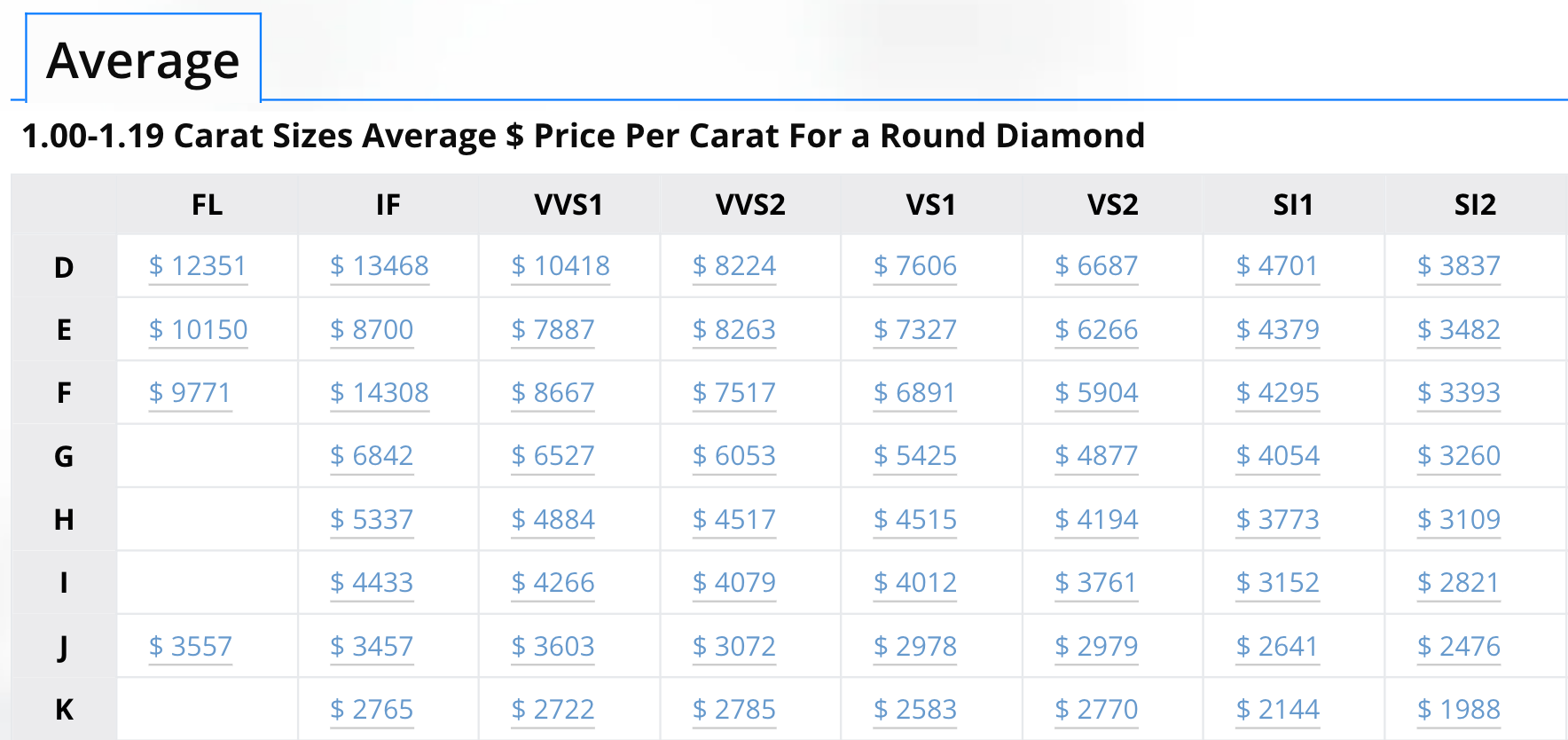
Q1: Can the 31‑Hue Wheel be used for diamonds? No. Diamonds are graded on a D‑Z colour scale for colourless‑to‑light yellow. Fancy colour diamonds use their own hue descriptors (e.g., Fancy Intense Pink).
Q2: Do all gem labs use the same 31 hues? Most major labs (GIA, SSEF, GRS, IGI) use a 31‑hue framework, though naming conventions may differ slightly (e.g., “purplish red” vs. “red‑purple”). Always check the accompanying report.
Q3: Where can I buy a physical 31‑Hue wheel? The GIA GemSet is the standard physical tool, available to GIA alumni and through selected gemological suppliers. Digital apps like GemLightbox now offer software‑based hue matching.
Q4: How does CaratX verify the hue codes in listings? CaratX encourages sellers to upload laboratory reports. For non‑certified stones, sellers must provide high‑resolution videos under standardized lighting. Our AI‑assisted moderation flags obvious mismatches.
Q5: Is the 31‑Hue Wheel relevant for untreated vs. treated stones? Absolutely. Treatment (e.g., beryllium diffusion in sapphire) can alter hue. The wheel captures that change objectively, a critical factor for valuation.
Conclusion:
The days of “pigeon’s blood” and “royal blue” as standalone descriptors are numbered. As the gem trade globalises and e‑commerce dominates, a universal, unambiguous colour language is non‑negotiable. The 31‑Hue Wheel delivers that precision.
At CaratX , we are committed to transparency. Every gemstone listed on our platform is accompanied by the best available colour data. Whether you are a seasoned dealer or a first‑time buyer, understanding the 31 hues will empower you to trade smarter.
Start your journey with CaratX today – where colour meets confidence.
Image Credit - GIA