

The Rose Cut Diamond: Historical & Modern Rose Cut Diamond Styles
Home
News And Media The Rose Cut Diamond: Historical & Modern Rose Cut Diamond Styles SHOP NOWHome
News And Media The Rose Cut Diamond: Historical & Modern Rose Cut Diamond Styles SHOP NOWFeb, 13, 2026 by Archit Mohanty 0 Comments
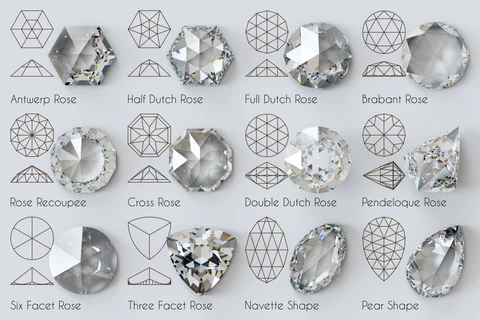
In an era dominated by the hyper‑brilliant round brilliant cut, a quiet revolution is taking place. Jewelry connoisseurs, minimalists, and vintage enthusiasts are turning away from aggressive sparkle and embracing the subtle, soulful glow of the rose cut diamond.
This ancient style characterised by a flat base and a faceted dome that resembles a blooming rose, is no longer a relic of the past. It is the defining aesthetic of the new vintage movement.
At CaratX , we connect buyers and sellers with authentic, ethically sourced rose cut diamonds across 18+ international markets. Whether you are a designer searching for a 5‑carat pear‑shape rose cut or a collector seeking a 17th‑century Dutch rose, our marketplace offers unparalleled access.
Shop rose cut diamonds now → www.caratx.com
The rose cut originated in the early 1500s and remained the dominant diamond cut until the invention of the brilliant cut in the 17th century. Unlike modern cuts optimised for electric light, the rose cut was designed for the soft, flickering flames of candlelight. Its large, open table and shallow depth allowed it to reflect warm, intimate flashes rather than cold, clinical brilliance.
The earliest and most basic form. A single rose cut features a flat bottom (no pavilion facets) and a dome covered with three to six triangular facets meeting at a central point. This cut maximised the size of rough diamonds while retaining a pleasing appearance.
Period: Late 1500s – 1700s
Typical Use: Pendant necklaces, devotional jewelry
Why it matters: It laid the foundation for all subsequent rose cuts.
Source: GIA – Diamond History
By the mid‑17th century, Dutch and Flemish cutters began adding facets to the underside of the stone. This created a mirrored effect and significantly increased brilliance.
Characteristics: Facets on both crown and pavilion; often symmetrical top and bottom.
Appearance: More fire than a single rose, but still softer than a brilliant cut.
Historical Context: Frequently found in Georgian and Victorian cluster rings.
Often mistakenly used as a blanket term, the true Dutch rose cut features a high, rounded dome covered in 12, 24, or 32 small triangular facets arranged in two or three tiers. It was the most technically advanced rose cut of its time.
Period: 17th – 18th century
Region: Amsterdam and Antwerp, then the diamond capitals of the world.
Resource: Antwerp World Diamond Centre
A fully faceted, elongated drop shape with a triangular cross‑section. Unlike other rose cuts, the briolette is faceted all around and often drilled for suspension.
Famous Examples: The French Crown Jewels, Faberge eggs.
Modern Use: High‑end earrings and tassel necklaces.
Today’s rose cut is a hybrid of historical techniques and computer‑aided precision. Modern cutters use laser‑guided faceting to achieve perfect symmetry while retaining the low‑profile charm that vintage lovers adore.
The 21st‑century interpretation of the classic. A higher dome and mathematically calculated facet angles create a uniform, soft glow without the “black window” effect seen in poorly cut old roses.
Our verified sellers offer modern round rose cuts from 0.30 ct to over 10 ct. Ideal for minimalist solitaire rings.
Explore round rose cuts - https://caratx.com/shop
The oval rose cut elongates the finger and pairs beautifully with east‑west settings. Its elongated dome scatters light in a linear pattern, making it a favourite among architecture‑inspired designers.
Trend Alert: Oval rose cuts set in horizontal bezels are dominating 2025 bridal trends.
A teardrop shape that combines the softness of the rose cut with the elegance of a marquise. The pear rose cut is highly versatile, it can be set as a solitaire, a halo, or a dangling earring.
Shop Pear Rose Cuts: CaratX Gemstone Collection
Hexagons, kites, shields, and even free‑form “rough” roses. These cuts rely on clean lines and negative space. They are particularly popular in:
Stackable rings.
Signet rings.
Unisex jewelry.
They offer the “raw diamond” look without the ethical ambiguity of unregulated rough. All geometric rose cuts on CaratX are precision‑cut and fully disclosed.
The return of the rose cut is not merely a nostalgic trend; it is a response to fundamental shifts in consumer values.
A rose cut’s shallow depth means the diamond sits low on the finger. No snagging on sweaters, no accidental knocks. This practical advantage is especially valued by active individuals seeking engagement rings they never have to remove.
Because the weight is distributed across the face rather than buried in a deep pavilion, a 1‑ct rose cut can appear as large as a 1.5‑ct round brilliant. You pay for appearance, not unnecessary depth.
We host both mined and lab‑grown rose cuts. Sellers provide full provenance. Sell your vintage diamonds on CaratX
A new generation of buyers describes the rose cut’s glow as “meditative,” “milky,” and “moonlight.” In an age of information overload, the understatement of a rose cut feels luxurious.
Rose-cut diamonds typically have 3 to 24 facets, giving them a shallow depth of about 20–40%, which creates a soft, diffuse glow rather than strong sparkle. Because they sit so shallow, they have a very low profile on the finger and generally cost less due to simpler cutting.
They are best suited for vintage-inspired designs, boho styles, and comfortable everyday wear. In contrast, brilliant-cut diamonds such as the round brilliant feature 57 to 58 facets and a deeper structure of about 59–62%, resulting in intense scintillation and high fire.
These stones sit higher in their settings and usually require prongs. They are priced at a premium and are favored for traditional bridal pieces and high-glamour jewelry like red-carpet designs.
Buying a rose cut requires different criteria than a brilliant cut. Colour and clarity are more visible due to the large, open table. Here is how to filter your search on CaratX.com:
Prioritise Colour (G–I) – Rose cuts show body colour. Fancy yellow and champagne roses are particularly sought after.
Clarity (VS2 or SI1) – Inclusions under the table are visible. VS2 offers the best value.
Facet Symmetry – Even hand‑cut roses should have symmetrical triangles. Use our 10x zoom feature.
Certification – Always buy certified. CaratX partners with IGI, GIA, and HRD.
Ready to buy? Start your search on CaratX Marketplace
Because rose cuts have exposed flat tables and delicate facet junctions, they require gentle care:
Avoid ultrasonic cleaners – The flat foil backing used in some antique settings can loosen.
Use mild soap, soft brush, and warm water.
Store separately – The flat face can be scratched by pointed pavilions of brilliants.
Do you have a collection of antique rose cuts or produce modern precision‑cut roses? CaratX empowers sellers to reach verified B2B and B2C buyers in 18+ countries, including the USA, UAE, EU, and India.
Why sell on CaratX?
Access to bulk buyers looking for matched rose cut lots
Register as a seller today → https://caratx.com/register
View our pricing plans → https://caratx.com/generic-pages/launch-your-products-on-caratx
Q: Are rose cut diamonds less expensive? A: Generally, yes. Because they use less rough and require fewer man‑hours than a full brilliant cut, rose cuts often cost 20–40% less per carat. However, rare antique roses can command premiums.
Q: Do rose cuts sparkle? A: They glow rather than sparkle. The light is dispersed in broad flashes, not tiny pinpoints. This is often described as “romantic” or “candlelight.”
Q: Can I insure a rose cut diamond? A: Absolutely. CaratX provides lab reports that insurance companies accept. We recommend scheduling any diamond over 0.50 ct.
Q: What is the most popular rose cut today? A: The oval rose cut and the hexagon rose cut are currently the top sellers on CaratX, particularly for engagement rings.
Q: Does CaratX sell lab‑grown rose cuts? A: Yes. Use our filter to select “Lab Grown” and “Rose Cut” simultaneously.
The rose cut diamond is not a fleeting trend, it is a 500‑year‑old tradition that has quietly survived every major shift in fashion and technology. Its resurgence reflects a collective desire for jewelry that feels personal, wearable, and honest.
Whether you are drawn to the imperfect charm of an 18th‑century Dutch rose or the clean geometry of a modern hexagon, CaratX is the global marketplace where these stories begin.
Join the community of buyers and sellers who are redefining the diamond industry.
Shop natural & lab rose cuts - https://caratx.com/search-results/Natural
Sell to 18+ countries - https://caratx.com/generic-pages/launch-your-products-on-caratx
Aug, 06, 2022
Aug, 06, 2022

0 Comments
Please login to leave a reply.