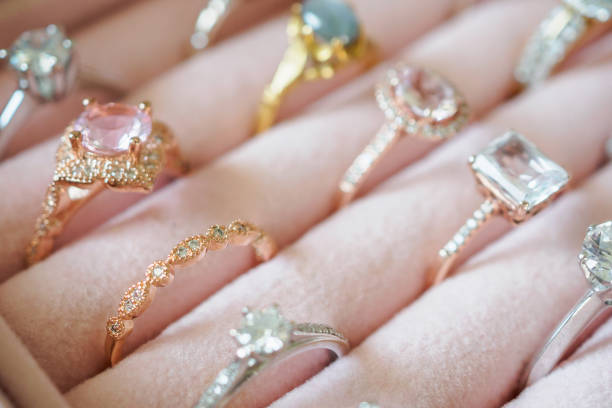

Discover whytanzaniteengagement rings are one of the world's rarest and most captivating choices.
Introduction:
Few gemstones carry the mystique of tanzanite. Poised between lush blue, vibrant violet, and rich purple, this exotic gem is found in only one place on the planet, a narrow strip of land near Mount Kilimanjaro in Tanzania. That single-source reality, combined with its breathtaking pleochroism and relatively recent discovery in 1967, has made tanzanite one of the most exciting colored stones of the modern era.
For couples seeking an engagement ring that defies convention,tanzaniteoffers something extraordinary: a stone rarer thandiamond, rich with symbolism, and available at a fraction of the cost of comparablesapphiresor diamonds in many cases.
This guide explores every facet of the tanzanite engagement ring from its geological origins and mystical associations to the practicalities of cut, clarity, carat, durability, and protective setting design. Whether you are a first-time buyer or a seasoned collector, this is your definitive resource.
What Is Tanzanite?
Tanzanite is the blue-to-violet variety of the mineral zoisite, a calcium aluminum silicate with the chemical formula Ca₂Al₃(SiO₄)₃(OH). Its color is primarily caused by trace amounts of vanadium (V³⁺) substituting for aluminum in the crystal lattice. Before heat treatment, most natural tanzanite rough is a brownish "bug juice" color; controlled heating to between 426°C and 482°C transforms it into the coveted violet-blue gem that reaches the market.
What makes tanzanite truly singular is its pleochroism, specifically trichroism. Depending on the crystal orientation,tanzanitecan display three distinct colors: sapphire blue, violet, and burgundy. Skilled cutters orient the rough to maximize the desired blue face-up color, but the finest stones often retain a hint of this trichroic magic. This optical phenomenon is not merely aesthetic; it is a critical diagnostic property used by gemologists to identify natural tanzanite and distinguish it from simulants.
To explore how pleochroism shapes value across the gemstone spectrum, read our detailed guide onThe World of Pleochroic Gemstones: The Magic of Color-Changing Crystals. You can also browse certified tanzanite and other rare stones directly on theCaratX Marketplace.
History: From Maasai Discovery to Global Icon
Tanzanite's story begins in 1967, when a Maasai tribesman named Ali Juuyawatu is credited with finding the first tanzanite crystals in the Merelani Hills of northern Tanzania. The gem was subsequently named by Tiffany & Co. in honor of its country of origin, and it almost overnight captured the imagination of leading jewelry designers and collectors. Unlike many gemstones with centuries of myth attached, tanzanite's lore is distinctly modern yet it has developed a powerful symbolic identity of its own.
In contemporary spiritual and metaphysical practice, tanzanite is associated with enhanced self-awareness, helping its wearer uncover hidden strengths and identify their calling. It is also believed to aid in protection and healing while increasing one's personal power. Whether or not one subscribes to these metaphysical properties, the stone's association with new beginnings and intuition resonates deeply with the symbolism of an engagement ring.
Tanzaniteis also a secondary December birthstone and the traditional gem for the 24th wedding anniversary, with some retailers also citing the 8th and 26th anniversaries as tanzanite celebrations. For a deeper dive into birthstone traditions and their market trends, see CaratX'sBirthstones by Month: Meaning, Color, Market Trends & Your Ultimate Buying Guide.
Why Choose a Tanzanite Engagement Ring?
1. Rarity Beyond Diamond -
Tanzanite is rarer than diamond in terms of geographic availability. All commercial tanzanite comes from a mining area of roughly 7 km by 2 km in the Merelani Hills, a finite and single-source deposit. The American Gem Society notes that price and availability are directly tied to mining activity in this tiny region, and production has been slowing significantly in recent years.
Choosing tanzanite is choosing a stone whose rarity is not a marketing claim but a geological fact.
2. Exceptional Value for Color -
Top-grade tanzanite can rivalfine sapphirein visual impact while often costing significantly less per carat. For couples who want a large, vivid blue-violet center stone without the premium attached to sapphire or diamond, tanzanite delivers extraordinary value. As one industry guide puts it, "For buyers who want a vivid blue stone and do not need maximum durability, tanzanite offers exceptional value".
3. Symbolism of New Beginnings -
Tanzanite's modern discovery and association with intuition and self-awareness make it a poetic symbol for a couple beginning a new chapter together. It is not burdened by centuries of rigid tradition, which appeals to modern brides and grooms who want their ring to reflect their own story.
4. A Ethical and Traceable Choice -
Because tanzanite is single-origin, traceability is theoretically simpler than for gems mined across multiple continents. However, the tanzanite supply chain has faced documented challenges related to artisanal mining conditions and governance.
Buyers who prioritize ethical sourcing should ask suppliers for provenance documentation and favor dealers who support responsible mining initiatives.
CaratX connects buyers with certified gemstones and jewelry from verified sellers across 18+ countries.
Register as a buyerto access the marketplace, orexplore the full gemstone spectrumto compare tanzanite with sapphire, spinel, and other blue gems.
The 4Cs of Tanzanite: A Buyer's Framework
Unlike diamonds, tanzanite does not receive a formal cut grade from GIA, but the 4Cs still provide a useful framework for evaluation. GIA evaluates tanzanite but does not grade it on a formal scale, so buyers must rely on knowledgeable jewelers and independent gemological reports.
Color: The Supreme Value Factor
Color is tanzanite's most prized trait. The most valuable colors are deep, saturated violet-blue or blue-violet. Paler hues are more commonly found and less valuable. GIA notes that tanzanite color is less saturated in smaller sizes, and gems generally must be above five carats to exhibit fine, deep color.
A predominantly blue face-up tanzanite is rarer than a predominantly violet one because the blue color axis is typically on the shorter crystal direction, making it harder to cut a large blue gem without significant weight loss.
Clarity: Eye-Clean Is the Standard
Tanzanite is classified as a Type I gemstone on the GIA clarity scale, meaning it is typically eye-clean and free of visible inclusions. Eye-visible inclusions significantly decrease value, particularly in lighter-colored stones.
Cut: The Key to Color Optimization
Because of tanzanite's strong pleochroism, cut is not merely about brilliance, it determines the face-up color. A well-proportioned cut maximizes the desired blue or violet hue and minimizes brownish or overly dark tones.
GIA advises that "the quality of the cut can make a big difference in beauty and brilliance," and poorly cut gems sell at a significant discount. Common shapes include oval and cushion, though pear, trillion, and emerald cuts are also popular.
Carat Weight: Size and Color Intertwined
Larger tanzanites are exponentially rarer, and size directly affects color saturation. Most faceted tanzanite weighs less than five carats, and stones heavier than 50 carats are exceptionally rare. For an engagement ring, a 1.5- to 3-carat tanzanite can deliver a commanding presence, while a 5-carat-plus stone enters collector territory.
Ready to compare? Browse certified tanzanite and other colored gemstones on theCaratX Marketplace, or explore ourBlue Gemstones collectionto see how tanzanite stacks up against sapphire, aquamarine, and spinel.
Durability, Care, and the Truth About Everyday Wear -
This is the most important practical section of this guide, and it deserves directness: tanzanite is not as durable as diamond, sapphire, or ruby.
Hardness and Toughness -
Tanzanite ranks 6 to 7 on the Mohs hardness scale, making it softer than many gems. More critically, it has fair to poor toughness and a property called cleavage, meaning it has a tendency to break when struck. The American Gem Society notes that tanzanite is "vulnerable to scratch during daily wear and abrasion" and is therefore "better suited for earrings and pendants than rings" for some wearers.
Does this mean you should avoid a tanzanite engagement ring? No but it means you must be intentional about setting, wear habits, and care.
Stability and Heat Sensitivity -
Tanzanite is stable under normal wearing conditions and resistant to the effects of heat, light, and common chemicals. However, it should never be subjected to sudden temperature changes or very high heat, and it can be attacked by hydrochloric and hydrofluoric acids. Most tanzanite on the market is routinely heat-treated to improve color, and this treatment is stable with no additional durability concerns.
Cleaning: The Non-Negotiables
Safe: Warm, soapy water with a soft cloth or soft-bristled brush.
Never: Ultrasonic cleaners or steam cleaners.
Avoid: Harsh chemicals, sudden temperature changes, and storing tanzanite loose with harder gems that can scratch it.
Care deep-dive: For a full technical breakdown, consult theGIA Tanzanite Care and Cleaning Guideand theJewelers of America Tanzanite Gemstone Guide.
Protective Settings: How to Wear Tanzanite Daily Without Regret
If you are set on a tanzanite engagement ring and plan to wear it regularly, the setting is your first line of defense.
Bezel Settings: Maximum Protection
A bezel setting completely encircles the gemstone with a metal rim, shielding the girdle and edges from impacts. This is widely recommended as the most protective setting for softer stones like tanzanite. The trade-off is that a full bezel can reduce light exposure, but a well-designed bezel with an open back can still allow plenty of brilliance.
Halo Settings: A Protective Bumper with Added Sparkle
A halo setting surrounds the center tanzanite with a ring of smaller diamonds or sapphires. The halo acts as a physical buffer, absorbing impacts before they reach the center stone, while also intensifying the perceived size and color of the tanzanite. This is an excellent compromise for buyers who want both protection and a classic, romantic look.
Low-Profile and Partial-Bezel Designs
Low-profile settings keep the stone close to the finger, reducing the chance of snagging or knocking. Partial bezels and secure claw arrangements with carefully shaped galleries can also reduce exposure while keeping the stone visible.
Design your ring with confidence: Learn the anatomy of a ring center stone, setting, prongs, halo, shank, and gallery in CaratX'sUltimate Guide to the Anatomy of a Ring.
If you are considering a solitaire design, ourHistory of the Solitaire Diamond Ringexplains why a single-stone setting remains the most timeless choice.
If you want a daily-wear ring that you never take off, sapphire or diamond is the more practical choice. If you want a stunning, rare, and deeply personal ring for someone who will treat it with care or for occasional wear tanzanite is unparalleled. Many couples choose a tanzanite engagement ring and pair it with a simple, durable wedding band, reserving the tanzanite for special occasions.
To shop sapphire engagement rings, visit theCaratX Sapphire collection.
Ethical Sourcing and the Merelani Supply Chain -
Tanzanite's single-source origin in the Merelani Hills creates both opportunity and responsibility. On one hand, traceability is simpler than for gems mined across multiple countries. On the other, the artisanal and small-scale mining (ASM) sector in Merelani has faced documented challenges, including unsafe working conditions, governance issues, and the need for stronger labor protections.
The Tanzanian government has implemented reforms, including the 2017 mining reforms and the 2019 Mining (Mirerani Controlled Area) Regulations, aimed at improving oversight and formalizing the sector. International organizations and academic researchers continue to study gender inclusivity, sustainable conflict mitigation, and capacity-building for miners in the region.
What can a buyer do?
Ask for provenance documentation from your jeweler or supplier.
Favor dealers who disclose treatment (most tanzanite is heat-treated, and this should always be disclosed).
Support businesses that invest in responsible sourcing initiatives and transparent supply chains.
Consider pre-owned or vintage tanzanite as a way to avoid contributing to new mining demand.
CaratX connects B2B and B2C buyers with certified gemstones and jewelry from verified sellers. Sellers who prioritize transparency and ethical sourcing are encouraged toregister on the CaratX marketplaceand reach buyers in 18+ international countries.
Recommended Reads from CaratX -
The Natural Gemstone Spectrum: A World of Color— Understand how chemistry and geology create the colors of tanzanite, sapphire, ruby, and more.
The World of Pleochroic Gemstones: The Magic of Color-Changing Crystals— A deep dive into trichroism and why tanzanite is the poster child for this phenomenon.
Birthstones by Month: Meaning, Color, Market Trends & Your Ultimate Buying Guide (2026)— Explore December birthstones and the market forces shaping colored gemstone demand.
The Ultimate Guide to the Anatomy of a Ring— Learn how settings, prongs, and galleries affect durability and beauty.
The Solitaire Diamond Ring: A History of the World's Most Iconic Engagement Ring— Why simplicity endures, and how to adapt the solitaire concept to a colored center stone.
White Gemstones: Properties, Value, and Buying Guide— Compare diamond, moissanite, and white sapphire as accent stones for a tanzanite halo.
Diamonds: Why Are They Forever?— The science and symbolism of the world's hardest gem, and how it compares to softer stones.
Frequently Asked Questions (FAQs) -
1. Is tanzanite a good choice for an engagement ring?
Tanzanite can be a stunning and meaningful engagement ring choice, but it requires more care than diamond or sapphire. With a Mohs hardness of 6–7 and fair-to-poor toughness, it is best suited for occasional-wear rings with protective settings such as bezels or halos. If you love the color and are willing to treat the ring gently, tanzanite offers exceptional rarity and value.
2. How much does a tanzanite engagement ring cost?
Tanzanite is generally more affordable than fine sapphire or diamond at comparable visual quality. Prices vary widely based on color saturation, clarity, carat weight, and cut. A fine 2- to 3-carat tanzanite can cost a fraction of a comparable blue sapphire, while large, top-color stones (5+ carats) command collector-level premiums. For current inventory, browse theCaratX Marketplace.
3. Can I wear a tanzanite ring every day?
Yes, but with precautions. Choose a protective bezel or halo setting, avoid wearing it during heavy manual work or sports, and clean it only with warm soapy water never ultrasonic or steam cleaners. If you want a truly "set it and forget it" ring, sapphire or diamond is more suitable.
4. Is tanzanite treated?
Most tanzanite on the market is heat-treated to transform brownish rough into the coveted violet-blue color. This treatment is stable and should always be disclosed by the seller. Untreated tanzanite exists but is less common and is typically brownish or less saturated.
5. What is the rarest color of tanzanite?
Predominantly blue face-up tanzanite is rarer than violet-dominant stones because the blue color axis is typically on the shorter crystal direction, making it harder to cut a large blue gem without significant weight loss. Deep, saturated violet-blue is the most valuable overall color range.
6. Can tanzanite be lab-created?
No lab-grown tanzanite exists on the market. There are no commercial manufacturers of synthetic tanzanite, though it can be simulated with other materials such as glass or synthetic forsterite. Always buy from a reputable, gemologically knowledgeable jeweler.
7. What anniversary does tanzanite represent?
Tanzanite is the traditional gem for the 24th wedding anniversary according to GIA. Some retailers also market it for the 8th and 26th anniversaries. It is also a December birthstone, alongside turquoise, zircon, and blue topaz.
Start selling internationally: CaratX empowers jewelers and gemstone dealers to reach B2B and B2C buyers in 18+ countries.Register your seller accountto list tanzanite, sapphire, diamond, and other certified gemstones on a trusted global marketplace. For pricing and plan details, visitCaratX Pricing.