

The World of Pleochroic Gemstones: The Magic of Color-Changing Crystals
Home
News And Media The World of Pleochroic Gemstones: The Magic of Color-Changing Crystals SHOP NOWHome
News And Media The World of Pleochroic Gemstones: The Magic of Color-Changing Crystals SHOP NOWFeb, 24, 2026 by Archit Mohanty 0 Comments
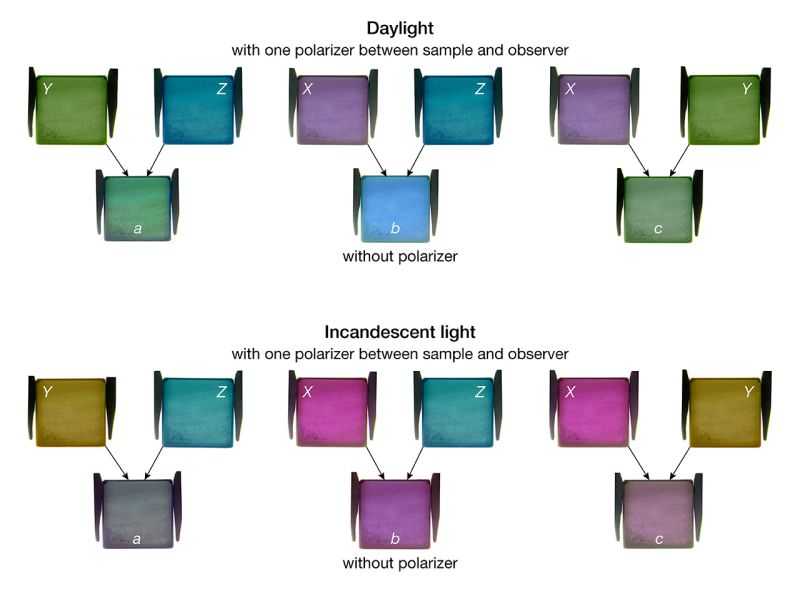
Imagine holding a gemstone that transforms before your eyes not by magic, but by science. As you tilt it, the color shifts from a deep sapphire blue to a vibrant violet, or perhaps from a rich green to a warm reddish-orange.
This isn't a trick of the light; it is a fascinating natural phenomenon known as pleochroism.
For gem enthusiasts, collectors, and jewelers, pleochroic gemstones represent the pinnacle of optical intrigue. While the average buyer might seek a stone that simply "looks pretty," the savvy investor knows that a gem displaying strong pleochroism often holds a higher value due to its rarity and dynamic beauty.
At CaratX, we connect you with these natural wonders. Whether you are a B2B buyer looking to source unique inventory or a B2C consumer searching for a one-of-a-kind piece, understanding pleochroism is key to appreciating the true value of a gemstone.
You can explore a wide variety of these stunning stones on our CaratX Marketplace.
To understand why a gemstone changes color when you move it, we must delve into crystallography. When light enters a gemstone, it travels at different speeds depending on the crystal's structure.
In isotropic gems (like diamonds or garnets), light travels the same speed in all directions. However, in anisotropic gems, light splits into two or three rays, each traveling at different speeds and absorbing different wavelengths of color.
Dichroism: The crystal shows two different colors depending on the viewing angle (common in hexagonal, tetragonal, and trigonal systems).
Trichroism: The crystal shows three different colors (common in orthorhombic, monoclinic, and triclinic systems).
According to the Gemological Institute of America (GIA), pleochroism is a critical diagnostic property used to identify gemstones. It helps gemologists distinguish between natural stones and simulants.
You can read more about the technical aspects of pleochroism on the GIA’s official resource page.
While over 40 species exhibit this trait, only a handful display it vividly enough to be visible to the naked eye. Here are the stars of the show:
Tanzanite is the poster child for pleochroism. Found only in a small area at the foothills of Mount Kilimanjaro, this variety of Zoisite is famously trichroic. Depending on the crystal orientation, it can appear sapphire blue, violet, or burgundy. Skilled cutters orient the gem to maximize the desired blue hue, but the finest stones often retain a hint of the trichroic effect.
Why it matters: Strong pleochroism in Tanzanite can increase its value, making it a favorite for high-end jewelry.
Shop Tanzanite: Looking for certified stones? Check out the current Tanzanite inventory on the CaratX Marketplace.
Iolite, or Cordierite, has one of the strongest pleochroic effects in the gem world. Legends say the Vikings used thin slices of Iolite as polarizing filters to navigate the seas. By looking through the stone, they could determine the sun’s position on overcast days. It flashes between a deep blue, a pale gray, and a yellowish-brown.
Don't let the nickname fool you; Andalusite is a gem in a league of its own. It often displays a stunning combination of green, brown, and red/orange simultaneously, almost like a tartan pattern. It doesn't just change color when you move it; it often shows two or three colors in the same stone at the same time, creating a mosaic effect.
Cutting Challenges: Due to its strong pleochroism, cutting Andalusite requires expert precision to balance the colors perfectly.
Alexandrite is famous for its "color change" (green in daylight, red in incandescent light), but this is distinct from pleochroism. However, Alexandrite also displays strong pleochroism, meaning it can show green, orange, and purple hues depending on the crystal direction you view. The combination of color change and pleochroism makes it one of the rarest and most expensive gems on earth.
Tourmaline is known for its incredible variety of colors. In terms of pleochroism, it is usually dichroic. For example, green Tourmaline (Verdelite) often appears dark green in one direction and light green or yellowish in another. Pink Tourmaline (Rubellite) can shift from pink to deep red. This is why properly oriented Tourmalines have a much richer color saturation.
Kunzite, a variety of Spodumene, is notorious for its strong pleochroism. It shows three distinct directions: pink, violet, and colorless. In larger stones, this effect is so pronounced that cutters must orient the table facet perpendicular to the "pink" direction to ensure the stone looks pink from the top, otherwise, it might appear washed out.
Durability Note: The International Gem Society (IGS) notes that Kunzite also has perfect cleavage, making it a delicate stone for jewelry settings.
While blue Sapphire is prized for its uniform color, it actually displays pleochroism. Blue Sapphire often shows blue and greenish-blue. Yellow Sapphire can show yellow and light yellow. However, in high-quality stones, this effect is often minimized by expert cutting to ensure a uniform face-up color.
The blue cousin of Emerald, Aquamarine, is dichroic. It typically shows a stronger blue along the length of the crystal and a nearly colorless or greenish-blue across it. This is why well-cut Aquamarines have a deep, even blue the cutter has aligned the table facet to hide the weaker color zone.
The pink sister of Aquamarine and Emerald, Morganite, shows pleochroism that can range from pale pink to a deeper rose or bluish-pink. Like Kunzite, it requires careful cutting to maximize the primary color.
Natural Zircon is a highly underrated gem. It is doubly refractive and displays noticeable pleochroism. Blue Zircon, in particular, can show blue and yellowish-brown colors, though heat treatment is common to achieve the desired blue.
While not as strong as Iolite or Tanzanite, Quartz varieties do exhibit weak to moderate pleochroism. Amethyst can show a reddish-purple and a bluish-purple. This is one of the ways gemologists can distinguish natural Amethyst from synthetic spinel or glass.
A gem cutter, or lapidary, is the artist who decides the final color of the stone. When rough is mined, it enters the workshop with three distinct color "paths." The cutter must analyze the rough using a dichroscope, an instrument that isolates the two or three colors.
The goal is usually to orient the finished gem's table (the top flat facet) perpendicular to the direction of the most desirable color. For example:
Tanzanite: Cutter aims to maximize the violet-blue while reducing the "muddy" brownish zones.
Iolite: Cutter tries to feature the rich blue and minimize the yellowish-gray.
Andalusite: Cutter might orient the stone to display a "window" where multiple colors are visible simultaneously, creating a unique "tricolor" effect.
If the cutter fails to account for pleochroism, the resulting gem might look dull, washed out, or completely different from what the rough promised.
This is why precision cutting is a hallmark of high-value gemstones available on platforms like CaratX.
It is crucial not to confuse pleochroism with other color effects:
Color Change (Alexandrite Effect): This is a change in color due to a change in the light source (e.g., daylight vs. incandescent light). Pleochroism is a change due to a change in the viewing angle.
Asterism (Star Effect): The presence of a star-shaped light reflection caused by needle-like inclusions.
Chatoyancy (Cat's Eye): A single band of light across the gem caused by parallel inclusions.
Iridescence: Color play due to light interference (like in Opal).
If you have a gemstone and want to test if it is pleochroic, you don't always need expensive equipment.
The Naked Eye Method: Hold the gemstone in good daylight (not direct sun) and rotate it in different directions. If you see a distinct change in hue or saturation, you are observing pleochroism.
The Dichroscope: This is a small, handheld tool. You look through it at a light source while holding the stone close. It isolates the two colors side-by-side, allowing you to see them clearly.
Polarizing Filters: Using two polarizing filters can help confirm if a stone is doubly refractive and likely to show pleochroism.
For those in the gem trade, understanding pleochroism is essential for inventory valuation. A stone that shows "strong visible pleochroism" is often marketed as a premium product.
For Sellers: If you are a seller looking to move inventory, highlighting the pleochroic nature of your Tanzanite or Iolite can justify a higher price point. It adds a layer of uniqueness that standard gemstones lack.
For Buyers: When purchasing a gemstone online, high-resolution videos that show the stone being rotated are crucial. This allows you to see the pleochroic flash, ensuring you are getting a stone with life and character.
Pleochroic gemstones are not static objects; they are dynamic, living pieces of earth science. They interact with light and the observer in a way that changes with every movement. Whether it's the legendary navigation aid of Iolite or the royal hues of Tanzanite, these stones carry a story that a standard, singly-colored gem cannot match.
As technology advances, the appreciation for these natural phenomena only grows. While laboratory-grown stones can replicate color, they struggle to replicate the complex, pleochroic nature of a well-formed natural crystal.
If you are looking to add such a dynamic piece to your collection or your business inventory, look no further than CaratX.
We are your gateway to the global gemstone market. For more details on our pricing plans and how to get started, visit our Pricing Information Page.
Q1: What is the difference between pleochroism and color change? A: Pleochroism is a change in color when the gemstone is rotated or viewed from different angles under the same light source. Color change (like in Alexandrite) is a change in color when the gem is viewed under different types of light (e.g., moving from sunlight to candlelight).
Q2: Which gemstone has the strongest pleochroism? A: Iolite (Cordierite) is widely regarded as having one of the strongest pleochroic effects visible to the naked eye. Tanzanite is also a top contender for its vivid trichroism.
Q3: Does pleochroism increase a gemstone's value? A: Yes, generally. In gems like Tanzanite, Iolite, and Andalusite, a well-oriented stone that shows vivid pleochroism is considered rare and desirable, which increases its market value. However, in stones like Blue Sapphire, the goal is usually to cut it to minimize pleochroism for a uniform color.
Q4: Can diamonds show pleochroism? A: No. Diamonds are isotropic (they belong to the cubic crystal system). Light travels through them at the same speed in all directions, so they do not exhibit pleochroism.
Q5: How do gem cutters deal with pleochroism? A: They study the rough crystal and use a tool called a dichroscope. They then orient the stone so that the final cut gem shows the most attractive color through the top (the table) while often hiding the less attractive colors.
Image Credit - GIA


Aug, 06, 2022
Aug, 06, 2022
0 Comments
Please login to leave a reply.