
The diamond industry in 2026 is a study in contrasts. As the first half of the year draws to a close, the market is increasingly defined by a stark bifurcation: large, high-quality stones are commanding premiums and facing shortages, while smaller, commercial-grade diamonds continue to struggle under the weight of economic pressures and the rise of lab-grown alternatives. This trend is confirmed by major industry voices.
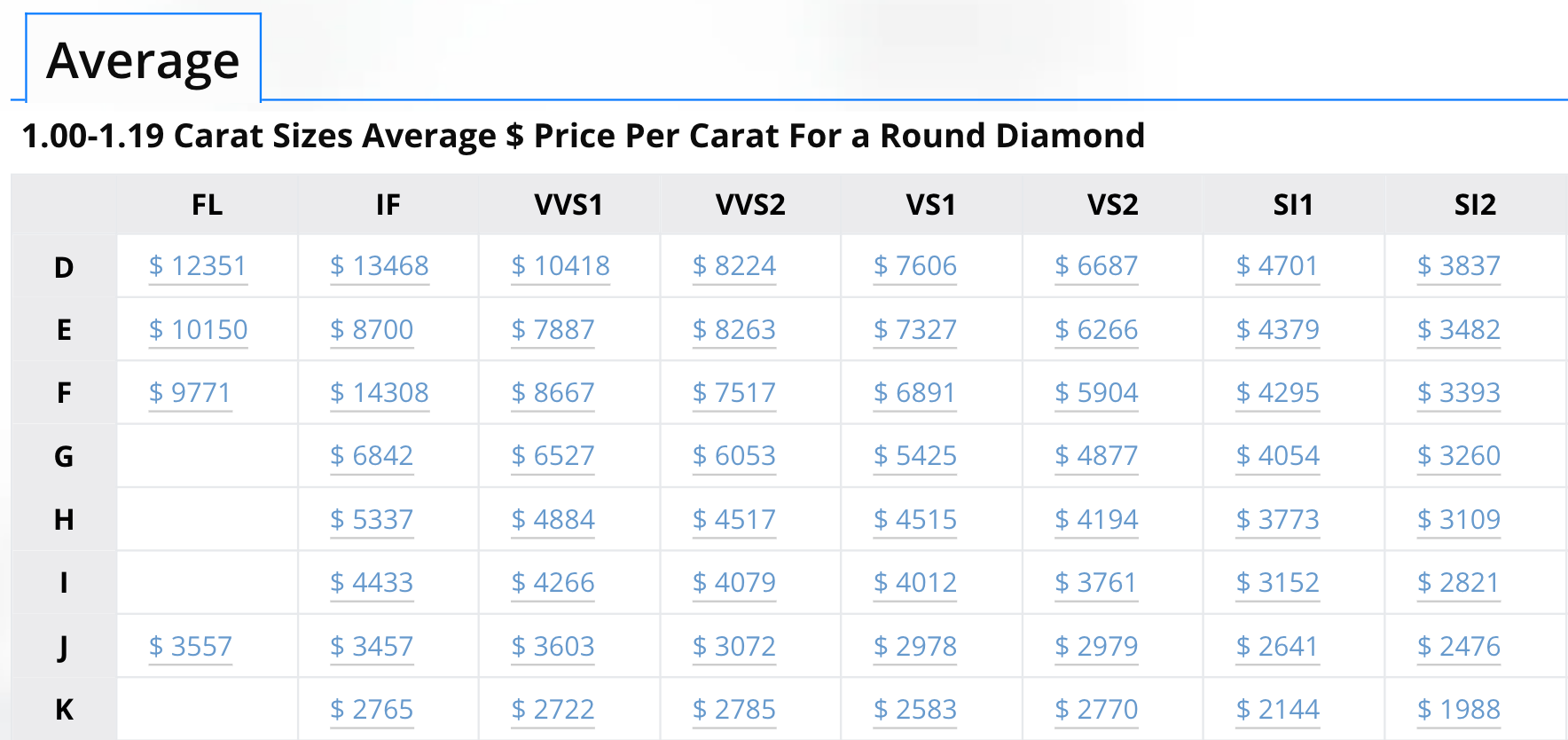
In a presentation to CIBJO, Rapaport Group noted that while 1-carat and smaller diamonds are down 10% to 25% in price, the future belongs to "the best quality, rarest diamonds," with 20% of diamonds accounting for more than 80% of sales value. At the same time, the market is being reshaped by a confluence of factors: ongoing geopolitical conflicts in the Middle East, shifting trade policies with new US tariffs, and a fundamental change in consumer preferences that is forcing the entire supply chain to adapt.
United States:
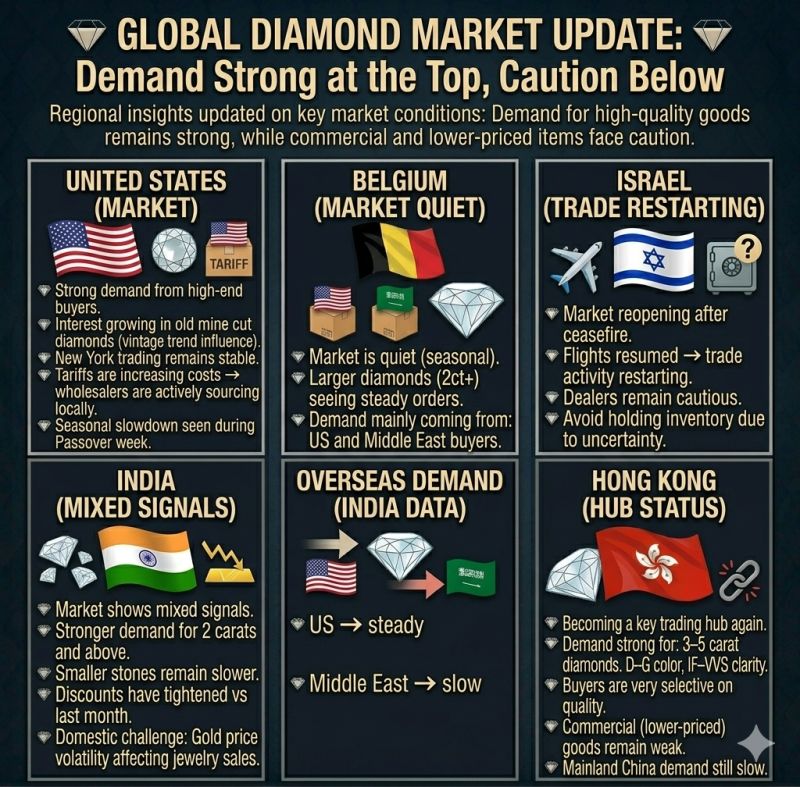
The US market, the world's largest for diamonds, remains a pillar of strength for high-end goods but is showing signs of stress in other segments. High-end consumer demand is positive, with a notable and intriguing interest in Taylor Swift-inspired old mine cuts, a trend that highlights the influence of pop culture on luxury tastes.
Reports from the Miami antique show were mixed, but the broader New York trading scene remains steady. This stability, however, is underpinned by a new reality: US tariffs are making overseas purchases significantly more expensive.
In February 2026, President Trump signed an executive order imposing a 10% temporary import surcharge on most goods entering the US, citing the need to address the balance of payments deficit. This tariff, effective February 24, 2026, has a direct impact on the diamond trade.
While some goods, like certain worked diamonds, may have specific tariff classifications, the general surcharge adds a new layer of cost to an already expensive commodity. Consequently, wholesalers are actively seeking goods already within the US to avoid these new levies. Adding to the complexity, the US has maintained sanctions on Russian diamonds, with prohibitions on importing non-industrial diamonds of Russian origin weighing 0.5 carats or greater remaining firmly in place.
Belgium:
As the historic gateway for diamond trading into Europe, the Antwerp bourses are experiencing a seasonally quiet period. However, beneath the calm surface, there is solid activity. Larger diamonds are seeing robust orders, particularly from the US and the Middle East.
The market's focus remains on Anglo American's upcoming De Beers sale, a key barometer for the industry's health. De Beers, facing a "challenging" market, has already cut its 2026 production guidance to 21-26 million carats, down from 26-29 million, as it prioritizes market stability over volume.
Israel:
The Israeli diamond market has shown remarkable resilience. After a period of shutdown due to the US-Israel-Iran conflict, the market is now reopening. The establishment of a ceasefire has heralded an end to the immediate missile threats, allowing dealers to make the most of the opportunity.
Flight resumptions are enabling crucial imports, exports, and business trips, which are the lifeblood of the industry. However, traders remain careful, wary of leaving goods in Israel in case the geopolitical situation deteriorates and the skies close again. This cautious optimism is a defining feature of the current landscape.
India:
The Indian market, the world's largest diamond cutting and polishing center, is experiencing mixed trends and widespread caution. The bifurcation is evident here as well, with 2-carat and larger diamonds performing better than smaller stones. Discounts are now narrower than they were a month ago, suggesting some stabilization. Overseas demand mirrors the global trend steady from the US, but slow from the Middle East due to the ongoing war.
The domestic jewelry sector is facing a unique challenge: gold-price volatility. As gold prices fluctuate, it impacts consumer sentiment and spending on diamond jewelry. Furthermore, Indian exporters in Surat and Mumbai, who together export around 400-500 parcels daily via Dubai, are facing major logistical hurdles due to flight cancellations and airport shutdowns in the region. The conflict has effectively frozen a significant portion of the trade flow, impacting the $10.55 billion in exports the city achieved in FY 2024-25.
Hong Kong:
The geopolitical turmoil in the Middle East has had an unexpected consequence: dealers have moved from Dubai to Hong Kong to escape the war zone. This relocation has made Hong Kong a central hub for the Asian diamond trade. The demand is highly specific, focused on 3 to 5-carat, D-G color, IF-VVS clarity diamonds. Buyers are exceptionally selective about quality, leaving commercial goods struggling.
Mainland China's demand for natural diamonds remains quiet, a trend that has prompted many dealers to embrace adjacent categories. To compensate, they are expanding into finished jewelry, other gemstones, and lab-grown diamonds. The mainland market, when it does buy, focuses on a narrow spectrum: round, 0.30, 0.50, and 1-carat diamonds in D-H color, VVS1-VS2 clarity, with Triple Excellent (3X) cut grades and no fluorescence. Fancy shapes like oval, pear, and emerald cuts are also in demand, reflecting a more sophisticated consumer base.
The Market Bifurcation:
The single most important trend shaping 2026 is the market bifurcation. A peer-reviewed study in the Journal of Gems & Gemmology confirms this structural shift, noting that the natural diamond sector is maintaining value through controlled extraction volumes and enhanced certification systems.
While the overall market is challenging, there is "excess demand for the best quality, rarest diamonds". This is evident in the price data. The RapNet Diamond Index (RAPI) for 1-carat goods fell 1.7% in March 2026 alone, while 0.30-carat and 0.50-carat stones declined 1.1% and 3.5%, respectively.
In stark contrast, larger rough diamonds, particularly those 5 carats and above, remain in tight supply, with reports of price increases at De Beers' March sight. The Zimnisky Global Rough Diamond Price Index shows that 5-9-carat rough is up a low-to-mid-teens percentage year-to-date. This divergence creates a clear strategic imperative: for those selling premium, large stones, the market is favorable; for those reliant on small, commercial goods, the pressure is intense.
The Lab-Grown vs. Natural Debate:
The narrative of lab-grown diamonds (LGDs) has evolved. They are no longer a novelty but a permanent and powerful market segment. The synthetics have "taken over the near-gem market and also still hold about 50 percent of the U.S. engagement ring market".
However, the situation is more nuanced. The academic research suggests a long-term coexistence. LGDs are eroding natural diamonds' market share, oversupply has triggered a progressive decline in LGD prices. The natural diamond sector, by contrast, is leveraging its scarcity and emotional resonance to maintain value. For B2B buyers, this means a clear choice: natural diamonds for long-term value retention and luxury positioning, and lab-grown for volume-driven, price-sensitive segments.
Geopolitics & Trade:
Geopolitics has become a central factor in diamond trading. The US-Israel-Iran conflict has disrupted global supply chains in real-time. Iranian missile strikes froze trading in Israel and Dubai, forcing rough tender houses to relocate sales to Antwerp. The conflict has severely impacted India's diamond hub in Surat, with stakeholders noting that flight cancellations have "brought everything to a halt". The World Federation of Diamond Bourses (WFDB) has noted that the ongoing conflict directly affects markets, international trade flows, and consumer confidence worldwide.
Trade policy is adding to the uncertainty. The temporary 10% US import surcharge has created a scramble for goods already within the country.
Legislation has been introduced to strike down these tariffs, but their immediate impact is already being felt. Sanctions on Russian diamonds continue to reroute global supply chains, with the US extending a general license for the import of certain non-Russian origin diamonds through September 1, 2026. For industry players, this means diversification of sourcing and markets is no longer an option but a necessity.
Strategic Implications -
As the industry moves into the second half of 2026, several strategic imperatives emerge:
For Sellers of Premium Goods: The market favors you. Focus on sourcing and marketing large, high-quality stones (2 carats and above, D-G, IF-VVS). The scarcity of these goods is a competitive advantage.
For Those in Commercial Segments: The pressure is intense. Explore value-added services like custom jewelry design or expand into lab-grown diamonds to capture the price-sensitive consumer.
For All Market Participants: Diversify your geographic exposure. The volatility in the Middle East and shifting US trade policies mean relying on a single hub or market is risky. Explore emerging hubs like Hong Kong and strengthen relationships in stable markets.
Embrace Digital Platforms: In a fragmented and fast-moving market, real-time access to global buyers and sellers is critical.
Explore More on CaratX
At CaratX , we are committed to providing the tools and platform you need to succeed in this dynamic environment. Explore our marketplace and seller resources to take your diamond business global:
Start Selling to 18+ International Countries: Expand your reach and tap into new markets by registering as a seller on our B2B platform - https://www.caratx.com/register
Sell Jewelry Internationally: Our CaratX seller plan is designed for jewelry designers and manufacturers to connect with buyers worldwide - https://caratx.com/generic-pages/launch-your-products-on-caratx
Shop Natural Diamonds & Gemstones: Access our extensive marketplace to find the perfect stones at unbeatable prices, whether you're looking for natural diamonds or a diverse selection of gemstones.
Learn More About Our Pricing: For detailed information on how to launch your products on CaratX, check out our pricing page - https://caratx.com/generic-pages/launch-your-products-on-caratx
Frequently Asked Questions (FAQs)
Q1: Are lab-grown diamonds affecting the price of natural diamonds? Yes, significantly, particularly in the smaller, commercial-grade categories (0.30 to 1 carat). Martin Rapaport noted that 1-carat and smaller diamonds are down 10% to 25% over the past year, largely due to the impact of synthetics. However, the market for large, high-quality natural diamonds remains resilient.
Q2: How are US tariffs affecting the diamond trade? The 10% temporary import surcharge imposed in February 2026 is making overseas purchases more expensive for US buyers. This has led wholesalers to seek goods already within the US to avoid the added cost. Combined with existing sanctions on Russian diamonds, the tariff landscape is complex and requires careful navigation.
Q3: Is it safe to trade diamonds with Israel right now? The market has reopened following a ceasefire, and flights have resumed, enabling trade. However, traders remain cautious, with some reluctant to leave goods in the country in case the situation deteriorates again. It is a market of cautious optimism.
Q4: What diamond shapes and sizes are in highest demand? Demand is highly bifurcated. Larger stones (2 carats and above) and fancy shapes like ovals, marquises, and emeralds are performing well. In markets like Hong Kong and mainland China, there is strong demand for high-quality 3-5 carat stones, as well as specific rounds (0.30, 0.50, 1.00 ct) with ideal specifications.
Q5: Why is Hong Kong becoming more important for diamond trading? Due to the war in the Middle East, many dealers have relocated from Dubai to Hong Kong, making it a central hub for the Asian trade. Furthermore, while Mainland China's demand for natural diamonds is quiet, Hong Kong serves as a key entry point for the region and a base for trading with Southeast Asian buyers.