
When we think of rarity and luxury in the gemstone world, diamonds immediately spring to mind. For decades, the diamond has been marketed as the ultimate symbol of eternal love and the pinnacle of precious stones. However, for the discerning collector, investor, or jewelry enthusiast, the truth is far more fascinating.
Diamonds are not rare. At least, not in the way we think.
Geologically speaking, diamonds are carbon crystals formed under pressure. While high-quality, flawless diamonds are scarce, the mineral itself is abundant. In fact, there are dozens of gemstones on Earth that exist in such minuscule quantities that if you lined up all the ever-mined specimens, they wouldn't fill a single vault.
At CaratX , we connect buyers and sellers with the world's most exquisite treasures. If you are looking to diversify your portfolio or simply appreciate the rarest beauties nature has to offer, here is your definitive guide to the 9 gemstones rarer than diamonds.
For those interested in selling such unique pieces, Sellers can register on the CaratX marketplace here to access a global B2B and B2C audience.
1. Painite:
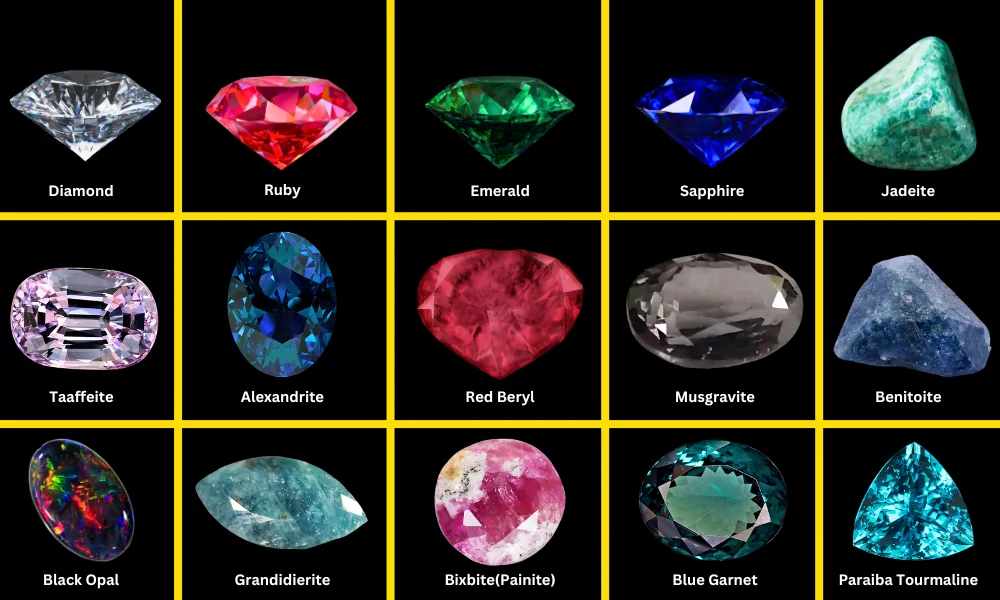
For decades, Painite held the title of the world's rarest gemstone mineral. Discovered in Myanmar (Burma) by British mineralogist Arthur C.D. Pain in the 1950s, for many years, only two crystals were known to exist.
Why it is rarer than Diamonds: Unlike diamonds, which have commercial mines spanning continents, Painite's chemical composition (Calcium Zirconium Boron Aluminium Oxide) requires a unique geological environment that is almost nonexistent. Until the early 2000s, less than 2 dozen crystals were documented.
Appearance: It typically ranges from a deep reddish-brown, orange-red, to a gemmy brown. Under a loupe, it has a beautiful hexagonal crystal structure.
Current Status: Even with new discoveries in Myanmar, facetable gem-quality material remains virtually unobtainable for the average consumer, making it a holy grail for collectors.
2. Alexandrite:
Alexandrite is a rare variety of the mineral Chrysoberyl. It was discovered in the Ural Mountains of Russia in the 1830s and named after the future Tsar Alexander II. Its claim to fame is its dramatic color change.
Why it is rarer than Diamonds: While diamonds sparkle, Alexandrite performs magic. It appears green in daylight or fluorescent light but turns raspberry red under incandescent light. This phenomenon requires the perfect blend of chromium and iron during formation, a cosmic accident that rarely happens.
The Russian Origin: The original Ural Mountain deposits are virtually exhausted. While new sources have been found in Brazil, Sri Lanka, and Tanzania, they rarely match the quality of the "Russian" color change.
Value: Fine-quality alexandrite can command prices upwards of $50,000 per carat, far exceeding the price of a high-quality diamond.
Looking to source unique color-changing gemstones for your collection? Shop natural diamonds and rare gemstones on our marketplace.
3. Red Beryl (Bixbite):
To call Red Beryl "rare" is an understatement. Found primarily in the Wah Wah Mountains of Utah, USA, this gemstone is so scarce that one gem-quality specimen is found for every 150,000 diamonds.
Why it is rarer than Diamonds: Unlike emeralds (green beryl) which are found globally, Red Beryl requires a unique geochemical environment involving topaz and rhyolite. The crystallization process is stunted, meaning crystals are almost never larger than 1 carat after cutting.
The Misnomer: It is often mistakenly called "Red Emerald," but the Gemological Institute of America (GIA) clarifies that it is technically Bixbite, a distinct variety of beryl.
Mining: The only commercial operation, the Ruby Violet claims in Utah, produces such limited rough that the mine opens to the public only a few weeks a year to collect surface material.
4. Grandidierite:
Discovered in Madagascar in 1902 by French mineralogist Alfred Grandidier, this stone remained a museum curiosity for over a century because no gem-quality crystals could be found.
Why it is rarer than Diamonds: Grandidierite is typically opaque and opaque material is rare enough. However, the translucent to transparent gem-quality Grandidierite is the unicorn of the gem world. It is a magnesium aluminum borosilicate that forms in highly specific metamorphic rocks.
Appearance: It boasts a stunning bluish-green to greenish-blue hue, often compared to the finest aquamarine but with a deeper, more mysterious saturation.
Market Presence: For years, only a handful of cut stones existed. Recently, a small pocket was found in Sri Lanka, but the material remains astronomically priced.
To stay updated on the arrival of such ultra-rare collector stones, follow CaratX for insightful and educational content.
5. Taaffeite:
This is the only gemstone in the world that was initially identified as a different stone (spinel) before being discovered as a new species by accident.
Why it is rarer than Diamonds: Count gemologist Count Taaffe found a faceted stone in a jeweler's shop in Dublin in 1945. When he examined it, he noticed a double refraction that spinel does not have. It was later confirmed as a new mineral.
The Chemistry: Taaffeite fills the gap between spinel and beryl. It is found in Sri Lanka and Tanzania, but usually only in pebbles and gravels, rarely in matrix.
Rarity Factor: For every million carats of gem-quality material mined, Taaffeite accounts for less than a single carat.
6. Musgravite:
If Taaffeite is rare, Musgravite is its elusive, reclusive cousin. Discovered in the Musgrave Mountains of Australia in 1967, it was decades before any gem-quality material was cut.
Why it is rarer than Diamonds: Chemically related to Taaffeite, Musgravite was initially indistinguishable from it without X-ray diffraction. For years, the only specimens were tiny, opaque crystals unsuitable for cutting.
The Breakthrough: It wasn't until 2005 that the first major gem-quality Musgravite appeared on the market, sourced from Sri Lanka and Greenland.
Value: Because of its extreme scarcity and the high demand from collectors who want to complete their "rare gem" collection, Musgravite often sells for $35,000 per carat or more.
7. Benitoite:
Benitoite is a stunning sapphire-blue barium titanium silicate that is found in commercial quantities in only one place on Earth: San Benito County, California.
Why it is rarer than Diamonds: Not only is its geographical location unique, but Benitoite also exhibits a property called "strong dichroism" and fluoresces a bright blue under UV light. Diamonds fluoresce, but not with this specific intensity.
The Deposit: The Benitoite Gem mine is now closed to large-scale mining, operating primarily as a tourist dig. This means new supply is virtually zero.
Dispersion: It has a higher dispersion (fire) than diamond, meaning it throws rainbows of color even brighter than a diamond.
8. Jeremejevite:
Named after the Russian mineralogist Pawel Wladimirowich Jeremejew, this gemstone was originally found in the remote mountains of the Nabibia region.
Why it is rarer than Diamonds: Jeremejevite is an aluminum borate that forms in perfect, pristine hexagonal crystals. For decades, the only specimens were microscopic. Finding crystals large enough to facet is a monumental task.
Appearance: It ranges from colorless to a pale sky blue and pale yellow. The blue variety is the most sought after, reminiscent of the finest aquamarine but with a different crystal habit.
Localities: Besides Namibia, minor finds have occurred in Tajikistan and Germany, but facetable rough remains one of the toughest challenges for gem cutters.
9. Black Opal:
While opal itself is common, Black Opal is in a league of its own. Specifically, the material found at Lightning Ridge, Australia.
Why it is rarer than Diamonds: Black Opal is rare because it has a dark or black body tone (potch) that allows the colors to "fire" against a dark background, making them appear like a galaxy of stars. Most opal is light or white.
The Lightning Ridge Factor: This region produces the finest black opal in the world. The mining is done by individual "opal miners" in small shafts, not by industrial conglomerates. The unpredictable nature of the seam makes it impossible to mass-produce.
Value: A fine Lightning Ridge black opal can sell for more per carat than a diamond because of its unique play-of-color and rarity of pattern.
Interested in the investment potential of colored gemstones? Sellers can register on CaratX marketplace here to list their unique pieces for a global audience of 18+ countries.
Why Does Rarity Matter -
Rarity in gemstones is defined by three factors: Geological Scarcity (how the earth makes it), Geographical Scarcity (where it is found), and Gemmy Scarcity (how much of it is clear enough to cut).
For investors, these 9 stones represent a store of value that is portable and appreciating. Unlike diamonds, which have a controlled market, these stones are true free-market commodities. If you are a jeweler or wholesaler looking to differentiate your inventory from commercial mall stores, carrying a piece of Painite or a fine Black Opal sets you apart.
CaratX bridges the gap between these rare earth treasures and the modern buyer. Whether you are looking to source unusual gems or sell your collection to vetted buyers in over 18 countries, our platform provides the infrastructure.
For Sellers: List your gems on CaratX
For Buyers: Explore our marketplace
For Businesses: Check our seller plans and pricing
Frequently Asked Questions (FAQs)
Q: Are these gemstones a good investment? A: Yes. Because their supply is finite and no new mines are being discovered for these specific varieties (unlike diamonds which are found on every continent), their value has historically appreciated faster than inflation and often faster than the fancy colored diamond market.
Q: How do I know if a gemstone I own is one of these rare types? A: You should never rely on visual identification alone. You need a laboratory report. Reputable labs like GIA, SSEF, or GRS use spectroscopy and chemical analysis to distinguish Taaffeite from Musgravite, or Natural Red Beryl from synthetic corundum.
Q: Can I buy these on CaratX? A: While our marketplace primarily focuses on diamonds and commercial jewelry, we are expanding into the collector's market. It is best to visit our shop page and use the filters to search for "Collector Stones" or contact sellers directly through the platform.
Q: Is it legal to sell Painite or Benitoite? A: Absolutely. Unlike fossils or artifacts, rough gemstones and minerals are generally legal to buy and sell across borders, provided they are declared correctly. Benitoite, while a state gem, is not protected like a cultural artifact and can be sold freely.
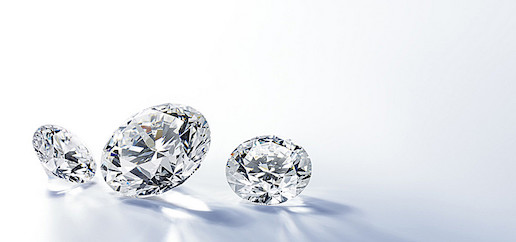
Image Credit - Airox Nigen