

Birthstones Through History: What Your Gemstone Says About You
Home
News And Media Birthstones Through History: What Your Gemstone Says About You SHOP NOWHome
News And Media Birthstones Through History: What Your Gemstone Says About You SHOP NOWJun, 22, 2026 by Archit Mohanty 0 Comments
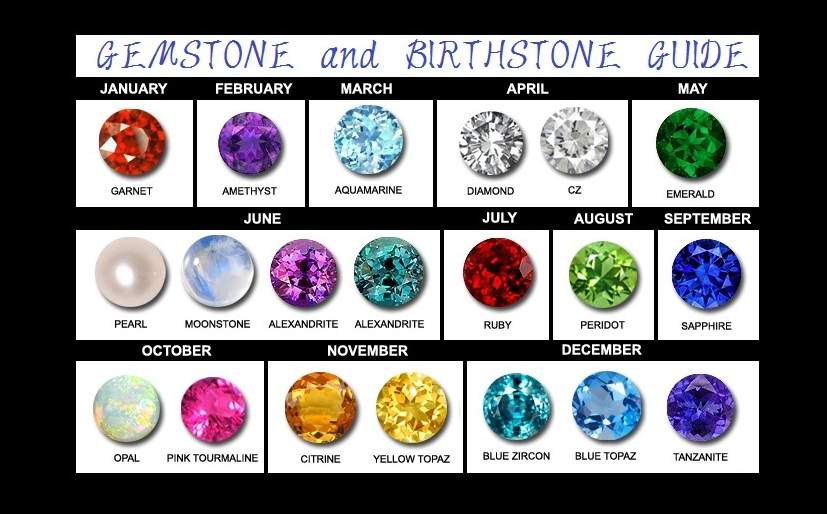
Birthstones have captivated humanity for millennia. These dazzling gems are far more than beautiful accessories, they are windows into ancient traditions, carriers of profound symbolism, and personal talismans believed to reveal something essential about who you are.
But what does your birthstone really say about you? And how did this ancient tradition become the global phenomenon we know today? Let's embark on a journey through history, symbolism, and the sparkling world of gemstones.
The tradition of birthstones is not a modern marketing invention, it is deeply rooted in ancient history. The most widely accepted origin traces back to the Breastplate of Aaron, described in the Book of Exodus in the Hebrew Bible.
According to Exodus 28:15-30, God commanded Moses to create a sacred breastplate for his brother Aaron, the first High Priest of the Israelites. This ceremonial garment was adorned with twelve gemstones, each representing one of the twelve tribes of Israel. The breastplate was arranged in four rows of three stones, with each stone engraved like a seal with the name of a tribe.
The first-century historian Josephus and later St. Jerome in the 5th century drew connections between these twelve stones, the twelve months of the year, and the twelve signs of the zodiac. This association laid the foundation for what would eventually become our modern birthstone tradition.
By the 8th and 9th centuries, the practice evolved: people would own all twelve stones but wear only one during a given month, believing it possessed heightened powers during that time. The modern tradition of wearing a single stone corresponding to one's birth month did not emerge until the 16th century, originating in either Germany or Poland.
Explore the difference between diamonds and gems to understand how these precious stones are classified.
For centuries, birthstone lists varied widely across cultures and regions. The need for standardization became apparent as the jewelry industry grew globally. In 1912, the American National Association of Jewelers (now known as Jewelers of America) met in Kansas and officially adopted a standardized list of birthstones.
This 1912 list established the birthstones we recognize today. The Jewelry Industry Council of America later updated the list in 1952, adding alexandrite for June, citrine for November, and pink tourmaline for October. Today, many months have multiple birthstone options, reflecting both traditional and modern preferences.
Browse our collection of loose diamonds and gemstones to find your perfect birthstone.
Each birthstone carries unique symbolism, personality traits, and historical significance. Here's what your gemstone reveals about you:
Symbolism: Protection, friendship, and strength
Garnet, with its deep red hue reminiscent of pomegranate seeds, has been cherished since ancient times. The name comes from the Latin granatum, meaning "seed." January's birthstone is known as the "traveler's stone," believed to guard against harm and negativity during journeys.
What it says about you: Those born in January are said to be fiercely independent, passionate, and loyal. Garnet symbolizes eternal friendship and trust, making it the perfect gift for a cherished friend. In Indian astrology, garnet helps eliminate negative feelings like depression and guilt, instilling greater self-confidence and mental clarity.
Discover pastel gemstones and how they complement diamonds in modern jewelry designs.
Symbolism: Peace, wisdom, and clarity
Amethyst, the purple variety of quartz, has captivated mankind for millennia. The name derives from the Greek amethystos, meaning "not intoxicated," reflecting the ancient belief that the stone protected its owner against drunkenness.
What it says about you: February-born individuals are known for their intelligence, calm demeanor, and easy-going nature. Amethyst symbolizes peace, clarity, and inner strength. Historically, royals have admired this February birthstone since at least the days of Alexander the Great, and it was believed to convey strength and wit to those who wore it. It is also the traditional gem for the sixth wedding anniversary.
Learn about the timeless allure of white gemstones and how they compare to colored stones like amethyst.
Symbolism: Calmness, courage, and happiness
Named from the Latin aqua marina meaning "seawater," aquamarine is a green-blue variety of the mineral beryl. Ancient sailors believed aquamarine protected them during voyages and ensured safe passage.
What it says about you: March babies are said to be kind, welcoming, open, and charming. Aquamarine evokes feelings of calmness and level-headedness. It is said to bring happiness to marriage, calm waves, and keep sailors safe at sea. The 1,298-carat dark blue aquamarine given to First Lady Eleanor Roosevelt in 1936 remains one of the most famous examples of this gem.
Shop for aquamarine jewelry and explore our collection of solitaire rings and pendants.
Symbolism: Love, strength, and everlasting commitment
The diamond is not only the April birthstone but also a near-universal symbol of love and commitment. Formed billions of years ago under intense heat and pressure deep within the Earth, diamonds are the hardest natural material on the planet.
What it says about you: Those born in April are lucky to call this scintillating gem their birthstone, a symbol of clarity and strength. Over the centuries, the diamond was believed to have healing powers, serving as an antidote to poison and providing protection against the plague. Diamond is also the traditional gift for the 60th and 75th wedding anniversaries.
Explore our guide to buying loose diamonds and understand the 4Cs of diamond quality.
Symbolism: Growth, hope, and renewal
Emerald, the birthstone for May, has been beloved for millennia, evoking rebirth and renewal. The word "emerald" comes from the Greek smaragdos, meaning "green gem". From Egyptian pharaohs to Incan emperors, emerald has enchanted royalty Cleopatra was known for her passion for emerald.
What it says about you: May-born individuals are associated with tenacity and wisdom. Legend has it that emerald has the power to make its wearer more intelligent and quick-witted. Roman author Pliny the Elder wrote that the green birthstone had therapeutic properties, helping gem cutters restore their eyes by looking at the emerald. Science now confirms that the color green relieves stress and eye strain.
Discover Navaratna rings featuring emerald alongside other powerful gemstones.
Symbolism: Purity, transformation, and intuition
June is one of the few months with three birthstones. Each offers unique beauty and meaning:
Pearl originates from oceans, lakes, and rivers around the world. Ancient peoples held various beliefs about their origin, Middle Eastern traditions held that pearls were teardrops fallen from heaven, while the Chinese believed they came from the brain of a dragon.
Alexandrite, added in 1952, is a rare color-changing gem that appears green in daylight and red under incandescent light.
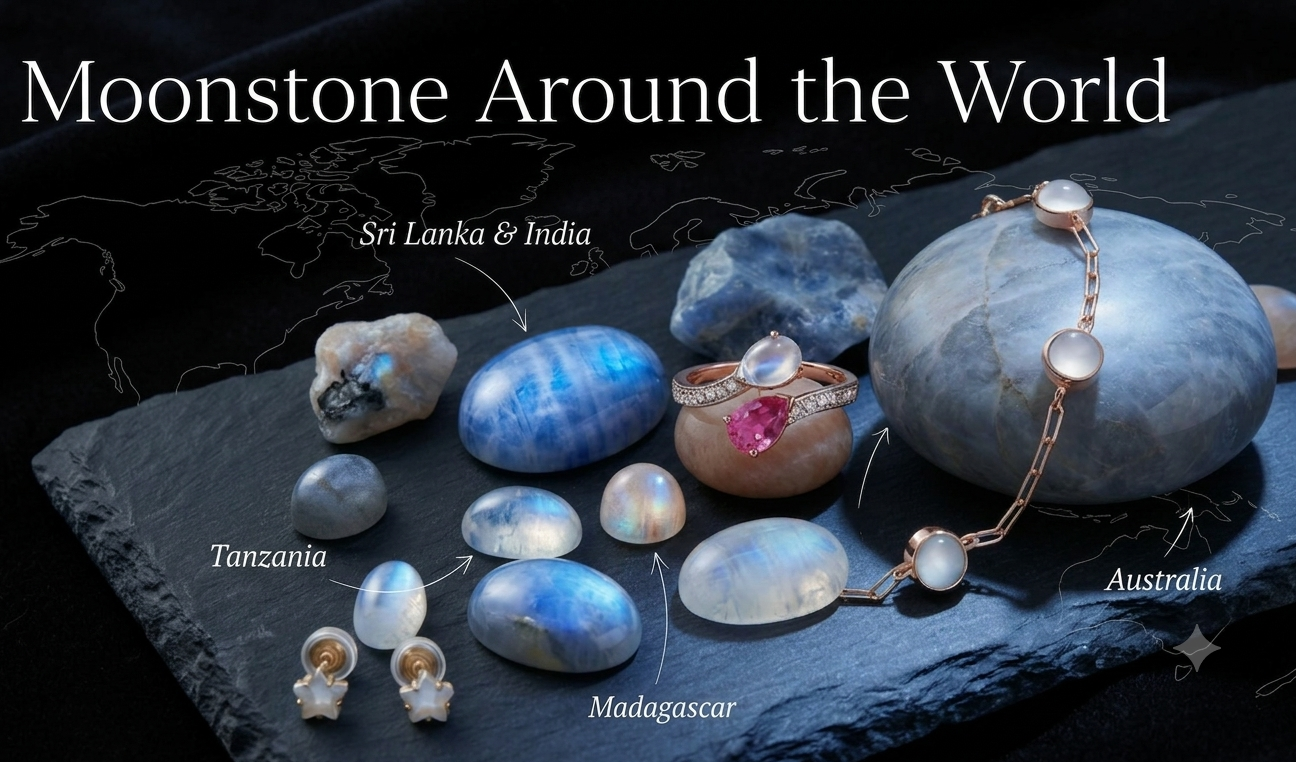
Moonstone belongs to the feldspar family and is known for its ethereal adularescence.
What it says about you: Those born in June are usually inventive, reflective, and resourceful. Pearl represents purity and calm, alexandrite symbolizes balance and confidence, while moonstone brings emotional clarity and inner peace.
Explore our baroque pearls collection and white gemstones guide.
Symbolism: Passion, energy, and prosperity
Ruby, the July birthstone, is one of the most coveted of gems. The name derives from the Latin ruber, meaning "red" the color of love and passion. Called the "king of gems" in ancient India, ruby is a variety of the mineral corundum containing trace amounts of chromium.
What it says about you: July-born individuals are passionate, energetic, and driven. The finest color of the ruby birthstone is a deep red with a hint of purple, called "pigeon's blood" in the trade. With a hardness of 9 on the Mohs scale, ruby is exceptional for daily wear.
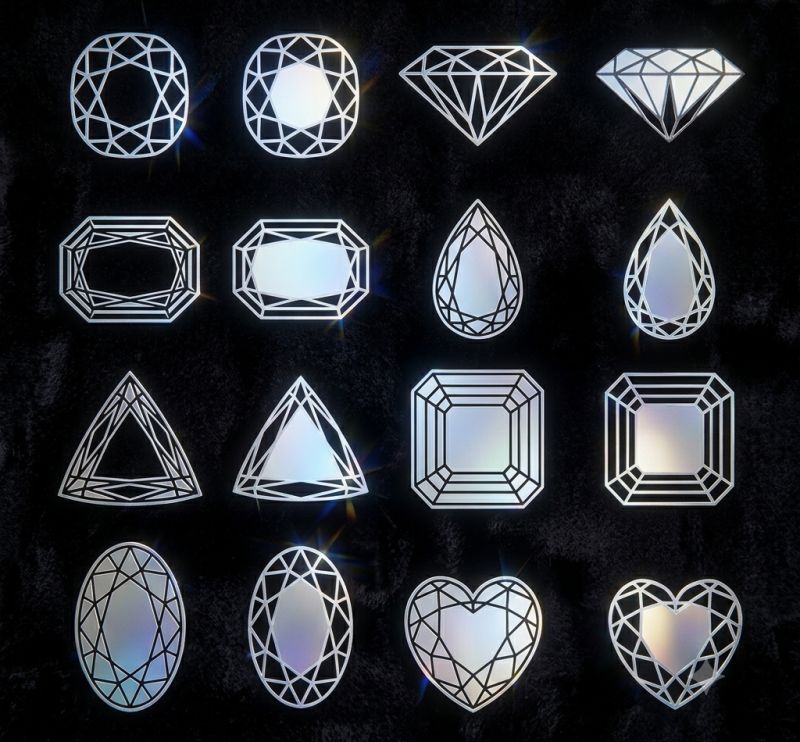
Learn about the science behind a diamond's unique shape and how gemstone formation relates to their properties.
Symbolism: Good fortune, positivity, and success
Peridot is known as the "extreme" gem because it is found in hardened lava from Earth's mantle as well as in meteorites from outer space. Some peridot is ancient found in pallasite meteorites that are remnants of our solar system's birth.
What it says about you: August-born individuals are known for their lively personality that makes people gravitate toward them. Peridot symbolizes strength and is said to protect the wearer from nightmares and harm. It is worn to attract wealth and promote harmony in interpersonal relationships.
Browse our gemstone collection for peridot and other birthstones.
Symbolism: Wisdom, loyalty, and truth
The September birthstone has traditionally symbolized sincerity, truth, faithfulness, and nobility. For countless centuries, sapphire has adorned royalty and the robes of the clergy.
What it says about you: September-born individuals are known for their wisdom and loyalty. Sapphire is relatively hard, scoring a 9 on the Mohs scale, with excellent toughness. While sapphire is most famous for its rich blue hue, it actually comes in a stunning spectrum of colors called "fancy sapphires". It is the gem of the 5th and 45th wedding anniversaries.
Discover the rarest gemstone in the universe and how sapphires compare to other precious stones.
Symbolism: Creativity, love, and inspiration
October features two unique birthstones. Opal displays a unique play-of-color that some say looks like fireworks, lightning, or galaxies trapped inside the stone. The ancient Greeks believed opals gave their owners the gift of prophecy. Tourmaline comes from the Sinhalese word toramalli, meaning "stone with mixed colors," reflecting its ability to display multiple colors in one crystal.
What it says about you: October-born individuals are creative and inspired. Opal was originally the recognized October birthstone, but in 1952, pink tourmaline was suggested as an alternate. Today, tourmaline of any color is accepted as October's birthstone.
Explore our jewelry collection featuring opal and tourmaline designs.
Symbolism: Joy, abundance, and confidence
November offers two beautiful options. Topaz comes in a rainbow of colors including blue, green, yellow, orange, red, pink, and purple. Citrine is prized for its charming yellow and orange hues, the transparent yellow to brownish orange variety of quartz.
What it says about you: November-born individuals are associated with joy and confidence. Both November birthstones are known to have calming energies while bringing fortune and warmth to the wearer. Topaz is the commemorative stone for the 4th wedding anniversary.
Learn about zircon vs. cubic zirconia and how to distinguish natural from synthetic gems.
Symbolism: Peace, protection, and good luck
December offers a trio of dazzling gems with beautiful blue hues. Turquoise has been cherished for millennia, Egyptian pharaohs adorned themselves with it, and Chinese artisans carved it more than 3,000 years ago.
It was thought to guarantee health and good fortune. Tanzanite is a more recent discovery, heat-treated to produce its signature blue to violet hues. Zircon is an ancient gem with intense fire and brilliance.
What it says about you: December-born individuals are known to be courageous. These gems offer protection and good luck, with turquoise specifically believed to scare off evil spirits and promote health.
Shop for natural diamonds and gemstones from our marketplace.
The Western birthstone list standardized in 1912 is not the only tradition. Different cultures have developed their own associations:
Vedic astrology features the Navaratna nine gemstones corresponding to celestial bodies, each believed to balance planetary energies and provide protection, good fortune, and spiritual well-being. The Navaratna ring features ruby (Sun), pearl (Moon), red coral (Mars), emerald (Mercury), yellow sapphire (Jupiter), diamond (Venus), blue sapphire (Saturn), hessonite (Rahu), and cat's eye (Ketu).
The Ratna Pariksha, a 5th-century Hindu text, chronicles the relationships between stones and their mystical properties.
Tibetan and Buddhist traditions also incorporate gemstones for spiritual protection and healing.
Discover the cosmic power of Navaratna rings and how to choose the perfect one.
While birthstones carry rich symbolism, their physical properties are equally fascinating. Gemstones are classified by the 4Cs: Carat, Cut, Color, and Clarity.
Carat measures weight (1 carat = 0.2 grams).
Cut determines how well a diamond reflects light.
Color ranges from D (colorless) to Z (noticeably yellow or brown).
Clarity measures internal flaws or inclusions.
The Gemological Institute of America (GIA) established these grading standards, which are now used worldwide.
Read our Natural Diamond Market 2026 analysis for insights into current market trends and pricing.
Whether you're buying for yourself or as a gift, consider these factors:
Authenticity: Ensure your gemstone is genuine and ethically sourced.
Quality: Look for stones with minimal inclusions and vibrant color.
Setting: Choose a metal and setting that complements the stone.
Certification: Request gemological reports from reputable laboratories like GIA or IGI.
Register as a seller on CaratX to start selling diamonds and jewelry internationally, or shop our marketplace for authentic gemstones at unbeatable prices.
What's the Difference Between Diamonds and Gems?
Understanding Diamond Color – A Comprehensive Guide
The Glittering Past: A Journey Through Diamond Trading and Mining History
The Art of Buying Loose Diamonds: Your Buyer's Guide
Pastel Gemstones: The Perfect Subtle Touch to Enhance Diamonds
Navaratna Rings: The Cosmic Power of Nine Gemstones
The Timeless Allure of White Gemstones
The Rarest Gemstone in the Universe
Zircon vs. Cubic Zirconia: The Ultimate Guide
Disclaimer: The symbolic meanings and personality associations of birthstones are based on historical traditions and folklore. Individual experiences may vary.
Follow CaratX for more insightful and educational content on diamonds, gemstones, and jewelry.
Start selling to diamonds in 18+ international countries: www.caratx.com/register
Sellers register on CaratX marketplace here to start selling to B2B and B2C buyers: www.caratx.com/register
Sell jewelry internationally to buyers through our CaratX seller plan: www.caratx.com/register
Shop gemstones from our CaratX marketplace at unbeatable prices: https://caratx.com/search-results/gemstones
Shop natural diamonds: https://caratx.com/search-results/Natural
More details about our pricing: https://caratx.com/generic-pages/launch-your-products-on-caratx
Q: Are birthstones based on the month you were born or your zodiac sign? A: Modern birthstones are typically assigned by birth month, though some traditions also associate stones with zodiac signs. The 1912 standardization established the month-based system we use today.
Q: Why do some months have multiple birthstones? A: Some months have multiple options due to historical traditions and updates to the official list. For example, June has three birthstones (pearl, alexandrite, and moonstone), and October has two (opal and tourmaline).
Q: Can I wear a birthstone that isn't my own? A: Absolutely! While birthstones are traditionally worn by those born in that month, there are no rules preventing anyone from enjoying any gemstone they love.
Q: Are lab-grown diamonds considered real birthstones? A: Yes. Lab-grown diamonds are chemically, physically, and optically identical to mined diamonds. They offer a sustainable and ethical alternative.
Q: How were birthstones chosen in 1912? A: The Jewelers of America standardized the list based on historical traditions, market availability, and commercial considerations. The list has been updated several times since then.
Aug, 06, 2022
Aug, 06, 2022

0 Comments
Please login to leave a reply.