

Fancy Shapes Continue to Shine in the Diamond Market: A Detailed 2026 Market Analysis
Home
News And Media Fancy Shapes Continue to Shine in the Diamond Market: A Detailed 2026 Market Analysis SHOP NOWHome
News And Media Fancy Shapes Continue to Shine in the Diamond Market: A Detailed 2026 Market Analysis SHOP NOWJun, 19, 2026 by Archit Mohanty 0 Comments
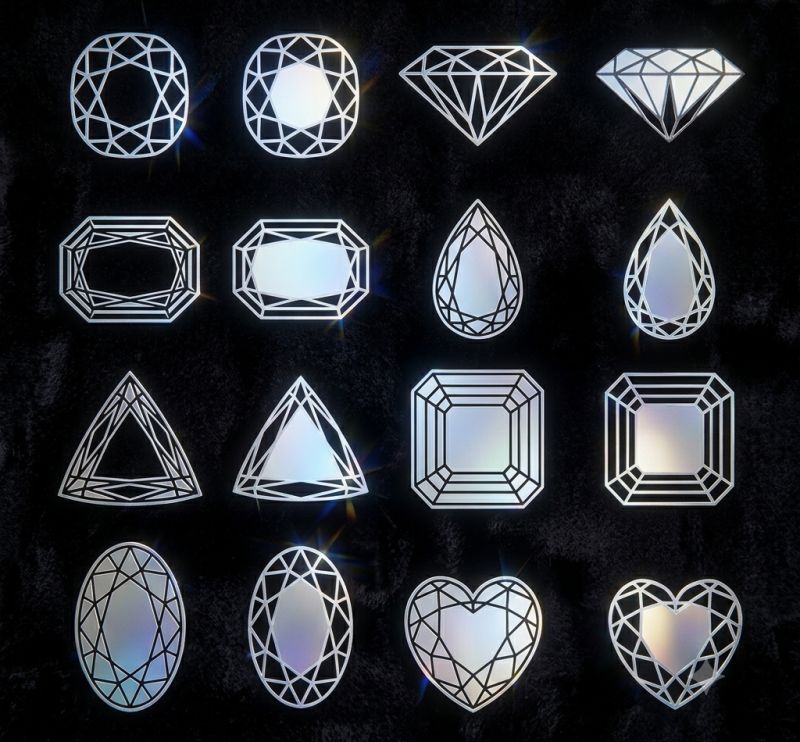
The diamond industry is undergoing one of its most significant transformations in decades. As consumer preferences evolve, market dynamics shift, and technology reshapes the competitive landscape, one trend has emerged with remarkable clarity: elongated fancy shapes are leading the way in the natural diamond market.
The JCK Las Vegas show, held from May 29 to June 1, 2026, served as a definitive barometer for these changing tides. This analysis examines the current state of the diamond market, the rising prominence of fancy shapes, and what these trends mean for buyers, sellers, and investors in the natural diamond space.
The diamond market has split into two distinct trajectories. According to The Knot Real Weddings Study 2026, lab-grown center stones accounted for 61 percent of all engagement ring purchases in 2025, representing a staggering 239 percent increase since 2020. This seismic shift has fundamentally altered the natural diamond landscape.
The Report highlights a critical insight: lab-grown diamonds overwhelmingly have high color and clarity. A D-flawless diamond is no longer an obvious "flex" in an era where synthetics dominate the engagement ring market. This reality has driven wealthy consumers seeking natural diamonds toward a counterintuitive preference lower color grades that signal authenticity.
The bifurcation is starkly visible in pricing and demand patterns:
Diamonds under 2 carats are increasingly losing market share to lab-grown alternatives.
Diamonds above 2 carats have become the natural sector's mainstay.
The 1.50 to 1.99 carat range is showing signs of improvement.
Signet Jewelers estimates that natural diamonds still account for 70% of overall engagement-market revenue and an extraordinary 90%+ of the $5,000+ price range.
The BBC reports that the price gap between natural and lab-grown diamonds has narrowed, with some lab-grown stones retailing for a fraction of the cost of equivalent natural ones.
In a market where size has become the primary differentiator for natural diamonds, elongated fancy shapes offer a distinct advantage: they appear larger than rounds of the same carat weight due to greater surface area. This visual size advantage, combined with their distinctive aesthetic, has made them the darlings of the current market.
According to Diamond News, long fancy shapes such as Ovals, Marquises, and Emeralds are doing better than rounds in 2 carat and larger categories. High-quality Marquises, long Radiants, and long Cushions are in particularly short supply.
Perhaps no shape exemplifies the current fancy-shape boom better than the Marquise. Once considered a relic of 1980s and 1990s engagement rings, the curvaceous cut has made a spectacular comeback. As JCK's coverage of Las Vegas Jewelry Week noted, the marquise cut's "evil eye–like look felt fresh and seductive".
The numbers confirm this resurgence:
Marquises are currently the most expensive fancy shape.
High-quality Marquises are among the most sought-after and command the highest prices.
Well-cut Marquises are becoming increasingly difficult to find due to limited supply.
Long Cushion cuts represent another fascinating data point in the fancy-shape boom. According to market data, long Cushions are trading at 20% to 25% premiums compared with square cushions. This premium reflects both the scarcity of well-proportioned elongated cushions and the strong consumer preference for the elongated silhouette.
The fancy-shape phenomenon extends beyond Marquises and Cushions:
Elongated Ovals with good proportions in D-I colors and VS-SI clarities continue to sell well in the US market.
Emerald cuts in 2 carat and above are performing strongly.
Long Radiants are becoming harder to find due to limited supply.
Very well-cut fancy shapes are difficult to find and command significant premiums.
The JCK Las Vegas show, running from May 29 to June 1, 2026, crystallized these market trends. Indian exhibitors reported robust order flow and enquiries, with a significant driver being the deep stratification of the diamond market.
Key observations from the show:
Ovals, pears, and marquise shapes dominated the floor due to their visual size advantage and modern feel.
Exhibitors came looking for long fancy shapes, antique cuts, low-color diamonds, and unique jewelry designs.
It that 2-carat-and-above natural diamonds were in high demand and short supply, while below 2 carats saw sluggish sales.
As CaratX's own analysis of JCK 2026 noted, elongated shapes like Ovals, Marquises, Radiants, Cushions, and Emeralds generated exceptional buyer enthusiasm. The round diamond is increasingly becoming a "commodity," while the fancy shape is the "profit maker".
In a development that could reshape the fancy-shape market, the Gemological Institute of America (GIA) plans to introduce cut grades for marquise-, oval-, and pear-shaped diamonds starting in 2027.
This represents a monumental shift. Currently, GIA assigns formal cut grades (Excellent to Poor) only to round brilliants. Fancy shapes receive scores only for polish and symmetry, but no overall cut grade. The new system aims to address industry demand and improve consumer protection by recognizing cut quality variations in fancy shapes.
Cut quality varies greatly among fancy shapes, and the absence of a standardized grading system has made it difficult for consumers to evaluate quality. The GIA's move is expected to:
Increase transparency in the fancy-shape market.
Reward well-cut stones with premium pricing.
Help consumers make more informed purchasing decisions.
Potentially increase demand for GIA-graded fancy shapes.
Separately, the GIA plans to add new comments about fluorescence to its standard diamond grading reports, beginning in the fourth quarter of 2026. Natural diamonds with D to Z color possessing fluorescence will receive one of two notes:
Fluorescence may enhance the diamond's appearance in UV-rich environments like natural daylight.
In less than 0.2% of cases, fluorescence "can make existing characteristics...more noticeable under UV-rich lighting".
This development is particularly relevant for fancy shapes, where fluorescence characteristics can significantly impact appearance and value.
One of the most counterintuitive trends in the current market is the rising demand for low-color natural diamonds. According to the Intelligence Report, those seeking 2.50-carat and larger goods are increasingly asking for J grade or lower, sometimes significantly lower.
The main impetus, sellers say, is consumers' preference to show that their diamond is natural. Lab-grown diamonds overwhelmingly have high color and clarity, so a D-flawless natural diamond no longer distinguishes itself from a synthetic counterpart. Lower-color diamonds, particularly those with warm tones, are more difficult to replicate in a laboratory setting, making them a more convincing signal of natural origin.
This trend explains why:
Large diamonds in low colors are a hot market in the US.
Antique cuts which often feature warm colors are gaining popularity.
Celebrities like Taylor Swift have influenced the movement toward lower-color diamonds.
The shift toward lower-color diamonds has created interesting pricing dynamics. While 1-carat round diamonds saw a 1.3% drop in the March 2026 Price List, the underlying data revealed significant technical variance across color and clarity grades.
The J to M, VS1 to SI2 categories in 3- to 3.99-carat rounds have seen asking prices increase 1.5% since the start of 2026 after declining throughout 2025.
The demand for individuality and unique designs has fueled a resurgence of vintage-inspired styles and antique cuts. This trend aligns perfectly with the fancy-shape boom, as many vintage cuts are themselves fancy shapes.
For buyers, this means that cut quality particularly in fancy shapes is the most important determinant of both beauty and value. For sellers, it means that inventory composition is critical; well-cut fancy shapes are in short supply and command premium pricing, while poorly cut stones are difficult to move.
The inventory landscape reflects the market's bifurcation:
Search demand for high-end natural diamonds exceeds supply by an estimated 30% to 40%.
Polished inventories are tightening in select categories, especially 2 carat and larger.
High-quality Marquises, long Radiants, and long Cushions are in short supply.
Sharp declines in diamond sales in China historically a market for small, high-quality stones have enhanced the importance of the US market, where size is a bigger factor. This geographic shift has reinforced the trend toward larger stones in the natural diamond sector.
If you're considering a natural diamond engagement ring, the current market offers several insights:
Size matters: In natural diamonds, 2 carats and above represent the best value proposition.
Fancy shapes offer value: Elongated shapes like Ovals, Marquises, and Emeralds appear larger than rounds of the same carat weight.
Consider lower colors: J and below can offer excellent value while signaling natural origin.
Cut quality is paramount: Well-proportioned fancy shapes command premiums and are worth it.
GIA grading will evolve: Starting in 2027, GIA cut grades for Marquises, Ovals, and Pears will increase transparency.
The bifurcation of the diamond market has created distinct investment opportunities:
Large fancy shapes (2 ct.+) are outperforming the broader market.
Well-cut stones in short supply are commanding increasing premiums.
Low-color natural diamonds represent a contrarian opportunity.
Antique and vintage cuts offer differentiation from lab-grown alternatives.
The data is clear: inventory composition is the key to success in the current market. Sellers should consider:
Focusing on 2 ct. and above in natural diamonds.
Building inventory of well-cut fancy shapes (Oval, Marquise, Emerald, Radiant, Cushion).
Stocking lower-color diamonds (J and below) in larger sizes.
Carrying antique and vintage cuts for the growing demand for uniqueness.
Avoiding poorly proportioned fancies that are illiquid.
The premium for quality has never been higher:
Well-cut fancy shapes can command 20-25% premiums over their square counterparts.
Exceptional cuts continue to command strong premiums.
Poorly cut stones are increasingly difficult to sell.
For sellers looking to reach international buyers, platforms like CaratX offer access to 18+ international countries. The CaratX marketplace connects sellers with B2B and B2C buyers, providing a global reach that is increasingly essential in the bifurcated diamond market.
The 2026 diamond market presents a clear picture: fancy shapes are shining, and size is paramount. The bifurcation between natural and lab-grown diamonds has created distinct market segments, with natural diamonds increasingly focused on larger sizes, unique shapes, and exceptional craftsmanship.
The JCK Las Vegas show confirmed what market data has been suggesting: consumers who choose natural diamonds are seeking differentiation. Whether through elongated fancy shapes, antique cuts, lower-color stones, or vintage-inspired designs, the message is clear authenticity and individuality command a premium.
For buyers, this means opportunity. Well-cut fancy shapes in 2 carats and above offer exceptional value and beauty. For sellers, it means focus. Inventory of well-cut, larger fancy shapes is the key to success in the bifurcated market.
As the GIA prepares to launch cut grades for fancy shapes in 2027, the market is poised for even greater transparency and sophistication. The fancy shape revolution is not a passing trend, it is the new reality of the natural diamond market.
Shop Natural Diamonds – Browse our curated collection of certified natural diamonds from trusted sellers
Shop Gemstones – Explore our extensive collection of natural gemstones
Sellers Register – Start selling to B2B and B2C buyers in 18+ international countries
CaratX Marketplace – The global B2B marketplace connecting diamond and jewelry sellers with buyers worldwide
Elongated fancy shapes like Ovals, Marquises, and Emeralds appear larger than rounds of the same carat weight due to greater surface area. They also offer distinctive aesthetics that appeal to consumers seeking individuality. Additionally, the visual size advantage makes them particularly attractive in the 2-carat-and-above segment.
Marquise diamonds are currently the most expensive fancy shape. High-quality Marquises are among the most sought-after and command the highest prices due to limited supply.
Long Cushions are trading at 20% to 25% premiums compared with square cushions. This reflects both the scarcity of well-proportioned elongated cushions and strong consumer preference for the elongated silhouette.
The GIA plans to introduce cut grades for marquise-, oval-, and pear-shaped diamonds starting in 2027. This will expand beyond round brilliants, which currently receive cut grades.
Yes. Lab-grown diamonds have captured significant market share in the sub-2-carat segment, particularly for engagement rings. This has pushed natural diamonds toward larger sizes and unique shapes as differentiators. However, natural diamonds still account for 70% of engagement-market revenue and 90%+ of the $5,000+ range.
There's growing demand for lower-color natural diamonds (J and below) in larger sizes. This trend is driven by consumers' preference to show their diamond is natural, as lab-grown diamonds overwhelmingly have high color and clarity.
Extremely important. Well-cut fancy shapes are difficult to find and command significant premiums. Conversely, fancies with poor proportions are illiquid. With GIA cut grades for fancy shapes launching in 2027, cut quality will become even more transparent and valuable.
This depends on your priorities. Lab-grown diamonds offer excellent value and are chemically identical to natural diamonds. Natural diamonds offer rarity, provenance, and potential value retention. For engagement rings under 2 carats, lab-grown is increasingly popular. For larger stones (2+ carats) and unique fancy shapes, natural diamonds offer differentiation that is difficult to replicate.
JCK Las Vegas 2026 Reveals a Clear Shift in Diamond Demand – Our analysis of the JCK Las Vegas show, covering the deep bifurcation in diamond demand and why 2-carat-and-above stones are leading the market
JCK Las Vegas 2026: The Great Diamond Market Reset – 10 Key Takeaways for a New Era – Essential insights from the show floor, including the K-shaped recovery, the 2-carat+ surge, and strategic positioning for sellers
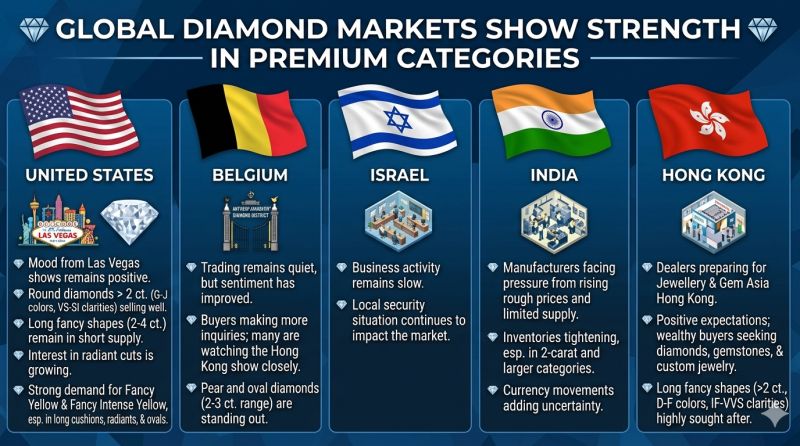
Global Diamond Markets Show Growing Confidence After Las Vegas: The 2026 Recovery Takes Shape – Regional deep-dive analysis on how the Las Vegas shows sparked real purchase orders across US, India, and Hong Kong markets
The Rise of Elongated Diamonds: Market Trends, Pricing & Sourcing Guide – Deep analysis of why Ovals, Marquises, Radiants, and Cushions are outperforming rounds, with pricing data and sourcing strategies
The Elongated Era: Why Long Fancy Diamond Shapes Are Dominating the Market – Explores the driving forces behind the fancy shape boom, including the perception of size, modern aesthetics, and social media influence
Natural Diamond Market 2026 – Comprehensive overview of the 2026 natural diamond market, including supply constraints, price trends across commercial vs. premium segments, and the rise of elongated fancy shapes
Diamond Market 2026: Rarity and Size Drive Premium Demand as Fancy Shapes Take the Throne – Strategic intelligence report on the two-tier market, regional trading hub analysis, and the meteoric rise of fancy-shaped diamonds
Premium Natural Diamonds Are Showing Stronger Stability in 2026 – Analysis of the post-correction landscape, the commercial vs. premium bifurcation, and why D–F, VS+ diamonds are demonstrating robust resilience
2026 Natural Diamond Market Report: Premium Demand Surges as Millennials and Gen Z Redefine Luxury Gifting – How younger generations are reshaping the natural diamond market, with data on consumer preferences and buying behavior
The Diamond Inventory Paradox: Why Vaults Overflow While Demand Goes Unmet – Why the right diamonds are scarce even as overall inventory remains high, and how this structural imbalance is reshaping the market
Understanding Today's Diamond Inventory Landscape – Detailed breakdown of global diamond supply by quality segment, revealing a 30–40% unmet demand for premium stones
Jun, 18, 2026
Aug, 06, 2022
Aug, 06, 2022
0 Comments
Please login to leave a reply.