

Lab-Grown Diamonds in 2025, Fast Growth, Big Impact on Jewelry Trends
Home
News And Media Lab-Grown Diamonds in 2025, Fast Growth, Big Impact on Jewelry Trends SHOP NOWHome
News And Media Lab-Grown Diamonds in 2025, Fast Growth, Big Impact on Jewelry Trends SHOP NOWApr, 07, 2026 by Archit Mohanty 0 Comments
The global diamond industry has officially entered a new era. After years of gradual encroachment, lab-grown diamonds (LGDs) have achieved a decisive mainstream breakthrough in 2025, fundamentally redefining consumer expectations, price structures, and jewelry design aesthetics worldwide. What was once dismissed as a niche novelty for budget-conscious shoppers has rapidly transformed into a powerful market force, reshaping everything from engagement ring traditions to the competitive strategies of luxury jewelry houses.
According to a landmark report from jewelry and watch insurer BriteCo, lab-grown diamonds now represent 42% of all diamond jewelry sold globally, a figure that would have seemed implausible just five years ago. Even more striking, in the crucial engagement ring segment long considered the emotional and commercial heart of the diamond trade 48% of rings now feature a lab-grown center stone. Another 22% of other jewelry categories, including earrings, necklaces, and fashion pieces, utilize lab-grown diamonds, demonstrating strong adoption across multiple product segments.
This seismic shift is being driven by three powerful forces: rapidly improving manufacturing technology that has dramatically lowered production costs, a pronounced change in buyer behavior particularly among younger generations who prioritize value and size over tradition, and the lingering effects of post-pandemic economic pressures that have made consumers more price-conscious than ever before.
The engagement ring market the most emotionally charged and financially significant segment of diamond jewelry has experienced the most dramatic transformation. The BriteCo report reveals that 48% of engagement rings sold in 2025 featured a lab-grown center stone. This figure aligns closely with data from other industry sources.
Taylor & Hart, a bespoke jeweler with showrooms in London and New York, found that 70% of the diamonds set in engagement rings during 2025 were lab-grown, representing a 14% increase from 2024.
The Knot’s annual Real Weddings Study, surveying more than 10,000 couples who married in 2025, reported that 61% of consumers chose a lab-grown center stone for their engagement ring, a staggering 239% increase since 2020. The Knot attributed this surge to “economic pragmatism and evolving values,” with 40% of couples stating it was specifically important that their stone be lab-grown.
Across the Atlantic, bespoke jeweler Taylor & Hart similarly reported that 70% of its couples now choose lab-grown diamonds, citing “growing demand for sustainability, ethical sourcing and better value” as primary drivers.
Beyond engagement rings, lab-grown diamonds are making significant inroads into everyday fashion jewelry. BriteCo data shows that approximately 22% of other jewelry categories including earrings, pendants, bracelets, and fashion rings now incorporate lab-grown diamonds. More importantly, this segment’s market share has grown by an extraordinary 240% between 2020 and 2025, reflecting rapid penetration into daily wear scenarios.
This growth is fueled by the positioning of lab-grown diamonds as “affordable everyday luxury,” a concept that resonates powerfully with consumers who want the sparkle and prestige of diamonds without the traditional price premium. BriteCo CEO Dustin Lemick captured this bifurcation succinctly: “Lab-grown diamonds are becoming an accessible, everyday luxury, while natural diamonds are repositioning as exclusive symbols of enduring value”.
The global lab-grown diamond market is now a substantial economic force. According to Precedence Research, the market was valued at $29.73 billion in 2025 and is projected to grow at a compound annual growth rate (CAGR) of 14.15%, reaching $97.85 billion by 2034.
Fortune Business Insights offers a similarly bullish projection, estimating the market will grow from $25.89 billion in 2024 to $74.45 billion by 2032. These figures underscore that the lab-grown diamond phenomenon is not a temporary trend but a permanent structural shift in the jewelry industry.
The most powerful driver of lab-grown diamond adoption remains price. The BriteCo report provides definitive 2025 pricing data:
The average natural 1-carat diamond retails for approximately $4,200, with a typical range between $3,000 and $6,000 depending on cut, color, and clarity. By contrast, the average lab-grown 1-carat diamond costs $1,000 or less at retail a price differential of 60% to 80%.
Some sources report even lower prices; Madison Dia found that the average price of a one-carat lab-grown diamond had fallen to just $602 in 2025, representing less than 20% of the cost of a comparable natural diamond.
The dramatic price differential has fundamentally altered consumer purchasing behavior. Instead of simply spending less money, buyers are using their savings to purchase larger and higher-quality stones. BriteCo data confirms that consumers are consistently opting for bigger diamonds within the same budget, a trend that has accelerated as lab-grown prices have fallen.
The average engagement ring price has correspondingly decreased. According to BriteCo, the average engagement ring purchase price fell from $6,000 in 2021 to $5,200 by 2024. The Knot’s 2025 data shows a further decline to $4,600 on average, down from $5,200 the previous year. Meanwhile, the average diamond size in engagement rings has increased significantly, rising from 1.31 carats in 2019 to 2.45 carats in 2025, according to BriteCo’s analysis.
This inverse relationship between price and size is the defining characteristic of the current market. Couples are spending less money overall while acquiring dramatically larger stones a value proposition that is reshaping the entire engagement ring category.
The rise of lab-grown diamonds has also exerted downward pressure on natural diamond prices. Rapaport data indicates that natural diamond prices have softened across multiple categories. In November 2025, the RapNet Diamond Index (RAPI™) for 1-carat goods dropped 2.6%, while 0.30-carat diamonds fell 6% and 0.50-carat stones declined 5.1%. Only larger stones, such as 3-carat diamonds, showed price stability, with the index rising a modest 0.1%.
Industry observers note a growing bifurcation in the diamond market: small to medium natural diamonds (0.5–1.5 carats) face sustained pressure from lab-grown alternatives, while large, high-quality natural diamonds (2 carats and above) retain their value due to scarcity and collector demand. As one analysis noted, the market has taken on an “ice and fire” pattern natural diamonds in the 0.5–1 carat range continue to be squeezed, while high-end natural diamonds above 2 carats show resilience.
The most visible change in engagement ring design is the dramatic increase in average stone size. The BriteCo report documents that the average lab-grown center diamond for engagement rings increased from 1.31 carats in 2019 to 2.45 carats in 2025 an increase of nearly 87% in just six years. Taylor & Hart similarly found that average carat weight climbed to 1.75 carats in 2025, compared with 1.30 carats the previous year.
The Knot’s data confirms this trend, reporting an average lab-grown diamond size of 2 carats in 2025, compared to just 1.6 carats for natural diamonds. For lab-grown diamonds purchased through Taylor & Hart, the average oval carat weight rose specifically to 1.75 carats in 2025 up from 1.30 carats in 2024.
This size inflation is made possible entirely by the affordability of lab-grown diamonds. Consumers are not spending more money in fact, they are spending less overall but they are receiving substantially larger stones than would have been possible with natural diamonds at the same price point.
Contrary to the assumption that larger stones might come with quality compromises, BriteCo reports that consumers are opting for higher quality alongside larger sizes. As lab-grown diamonds have become more affordable, buyers are upgrading not just carat weight but also cut, color, and clarity grades. The combination of lower prices and improved manufacturing quality means that today’s lab-grown diamonds often exceed the quality of comparably priced natural diamonds by a significant margin.
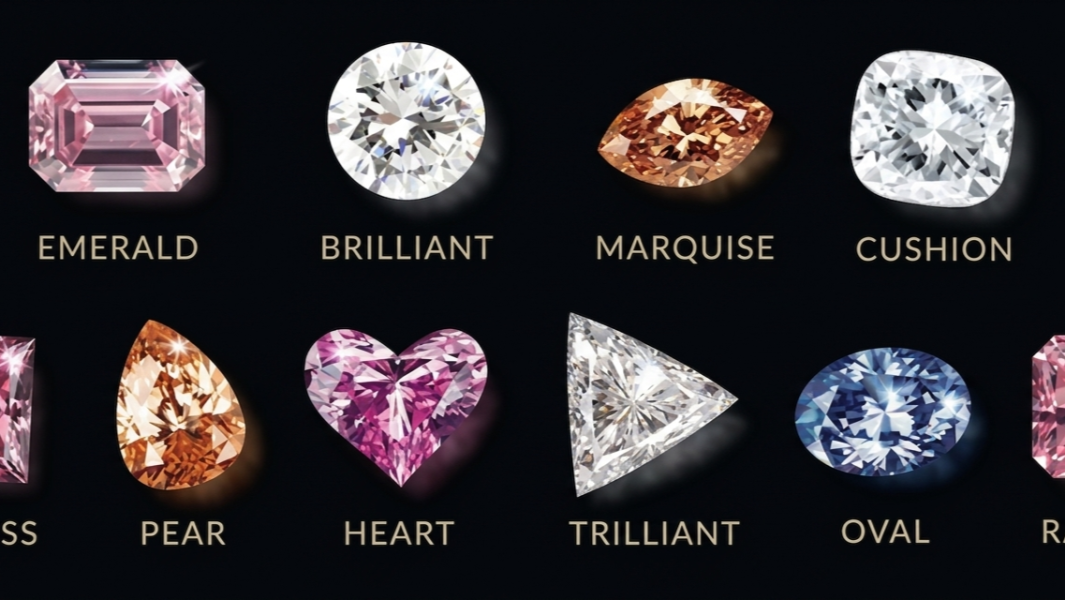
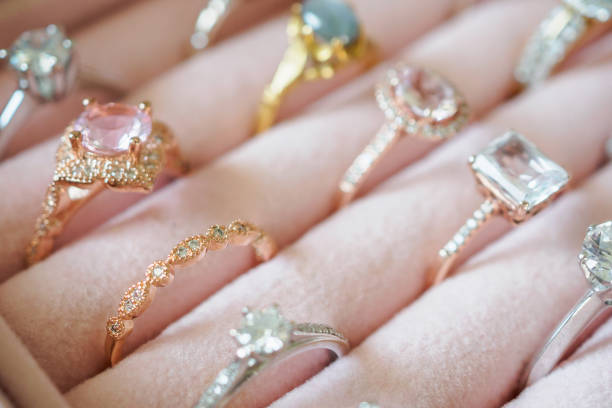
One of the most unexpected developments in 2025 has been the ascendancy of the oval cut as the most popular shape for lab-grown diamonds. The BriteCo report explicitly states that “in 2025, oval was the most popular shape for lab-grown diamonds”.
Taylor & Hart’s data is even more striking: the jeweler found that oval cuts now represent nearly half of all diamond shapes sold, replacing round as the leading cut of diamond. The firm attributes the rise of ovals to a combination of practical and cultural factors: “better value, a more flattering look on the hand, and steady celebrity visibility that keeps the shape front of mind for modern couples”.
Celebrity influence has played a significant role in popularizing the oval shape. High-profile engagements featuring oval diamonds have captured public attention: Georgina Rodríguez’s dramatic oval diamond following her engagement to Cristiano Ronaldo, Winnie Harlow’s 8.5-carat oval center stone, and earlier oval favorites from Hailey Bieber, Kourtney Kardashian, Blake Lively, and Lady Gaga have all helped cement the shape’s modern, distinctive appeal.
While oval has emerged as the clear leader, other shapes remain popular. The Knot’s survey of over 10,000 couples found that round was still the most common shape overall at 26%, closely followed by ovals at 25%. Other top ring shapes included emerald, princess, pear, and marquise, each commanding approximately 8% of the market.
In terms of settings, solitaire stone settings remain the choice of 38% of consumers, with 83% of respondents selecting a clear diamond. Moissanite and sapphires were the most popular non-diamond choices for center stones. Nearly 90% of consumers chose to make custom edits or to custom design their ring entirely, underscoring the growing demand for personalization and unique design.
Alongside changes in diamond shape, metal preferences have also shifted dramatically. Yellow gold represented 55% of all selections according to Taylor & Hart, replacing platinum as the dominant metal choice. The Knot similarly reported that yellow gold was in the highest demand at 39%, up 140% over the past five years, as white gold continued its steady decline.
This resurgence of yellow gold aligns with a broader cultural move toward styles that feel personal, distinctive, and visually striking a perfect complement to the larger, more prominent lab-grown diamonds that couples are now choosing.
Understanding the technology behind lab-grown diamonds provides important context for their market trajectory. The Gemological Institute of America (GIA), the world’s foremost authority on diamond grading and identification, has published extensive research on laboratory-grown diamonds. GIA explains that lab-grown diamonds are produced through two primary methods: high-pressure, high-temperature (HPHT) and chemical vapor deposition (CVD).
In the HPHT method, a diamond “seed” is placed in a carbon-rich environment and subjected to extreme pressure (approximately 1.5 million pounds per square inch) and temperatures (around 2,700°F or 1,500°C), causing carbon atoms to crystallize around the seed and form a diamond. In the CVD method, a diamond seed is placed in a vacuum chamber filled with carbon-rich gas (typically methane), which is then heated to extreme temperatures (around 1,400°F or 800°C), causing carbon atoms to separate from the gas and deposit onto the seed, layer by layer.
GIA notes that CVD products now dominate the supply of laboratory-grown diamonds submitted for grading reports, with the majority also undergoing post-growth HPHT treatment to remove their color. The institute has documented a rapid evolution of laboratory-grown diamonds over the past two decades, with significant increases in quantity, size, and quality.
Colorless to near-colorless laboratory-grown diamonds share many gemological and physical properties with their natural counterparts, which presents a challenge for independent gemologists and appraisers in distinguishing these gems from natural diamonds. Consequently, gemologists have needed to invest in powerful analytical testing equipment or depend on gemological laboratories for accurate identification.
GIA’s research indicates that colorless to near-colorless laboratory-grown diamonds are type II, meaning they have no detectable nitrogen impurities. By contrast, only about 1% of natural diamonds are type II. This distinction forms the basis of many identification protocols.
BriteCo’s report outlines several potential future market developments that will shape the industry in the coming years:
1. Brand Differentiation May Blur As lab-grown diamonds become increasingly commoditized, brand differentiation may become more difficult. Natural diamond producers are expected to accelerate marketing efforts to justify higher values for natural diamonds, emphasizing their rarity, emotional resonance, and investment potential.
2. Lab-Grown Diamonds as Their Own Category BriteCo predicts that lab-grown diamonds may emerge as a distinct jewelry category, separate from natural diamonds. This would allow consumers to choose between categories based on their values, budget, and intended use, rather than viewing lab-grown diamonds merely as substitutes for natural stones.
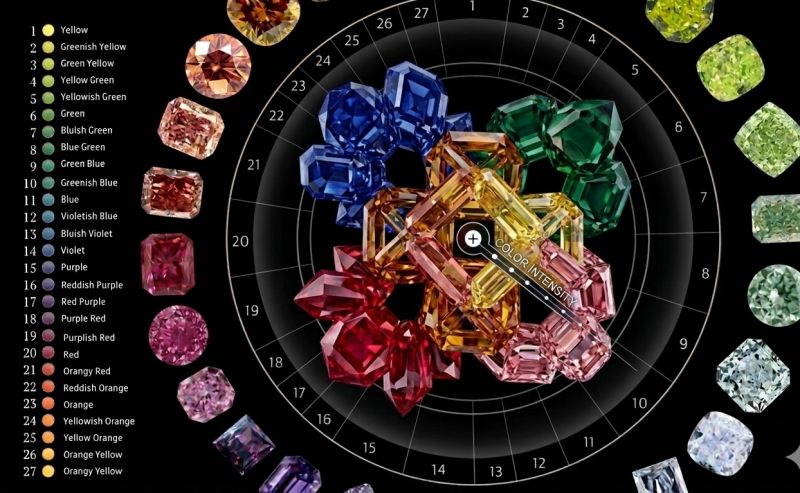
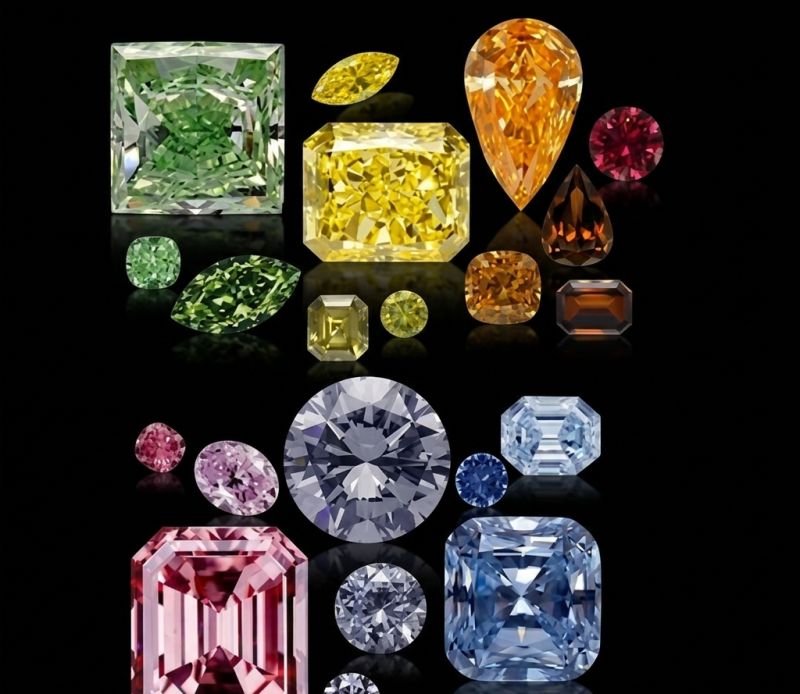
3. Growth in Fancy-Colored Lab-Grown Diamonds There will likely be a significant rise in demand for fancy-colored lab-grown diamonds (pink, blue, yellow, green) due to their lower cost and customizable production capabilities. Natural fancy-colored diamonds are extremely rare and expensive, making lab-grown versions an attractive alternative for consumers seeking distinctive, personalized jewelry.
4. Everyday Wear Jewelry Expansion Because of affordability and consistent quality, lab-grown diamonds could become a new class of everyday wear jewelry, expanding beyond engagement rings into fashion pieces, gifts, and accessories.
The market for fancy-colored lab-grown diamonds is poised for exceptional growth. Precedence Research projects the lab-grown diamond market will grow at a 14.15% CAGR through 2034, with colored diamonds representing a significant portion of this expansion.
For readers looking to participate in the lab-grown diamond revolution, CaratX offers a platform for buying and selling diamonds and gemstones internationally.
CaratX provides a global marketplace for diamond sellers to reach B2B and B2C buyers across 18+ international countries. Whether you are a manufacturer, wholesaler, or retailer, CaratX offers the tools and reach to expand your business globally.
Register as a seller on CaratX: https://www.caratx.com/register
Consumers and businesses looking to purchase lab-grown diamonds, natural diamonds, or gemstones can access CaratX’s extensive inventory at competitive prices. The platform offers transparent pricing, verified certifications, and secure transactions.
Shop diamonds and gemstones on CaratX: https://www.caratx.com
For detailed information about CaratX’s pricing structure and seller plans, visit their dedicated pricing page:
CaratX Pricing Details: https://caratx.com/generic-pages/launch-your-products-on-caratx
Yes, lab-grown diamonds are chemically, physically, and optically identical to natural diamonds. They are composed of pure carbon crystallized in the cubic structure and exhibit the same hardness (10 on the Mohs scale), brilliance, and fire as natural diamonds. The only difference is their origin one is grown in a laboratory, the other is mined from the earth.
To the naked eye, there is no visible difference. Specialized gemological equipment is required for identification, typically examining characteristics such as fluorescence patterns, growth structures, and trace element composition. Reputable jewelers will always disclose whether a diamond is lab-grown or natural, and certification from laboratories like GIA, IGI, or HRD will specify the diamond’s origin.
Generally, lab-grown diamonds do not retain value in the same way that natural diamonds do. Natural diamonds benefit from inherent scarcity and a centuries-old market infrastructure that supports resale value. Lab-grown diamonds, by contrast, are manufactured products whose prices have been consistently falling as technology improves. For consumers seeking a stone primarily for beauty and enjoyment, lab-grown diamonds offer excellent value; for those seeking an investment or heirloom asset, natural diamonds remain the conventional choice.
The answer is nuanced. Peer-reviewed research indicates that lab-grown diamond substitution can significantly reduce greenhouse gas emissions, mineral waste, and water usage compared to continued natural diamond mining. However, the sustainability of lab-grown diamonds depends heavily on the energy sources used in their production. Lab-grown diamonds made with renewable energy have a substantially lower carbon footprint than those made with fossil fuels. Consumers should look for companies that provide transparent ESG reporting.
Oval cut has become the most popular shape for lab-grown diamonds in 2025, surpassing the traditional round cut. Oval cuts offer a flattering appearance on the hand, better value per carat, and strong celebrity endorsement. Taylor & Hart reports that oval cuts now represent nearly half of all diamond shapes sold.
As of 2025, a high-quality 1-carat lab-grown diamond typically costs $1,000 or less at retail, compared to approximately $4,200 for a comparable natural diamond. Some sources report prices as low as $600 for certain grades and shapes.
Yes! CaratX provides a platform for sellers to offer lab-grown diamonds, natural diamonds, and gemstones to buyers in over 18 international countries. Visit https://www.caratx.com/register to register as a seller and start reaching B2B and B2C customers worldwide.
Follow CaratX for more insightful and educational content on the diamond and jewelry industry.
Start selling diamonds in 18+ international countries: www.caratx.com/register
Shop gemstones at unbeatable prices: https://caratx.com/search-results/gemstones
Shop natural diamonds: https://caratx.com/search-results/Natural
View CaratX pricing and seller plans: https://caratx.com/generic-pages/launch-your-products-on-caratx
Jun, 15, 2026
Aug, 06, 2022
Aug, 06, 2022
0 Comments
Please login to leave a reply.