
India’s Diamond Market in 2026: Domestic Growth, and the Rise of Premium Natural Diamonds
Home
Education Blog India’s Diamond Market in 2026: Domestic Growth, and the Rise of Premium Natural Diamonds SHOP NOWHome
Education Blog India’s Diamond Market in 2026: Domestic Growth, and the Rise of Premium Natural Diamonds SHOP NOWMay, 04, 2026 by Archit Mohanty 0 Comments
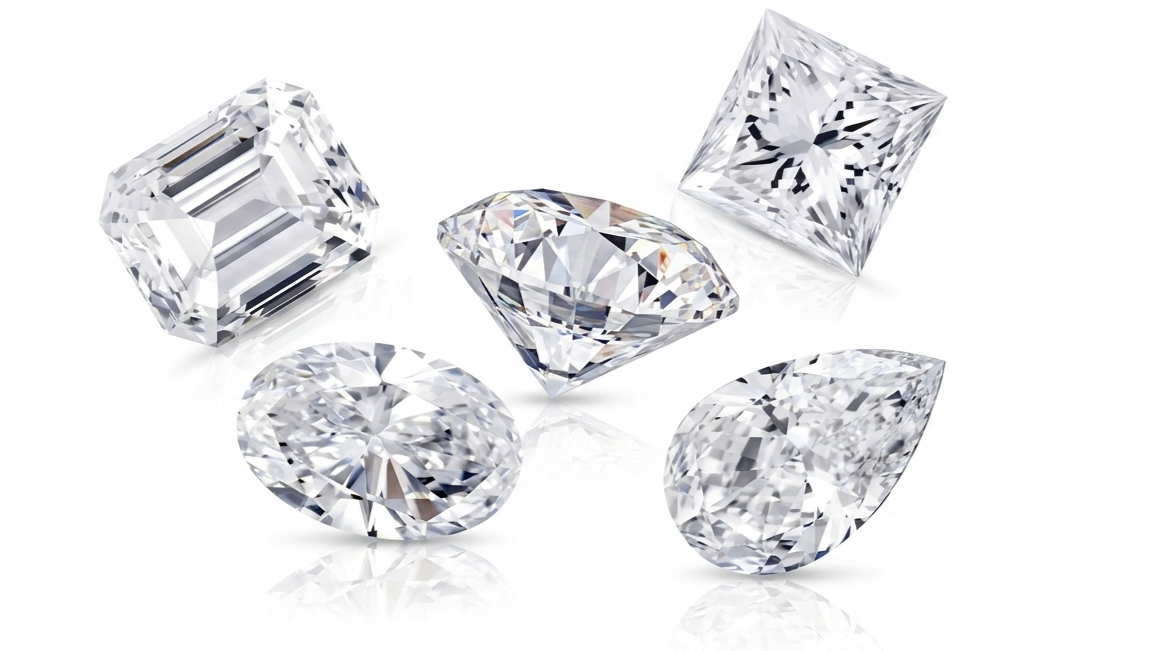
India’s diamond industry the world’s primary cutting and polishing hub, responsible for approximately 90% of global diamond manufacturing is experiencing a year of stark contrasts in 2026. As manufacturers prepare for the traditional summer vacation slowdown, polished diamond output is expected to decline further across major cutting centers like Surat. Yet beneath this cyclical lull, a more profound transformation is unfolding, marked by selective global demand, resilient premium categories, and a historic pivot toward domestic consumption.
This post provides an analysis of India’s diamond market in 2026, examining the forces reshaping the industry and offering strategic insights for stakeholders from manufacturers and exporters to B2B buyers and jewelry brands.
The most defining characteristic of the 2026 diamond market is its selectivity. Demand is no longer uniform across sizes, qualities, or geographies. According to December 2025 data, polished diamonds above 1 carat held firm while smaller goods endured sharp price corrections. The Diamond Index for 1-carat diamonds fell 2.3% in December, whereas 0.30-carat and 0.50-carat goods plummeted 9.3% and 6.4% respectively. The 3-carat index, by contrast, edged upward.
“Demand for larger goods (above 2 to 3 carats) is fairly stable and prices have begun to firm up.” However, the mid-tier segment stones from 20 points to about 2 carats remains “stressed and difficult”.
The anticipated decline in polished diamond manufacturing during the summer recess is not a sign of crisis but of calculated restraint. India has learned from the painful inventory gluts of 2023–24. Global natural diamond supply in 2025 was estimated at just over 100 million carats the lowest annual output since 1992. For 2026, supply is forecast to rebound only moderately, to around 105 million carats, down from over 150 million carats as recently as nine years ago.
De Beers has been a leader in this supply discipline, cutting its 2026 production guidance to 21–26 million carats, down from a previous 26–29 million carats. The miner is estimated to be producing at as much as 35% under capacity, a strategic choice aimed at preserving price stability in premium categories.
This manufacturing pullback is directly supporting pricing stability in better-quality diamonds. As one industry observer noted, “Production cuts are supporting the market, especially in larger and higher-quality diamonds”.
Diamonds above 2 carats particularly those with D-to-G color and VVS-to-VS clarity are proving to be the most resilient category in 2026. These stones are benefiting from a confluence of factors:
Tight supply: Natural diamond production is at multi-decade lows, and premium rough is increasingly scarce.
US luxury demand: The American market remains the strongest source of natural diamond demand for Indian exporters. Premium bridal jewelry and high-end luxury spending continue to support movement in high-quality diamonds.
Flight to quality: Investors and consumers are gravitating toward assets with perceived lasting value, especially as lab-grown diamond prices continue to crater.
The BCG report Natural Diamond Industry Braces for Transformation, commissioned by De Beers, notes that primary natural diamond production is expected to decline by approximately 1% CAGR over the next decade, driven by aging mines, a scarcity of new discoveries, and constrained exploration budgets.
This supply tightening, coupled with steady luxury demand, creates a supportive environment for larger, certified natural diamonds.
The United States accounts for roughly half of global diamond consumption, and for Indian exporters, it remains the most critical market. However, the trade landscape has been volatile. Steep 50% US tariffs on Indian goods, imposed in 2025, caused cut-and-polished diamond exports to the US to decline by over 60% in the April–December 2025 period, from USD 3.64 billion to USD 1.45 billion.
Relief arrived in February 2026 with an interim US-India trade agreement framework, which reduced tariffs to 18% and eventually eliminated them entirely for gems and diamonds upon finalization.
Despite these trade headwinds, premium bridal jewelry and luxury spending in the US remain robust. At the top end, growth is resilient, with a notable rise in high-value diamond jewelry purchases. Consumers with spending power are still choosing natural diamonds.
This preference is reinforced by a growing recognition of the geological rarity of natural diamonds. Formed 150 to 700 kilometers deep in the Earth's mantle over billions of years, natural diamonds are carried to the surface only through rare kimberlite volcanic eruptions. This remarkable origin story one that no laboratory can replicate continues to resonate with luxury buyers.
Demand from China and Hong Kong remains slower compared to previous years, constrained by economic uncertainty and a shift in consumer preferences toward gold jewelry. During 2024, gold jewelry reinforced its dominance in China, growing from 58% to 73% of the market share, while diamond demand languished.
Industry experts believe the decline in Chinese demand may have bottomed out, but a meaningful rebound in 2026 is unlikely. This weakness disproportionately affects smaller commercial diamonds (0.20 to 2 carats), which were historically China’s primary consumption category.
The single most positive trend for India’s diamond industry in 2026 is the explosive growth of domestic demand. India has overtaken China to become the world’s second-largest market for natural diamond jewelry, with a 12% global share, trailing only the United States (53%). The Natural Diamond Jewellery (NDJ) market is currently valued at approximately ₹785 billion and is projected to expand at a CAGR of 12% between 2024 and 2030, reaching around ₹1,520 billion.
“We see the strongest natural diamond demand growth coming from India. Domestic demand in India remains very strong about 11% growth last year, marking four consecutive years of double-digit growth.
Several structural factors are driving this growth:
Younger consumers are reshaping the market. Generation Z contributes 51% of market value, while millennials account for an additional 35%, taking their combined share to 86%. Over half of newly acquired diamond jewelry is now worn regularly, reflecting a shift from special-occasion purchases to everyday self-expression.
Self-purchasing has emerged as a key trend, particularly among women. While weddings remain a major contributor (nearly 29% of the market), diamonds are increasingly purchased for anniversaries, career achievements, milestone gifting, and daily wear.
The solitaire segment, in particular, is thriving. Divine Solitaires, a leading brand, expects to close FY25–26 with approximately 30–35% growth, adding more than 1,500 customers each month. The company estimates India’s solitaire diamond jewellery market at ₹25,000 crore, identifying it as one of the fastest-growing segments within the industry.
Local demand is particularly strong for certified natural diamonds in the D-to-G color and VVS-to-VS clarity ranges. Bridal jewelry and premium studded pieces are becoming increasingly popular, mirroring the premiumization trend observed globally. As one market analysis noted, “Oversize diamonds (2.50–2.99 carats) in D–J color and VS2–SI2 clarity remain in short supply, while smaller diamonds face persistent price pressure”.
Not all categories are thriving. Smaller diamonds particularly the 0.01 to 0.03 carat “star” goods are facing severe pressure. These goods have seen only a temporary recovery in early 2026, and the underlying trend remains weak. Strong competition from synthetic diamonds, combined with persistent oversupply, continues to erode pricing power in the small-stone segment.
The lab-grown diamond market has matured rapidly. In major Western markets, lab-grown diamonds have crossed the 50% mark by unit sales in engagement rings. Globally, lab-grown diamonds have moved from about 5% of the market in 2018 to nearly 20% by 2024. Their appeal is driven by affordability (lab-grown diamonds can cost 60–90% less than natural diamonds) and sustainability messaging.
However, even the lab-grown sector is facing its own reckoning. Experts warn that lab-grown diamond prices could drop so low that they become fashion accessories, no longer competing directly with natural diamonds in the key bridal market. For now, though, the pressure on small natural diamonds is undeniable.
The overarching theme for India’s diamond market in 2026 is selectivity. Success is no longer guaranteed by volume alone. The industry is moving toward a more value-driven model, with stronger focus on:
Premium-quality natural diamonds.
Certified goods with trusted grading reports.
Higher-value jewelry segments (bridal, solitaires, luxury studded).
Digital B2B platforms that connect sellers with international buyers efficiently.
In this increasingly complex and selective market, CaratX is emerging as an essential platform for diamond and jewelry professionals. CaratX connects the diamond, gemstone, jewelry, and pearl industry on a single marketplace, reducing costs and expanding market access for sellers and buyers alike.
CaratX Loose Diamonds: Start with a free buy-and-sell account, 10 listings, local currency conversion, inventory trends and analytics, and dedicated email support. Get Started
CaratX Jewelry Seller ($795/year): 150 product listings, complete e-commerce checkout, 15% sell fee (retail only), one featured page item, one home page listing, net 30 payments, and custom jewelry leads from buyers. Get Started
CaratX Go-To-Market (1900/month): Includes all Jewelry Sellerfeatures, plus a dedicated accountmanager,1900/month):
Includes all Jewelry Seller features, plus a dedicated account manager, 500 ad spend, two social media accounts managed, two premium blog posts, two featured home page listings, advanced inventory analytics, 6.5% sell fee, $25 flat-rate shipping (US only), net 20 payments, and priority support. Get Started
Shop Natural Diamonds: Explore a curated selection of certified natural diamonds. Shop Now
Shop Gemstones: Access gemstones at unbeatable prices. Shop Now
Sellers can also partner with CaratX to launch products in over 18 international countries, tapping into B2B and B2C buyers worldwide. Register as a Seller
Jewelry Sellers Registration Learn More About CaratX Pricing and Plans
Q1: Are natural diamond prices going up or down in 2026? Overall, the Natural Diamond Index declined 3.6% in Q1 2026, but this average masks significant variation. Diamonds above 2 carats in premium color (D–G) and clarity (VVS–VS) have seen price stability and even modest firming. Smaller commercial goods (below 0.50 carat) continue to face downward pressure.
Q2: Why is India’s domestic diamond market growing so fast? India’s domestic growth is driven by rising disposable incomes, a young demographic (Gen Z and millennials account for 86% of market value), increasing self-purchasing behavior, and cultural traditions that emphasize diamond jewelry for weddings and milestones.
Q3: How do lab-grown diamonds compare to natural diamonds in terms of value retention? Natural diamonds have historically retained value better due to their rarity, geological origin, and established secondary markets. Lab-grown diamond prices have cratered 74% since 2020 and continue to decline, with wholesale prices now around $50 per carat nearly 20 times cheaper than natural diamonds.
Q4: What is the difference between GIA and AGS diamond certification? The Gemological Institute of America (GIA) is the originator of the 4Cs (Color, Clarity, Cut, Carat Weight) and is widely regarded as the most trusted grading laboratory. The American Gem Society (AGS) is known for its stricter cut grading standards and light performance measurement. GIA provides cut grades only for round brilliant diamonds; AGS provides cut grades for a wider range of fancy shapes. CaratX features diamonds certified by both GIA and AGS, ensuring transparency and trust. Learn more about the 4Cs of diamond quality at GIA.
Q5: How can I start selling diamonds internationally? CaratX offers seller plans starting with a free account for loose diamonds, allowing you to list inventory, access inventory analytics, and connect with buyers in over 18 countries. Register here.
India’s diamond market in 2026 is a study in contrasts: global headwinds versus domestic tailwinds; pressured small goods versus stable large stones; cautious Western spending versus exuberant local demand. For industry participants, the path forward is clear: focus on premium-quality, certified natural diamonds; leverage digital platforms like CaratX to access international buyers efficiently; and align product strategies with the growing segments of bridal jewelry, solitaires, and self-purchasing.
The shift toward premiumization, combined with India’s emergence as a major consumption hub, suggests that the industry’s best days may still lie ahead for those who adapt.
Follow CaratX for more insightful and educational content on the diamond and gemstone industry.
Start selling diamonds in 18+ international countries – www.caratx.com/register
Sellers register on CaratX marketplace here to start selling to B2B and B2C buyers – www.caratx.com/register
You can now sell jewelry internationally to buyers through our CaratX seller plan – www.caratx.com/register
Shop gemstones from our CaratX marketplace at unbeatable prices – https://caratx.com/search-results/gemstones
Shop natural diamonds from here – https://caratx.com/search-results/Natural
Sellers register to start selling to 18+ buyers now – www.caratx.com/register
More details about our pricing, check here – https://caratx.com/generic-pages/launch-your-products-on-caratx
Jun, 18, 2026
Aug, 06, 2022
Aug, 06, 2022

Dec, 17, 2025
0 Comments
Please login to leave a reply.