
The global diamond market continues to face significant headwinds in 2026, yet within this challenging environment, a clear polarization has emerged. According to industry analyst demand below the $2,500 price point continues to weaken, while purchases in the $2,500–$5,000 range remain the market’s core. At the top end, however, growth remains resilient, with a notable rise in high-value diamond jewellery purchases in the US, underlining that consumers with spending power are still choosing natural diamonds.
The Natural Diamond Council anticipates that Gen Z will remain the fastest-increasing segment in 2026. This projection references a survey commissioned by the De Beers Group, which found that more than 40% of women’s natural-diamond jewellery sales by value were self-purchases.
US specialty jewelers’ natural-diamond jewelry sales increased by 2.1% in 2025, with the average price rising by 10% as consumers opted for larger, higher-quality stones.
United States:
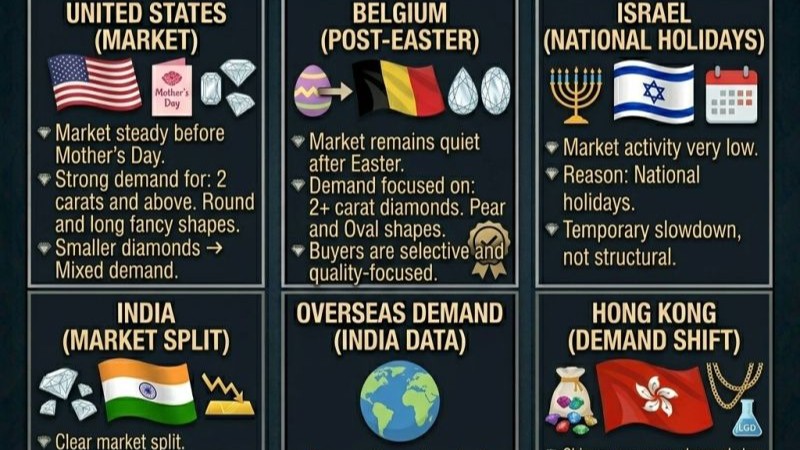
The US wholesale diamond market remains steady heading into Motherʻs Day (May 10), yet the underlying demand pattern is distinctly polarized. Retailers are reporting strong appetite for 2 carats and above across both rounds and long fancy shapes, while smaller diamond categories continue to face mixed demand.
Consumer Spending Outlook -
According to Deloitte’s US outlook, overall consumer spending growth is expected to slow to approximately 1.6% in 2026, restrained by lingering inflation, higher borrowing costs, and a more cautious consumer environment. This macroeconomic backdrop is pushing consumers toward higher-value pieces per transaction, even as unit volumes soften.
Engagement Ring Trends -
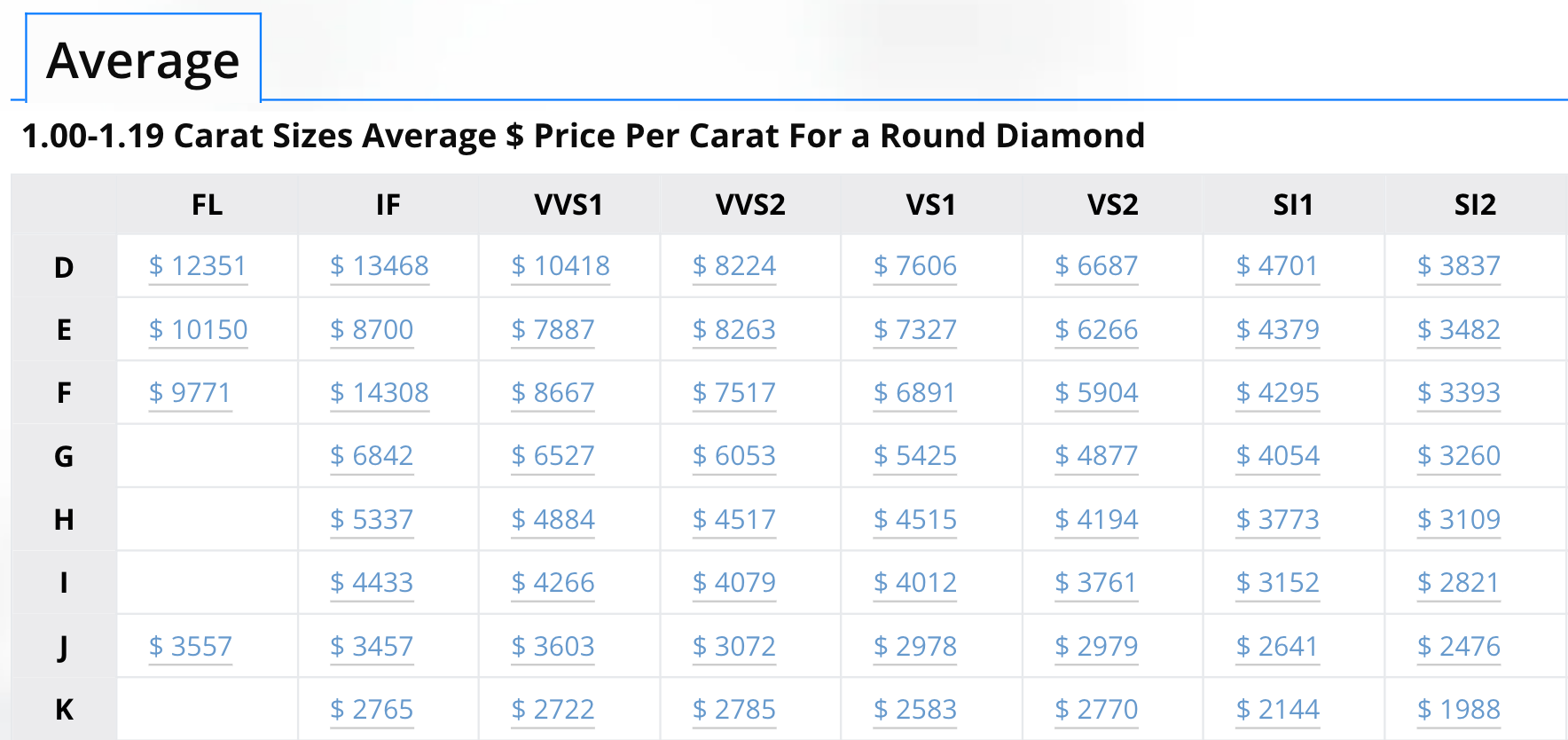
US engagement rings present a complex picture. Industry data shows that 61% of US engagement-ring center stones are now synthetic, reflecting lab-grown diamondsʻ significant inroads into the bridal segment. However, natural diamonds continue to dominate higher price points. The average centre diamond weighed 1.16 carats, with round diamonds accounting for 62% of units sold, followed by oval shapes.
For businesses looking to capitalize on US demand for certified natural diamonds, CaratX offers a platform to list inventory and connect with serious B2B buyers. Register as a seller on CaratX marketplace to start selling to buyers in the US and 17+ other international countries via www.caratx.com/register.
Belgium (Antwerp):
Following the Easter holiday, business in Antwerp the historic heart of the global diamond trade has remained notably quiet. The Belgian market is characterized by selective, quality-focused buying concentrated on 2+ carat diamonds, particularly in Pear and Oval shapes.
Antwerp Under Pressure -
The Antwerp diamond industry ended 2025 with total trade value of USD 19.1 billion, a 22.4% decline from 2024, down from a post-pandemic peak of nearly USD 41 billion in 2022. The sector is grappling with what industry experts call a “perfect storm”: rising popularity of synthetic diamonds, EU/G7 sanctions cutting Russian rough supply by roughly one-third, and Dubai’s emergence as a competing trade hub.
Rough Shortages Supporting Prices -
Crucially, supply shortages in rough diamonds are paradoxically supporting polished prices. De Beers cut its 2026 production guidance to 21–26 million carats, down from a previous 26–29 million carats, as the company prioritizes market stability over volume growth. According to Paul Zimnisky, natural diamond output is forecast to just moderately rebound to around 105 million carats in 2026 down from over 150 million as recently as nine years ago.
Manufacturers and wholesalers seeking to source GIA-certified natural diamonds can explore CaratX’s extensive inventory.
Shop natural diamonds from a global network of trusted suppliers at www.caratx.com.
Israel: Market Activity Low Due to Holidays and Geopolitical Tensions
Market activity in Israel has been very limited, primarily due to national holidays and heightened geopolitical tensions. The Israel Diamond Exchange has been operating only for essential services, with imports and exports frozen at times, and rough tenders shifting to Antwerp.
Industry Outlook -
Industry experts characterize the current slowdown as temporary rather than structural. According to Wresearch, the Israel Diamond Market is projected to grow at a CAGR of 5.4% during the forecast period (2026–2032), supported by Israel’s expertise in diamond cutting and continuous demand for high-quality polished diamonds from North American and European markets.
Exports to the US were down 60% to US$970.6 million, while exports to Hong Kong fell 43% to US$757.2 million, reflecting broader global demand softness rather than intrinsic weakness in Israeli cutting capabilities.
India: Clear Market Split Between Large and Small Stones
India, the world’s largest diamond polishing and cutting hub presents the most dramatic evidence of a two-speed market. 2+ carat diamonds are experiencing strong movement, while smaller goods face slower demand.
Export Data Tells the Story -
India’s cut and polished diamond exports in FY26 stood at $12.16 billion nearly 50% lower than the FY22 peak of $24.24 billion, marking one of the sharpest contractions in the industry’s history. On a year-on-year basis, exports declined 8.52% in FY26, while volumes fell 3.85% to 160.04 lakh carats.
Domestic Market Remains Stable -
Encouragingly, India’s domestic demand remains stable, supported by demographic growth and strong cultural attachment to jewellery, even as Western markets show fatigue. Domestic consumption is helping cushion the impact of weaker export demand.
Shift Toward Larger Stones -
Indian cutters are actively shifting production toward larger stones, a strategic response to both rough shortages and the changing global demand landscape. Polished production is down due to rough shortages, which is supporting prices in the market.
For diamond manufacturers and wholesalers looking to expand internationally, CaratX provides a direct channel to buyers across 18+ countries.
Start selling to diamonds in 18+ International countries by registering at www.caratx.com/register. You can now sell jewellery internationally to buyers through CaratXʻs seller plan sign up.
Hong Kong & China: Slow Chinese Demand, Hot Premium Segment
Hong Kong remains the key barometer for Asian luxury demand, and the current reading is mixed at best. Chinese consumer demand for diamonds continues to run slow, with buyers shifting toward colored gemstones, gold jewelry, and lab-grown diamonds.
Hong Kong Jewellery Show 2026 -
At the 2026 Hong Kong International Jewellery Show, selective buying defined the atmosphere, as Southeast Asian and Indian buyers dominated attendance while Chinese buying once a defining pillar of the Hong Kong fairs remains significantly lower compared to pre-pandemic levels.
The loose diamond pavilion appeared roughly 25–30% smaller compared to previous editions, with several Indian diamantaires choosing not to participate. Yet within the selective environment, 3–5 carat diamonds (D–G color, IF–VVS clarity, GIA-certified) were the clear standout performers.
Coloured Gemstones Surge -
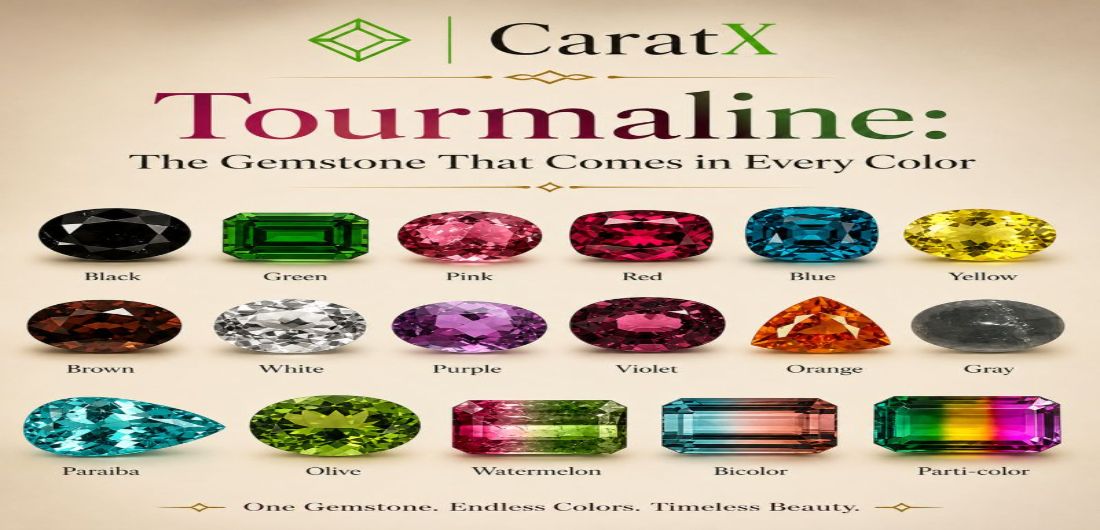
In a significant shift, coloured gemstones emerged as one of the strongest performing categories at the fair. Exhibitors reported steady footfall and strong inquiries from jewellery manufacturers. This trend is corroborated by HKTDC survey data, which found diamonds were the most in-demand stone at 29%, followed by rubies (25%) and pearls (20%).
Retailers and jewellery manufacturers seeking to diversify their gemstone offerings can shop gemstones from our CaratX marketplace at unbeatable prices visit www.caratx.com to explore the collection.
Segment Analysis: Winners and Losers in 2026
Winners: Large & Premium Stones
The data consistently points to exceptional performance in premium segments:
2 carats and above → Strong global demand across all geographies.
3–5 carat premium stones (D–G, IF–VVS, GIA certified) → Top-performing segment.
5–9 carat rough stones are up a low-to-mid-teens percentage year-to-date 2026, according to subsets of the Zimnisky Global Rough Diamond Price Index.
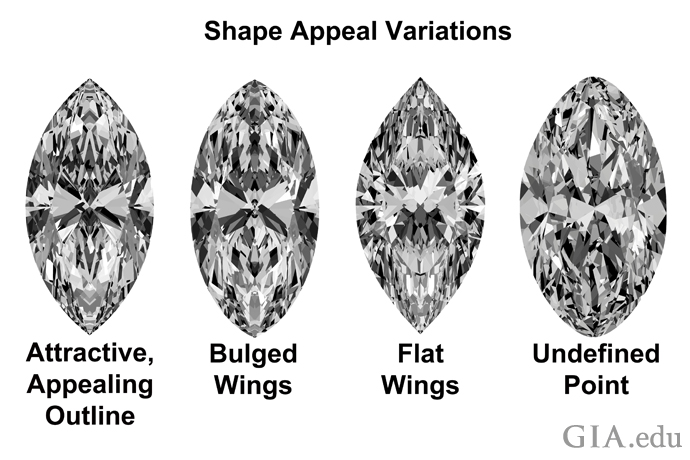
Long fancy shapes (Ovals, Pears, Marquises, Emeralds) are outperforming rounds in 2-ct-plus categories.
Losers: Small Stones & Uncertified Goods
Small diamonds (<1 ct) → Mixed or weak demand; facing intense price pressure from mass-produced lab-grown diamonds.
0.5ct diamond price index experienced a sharp decline in late March 2026.
Poorly cut fancy shapes are illiquid and difficult to sell.
Lab-Grown Diamonds: A Contradiction
The lab-grown diamond market is defined by a striking contradiction: demand is growing rapidly, but prices are collapsing.
Wholesale prices for lab-grown diamonds declined 14% in Q1 2026, continuing a downward trend with “no clear floor yet.” The sharpest drops occurred for larger stones once major profit drivers with 3 ct. round diamonds down 28% year-over-year.
The lab-grown diamond market size has grown from $27.95 billion in 2025 to an estimated $30.16 billion in 2026 at a CAGR of 7.9%.
Consumer acceptance continues to rise, particularly in the bridal segment, where lab-grown diamonds now exceed 50% of US engagement ring center stones by unit sales.
Supply-Side Dynamics:
A critical factor supporting the natural diamond market in 2026 is tight supply. According to Kimberley Process data, global natural diamond production continues to shrink, with estimated production for 2025 standing at 105 million carats, down 13% in volume compared with 2022.
De Beers Production Cuts -
De Beers has cut its 2026 production guidance to 21–26 million carats, down from a previous 26–29 million carats. The company is currently estimated to be producing at as much as 35% under capacity a deliberate supply-control strategy to support prices.
Russian Diamond Sanctions -
EU and G7 sanctions have removed Russian diamonds from Western supply chains, with Antwerp losing about 30% of its rough imports as approximately one third of its supply previously originated from Russia. These diamonds are now primarily redirected to markets such as India and Dubai, where no sanctions apply.
The Dubai Factor -
Dubai continues to grow as a competitive global trading center. According to the UAE Kimberley Process Chair, over 1.06 billion carats of combined rough and polished diamonds were traded through Dubai in the past five years, with almost 179 million carats traded in 2024 alone.
This shift is reshaping global trade flows, with Indian exporters diverting shipments through alternative hubs such as the UAE and Thailand as direct polished diamond exports to the US dropped to 16% in the first nine months of FY26 from 35% in FY25.
Strategic Outlook: What to Watch for the Rest of 2026
Bullish Indicators -
Global natural diamond supply remains at multi-decade lows, creating a supply-side floor for prices. De Beers is investing more in natural diamond marketing than it has in over a decade, supporting category demand.
Large-stone categories (2ct+, 5ct+ rough) are seeing genuine price appreciation and strong institutional demand. Consumer surveys confirm that all else equal most consumers still prefer natural diamonds, especially among wealthier demographics.
Bearish Indicators -
Chinese consumer demand remains sluggish, with no immediate catalyst for recovery. Lab-grown diamonds continue to capture market share in sub-$5,000 price points, particularly in bridal. The 1-carat natural diamond category faces an existential question: will it ever regain ground against cheaper LGD alternatives? US tariffs and trade policy uncertainty are disrupting traditional supply chains.
Price Stability Expected by Mid-2026
The larger adjustment will come from aligning production, polishing capacity, and market expectations to a more measured demand environment.
Conclusion: A Market for the Well-Positioned
The global diamond market in 2026 is not for the faint of heart nor for the undifferentiated. Success requires precision targeting of premium segments, certification (particularly GIA), and strategic access to international buyers.
For manufacturers and wholesalers, the message is clear:
Focus on 2+ carat and 3–5 carat premium goods where demand remains robust.
Ensure GIA certification for stones targeting the high-end investment segment.
Expand internationally to diversify away from any single marketʻs weakness.
Consider offering coloured gemstones and gold jewelry alongside diamonds to capture shifting consumer preferences.
For retailers and jewellery brands:
Stock certified natural diamonds for consumers prioritizing authenticity and heritage.
Offer lab-grown diamonds for price-sensitive, value-conscious shoppers but manage inventory carefully given ongoing price erosion.
As the industry navigates this reset, the platforms that connect buyers and sellers efficiently like CaratX will play an increasingly vital role in facilitating cross-border trade.
Frequently Asked Questions (FAQ)
Q1: Are natural diamond prices going up or down in 2026?
A: The answer depends heavily on stone size and quality. Large natural diamonds (2 carats and above) are seeing stable-to-increasing prices, driven by supply shortages and resilient high-end demand. De Beers has raised prices of 5-carat-plus rough for three consecutive months as of March 2026. Small natural diamonds (under 1 carat) continue to face price pressure due to competition from lab-grown alternatives.
Q2: Why are lab-grown diamond prices falling so fast?
A: Wholesale prices for lab-grown diamonds declined 14% in Q1 2026, with 3-carat rounds down 28% year-over-year. The drop reflects a structural imbalance: production capacity has expanded faster than consumer demand. Tenoris reports that the lab-grown inventory-to-sales ratio has increased from “high single digits” in 2020 to nearly 50% at present, indicating oversupply.
Q3: What carat size should I invest in for best value retention?
A: The top-performing segment in 2026 is 3–5 carat natural diamonds with D–G color, IF–VVS clarity, and GIA certification. These investment-grade stones are seeing strong demand from ultra-high-net-worth buyers, particularly in Asian markets. The 2-carat category also shows robust global demand, while 0.50–1.00 carat stones face the most significant competitive pressure from lab-grown diamonds.
Q4: How do US tariffs affect the diamond trade?
A: US tariff policy remains a key source of uncertainty. A notable development was the September 2025 exemption of diamonds polished in Europe from US import tariffs. However, Indian exporters who previously sent 35% of polished diamonds directly to the US—have been forced to divert shipments through the UAE, Thailand, and other hubs. Clarity on future US tariffs on Indian goods will be a critical market driver in the coming months.
Q5: Is the diamond industry in crisis?
A: Yes, for certain segments. India’s cut and polished diamond exports have fallen nearly 50% from their FY22 peak, marking one of the sharpest contractions in the industry‘s history. Govind Dholakia, Founder-Chairman Emeritus of SRK, describes the current downturn as “the most prolonged and severe crisis in six decades.” However, premium segments told a different story, with strong demand for large stones ensuring profitability for well-positioned players.
Q6: How can I start selling diamonds internationally?
A: CaratX provides a comprehensive B2B and B2C marketplace connecting sellers with buyers across 18+ countries. To start selling diamonds or jewellery internationally, register at www.caratx.com/register. Sellers can list natural diamonds, lab-grown diamonds, gemstones, and finished jewellery. More details about pricing and seller plans are available at caratx.com/generic-pages/launch-your-products-on-caratx.
Follow CaratX on social media and subscribe to our newsletter for weekly diamond market insights, pricing updates, and expert analysis delivered directly to your inbox.
To view our current inventory of natural diamonds, lab-grown diamonds, and coloured gemstones, visit www.caratx.com today.