

💎Navigating the Shifting Sands: A Detailed Analysis of the Current Diamond Market
Home
News And Media 💎Navigating the Shifting Sands: A Detailed Analysis of the Current Diamond Market SHOP NOWHome
News And Media 💎Navigating the Shifting Sands: A Detailed Analysis of the Current Diamond Market SHOP NOWDec, 03, 2025 by Archit Mohanty 0 Comments
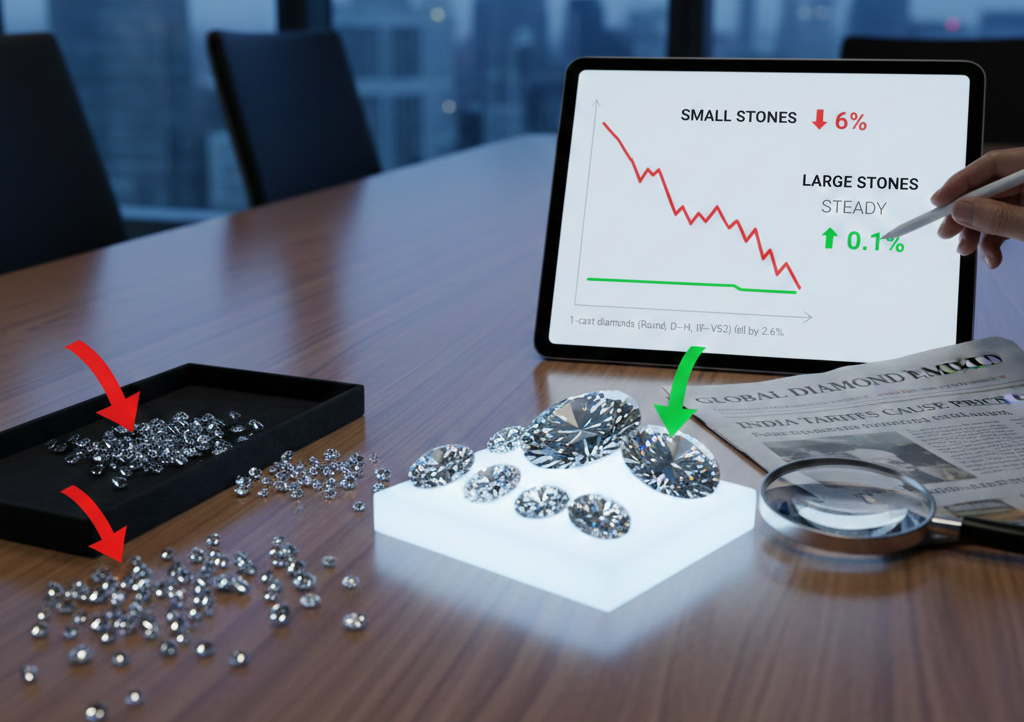
The global diamond market is a complex ecosystem, sensitive to economic forces, consumer sentiment, and geopolitical events. The latest data from November reveals a tale of two markets: one of resilience for larger, investment-grade stones, and one of significant pressure for smaller, more commercially focused goods.
This divergence offers critical insights for traders, retailers, and investors alike. For professionals looking to sell diamonds internationally or source inventory in this volatile climate, understanding these micro-trends is paramount.
The headline from November is one of sustained stratification. Data from leading industry indices, such as the RapNet Diamond Index (RDI), confirms a clear pattern that has solidified over recent quarters.
The Plight of Smaller Stones: The most pronounced declines were in the 0.30-carat to 1-carat range, which forms the backbone of much mainstream jewelry. A 6% drop for 0.30-carat diamonds and a 5.1% fall for 0.50-carat stones signify intense pressure. This segment is highly sensitive to consumer price fluctuations and economic uncertainty, leading to overstock and aggressive discounting at the wholesale level. For buyers, this presents a strategic opportunity to shop natural diamonds at corrected prices for immediate-use inventory.
The 1-Carat Benchmark: Often considered the industry’s benchmark, 1-carat round diamonds (in D–H color and IF–VS2 clarity ranges) fell by 2.6%. Even within this category, goods with SI clarity popular for their value proposition declined by 1.7%. This indicates a cautious approach from retailers restocking for the coming season, prioritizing only the most quintessential inventory.
Stability at the Top: In stark contrast, 3-carat diamonds saw a marginal increase of 0.1%. This stability, even in a down market, underscores the enduring value proposition of larger, higher-quality diamonds. They are increasingly viewed as tangible alternative assets, a trend noted by financial analysts and institutions like the World Diamond Council. This segment attracts a different buyer profile, one less affected by short-term economic headwinds.
A critical regional story is unfolding in India, the world's diamond manufacturing heartland. The U.S. import duty of approximately 50% on polished diamonds originating from India has created a significant tariff barrier, exacerbating price declines for goods destined for one of the world's largest consumer markets.
This policy has led to a cascading effect:
Manufacturing Slowdown: Post-Diwali, Indian manufacturers have deliberately slowed production to manage cash flow and reduce inventory risk. This is a typical cyclical adjustment but is more pronounced this year.
Plummeting Rough Imports: A telling indicator is the 45% year-on-year drop in India’s rough diamond imports in October, to $385.4 million. This reflects a deliberate pullback from upstream purchasing until the midstream pipeline shows clearer signs of demand.
Opportunity for Global Sellers: For sellers outside India, this creates a unique window. International buyers may be seeking diversified supply chains. By choosing to start selling to diamonds in 18+ international countries through a global platform, suppliers can bypass regional bottlenecks.
Major industry players are navigating this uncertainty with caution. De Beers, in its recent sight, held rough diamond prices stable while offering Sightholders unprecedented flexibility to decline purchases. However, as reported by mining publications and financial outlets like Bloomberg, De Beers’ rough prices remain above comparable goods in the open market, maintaining a delicate balance between supporting prices and fulfilling demand.
In a significant longer-term development, the government of Namibia has expressed interest in acquiring a minority stake in De Beers. This move, analyzed by resources like the Natural Resource Governance Institute, highlights the growing trend of resource-producing nations seeking greater value and control within the diamond supply chain, which could reshape future sourcing dynamics.
For Buyers (B2B & B2C): The market for smaller goods is a buyer's market. Diligent sourcing can uncover significant value. Platforms that aggregate global supply, like the CaratX marketplace, are ideal for comparing stones and finding the best price points across calibrated goods.
Furthermore, consider diversifying into other categories; for instance, you can shop gemstones like sapphires or emeralds as complementary inventory to meet diverse consumer tastes.
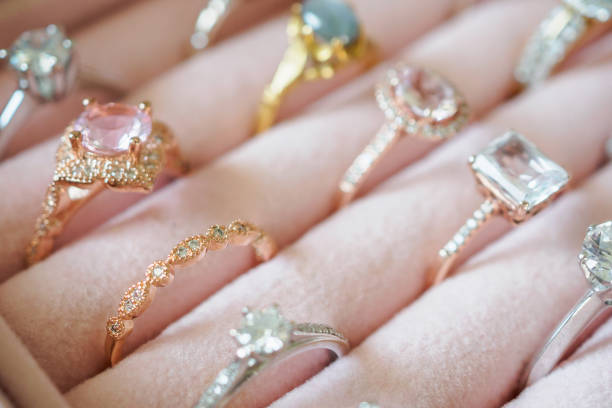
For Sellers: This is a time for strategic positioning. The pressure on small goods means competing on price alone is a race to the bottom. The key is accessing broader, less saturated markets. By choosing to sell jewelry internationally through a managed platform, sellers can reach buyers in regions with stronger demand or different economic cycles.
The CaratX seller plan is designed specifically to facilitate this global reach, handling logistics and trust barriers to connect you directly with 18+ international markets.
The overall sentiment remains one of cautious stability for larger diamonds and continued pressure on smaller sizes. The industry eagerly awaits clarity on U.S. tariff policies and a potential resolution. Economic indicators, including inflation and interest rates, will heavily influence consumer demand in the first quarter of 2024. For now, agility and global market access are the most valuable assets for diamond businesses.
Q1: Why are small-carat diamond prices falling so sharply? A1: Smaller diamonds (0.30-1 ct) are highly sensitive to economic conditions and consumer discretionary spending. Overstock in the midstream pipeline, combined with reduced retail restocking and economic uncertainty, has created a surplus, driving prices down.
Q2: How do US import duties affect diamond prices globally? A2: The ~50% duty on polished diamonds imported from India into the US makes those goods more expensive for American retailers. This reduces demand for Indian-made stones, forcing Indian manufacturers to lower prices to compensate, which creates downward pressure on global prices for those categories.
Q3: Are larger diamonds (3+ carats) a good investment now? A3: Their recent price stability suggests they are viewed as a store of value. However, diamond investment requires expertise. They are illiquid and valuation is complex. Always consult independent experts and consider them a long-term, alternative asset class rather than a short-term trade.
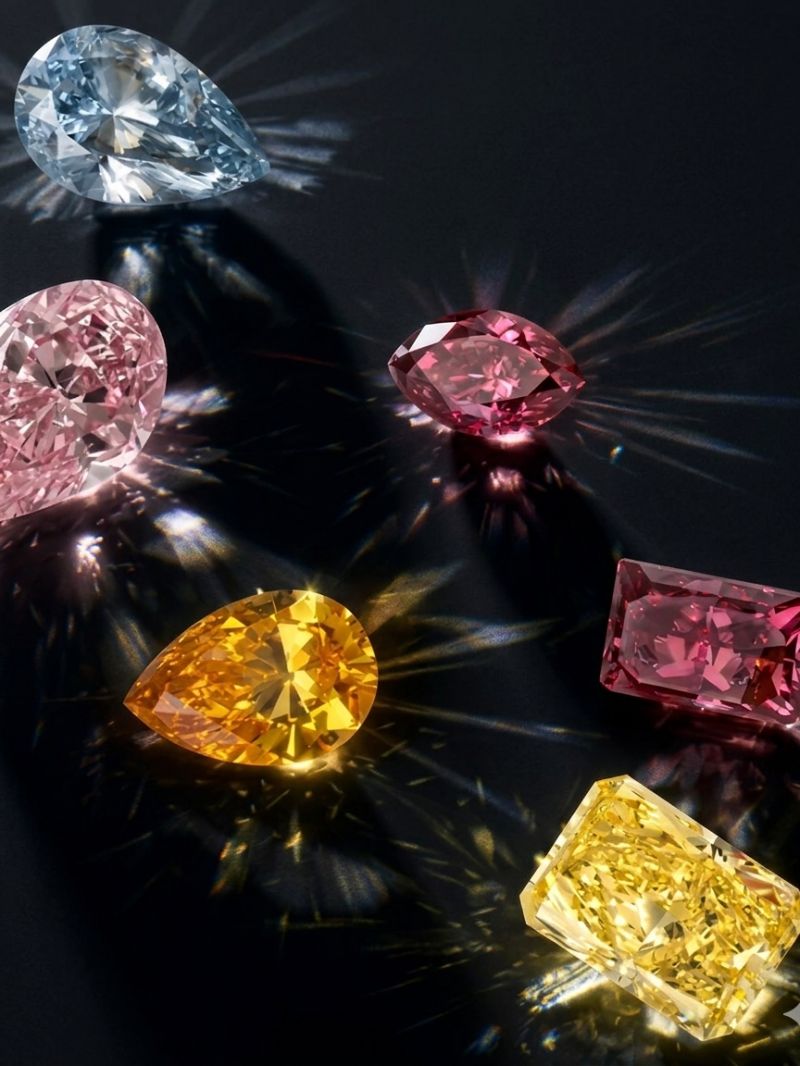
Q4: What is the best strategy for a jewelry retailer right now? A4: Focus on inventory turnover. Source smaller stones at current low prices for immediate sales but be cautious with overbuying. Consider offering a diversified product range. You can shop gemstones and colored diamonds to attract different customers. Ensure your supplier network is global to mitigate regional risks.
Q5: How can a manufacturer or wholesaler survive this downturn? A5: Access to diverse markets is critical. Instead of relying on one or two regional buyers, expand your reach. Platforms that allow you to start selling to B2B and B2C buyers across 18+ countries can provide crucial demand stability when your home market is under pressure.
RapNet Diamond Index (RDI). "November 2025 Price Movement Analysis." RapNet - The World's Largest Diamond Trading Network.
Gemological Institute of America (GIA). "Diamond Quality & Value Factors." GIA.edu.
World Diamond Council. "Annual Industry Reports." Diamonds.org.
Bloomberg. "Commodities & Mining: Diamond Sector Updates." Bloomberg.com.
Natural Resource Governance Institute (NRGI). "Governance in the Diamond Supply Chain." ResourceGovernance.org.
U.S. International Trade Commission. "Harmonized Tariff Schedule for Diamonds." USITC.gov.
Disclaimer: This blog post is for informational and educational purposes only. Diamond and gemstone prices are subject to market fluctuations.
May, 26, 2026
Aug, 06, 2022
Aug, 06, 2022

0 Comments
Please login to leave a reply.