
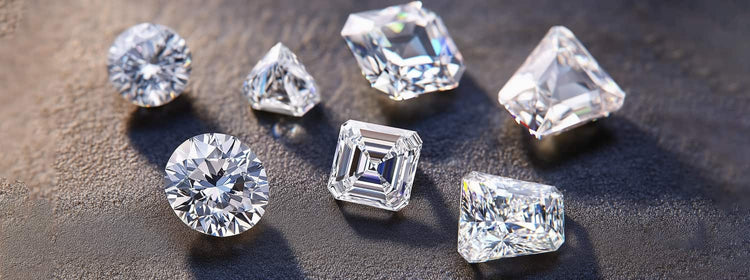
The diamond industry is witnessing a significant transformation in consumer preferences, particularly in the realm of fancy shape diamonds. Moving beyond the perennial dominance of the round brilliant, today’s informed buyers both in the B2B and B2C spaces are driving clear and powerful shifts in demand. This detailed analysis explores what’s hot, what’s not, and the nuanced factors shaping the global market for non-round diamonds.
The Rise of the Elongated Silhouette -
The most pronounced trend in the current market is the strong performance of elongated fancy shapes in sizes of 2 carats and above. Buyers are increasingly prioritizing stones that appear larger on the finger, offer elegant, flattering lines, and present a modern, well-balanced look. This preference for length over more compact shapes has created a distinct hierarchy in demand and pricing.
Leading the Pack: Oval, Marquise, and Emerald Cuts
Oval diamonds continue to be a powerhouse in the fancy shape category. Their brilliant faceting pattern offers exceptional fire and brilliance, while their elongated shape creates an illusion of greater size. In the US market, demand remains particularly robust for well-proportioned elongated Ovals within the D–I color and VS–SI clarity ranges.
These stones strike a perfect balance between beauty, size, and value, making them a favorite for retailers and consumers alike. Explore our curated selection of stunning oval cut diamonds to see this trend in action.
Marquise cut diamonds are currently commanding the highest price premiums among all fancy shapes. This isn't due to a fleeting fashion trend, but rather a fundamental issue of supply and quality. A truly excellent Marquise cut requires exceptional skill to achieve perfect symmetry and a captivating bow-tie-free appearance.
High-quality rough that yields a beautiful Marquise is rare, making top-tier stones exceedingly difficult to source. For a deeper understanding of cut quality, resources like the Gemological Institute of America (GIA)’s Cut Research provide authoritative insight into the science of light performance.
The Emerald cut, with its hall-of-mirrors clarity and elegant step cuts, represents a timeless sophistication. Its popularity is steady among buyers seeking a blend of vintage appeal and modern geometric clean lines. The value of an Emerald cut is intensely linked to its clarity and the quality of its step-cut faceting.
High-Demand and Short-Supply Shapes: Elongated Radiants and Cushions
The trend toward elongation has significantly impacted the markets for Radiant and Cushion cut diamonds.
Long Radiant cuts rectangular stones with the brilliant faceting of a Radiant are in critically short supply. Their combination of a modern rectangular footprint with intense sparkle makes them highly desirable, pushing prices upward.
Similarly, the elongated Cushion cut is experiencing a remarkable surge. Specifically, long Cushion cuts are trading at a significant 20% to 25% premium compared to their square counterparts. Their appeal lies in the fusion of a classic, romantic cushion shape with a more contemporary elongated form. The soft corners are practical for everyday wear, and the elongated look caters to the modern aesthetic. Discover the unique charm of our cushion cut diamond collection, where you can compare different length-to-width ratios.
Regional Market Nuances: US Strength and Indian Selectivity
The global diamond market is not monolithic. Demand patterns vary significantly by region:
United States: The market shows solid, consistent demand for quality-focused fancy shapes. As mentioned, ideal-proportion Ovals are strong. There is also growing appetite for distinctive shapes like the Ashoka cut or antique-style cuts, reflecting a mature market where individuality is prized.
India: A key manufacturing and consuming hub, India shows more nuanced trends. Reports indicate a softening in prices for smaller Oval and Pear shapes in the 0.30 to 0.79 carat range, likely due to inventory adjustments and shifting consumer preferences toward larger stones. However, even within this segment, stones with ideal length-to-width ratios (typically between 1.45-1.55 for ovals, for instance) maintain their value. This underscores a universal truth: superior cut and proportions often outweigh carat weight alone in determining desirability and price retention.
The Challenged Segments:
Not all fancy shapes are enjoying rising tides. The Princess cut, once a hugely popular contemporary choice, continues to face challenges with lower demand. This may be attributed to its sharper corners (which can be prone to chipping) and a market shift toward the softer, more organic lines of ovals and cushions.
Across all fancy shapes, one universal truth prevails: stones with poor proportions and finish are becoming increasingly difficult to sell. Whether it's an Oval that is too deep and faces up small, or a Marquise with poor symmetry, these diamonds often remain stagnant in inventory. In contrast, well-cut fancy shapes are rare and continue to command strong, justified premiums.
The Indisputable Importance of Cut Quality
This market analysis reinforces that cut is king, especially for fancy shapes. Unlike round brilliants, fancy shapes do not have a single, universally agreed-upon "ideal" cut grade. Therefore, understanding proportions (length-to-width ratio, depth%), symmetry, and the presence (or absence) of undesirable optical effects like bow-ties in elongated shapes is critical.
When sourcing fancy shapes, savvy buyers and retailers must prioritize:
Precise Proportions: The right length-to-width ratio for the desired visual effect.
Excellent Symmetry: Ensuring the shape is balanced and pleasing to the eye.
Quality of Finish: Well-polished facets and sharp, clean meets.
Stone-Specific Analysis: Particularly for shapes like Marquise and Pear, each stone must be evaluated individually for its unique light performance.
How CaratX Empowers Your Business in This Dynamic Market
Navigating the fancy shape diamond market requires access to a global inventory, transparent data, and efficient tools. CaratX is designed to be the comprehensive solution for modern diamond and jewelry businesses.
Sell to a Global Audience: Don't let inventory of slower-moving shapes like certain Princess cuts linger. Register as a seller on CaratX and instantly access buyers across 18+ international countries. Our platform facilitates both B2B and B2C sales, maximizing your reach.
Source Premium Fancy Shapes: Looking for high-demand, well-cut elongated Ovals, Cushions, or rare Marquise diamonds? Our marketplace aggregates global supply, allowing you to find the perfect stones to meet your clients' needs. Start shopping for natural diamonds with advanced filters to pinpoint exact specifications.
Expand into Jewelry: The demand for fancy shapes is ultimately driven by jewelry design. Our CaratX seller plan enables you to sell finished jewelry pieces internationally, capitalizing on these trends directly.
Diversify with Gemstones: Complement your diamond offerings with colored gemstones. You can shop gemstones from our CaratX marketplace at competitive prices, creating a full spectrum inventory.
Ready to transform your business? Learn more about our simple pricing and how to launch your products by visiting our detailed guide: Launch Your Products on CaratX.
Frequently Asked Questions (FAQs)
Q: Why are long Cushion cuts more expensive than square ones? A: Due to current fashion trends favoring elongated shapes, demand for long Cushions significantly outpaces supply. This, coupled with the fact that cutting an elongated shape from rough may be less yield-efficient than a square one, results in a substantial price premium (currently 20-25%).
Q: What is the best length-to-width ratio for an Oval diamond? A: The "best" is subjective and depends on personal preference. However, for a classic, balanced elongated look, ratios between 1.35 and 1.50 are most popular. Ratios closer to 1.45 are often seen as ideal, offering a noticeable elongation without appearing too skinny.
Q: Why are Marquise cuts so expensive right now? A: The high price for quality Marquise diamonds is primarily a supply constraint. It is very difficult to find rough diamond material that can be cut into a Marquise with excellent symmetry, no bow-tie effect, and appealing proportions. High demand for this dramatic shape further escalates prices for the few superior stones available.
Q: How important is clarity for Emerald cut diamonds? A: Clarity is crucial for Emerald cuts. Their large, open step facets act like windows, making inclusions far more visible than in a brilliant-cut stone. We generally recommend a minimum of VS2 clarity for a clean eye-appearance, with many buyers opting for VVS or higher for maximum purity.
Q: Can I sell jewelry on CaratX, or only loose diamonds? A: You can sell both! The CaratX seller plan is designed for businesses wanting to sell finished jewelry pieces internationally, as well as loose diamonds and gemstones. It’s a unified platform for all your diamond and jewelry commerce needs.
Follow CaratX for more insightful and educational content on the diamond and jewelry industry.
Start selling to diamonds in 18+ International countries - www.caratx.com/register
Sellers register on CaratX marketplace here to start selling to B2B and B2C buyers - www.caratx.com/register
You can now sell Jewelry Internationally to buyers through our CaratX seller plan - www.caratx.com/register
Shop gemstones from our CaratX marketplace at unbeatable price - www.caratx.com
Shop natural diamonds from here - www.caratx.com
Sellers register to start selling to 18+ buyers now - www.caratx.com/register
Image Credit - Robin Woolard