

The Koh-i-Noor: A Diamond That Witnessed Empires and Centuries of History
Home
News And Media The Koh-i-Noor: A Diamond That Witnessed Empires and Centuries of History SHOP NOWHome
News And Media The Koh-i-Noor: A Diamond That Witnessed Empires and Centuries of History SHOP NOWJun, 11, 2026 by Archit Mohanty 0 Comments
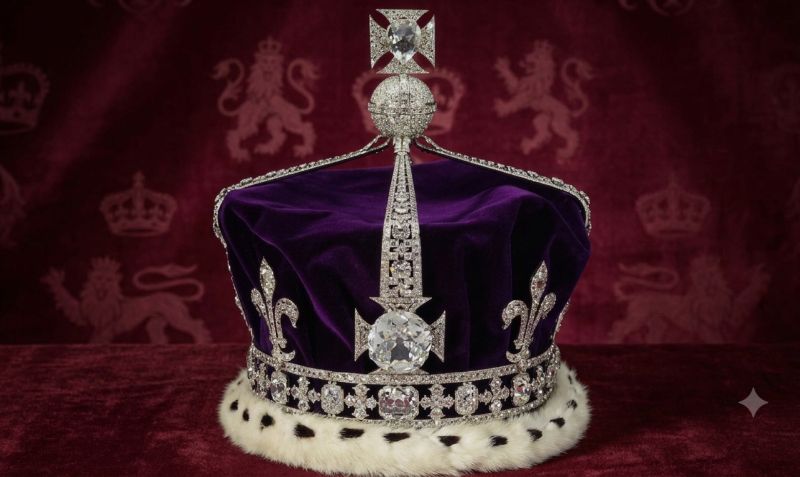
The Koh-i-Noor is far more than a diamond, it is a living archive of conquest, beauty, greed, mythology, and resilience. Meaning “Mountain of Light” in Persian, this legendary gem has witnessed the rise and fall of some of history’s most powerful empires, from the Mughal courts of India to the palaces of Persia, Afghanistan, and the Sikh Kingdom, before finally coming to rest within the British Crown Jewels. Its saga stretches across more than 700 years, making it one of the oldest, most traveled, and most controversial diamonds in human history.
Unlike the majority of diamonds that are bought and sold on the open market, the Koh-i-Noor has never been commercially traded. It has only ever been seized, gifted, or surrendered as a spoil of war. This unique provenance steeped in violence and ceremony has rendered the diamond essentially priceless, with estimates ranging from $140 million to as high as $20 billion.
This detailed exploration will trace the Koh-i-Noor’s journey through the centuries, examine the science behind its legendary status, explore the curse that supposedly follows its male owners, and analyze its place in modern geopolitics and the gemstone industry.
The story of the Koh-i-Noor begins not in a royal treasury, but deep beneath the surface of the earth. Historians and geologists widely agree that the diamond was most likely discovered in the Kollur Mine, part of the legendary Golconda region in southern India, sometime between 1100 and 1300 AD. The Golconda kingdom, located in what is now the state of Telangana, was the source of some of the world’s most famous diamonds, including the Hope Diamond and the Darya-i-Noor.
Unlike modern diamond mines that extract gems from volcanic pipes, the Golconda diamonds were found in alluvial placers and and gravel deposits along the banks of the Krishna River. For centuries, the primary geological source of these diamonds (either kimberlites or lamproites) remained a mystery.
Recent research, however, has pointed to the Wajrakarur Kimberlite Field in southern India as the possible origin of both the Koh-i-Noor and the Hope Diamond. The American Geosciences Institute notes that while the primary source rocks remain untraced, the diamonds’ unique characteristics link them definitively to this ancient Indian terrain.
In its original rough form, the Koh-i-Noor was described in the memoirs of the Mughal emperor Babur as weighing an astonishing 793 carats (known in old Indian units as 757 old carats)
The earliest unambiguous historical reference to the diamond appears in the Baburnama, the autobiography of Babur, the first Mughal emperor. In 1526, Babur recorded that a diamond of extraordinary size and value had been in the possession of a Rajah of Malwa since 1294. While the diamond was not yet named “Koh-i-Noor,” historians largely agree this was the same stone.
The Mughals prized the diamond not just for its monetary worth but for its metaphysical power. It was often worn as a talisman, seated on a throne amidst peacock feathers, symbolizing the emperor’s divine right to rule.
In 1739, the Persian conqueror Nader Shah sacked Delhi and plundered the Mughal treasury. Legend has it that when he finally saw the diamond, he exclaimed “Koh-i-Noor!” (Mountain of Light). The name stuck. Nader Shah took the gem back to Persia, but it would not remain there long, beginning a volatile period where the diamond changed hands among Afghan and Sikh rulers as spoils of war.
The diamond came into the hands of Maharaja Ranjit Singh, the founder of the Sikh Empire, in 1813. Unlike previous rulers who kept it hidden, Ranjit Singh wore the Koh-i-Noor openly, famously having it set into an armlet that he wore during public audiences. He reportedly wanted to donate the diamond to the Jagannath Temple in Puri, a wish that was never fulfilled due to his death in 1839.
The most controversial chapter began after the Second Anglo-Sikh War (1848–49). The British East India Company defeated the Sikh Empire and forced the 10-year-old Maharaja Duleep Singh to sign the Treaty of Lahore on March 29, 1849.
The diamond was then shipped to London and presented to Queen Victoria in 1850, marking the beginning of its modern chapter in the British Crown Jewels.
When the Koh-i-Noor arrived in London, it still retained its original Mughal-style cut a high-domed, flat-bottomed form known as a “Mughal cut.” This cut was valued for preserving carat weight but did not maximize brilliance in the way European cuts did. Queen Victoria’s husband, Prince Albert, was unimpressed with its appearance and ordered it to be recut in 1852 to conform to European standards of brilliance.
Original weight: 186 1/16 old carats (approx. 166 metric carats)
Recut weight: 105.602 modern metric carats
Cut: Oval brilliant cut (later modified)
Loss: Approximately 42% of the original stone’s mass was ground away in an attempt to improve its fire and brilliance.
Modern gemologists debate whether this recutting was a mistake. According to GIA researchers, while the diamond now has significantly more brilliance, the weight loss was drastic. A study using laser and X-ray scanning in the 2010s created a 3D model of the historic diamond, confirming that the original stone was far larger and possessed a distinctive internal structure that was lost in the recutting process.
Today, the Koh-i-Noor is a modified oval brilliant cut, measuring 3.6 cm long, 3.2 cm wide, and 1.3 cm deep. It is set in the Crown of Queen Elizabeth The Queen Mother, where it has remained since 1937.
Few gemstones are as shrouded in superstition as the Koh-i-Noor. The legend of its curse holds that only women or God can wear it safely; any man who possesses it will suffer misfortune or death.
The curse story may have originated with a sensationalist news story in the Delhi Gazette, which was then picked up by the Illustrated London News to create hype for the 1851 Great Exhibition, where the diamond was displayed to the public for the first time. An old Hindu proverb dating back to 1306 is often cited: “He who owns this diamond will own the world, but will also know all its misfortunes.”
Looking at the fate of its male owners, one can see a pattern:
Nader Shah (Persia): Assassinated.
Shah Shuja (Afghanistan): Assassinated.
Maharaja Ranjit Singh (Sikh Empire): Died shortly after obtaining the diamond.
Maharaja Duleep Singh (Sikh Empire): Forced to surrender his kingdom at age 10, exiled, died in poverty in Paris.
Since the diamond came into British possession, it has never been worn by a male monarch only by queens and queen consorts. Queen Victoria, Queen Alexandra, Queen Mary, and the Queen Mother all wore it without incident. Even at the 2023 coronation of King Charles III, the Koh-i-Noor remained in the Tower of London, and Queen Camilla chose to wear a recut version of a different diamond (the Cullinan III and IV) instead of the Koh-i-Noor, in a move widely interpreted as avoiding political controversy and, perhaps, the curse.
The Koh-i-Noor is now one of the most contested objects in the British Crown Jewels. Since India’s independence in 1947, successive Indian governments have requested its return. Pakistan, Afghanistan, and Iran have also laid claim, citing the diamond’s long history within their territories before British annexation.
In 2016, the Indian government told the Supreme Court that the diamond was “a matter of national pride” but declined to file a formal legal petition. In 2023, as the coronation of King Charles III approached, the debate intensified. Buckingham Palace attempted to address the controversy by including new text in the Crown Jewels display, explicitly stating: “The East India Company took the jewel from deposed Maharaja Duleep Singh in 1849, as a condition of the Treaty of Lahore.”
The diamond’s estimated value today remains a subject of intense speculation. Because it has never been sold, there is no market price. However, experts at the Natural Diamond Council have offered high-end estimates placing the gem’s insurance value between $1 billion and $20 billion, which would make it the most valuable gem in the world if ever sold.
By comparison, other experts have provided more conservative valuations of €140 to €400 million. Regardless, the diamond is universally agreed to be priceless in its historical and cultural significance.
A1: The Koh-i-Noor has never been sold on the open market, so its exact value is unknown. Insurance and appraisal estimates range from $140 million to $20 billion. Most experts agree it is priceless due to its historical and cultural significance.
A2: The Koh-i-Noor is part of the British Crown Jewels. It is set in the Crown of Queen Elizabeth The Queen Mother and is on public display in the Jewel House at the Tower of London.
A3: According to legend, the diamond brings misfortune to any male who wears it. This belief dates back to a Hindu proverb from 1306. Since coming into British possession, the diamond has only been worn by queens and queen consorts.
A4: India, Pakistan, Afghanistan, and Iran have all claimed the diamond at various times, citing its long history within their territories before British annexation in 1849.
A5: The diamond was recut in 1852 from a Mughal cut to an oval brilliant cut. The process removed 42% of the original stone’s mass. While the recutting improved brilliance, it also removed much of the diamond’s historic character.
A6: While the Koh-i-Noor itself is not for sale, Golconda diamonds with similar clarity and historical cachet occasionally appear at auction. For modern buyers, CaratX offers a global marketplace for certified natural diamonds.
The Koh-i-Noor is a mirror reflecting humanity’s deepest impulses: the lust for power, the appreciation of beauty, the drive for conquest, and the need for preservation. It has outlived every empire that has held it. Today, it stands as a silent witness in the Tower of London, viewed by millions of tourists each year, each visitor carrying their own interpretation of its meaning.
Whether it should be repatriated to India or remain as part of the British Crown Jewels is a debate for diplomats and historians. What remains undisputed is that the Koh-i-Noor is one of the most significant gemstones in human history, a mountain of light that has illuminated both the best and worst of civilization.
Whether you’re a collector seeking investment-grade fancy color diamonds, a seller looking to reach international markets, or a jewelry enthusiast wanting to learn more, CaratX is your global marketplace for certified natural diamonds and gemstones.
For Sellers: Start selling to diamonds in 18+ International countries – Register Here
For Buyers: Shop natural diamonds and gemstones at unbeatable prices – Shop Now
For Jewelers: Sell jewelry internationally to B2B and B2C buyers – Learn More
Pricing: Details about our transparent pricing structure – Check Here

Aug, 06, 2022
Aug, 06, 2022
0 Comments
Please login to leave a reply.