
The global diamond trade is currently navigating a complex labyrinth of geopolitical tensions, shifting consumer preferences, and a distinct bifurcation between the natural and lab-grown sectors. From the bustling trading floors of Antwerp to the emerging e-commerce landscapes of Hong Kong, the market is sending mixed signals.
At CaratX , we bridge the gap between these global markets, offering a secure platform for B2B and B2C diamond and jewelry transactions across 18+ countries. Whether you are a seller looking to expand internationally or a buyer seeking specific cuts, understanding these macro-trends is essential.
Here is an in-depth analysis of what is happening across key global diamond hubs.
1. United States:
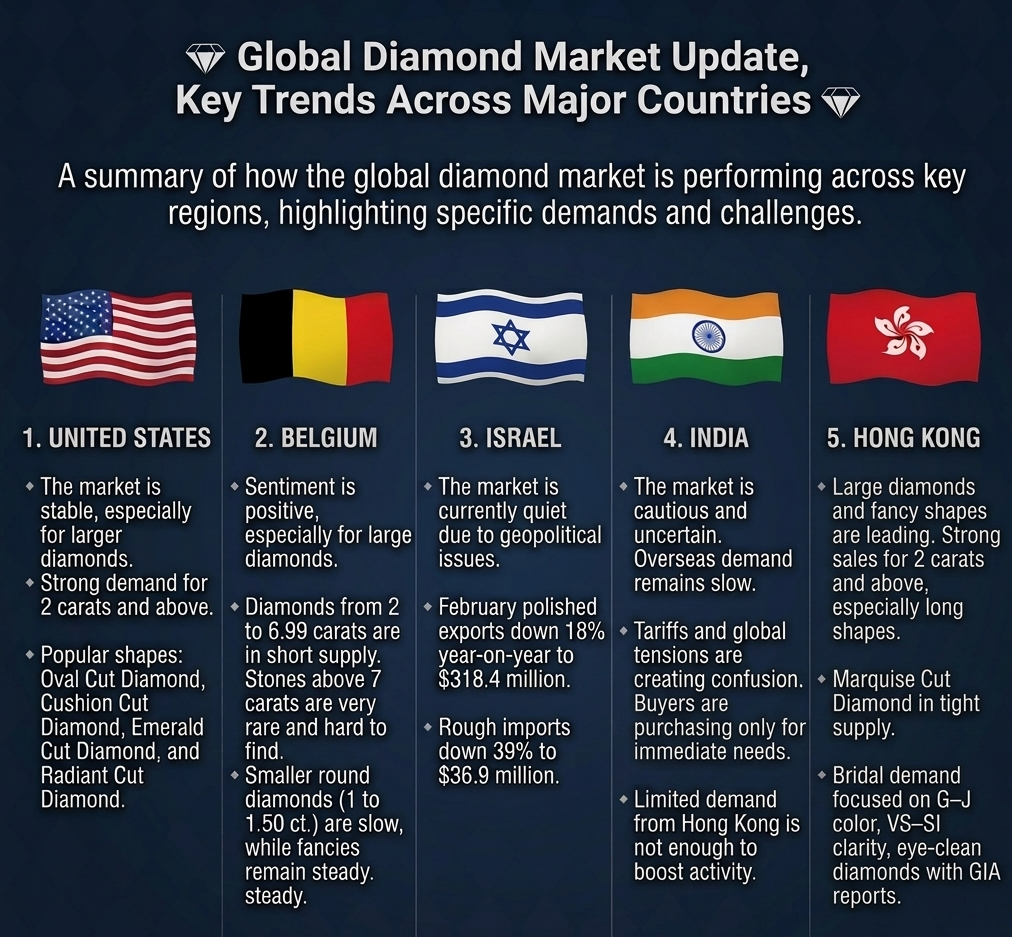
The United States remains the strongest pillar of the global diamond market, accounting for roughly half of global diamond jewelry demand. Currently, the market is characterized by stability, particularly in the 2 carat and above category.
The Demand for Size and Shape -
American consumers are gravitating towards "finger presence." There is a sustained surge in demand for Oval Cut Diamonds, Cushion Cut Diamonds, Emerald Cut Diamonds, and Radiant Cut Diamonds. These elongated shapes maximize carat weight, offering a larger spread on the finger for a better value proposition.
According to a recent analysis by the Gemological Institute of America (GIA), fancy shapes have seen a renaissance, driven by millennial and Gen-Z buyers seeking personalization away from the traditional round brilliant.
The Vintage Revival -
Interestingly, there is a notable shift back to heritage. Old Mine Cut and Old European Cut diamonds are gaining significant traction. These antique stones, often found in Art Deco and Victorian-era jewelry, appeal to consumers looking for uniqueness and a story. This trend aligns with a broader "slow luxury" movement documented by Harvard Business School’s luxury brand management studies, which emphasize heritage and craftsmanship over mass production.
Natural vs. Lab-Grown Dynamics
We are also seeing a slight pivot back to natural diamonds in the lower color grades (K-Z). As lab-grown diamonds become ubiquitous and their resale value drops sharply, some purists and investors are returning to natural stones for their enduring value. For buyers looking to capitalize on this trend, CaratX offers a curated selection of natural diamonds with full GIA certification.
2. Belgium (Antwerp):
Antwerp, the world's diamond capital, is experiencing a "flight to quality." Sentiment is cautiously optimistic, but the defining characteristic of the Belgian market right now is supply scarcity.
The 7-Carat Threshold
There is a distinct shortage of diamonds in the 2 to 6.99 carat range, while stones above 7 carats have become exceptionally rare. This scarcity is driving competition among manufacturers and traders. The Antwerp World Diamond Centre (AWDC) notes that rough diamond imports have tightened, directly impacting the polished supply in these high-weight categories.
While large stones move quickly, the market for smaller round diamonds (1 to 1.50 ct.) is sluggish. This indicates that retailers are currently depleting existing inventory for commercial sizes rather than placing new orders.
3. Israel:
The Israeli diamond industry, centered in the Bursa in Ramat Gan, is facing one of its most challenging periods. The ongoing geopolitical situation has transitioned the market from bustling to quiet.
The Numbers Don't Lie -
The impact is starkly visible in trade data. February saw polished exports drop 18% year-on-year to $318.4 million. More alarmingly, rough diamond imports plummeted 39% to $36.9 million. These figures, tracked by the Israel Diamond Institute (IDI), reflect not just a lack of demand, but a severe logistical paralysis.
Limited flights in and out of Israel are hindering the physical movement of goods. This disruption forces traders to rely more heavily on digital platforms.
For suppliers looking to bypass these logistical hurdles, selling through a digital marketplace like CaratX ensures continuity, connecting Israeli sellers directly with buyers in stable markets like the US and Europe without the need for physical travel.
4. India:
India, the cutting and polishing powerhouse of the world, is currently in a holding pattern. The market sentiment is cautious, primarily due to external factors rather than internal demand.
Tariffs and Tensions
The Indian manufacturing sector is highly sensitive to global tariffs and trade tensions. Confusion regarding import duties in key Western markets is causing buyers to adopt a "hand-to-mouth" strategy purchasing only for immediate needs rather than building inventory.
Furthermore, the anticipated demand surge from Hong Kong has failed to materialize, leaving Indian exporters with surplus stock. The Gems and Jewellery Export Promotion Council (GJEPC) has reported a slowdown in polished exports, urging members to focus on value-added products and explore new markets.
This is where platforms like CaratX become vital. By allowing Indian manufacturers to bypass traditional intermediary channels and sell directly to B2B buyers in 18+ countries, they can maintain liquidity even when traditional export routes are congested.
5. Hong Kong & China:
Hong Kong serves as the gateway to Greater China, and its current trends are a hybrid of Western luxury tastes and Asian market pragmatism.
The "Long Shape" Dominance
Echoing the US, Hong Kong is seeing strong sales for diamonds 2 carats and above, with a specific obsession with "long shapes." The Marquise Cut Diamond is in particularly tight supply, commanding a premium due to its ability to elongate the finger a highly desirable trait in Asian markets.
Bridal demand remains steady but practical. Couples are focusing on G–J color and VS–SI clarity diamonds. The key requirement is that they are "eye-clean" and backed by a GIA report, which remains the gold standard for certification in the region.
The Princess Cut Paradox and Lab-Grown Adoption -
Interestingly, the Princess Cut Diamond is losing popularity, possibly seen as too blocky compared to the elongated silhouettes of ovals and marquises. Simultaneously, there is a marked increase in demand for lab-grown diamonds under 1 carat. This is a budget-conscious move, allowing younger couples to allocate more of their budget to the setting or the wedding itself.
E-commerce is thriving here, with a growth in online sales for 0.30 to 0.50 ct. diamonds. For jewelers looking to tap into this digital shift, CaratX offers seller plan to list jewelry and loose stones directly to this active buyer base.
Strategic Recommendations for Buyers and Sellers -
Given the mixed signals, success in the current market requires agility.
For Sellers: If you have inventory of Marquise or Emerald cuts above 2 carats, now is the time to list them. Rarity is driving price.
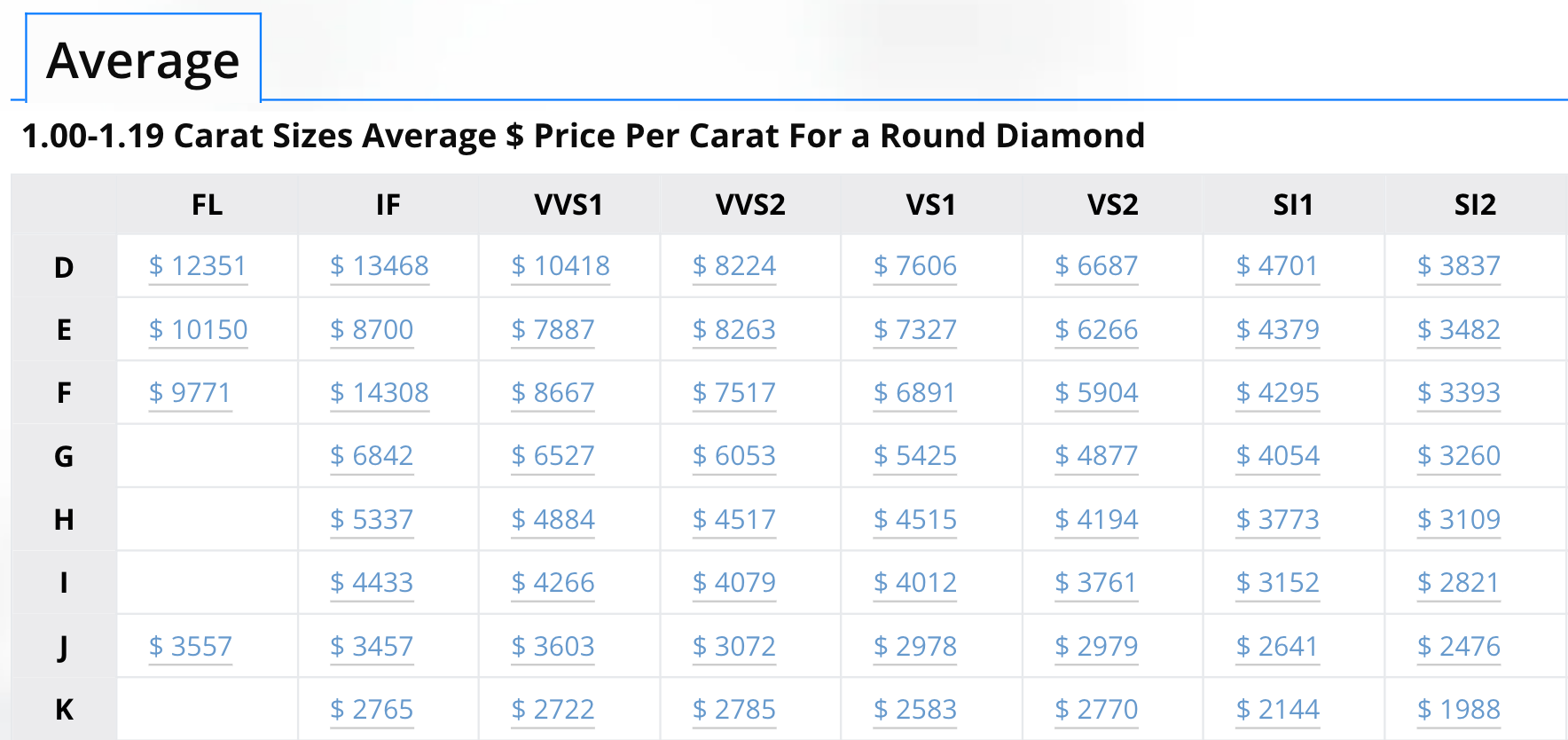
For Buyers: With India holding surplus stock and the US market stable, there are opportunities to negotiate on Round Brilliants in the 1-1.5 ct. range.
For Manufacturers: Diversify your sales channels. Relying on traditional hubs that are currently geopolitically strained is risky.
Explore New Frontiers: Don't limit yourself to local buyers. The CaratX marketplace allows you to sell diamonds and jewelry internationally to a vetted audience of B2B and B2C buyers.
Frequently Asked Questions (FAQs)
Q1: Why are "Old Mine Cut" diamonds becoming popular again? A: They offer a unique, hand-crafted aesthetic that differs from the precision of modern cuts. They represent history and sustainability through recycling, appealing to the modern luxury buyer's desire for authenticity. (Source: GIA.edu)
Q2: Are lab-grown diamonds a good investment? A: Unlike natural diamonds, lab-grown diamonds currently have a low resale value and are not considered a financial investment. They are, however, an excellent option for cost-effective, fashionable jewelry. Their value lies in their aesthetic and budget-friendly price point, not long-term capital retention.
Q3: How does the CaratX platform protect against fraudulent diamonds? A: CaratX prioritizes security and trust. All diamonds listed on our platform must come with verifiable certification from recognized labs such as GIA, IGI, or HRD. Our verification process ensures that buyers receive exactly what they purchase.
Q4: Why is there a shortage of Marquise Cut diamonds? A: The marquise cut requires high precision to avoid a "bow-tie" effect (a dark shadow across the center). Skilled cutters are fewer, and the cut often wastes more rough stone compared to cutting a round brilliant, making supply naturally limited while demand surges.
Q5: Can I sell jewelry, or only loose diamonds, on CaratX? A: Yes! Our platform has expanded to include finished jewelry. You can now register as a seller and list your jewelry collections to reach buyers in 18+ countries.
Ready to take action? Whether you are looking to source a rare 7-carat emerald or liquidate your inventory of calibrated melee, the CaratX marketplace is your gateway to the world.
Browse our collection of natural diamonds: https://caratx.com/search-results/Natural
Explore affordable, on-trend gemstones: Shop Gemstones
Join our global seller community: Register here
Review our competitive pricing plans: CaratX Pricing
Follow CaratX for more insightful and educational content to navigate the ever-evolving diamond industry.