

The Ultimate Guide to Diamond Color: How to Choose a Brighter, More Valuable Stone
Home
News And Media The Ultimate Guide to Diamond Color: How to Choose a Brighter, More Valuable Stone SHOP NOWHome
News And Media The Ultimate Guide to Diamond Color: How to Choose a Brighter, More Valuable Stone SHOP NOWFeb, 04, 2026 by Archit Mohanty 0 Comments
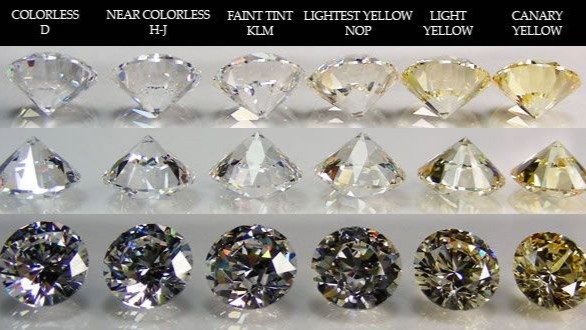
When selecting a diamond, most people focus first on carat weight, often overlooking the critical role of diamond color. Understanding color grading isn't just technical jargon, it's the key to unlocking a stone's true brilliance, perceived cleanliness, and ultimate value. The right color grade can make a diamond appear significantly brighter and more luminous, while an ill-suited choice can leave even a large stone looking dull and lifeless.
This guide will demystify the diamond color grading system, explain how color interacts with different settings and metals, and provide practical strategies for maximizing your budget without compromising beauty. Whether you're a first-time buyer, a jewelry enthusiast, or a professional in the trade, mastering color knowledge empowers smarter, more confident decisions.
Diamond color refers to the natural presence of trace elements (typically nitrogen) within the carbon crystal structure that absorb light and create subtle hues. The most common tint is yellow, though brown and gray tones also occur.
The Gemological Institute of America (GIA), the world's foremost authority on diamond grading, established the D-to-Z scale to objectively measure this phenomenon. It's crucial to understand that this scale measures absence of color, the less color, the higher the grade.
D: Absolutely colorless. The highest possible grade, exceptionally rare and brilliant.
E-F: Virtually indistinguishable from D to the untrained eye, even under magnification. These stones emit a pure, icy white light and represent the top 1% of gem-quality diamonds.
They perform exceptionally well in platinum and white gold settings, which enhance their colorless nature. Explore our collection of colorless diamonds at CaratX to see these exceptional stones.
G-H: Display minimal color detectable only by gemologists comparing against master stones. To the naked eye, they appear white, especially once set. These grades offer exceptional value.
I-J: Show a faint warm tone when viewed from the side, but typically face-up white in a well-cut stone. This range is where most savvy buyers find the perfect balance of quality and value.
Discover our curated Near Colorless diamond selection for brilliant options that won't overextend your budget.
A subtle yellowish tint becomes noticeable, particularly in larger stones (>1 carat). These diamonds offer significant savings and can appear beautifully warm when set in yellow or rose gold, which masks the faint color. They represent an excellent choice for vintage-inspired or romantic jewelry styles.
Color is visible to the naked eye. While not traditionally sought for white diamonds, stones in this range with strong, attractive color saturation (like canary yellow) enter the fancy color diamond category, which follows a different valuation system entirely.
Color doesn't exist in isolation; it interacts dynamically with the other 4Cs of diamond quality.
Cut & Color: An excellent cut can mask a lower color grade by maximizing brilliance and fire, which scatter light and distract the eye from body color. Conversely, a poor cut can make even a high-color diamond look dull.
Clarity & Color: Inclusions can sometimes obscure color perception, but they can also create a cloudy appearance that exacerbates a lower color grade.
Carat & Color: As carat weight increases, color becomes more noticeable. A J-color might look perfectly white in a 0.5-carat stone but show a hint of warmth in a 2-carat stone.
White Gold/Platinum: Enhance colorless (D-F) and near-colorless (G-I) grades. The metal's cool tone complements the diamond's whiteness. Lower grades (K and below) may appear more yellowish in contrast.
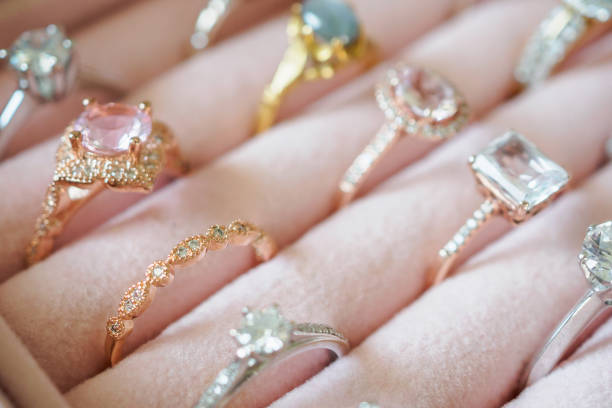
Yellow/Rose Gold: Perfectly complement faint tint grades (J-M). The warm metal setting makes the diamond appear whiter by comparison, allowing you to choose a lower, more economical color grade without sacrificing beauty.
Browse our engagement rings at CaratX to see color-in-setting examples.
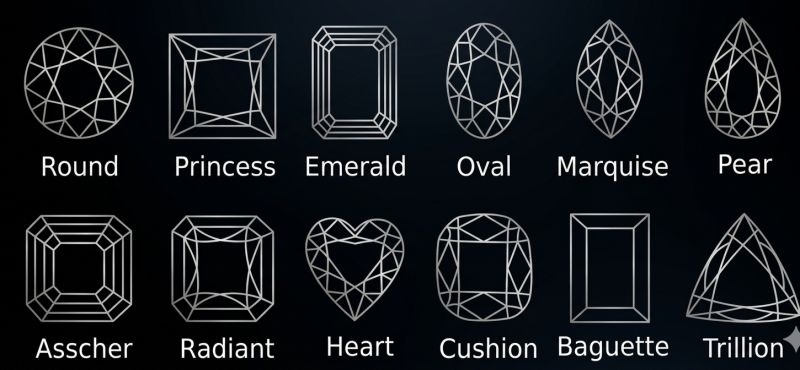
Brilliant Cuts (Round, Princess): Their numerous facets hide color well. You can often go 1-2 grades lower compared to step cuts.
Step Cuts (Emerald, Asscher): Their large, open facets reveal more body color. Prioritize a higher color grade (G or above) for these shapes.
Approximately 25-35% of diamonds exhibit fluorescence, a blue glow under ultraviolet light. The impact on color is nuanced:
For I-M color diamonds: Medium to strong blue fluorescence can make a slightly yellowish stone appear whiter in daylight (which contains UV), improving its perceived color.
For D-F color diamonds: Strong fluorescence might occasionally cause a hazy or oily appearance in some stones, though this is rare. Always review the diamond's actual appearance.
Color is most visible when viewing the diamond from the side (through the pavilion) against a white background. When set in a ring and viewed face-up (the way it's seen 99% of the time), color is far less noticeable. Don't overpay for a color grade difference you can't see in the setting.
Color is one of the most significant price drivers. A one-grade difference (e.g., from G to H) can mean a 10-20% price reduction with virtually no visible change to the naked eye. The price jump from the near-colorless (G-H) to colorless (D-F) range is particularly steep, often increasing 30-50% or more for the same clarity and carat weight.
This is where informed buyers gain an advantage. By choosing a G or H color diamond instead of a D, you can potentially save thousands while acquiring a stone that looks identical when set.
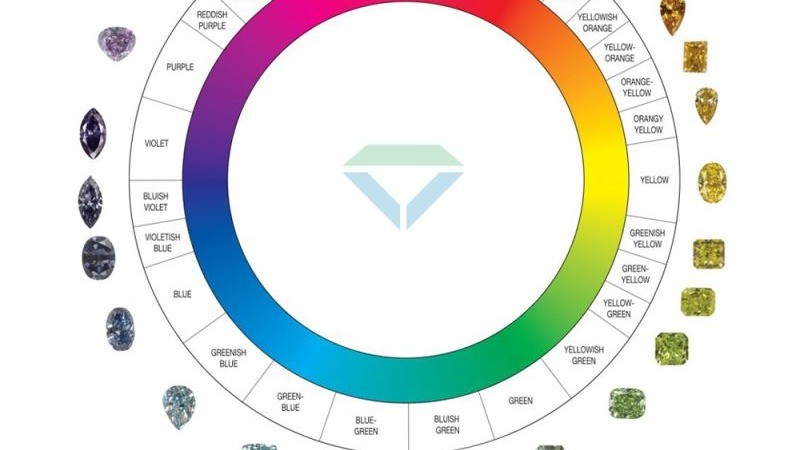
The D-Z scale applies only to white (colorless to light yellow/brown) diamonds. Diamonds with saturation beyond Z, or with other hues (blue, pink, green, red), are graded as fancy color diamonds. They use an entirely different system evaluating hue, tone, and saturation, with rarity increasing with color intensity.
The most valuable fancy colors are vivid red, blue, and green. Explore our exclusive fancy color diamond collection for these extraordinary gems.
According to the Gemological Institute of America (GIA), consistency in color grading requires controlled lighting conditions and comparison to master stones. Their research forms the backbone of the modern diamond trade.
The American Gem Society (AGS) further refines color understanding by considering how it affects light performance. Their studies confirm that beyond a certain point (typically G-H for round brilliants), the human eye cannot perceive color differences in a mounted stone under normal lighting.
At CaratX , we leverage this detailed color knowledge to curate diamonds that offer exceptional beauty and value. Our platform connects buyers directly with vetted sellers, providing:
Transparent Grading: Every diamond listing includes verified GIA,IGI or AGS reports.
Side-by-Side Comparison: Use our tools to compare color grades directly.
Expert Guidance: Access our gemological consultants for personalized advice.
Global Selection: Source from our international diamond marketplace with stones from 18+ countries.
Whether you're a B2B buyer looking to stock inventory or a B2C customer seeking the perfect engagement ring, our platform simplifies the process.
Sellers can register on CaratX to access our global buyer network and advanced listing tools.
Q: Should I prioritize color or clarity? A: For most buyers, color has a more immediate visual impact than clarity (except for obvious inclusions). A common strategy is to choose a slightly lower color (G-H) and higher clarity (VS) for a clean, white appearance at a better value.
Q: Is a D color diamond worth the premium? A: Only if budget is no concern and you desire the absolute pinnacle of rarity. For 99% of buyers, G or H color provides identical visual appeal when set, at a significantly lower price.
Q: How does setting style affect color perception? A: Bezels and halo settings (with smaller accent diamonds) can make a center stone appear whiter. Solitaire settings show more of the diamond, making color slightly more noticeable.
Q: Can a lower-color diamond still be brilliant? A: Absolutely. Cut quality is the primary driver of brilliance. A well-cut K-color can sparkle more brilliantly than a poorly cut F-color.
Understanding diamond color transforms you from a passive consumer to an empowered buyer. By recognizing that the "best" color isn't always the highest grade, but rather the grade that delivers the desired appearance at your price point, you make smarter investments in beauty.
The near-colorless range (G-J) consistently offers the optimum balance, providing a white appearance without the colorless premium. Remember to always consider color in context with cut quality, setting metal, and diamond shape.
For professionals in the trade, registering as a CaratX seller opens access to a global marketplace of informed buyers seeking precisely graded diamonds. Our platform provides the tools and analytics to competitively price color grades and meet market demand.
Ready to Find Your Perfect Diamond?
Shop Natural Diamonds: https://caratx.com/search-results/Naturals
Explore Gemstones: https://caratx.com/search-results/gemstones
Start Selling on Our Marketplace: https://www.caratx.com/register
Learn About Seller Plans & Pricing: https://caratx.com/generic-pages/launch-your-products-on-caratx
Follow CaratX for more insightful guides and market updates.
Image Credit - Oceanside Jewelers

May, 08, 2026
Aug, 06, 2022
Aug, 06, 2022
Apr, 29, 2026
0 Comments
Please login to leave a reply.