
The Ultimate Guide to Ruby Colors: How Origin Shapes the World's Most Prized Gemstone
Home
News And Media The Ultimate Guide to Ruby Colors: How Origin Shapes the World's Most Prized Gemstone SHOP NOWHome
News And Media The Ultimate Guide to Ruby Colors: How Origin Shapes the World's Most Prized Gemstone SHOP NOWFeb, 04, 2026 by Archit Mohanty 0 Comments
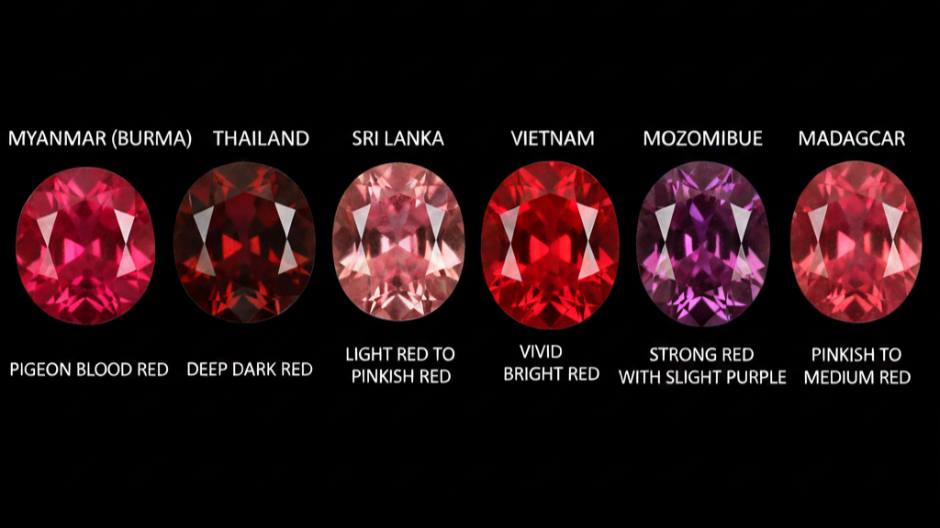
Rubies, the crowned jewel of the colored stone world, have captivated humanity for millennia with their intense red hue, symbolizing passion, power, and protection. While all rubies share the same basic chemical composition corundum (Al₂O₃) colored by trace amounts of chromium the specific shade, tone, and saturation can vary dramatically based on their geographical origin.
This isn't just a matter of aesthetics; origin affects a ruby's rarity, market value, and the very characteristics that make it unique. For collectors, jewelers, and enthusiasts, understanding the geographical fingerprint of a ruby is essential for making an informed acquisition.
This guide explores the fascinating world of ruby origins, their distinct color profiles, and what makes each source special.
Before diving into specific locales, it's crucial to understand why origin influences color. The variations arise from differences in the geological conditions during the ruby's formation often millions of years ago. Factors include:
Trace Elements: Chromium causes red, but the presence of iron can darken the stone or introduce brownish or purplish secondary hues.
Host Rock & Formation Environment: Whether the ruby formed in marble (typically lower in iron, leading to brighter colors) or in basalt (higher in iron, resulting in darker tones).
Geological Events: Heat, pressure, and metamorphic activity over time can alter the crystal structure and color zoning.
These geological "recipes" are unique to each region, creating a recognizable color signature that gemological laboratories like the Gemological Institute of America (GIA) can often identify.
Myanmar, historically known as Burma, is the most storied and celebrated ruby origin. For centuries, the Mogok Valley has produced stones that set the global standard for ruby quality.
Color Characteristic: The finest Burmese rubies possess a vivid, highly saturated pure red with a faint bluish or purplish undertone that seems to glow from within a color famously described as "pigeon's blood red." This term refers to a specific, luminous hue, not simply any red ruby.
Why It's Unique: Formed in metamorphic marble with very low iron content, these rubies have exceptional fluorescence under UV light (even sunlight), which enhances their red glow and makes the color appear more vibrant.
They command the highest premiums in the market due to their legendary status, exceptional color, and increasing rarity. Ethical sourcing considerations are paramount here.
Explore our curated collection of exceptional red gemstones that capture this legendary allure on our Ruby & Colored Gemstones page.
Historically a major hub for ruby trading and treatment, Thai rubies come from sources like Chanthaburi and Trat.
Color Characteristic: Typically a deep, dark red, often described as a "Siam red." They tend to have higher iron content, which subdues fluorescence and can introduce slight brownish or burgundy tones.
Why It's Unique: Thai rubies are known for their excellent clarity and durability. The darker, richer color is highly prized in certain markets and can be exceptionally elegant in gold settings.
While historically mass-marketed, fine untreated Thai rubies of strong color are rare and valuable. Thailand remains a global center for gemstone cutting and treatment.
The island nation of Sri Lanka is a treasure trove of gemstones, producing a wide spectrum of corundum, including sapphires and rubies.
Color Characteristic: Sri Lankan rubies are often a lighter, more pastel red, ranging from a soft pinkish-red to a vibrant raspberry hue. They are sometimes called "Ceylon rubies" in the trade.
Why It's Unique: Formed in metamorphic rocks with very little iron, they share the high fluorescence of Burmese stones but with less chromium, leading to lighter tones. Their high clarity and brilliance make them popular for delicate jewelry.
Discover the gentle beauty of these stones in our Light & Bright Jewelry Collection.
Valued for their brilliance and often larger sizes, they offer a distinct, romantic alternative to the intense Burmese red.
Discovered more recently in the Luc Yen and Quy Chau regions, Vietnamese rubies quickly gained a strong reputation.
Color Characteristic: They exhibit a vivid bright red, often with a slight purplish tint. The finest specimens can rival top Burmese material in saturation and fluorescence.
Why It's Unique: Similar marble-hosted geology to Myanmar results in similarly bright and fluorescent stones. Vietnamese rubies can also display beautiful pink to red color zoning.
A highly respected source that produces high-quality rubies, often offering excellent value relative to Burmese counterparts.
The Montepuez deposit in Mozambique, discovered in the 2000s, has become one of the world's most important ruby sources.
Color Characteristic: A strong, saturated red, often with a subtle secondary purple or violet tone. The color is consistently rich and evenly distributed.
Why It's Unique: Formed in amphibolite and other metamorphic rocks, they generally have higher iron content than Burmese stones, leading to less fluorescence but exceptional depth of color and good clarity. Their consistent quality and volume have reshaped the modern ruby market.
Mozambique rubies are highly respected, offering a superb blend of color, clarity, and size, making them a top choice for contemporary high-end jewelry.
Find these modern marvels among our selection of Natural Diamonds & Gemstones.
Madagascar produces a wide variety of ruby colors from several different deposits.
Color Characteristic: Ranges from pinkish-red to a medium pure red. The tones can be softer, and many stones display a lovely blend of pink and red.
Why It's Unique: The geology is diverse, leading to a broad color palette. Madagascar is also known for producing "star rubies" with asterism.
An important source that provides stones for a wide range of jewelry designs, from commercial pieces to fine gem-quality works.
Their variety makes them perfect for creative designs. Sellers can offer such diverse inventory to a global audience by registering on the CaratX marketplace.
When evaluating a ruby, consider how origin influences key factors:
Color Tone & Saturation: As detailed above, this is the most direct impact.
Market Value & Rarity: Burmese "pigeon's blood" commands the highest price due to rarity and demand. Other origins offer exceptional beauty at different price points.
Clarity & Inclusions: Different origins have characteristic inclusions (e.g., "silk" in Burmese stones) that can aid identification and sometimes enhance beauty.
Buyer Preference: Some seek the classic prestige of Burma, while others prefer the bold modernity of Mozambique or the soft romance of Ceylon.
Informed buyers increasingly prioritize verifiable, ethical supply chains. Platforms that connect buyers directly with vetted sellers, like CaratX, are crucial for transparent global trade.
Most rubies on the market undergo heat treatment to improve color and clarity, a stable and accepted practice. However, treatments like lead-glass filling require full disclosure.
A report from laboratory like the GIA or AGL is non-negotiable for any significant ruby purchase. These reports detail origin (when determinable), treatments, and quality analysis.
For more on understanding gemstone value and certification, visit our guide on Pricing and Launching Your Products on CaratX.
The journey of a ruby from the earth to jewelry is a story written in its color. Whether drawn to the legendary glow of Burma, the deep richness of Mozambique, or the gentle light of Sri Lanka, your choice reflects personal taste as much as objective quality. By understanding origin, you become a more empowered and appreciative connoisseur.
Ready to explore the world of rubies? Whether you are a B2B buyer seeking the finest inventory or a private collector searching for a statement piece, CaratX provides a secure, global marketplace.
Shop gemstones at unbeatable prices or if you're a seller, register to start selling to 18+ international countries today.
Q: Which ruby origin is the most valuable? A: Myanmar (Burmese) rubies of "pigeon's blood" quality are traditionally the most valuable due to their exceptional color, historical prestige, and rarity. However, fine-quality rubies from Mozambique, Vietnam, and even Thailand can also command very high prices based on their individual characteristics.
Q: Can a gemologist always determine a ruby's origin? A: Not always. While gemological labs use advanced spectroscopy and microscopy to analyze trace elements and inclusions characteristic of certain regions, some stones have ambiguous features. In such cases, labs will issue an origin report with possible countries or state that a definitive origin cannot be determined.
Q: Is an untreated ruby significantly more valuable? A: Yes, an untreated ruby of fine color and clarity is exponentially rarer and more valuable than its heat-treated equivalent. Heat treatment is common and accepted; it enhances the stone's natural beauty. Other treatments (like glass filling) significantly lower the value and must be disclosed.
Q: How does origin affect a ruby's durability? A: All rubies are a 9 on the Mohs scale of hardness, making them extremely durable for daily wear. Origin does not fundamentally change this hardness, though some inclusions specific to certain origins might require slight care during setting.
Q: Where can I buy rubies from specific origins with confidence? A: Purchase from reputable dealers who provide full disclosure and internationally recognized laboratory reports (e.g., GIA, AGL, SSEF). B2B and B2C platforms like CaratX that connect buyers directly with vetted global sellers are an excellent way to access a wide range of inventory with transparency. Sellers can register here to reach such buyers.
Follow CaratX for more insightful and educational content on gemstones, diamonds, and the global jewelry marketplace.
May, 26, 2026
Aug, 06, 2022
Aug, 06, 2022
0 Comments
Please login to leave a reply.