
Executive Summary:
As we move deeper into 2026, the global diamond industry stands at a critical juncture, shaped by geopolitical trade agreements, shifting consumer preferences, and macroeconomic pressures.
This comprehensive update analyzes performance across major trading hubs, deciphers underlying trends, and provides a forward-looking perspective for businesses navigating this complex landscape. The overarching sentiment is one of cautious optimism, tempered by significant structural challenges that require strategic adaptation.
Deep Dive into Regional Market Dynamics -
United States: Resilience and Selective Demand
The U.S. market continues to demonstrate resilience, serving as a primary engine for global diamond demand. Recent developments have been particularly encouraging:
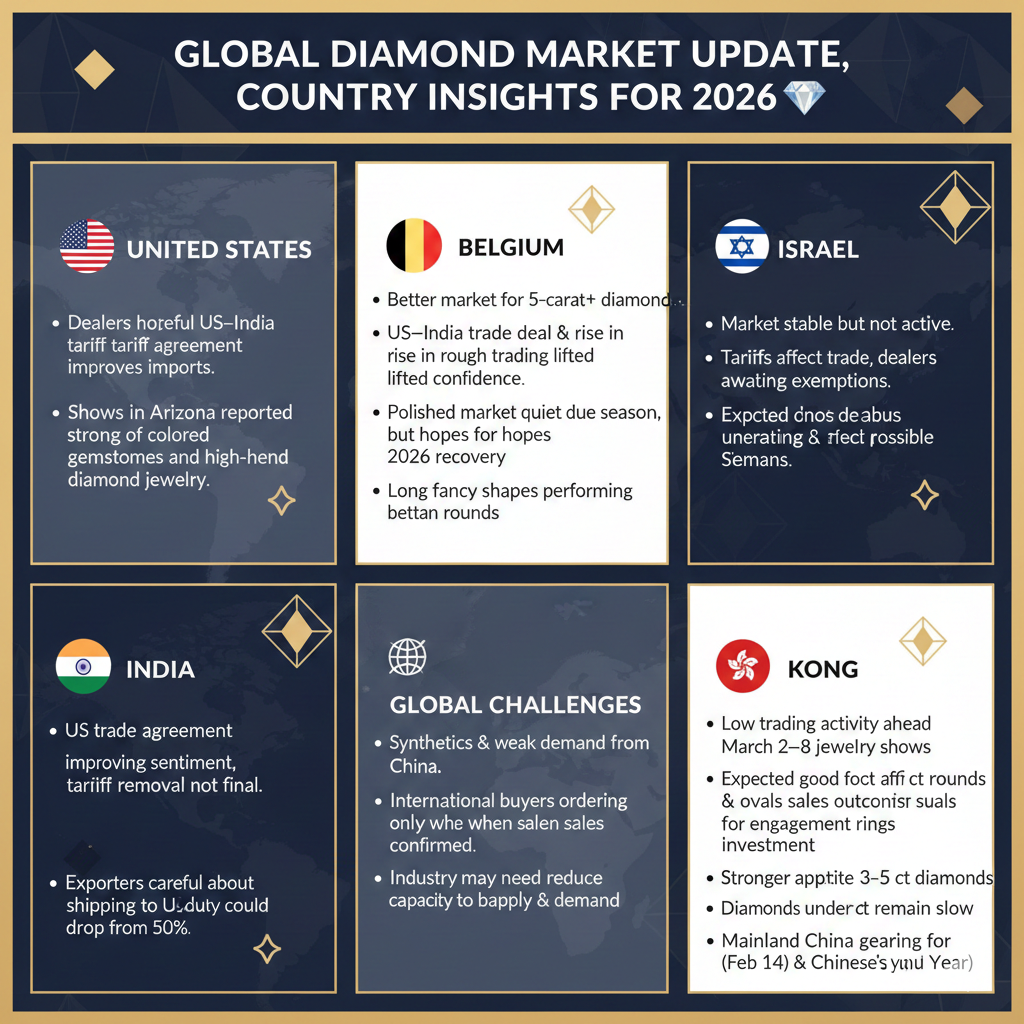
Trade Policy Catalyst: The anticipated U.S.–India tariff agreement is a pivotal factor, with dealers hopeful for a significant reduction from the current 5.75% import duty. This agreement is expected to streamline supply chains and improve margins for importers.
For businesses looking to capitalize on this evolving trade landscape, establishing a robust B2B diamond selling platform is crucial.
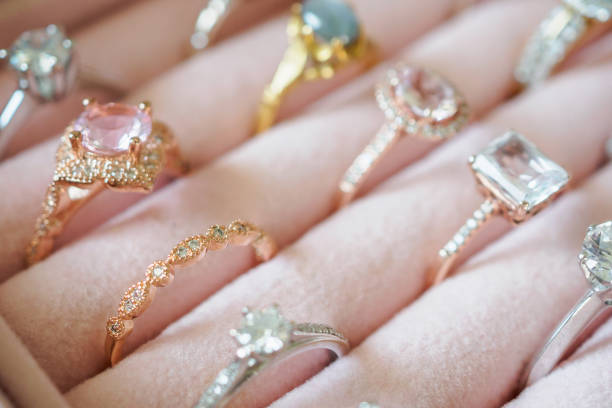
Showcase Success: Major gem and jewelry shows have reported strong activity. The Tucson shows (AGTA & GJX) and the Centurion Show in Phoenix highlighted a clear consumer trend: robust demand for high-end diamond jewelry and exceptional colored gemstones.
This indicates a market where connoisseurship and uniqueness are driving purchases over generic items.
Consumer Insight: The American buyer in 2026 appears to be quality-driven and experience-oriented, favoring statement pieces and personalized jewelry.
Belgium (Antwerp): A Hub for Investment-Grade Goods
Antwerp's market dynamics reveal a bifurcation:
Strong Rough & Large Stone Segment: Confidence is buoyed by increased rough trading and the positive ripple effects of the U.S.-India deal. There is a notably better market for diamonds of 5 carats and larger, signaling healthy appetite from high-net-worth individuals and investors.
Quiet Polished Market & Shape Trends: The broader polished market is in a seasonal lull but hopes for a recovery later in 2026.
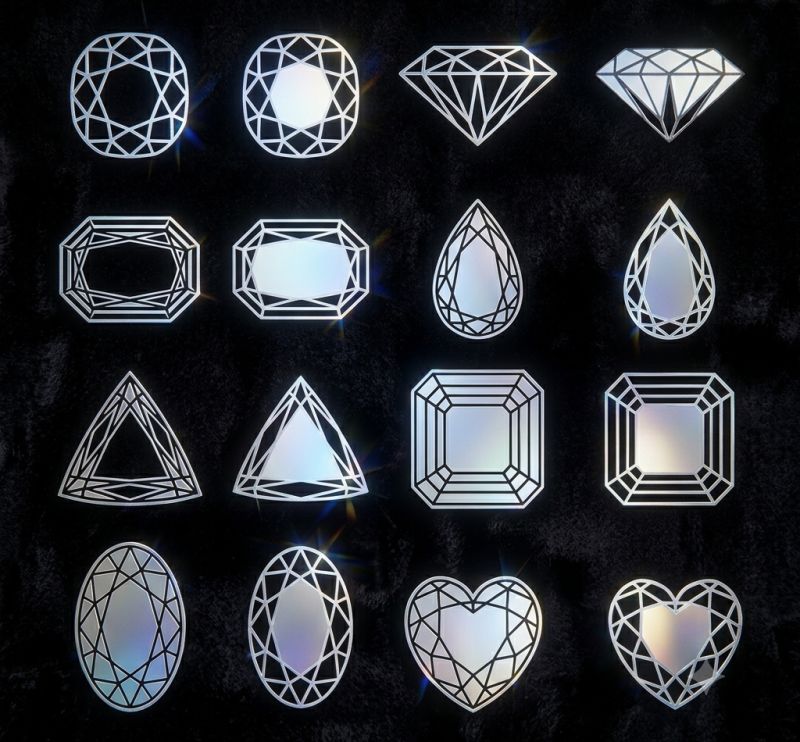
An interesting technical trend is the outperformance of long fancy shapes (like ovals, emeralds, and marquise) compared to rounds, suggesting changing design preferences in fine jewelry.
Israel:
The Israeli diamond center is in a holding pattern. While the market is stable, activity is muted as dealers navigate ongoing tariff pressures. The industry is actively seeking possible tariff exemptions to revitalize trade flows. This environment underscores the need for efficient, global marketplace solutions to connect sellers directly with international buyers.
India: Sentiment Improvement with Operational Caution
As the world's manufacturing heart, India's sentiment is directly tied to trade policies.
The Tariff Sword of Damocles: The potential U.S. tariff removal has improved optimism, but its non-final status creates operational hesitancy. Exporters are strategically delaying shipments to avoid the current 5.75% duty, anticipating a drop.
Structural Headwinds: Beyond tariffs, the industry faces profound challenges: the persistent rise of lab-grown diamonds, weakened demand from China, and a just-in-time ordering model from international buyers. This has led to widespread consensus that the industry may need to reduce manufacturing capacity to rebalance supply with genuine demand.
Hong Kong & Mainland China:
Hong Kong's activity is currently low, typical ahead of its major March jewelry shows (March 2-8). Expectations are for good foot traffic but uncertain sales conversions.
Defined Demand Bands:
Bridal Segment: Steady demand for 1–2.50 ct rounds and ovals for engagement rings remains a market constant.
Investment Segment: A stronger appetite for 3–5 ct diamonds indicates a healthy investment purchaser segment.
Challenged Segment: Goods under 1 carat continue to see slow movement, facing the greatest competition from alternatives.
Mainland Catalysts: The domestic market is gearing up for two major sales events: Valentine’s Day (Feb 14) and the Chinese New Year (Feb 17). These festivals are critical for jewelry gifting and retail performance.
Cross-Cutting Global Challenges and Opportunities -
The Synthetics Challenge: The market share of lab-grown diamonds continues to expand, particularly in the lower-to-mid market segments. Natural diamond players must emphasize rarity, provenance, and emotional value.
Geopolitical Trade Flows: Tariffs and trade agreements are directly impacting profitability and logistics. Diversifying market access is no longer optional but essential.
Demand Recalibration: Weak economic conditions in key markets have led to a "sell-first, order-later" approach from buyers. This necessitates greater agility and inventory management from suppliers.
The CaratX Advantage: Navigating the 2026 Landscape
In this complex environment, digital transformation and global reach are not just advantages, they are necessities. CaratX provides the infrastructure for businesses to thrive:
Sell to a Global Audience: Don't be limited by regional slumps. Start selling diamonds to 18+ international countries through a single, integrated platform. Register as a Seller on CaratX to unlock this global network.
Diversify Your Product Lines: The strong demand for colored gemstones reported in Tucson shows the value of diversification.
Explore our curated selection of natural gemstones at unbeatable prices on the CaratX marketplace.
Access Quality Inventory: Source desirable goods that are in demand, like the 1-2.50 ct rounds and ovals for bridal, or the 3-5 ct investment-grade stones.
Find a vast selection of natural diamonds to meet your specific needs.
Expand into Jewelry: The highlighted demand for high-end jewelry presents a direct opportunity.
With our CaratX seller plan, you can now sell jewelry internationally to both B2B and B2C buyers seamlessly.
Ready to transform your business for 2026? Launch your products on CaratX and access transparent pricing, powerful tools, and a global buyer base. More details about our Pricing.
Frequently Asked Questions (FAQs)
Q1: How will the potential U.S.-India tariff agreement actually benefit dealers? A: The agreement, which aims to remove the 5.75% import duty on polished diamonds, will directly improve the landed cost of goods in the U.S., the world's largest market. This will boost margins for Indian exporters and U.S. importers, potentially stimulating higher volumes of trade and making U.S. prices more competitive.
Q2: Why are long fancy shapes outperforming rounds in some markets? A: Trends in jewelry design heavily influence diamond shape demand. Long fancy shapes like ovals and marquise are currently popular in engagement ring and pendant designs for their elongating effect on the finger and modern aesthetic. They also often offer a larger perceived size per carat weight compared to rounds.
Q3: What does the industry mean by "reducing capacity" to balance supply and demand? A: This refers to a necessary correction where diamond manufacturers (primarily in India) temporarily slow down or halt their rough diamond polishing operations. This reduces the flow of new polished diamonds into the market, allowing existing inventory to be absorbed, thereby stabilizing and eventually increasing prices.
Q4: Is the demand for natural diamonds under threat from lab-grown? A: In specific segments (e.g., entry-level, fashion jewelry), yes. However, the markets for larger, higher-quality natural diamonds (especially for investment and bridal) remain distinct. The key for the natural sector is to effectively communicate its value proposition centered on rarity, natural origin, and enduring value. Resources like the Gemological Institute of America (GIA) provide essential education on diamond provenance and quality.
Q5: How can a platform like CaratX help with the challenge of buyers only ordering after sales? A: CaratX provides a always-on, global digital showroom. Instead of waiting for shows or direct orders, sellers can list their inventory where international buyers can see it daily. This facilitates faster matching of available goods with buyer needs, shortening the sales cycle and improving liquidity.
Sources & Further Reading
Insight Analysis: Market reports and dealer summaries from industry publications such as Rapaport and The Diamond Loupe.
Trade Policy: Official summaries from the Office of the United States Trade Representative (USTR) regarding bilateral trade agreements.
Gemological Context: Educational resources on diamond formation, grading, and identification from the Gemological Institute of America (GIA).
Economic Trends: Analysis of luxury goods consumption and macroeconomic factors affecting key markets from financial research institutions.