

India’s Gems & Jewellery Industry: A Glittering Facade with Internal Fractures
Home
Our Favorite Articles India’s Gems & Jewellery Industry: A Glittering Facade with Internal Fractures SHOP NOWHome
Our Favorite Articles India’s Gems & Jewellery Industry: A Glittering Facade with Internal Fractures SHOP NOWJan, 19, 2026 by Archit Mohanty 0 Comments
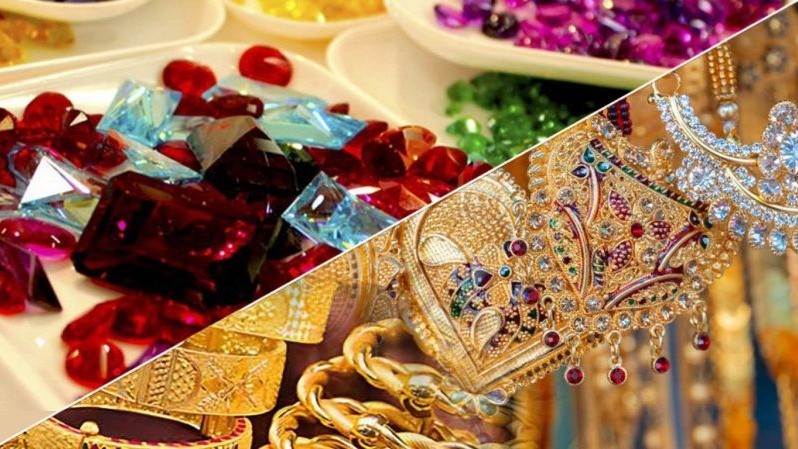
At first glance, India’s Gems & Jewellery (G&J) industry is a beacon of economic strength and global craftsmanship. It contributes a formidable 10–12% of India’s total merchandise exports, acting as a critical pillar for the nation's foreign exchange earnings. The sector is a massive employment generator, providing livelihoods for approximately 6 million people, from skilled artisans in Gujarat and Maharashtra to designers and traders in major hubs.
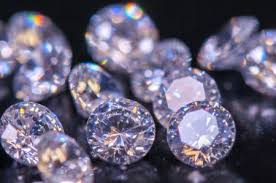
India’s dominance in diamond manufacturing is unparalleled. The country rightfully holds the title of the world’s diamond polishing and cutting capital, processing nearly 90% of all diamonds by volume. This expertise, built over decades, has made cities like Surat and Mumbai synonymous with diamond excellence.
However, a deeper analysis reveals a sector facing significant structural vulnerabilities. The industry's global competitiveness is paradoxically tied to factors largely beyond its control, especially the trade policies and economic health of a few large economies.
The industry's export profile is alarmingly concentrated. Cut & polished diamonds and gold jewellery form the overwhelming bulk of shipments. While India does export other categories like silver jewellery, imitation jewellery, coloured gemstones, and lab-grown diamonds, their share in the total export pie remains minuscule.
This lack of diversification creates systemic risk. A slowdown in global demand for diamonds or a dip in gold jewellery consumption directly translates to falling exports, impacting millions of jobs and the sector's GDP contribution. For instance, economic recessions in key markets historically lead to immediate order cancellations and inventory pile-up in Indian units.
India exports to numerous countries, but a handful of markets dominate, creating a fragile dependency:
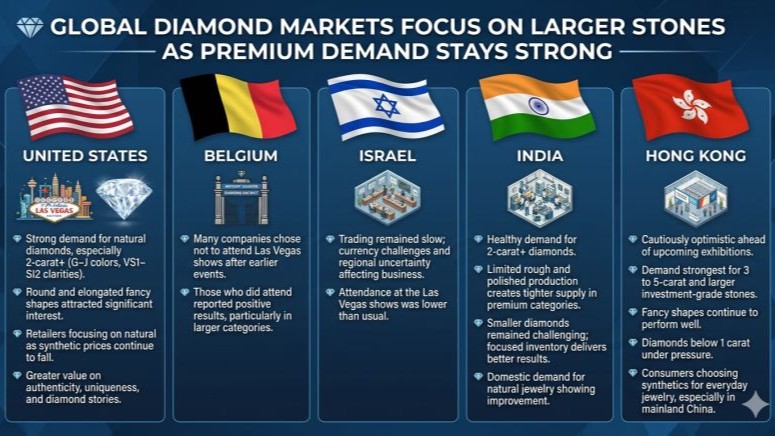
United States: The single largest buyer, absorbing a massive portion of both diamond and jewellery exports.
UAE, Hong Kong, and Belgium: These three, along with the US, account for over 80% of exports in many categories.
Although there has been a slight geographic diversification since 2016, with growing exports to parts of Europe, Southeast Asia, and the Middle East, the shift is painfully slow. The industry remains critically exposed to economic and policy shifts in the United States.
Changes in US consumer sentiment, import tariffs, or sanctions can send shockwaves through the entire Indian G&J supply chain.
To mitigate these risks, the industry must embark on a two-pronged strategy: product/market diversification and technological adoption.
Lab-Grown Diamonds (LGDs): This is not just a trend but a strategic imperative. As a leader in diamond technology, India is poised to dominate the LGD market. Brands and exporters must actively develop and market this category.
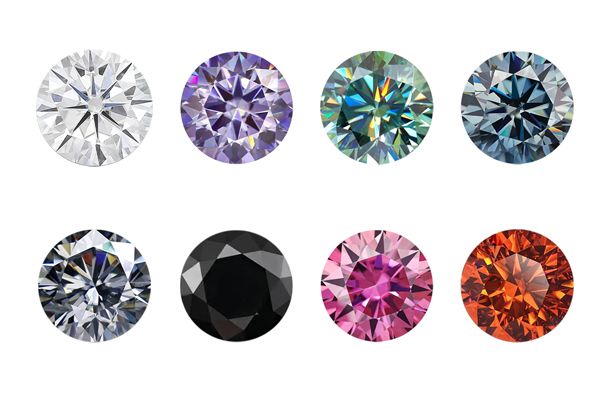
Coloured Gemstones: India has rich deposits and cutting skills for stones like emeralds, rubies, and sapphires. Promoting these as finished jewellery rather than just raw or cut stones can unlock higher value.
Design-Driven & Theme Jewellery: Moving beyond plain gold to high-design, thematic, and lightweight jewellery can attract younger global demographics.
Actively cultivating markets in East Asia (Japan, South Korea), Europe (Germany, France), and the Commonwealth of Independent States (CIS) is essential. This requires understanding nuanced consumer preferences and complying with diverse regulatory standards.
This is where a platform like CaratX becomes a strategic partner, not just a marketplace. CaratX directly addresses the core vulnerabilities of the Indian G&J industry by providing instant, diversified global access.
Break Geographic Dependencies: Instead of relying on a handful of buyers, Indian manufacturers and exporters can now access a network of verified B2B and B2C buyers across 18+ international countries from a single dashboard. This dramatically reduces market concentration risk.
Showcase a Diversified Portfolio: The platform allows sellers to list not just diamonds and gold, but also silver jewellery, imitation jewellery, and gemstones, helping them test new categories with a global audience.
Navigate International Sales with Ease: CaratX handles the complexities of international logistics, payments, and trust-building, allowing Indian SMEs to focus on their core strength: craftsmanship.
Ready to future-proof your business? Launch your products globally with the CaratX Seller Plan and start building a resilient, diversified export profile today.
For a detailed breakdown of how to get started, visit our comprehensive guide on Pricing and Launching your products on CaratX.
Q1: Why is India's gems and jewellery industry considered vulnerable despite its large size? The vulnerability stems from high dependence on just two product categories (diamonds and gold jewellery) and over-reliance on a few geographic markets (like the USA and UAE). Any economic or policy shock in these areas disproportionately impacts the entire Indian industry.
Q2: What are lab-grown diamonds, and why are they important for India's export strategy? Lab-grown diamonds (LGDs) are chemically, physically, and optically identical to mined diamonds but are created in a controlled environment. They represent a growing, price-sensitive, and sustainable market segment. For India, leveraging its diamond expertise to dominate the LGD value chain is a crucial diversification strategy.
Q3: How can a digital platform like CaratX help small and medium jewellers in India? CaratX reduces the enormous cost and complexity of finding international buyers. It provides a ready-made, trusted channel to access over 18 countries, helps showcase a diverse product range, and manages cross-border trade hurdles, enabling even smaller players to compete globally.
Q4: Are there authoritative resources to learn more about global gem and jewellery trends? A4: Yes. For diamond education and standards, the Gemological Institute of America (GIA) is a premier .edu resource.
The Gem & Jewellery Export Promotion Council (GJEPC). (2023). Annual Report 2022-23. https://gjepc.org/
Government of India, Ministry of Commerce & Industry. (2023). Export Import Data Bank. https://tradestat.commerce.gov.in/
Gemological Institute of America (GIA). (n.d.). Diamond & Gemstone Education. https://www.gia.edu/gem-education
Bain & Company. (2025). The Global Diamond Industry Report.
Image Credit - KNN INdia
Aug, 06, 2022
Aug, 06, 2022

0 Comments
Please login to leave a reply.