

Popular Diamond Cuts 2026: A Data-Driven Guide to What Buyers Are Choosing Today
Home
Our Favorite Articles Popular Diamond Cuts 2026: A Data-Driven Guide to What Buyers Are Choosing Today SHOP NOWHome
Our Favorite Articles Popular Diamond Cuts 2026: A Data-Driven Guide to What Buyers Are Choosing Today SHOP NOWApr, 21, 2026 by Archit Mohanty 0 Comments
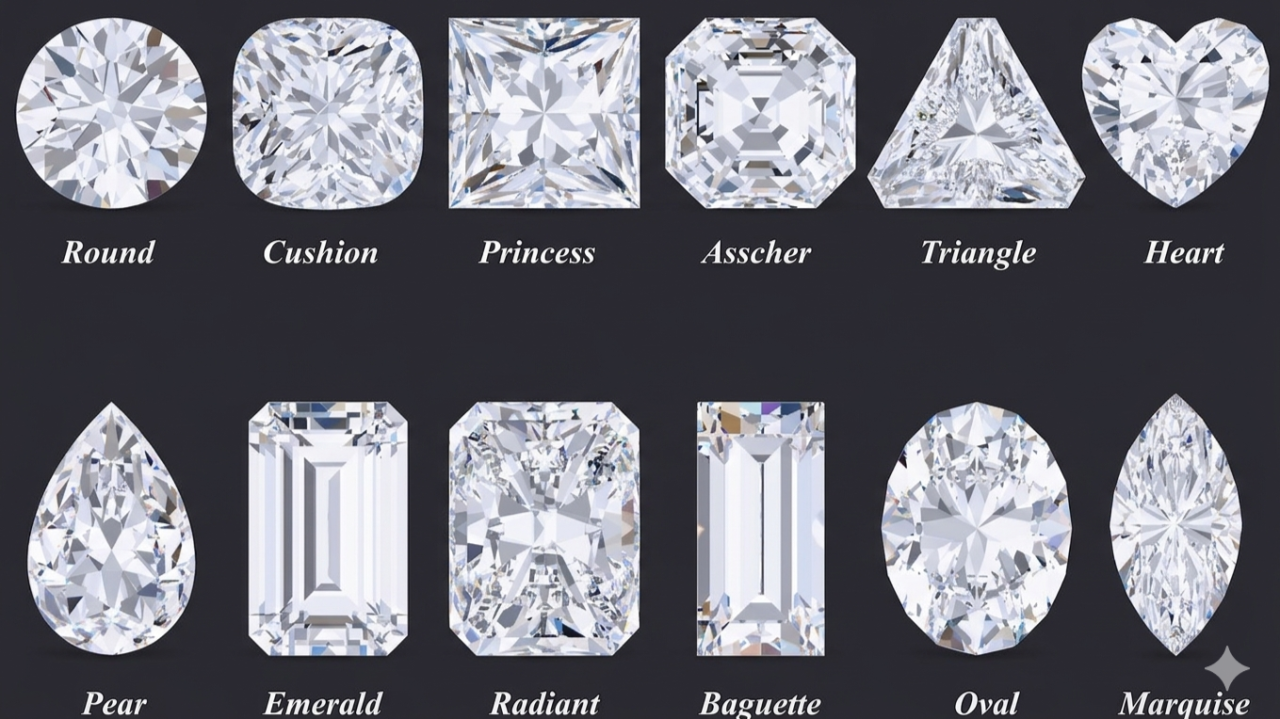
The diamond market is undergoing one of the most significant shifts in modern history. For decades, the round brilliant cut stood alone as the undisputed king of diamond shapes. Today, the landscape looks entirely different. Oval cuts have surged to rival round diamonds, elongated fancy shapes are commanding premium prices, and buyers are increasingly prioritizing visual size and personal expression over traditional metrics.
This guide analyzes the latest market data, explores each major diamond cut in detail, and provides actionable insights for both buyers and sellers in today’s evolving diamond marketplace.
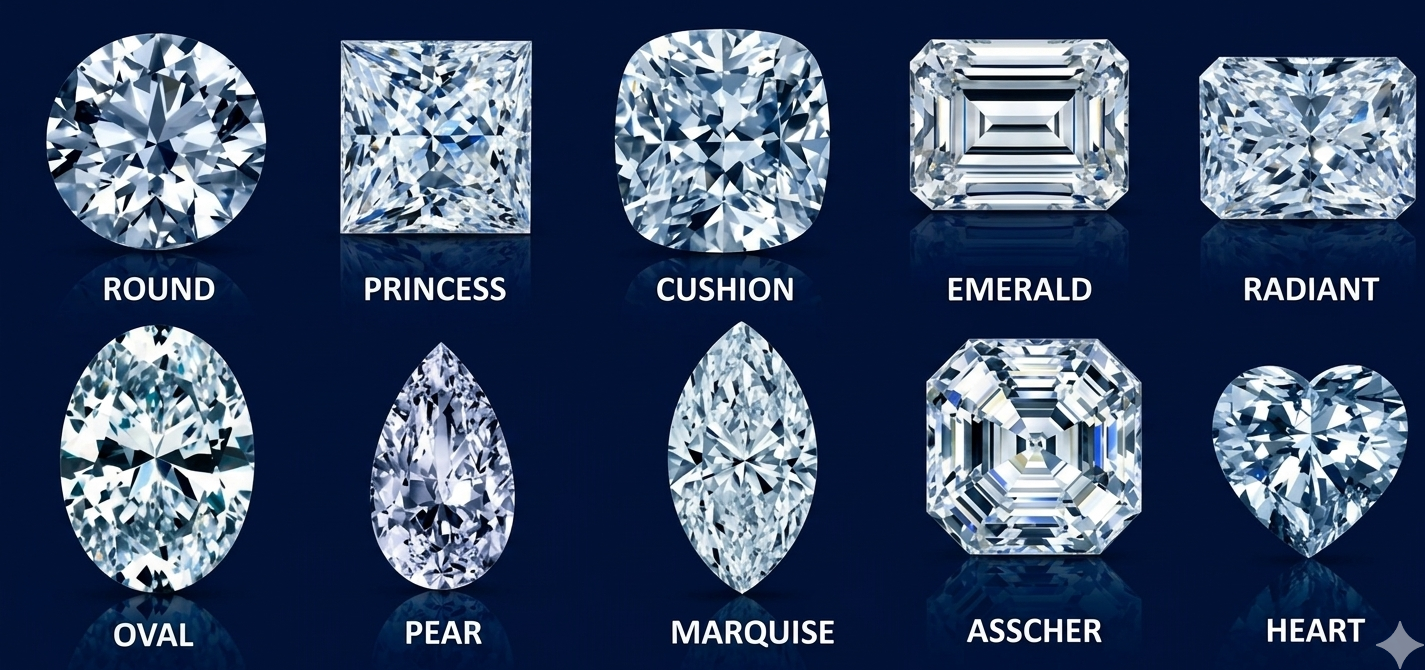
The Round Cut diamond holds the largest market share, ranging from 26% to 62% depending on the data source, and is known for its maximum sparkle, classic appeal, and highest price premium. The Oval Cut follows with a 25% to 33% share, offering an elongated shape that appears larger and gives a modern, elegant look.
The Emerald Cut, with around 8% share, features a step-cut design often called the “hall of mirrors,” focusing more on clarity and sophistication than sparkle. Similarly, the Princess Cut also holds about 8% of the market and is popular for its square shape, modern geometry, and strong value for money.
The Pear Cut, accounting for roughly 8%, combines a round and marquise shape into a teardrop form, giving it a romantic and unique appeal. Lastly, the Marquise Cut, also at around 8%, is long and pointed, designed to maximize finger coverage and create a bold, elongated look.
Key Market Insight: Round and oval cuts together now account for over 50% of total diamond shape demand. However, the market share data varies significantly depending on whether one measures by unit sales or by total carat weight.
Industry reports indicate that round brilliants still represent approximately 62% of unit sales globally, while oval cuts have captured 25–33% of the market depending on the region and reporting methodology.
The round brilliant cut remains the benchmark against which all other diamond cuts are measured. Its enduring popularity stems from a masterful combination of mathematical precision and optical physics that has been refined over more than a century.
The round brilliant cut contains exactly 57 or 58 precisely arranged facets 33 on the crown (top) and 24–25 on the pavilion (bottom) that work together as a sophisticated optical machine. This intricate arrangement is designed to maximize three distinct optical properties:
Brilliance: The reflection of white light back to the viewer‘s eye.
Fire: The dispersion of white light into spectral rainbow colors.
Scintillation: The dynamic sparkle created as the diamond moves.
Diamond’s exceptionally high refractive index of 2.42, the highest of any transparent gemstone combined with its strong dispersion, allows the round brilliant to achieve unmatched light performance.
When light enters a diamond, it slows down and bends. If the cutter has placed the facets at the correct angles (the critical angle is 24.5 degrees), the light reflects internally and exits through the crown, creating brilliance. If the proportions are off, light leaks out through the pavilion, and the diamond appears dark and lifeless.
The modern round brilliant cut owes its existence to Marcel Tolkowsky, a 19-year-old mathematics student at the University of London who published “Diamond Design“ in 1919 the first mathematical analysis of optimal diamond proportions.
Tolkowsky calculated that the ideal proportions for maximum light return were a total depth of 59.3%, a table diameter of 53%, a crown angle of 34.5 degrees, and a pavilion angle of 40.75 degrees. His work, completed without modern computers or laser measurement devices, laid the foundation for every round brilliant cut diamond produced today.
The Gemological Institute of America (GIA) conducted a 15-year study of diamond cut, using computer modeling to analyze how light behaves within a round brilliant diamond. The resulting cut grading system incorporates five components into a single overall grade for standard round brilliants: brightness, fire, scintillation, polish, and symmetry. The grade appears as Excellent, Very Good, Good, Fair, or Poor.
GIA‘s research revealed that only a small percentage of diamonds submitted for grading achieve the top-tier “Excellent“ cut grade. A well-cut diamond captures light perfectly, making it sparkle brighter and appear larger than a heavier stone with poor proportions.
Round diamonds command a price premium typically 15% to 30% more than princess cuts of similar quality because they require more material to be discarded during cutting. A round cut typically loses about 50–60% of the original rough diamond, whereas other shapes retain more of the raw crystal. This yield difference directly impacts pricing, making rounds the most expensive shape per carat.
For buyers prioritizing maximum sparkle, timeless appeal, and high resale value, the round brilliant remains an excellent choice. However, buyers on a budget can often obtain a larger diamond in a fancy shape for the same price.
Shop round cut diamonds and engagement rings at CaratX Marketplace
The oval cut has experienced the most dramatic rise in popularity of any diamond shape in recent years. Its market share surged from 21% in 2022 to 33% in 2025, a 57% increase in just three years and in some markets, the oval cut has surpassed the round brilliant as the most popular choice.
The oval cut offers a compelling value proposition that resonates with today‘s buyers:
Visual Size Advantage: Due to its elongated form, an oval diamond has a larger surface area than a round brilliant of the same carat weight, meaning it will “face up“ larger. A 1.50-carat oval typically appears larger than a 1.50-carat round.
Finger-Lengthening Effect: The elongated silhouette creates an optical illusion that makes the finger appear slimmer and more elegant.
Brilliant Faceting: When cut with ideal proportions, symmetry, and polish, an oval diamond becomes a prismatic powerhouse, exploding with fire and scintillation delivering the sparkle of a round diamond in a unique, flattering silhouette.
The primary challenge with oval cuts is the potential for a “bow-tie effect“ a dark, shadowy area across the center of the diamond that resembles a bow tie. Poorly cut ovals display this dark central shadow, which significantly diminishes the stone‘s beauty. Buyers should always check GIA reports and inspect the diamond in multiple lighting conditions to ensure minimal bow-tie presence.
Oval diamonds have surged to the forefront, particularly in the 2.5–2.99 carat range, where their elongated silhouette maximizes perceived size. In the U.S. market, high-quality ovals (D–I color, VS–SI clarity) now command a 5–10% premium over pears, driven by their versatility in modern settings like solitaires, halos, and three-stone designs.
Learn more: All You Need To Know About Oval Cut Diamond at CaratX
The emerald cut takes a fundamentally different approach to diamond beauty. Instead of maximizing fiery sparkle, it prioritizes clarity, transparency, and geometric precision. The result is a sophisticated “hall of mirrors“ effect that appeals to buyers seeking clean, architectural elegance.
Unlike the triangular or kite-shaped facets of brilliant cuts, the emerald cut features concentric rows of step-cut facets that run parallel to the girdle, creating a layered, terrace-like appearance. These parallel facets create what gemologists call the “hall of mirrors“ effect flowing bands of light and shadow that move across the stone‘s surface as it tilts.
Instead of scattering light chaotically like a brilliant cut, step cuts allow light to travel in organized paths, creating crisp, clean flashes that move horizontally and vertically. The large, open table acts as a window into the gem‘s interior, making the stone‘s natural clarity immediately apparent even in dim lighting conditions.
The emerald cut‘s large, open facets act like magnifying glasses, making every detail inside the stone visible. Inclusions, flaws, or color variations that might hide in a brilliant cut become immediately obvious in an emerald cut. While a brilliant cut diamond might look great with SI1–SI2 clarity, emerald cuts typically need VS2 or better to achieve their full potential.
For the same reason, color is more visible in emerald cuts. While a G color might be a fantastic choice for a round brilliant, it will likely show noticeable warmth in an emerald cut. To ensure a pure, icy appearance, buyers should target colors in the D–F (Colorless) range.
The emerald cut, with its clean, sophisticated lines, continues to attract buyers seeking understated elegance, although finding well-cut specimens is increasingly difficult. These stones are considered a “safe“ bet, offering high liquidity in the secondary market.
Explore: Anatomy of Emerald Cut Diamond at CaratX
The princess cut is classified as a square modified brilliant with an inverted pyramid structure, chevron pavilion facets, and two crown styles (bezel corners and French corners). Developed in the late 1970s by Betzalel Ambar, Ygal Perlman, and Israel Itzkowitz, its geometry maximizes rough diamond yield, which directly drives its price advantage over round brilliants.
The princess cut typically has 57 facets (21 crown, 4 girdle, 33 pavilion), producing intense light return comparable to a round brilliant. The chevron-shaped pavilion facets break light into smaller, more dispersed flashes, creating a distinctive sparkle pattern that differs from the round‘s more uniform brilliance.
Princess cut diamonds typically cost 20% to 40% less per carat than round brilliants because the square shape yields more usable material from the rough octahedral crystal. While a round cut typically retains only 45–50% of the rough diamond‘s weight, a princess cut can achieve yields of up to 90%.
However, the princess cut‘s sharp corners are vulnerable to chipping. Protective settings like V-prongs, bezels, or flat tab prongs provide the strongest corner protection.
Browse: Princess Cut Diamond Collection at CaratX
The pear-shaped diamond also known as the pendeloque or drop cut is a true hybrid, masterfully combining the round brilliant cut‘s fire with the marquise cut‘s elongated elegance.
The pear cut‘s unique teardrop silhouette offers exceptional versatility. It can be set as a solitaire with the pointed end facing either up or down, in a halo setting that accentuates its shape, or as a dangling earring. The elongated form provides the same finger-lengthening effect as ovals and marquises, making hands appear slimmer and more elegant.
Due to their pointed tip, pear-shaped diamonds require protective settings typically V-prongs or a bezel to prevent chipping. Buyers should also evaluate the stone‘s symmetry carefully, as poorly cut pears can appear lopsided or display an unattractive bow-tie effect.
The marquise cut, with its regal history and dramatic navette (little boat) shape, is the current price leader among fancy shapes. Its elongated silhouette and pointed ends evoke the glamour of French royalty and the Art Deco era.
The marquise cut‘s defining characteristic is its “spread factor.“ Because of its elongated shape, a marquise diamond appears significantly larger than a round brilliant of the same carat weight. A 1-carat round brilliant measures approximately 6.5mm in diameter, while a 1-carat marquise cut stretches to about 10mm in length nearly 50% longer. Milla Exports is one of the biggest supplier of lab grown diamonds of CaratX in 18+International countries from Surat.
The marquise cut can show color more readily than round diamonds. To maintain a white appearance, experts recommend selecting a diamond with a color grade of G or higher.
Discover: Marquise Cut Diamonds at CaratX
Industry experts consistently report that elongated stone shapes have been trending for years. Think of marquise, ovals, long emerald cuts, and even lengthier geometric-inspired silhouettes. The trend is driven by three factors:
Visual Size Illusion: A 2-carat oval appears 15–20% larger than a round of equal weight due to its elongated table.
Finger-Elongating Effect: Longer shapes make the hand appear slender and elegant.
Modern Aesthetic: Elongated cuts feel contemporary yet personal, appealing to buyers seeking uniqueness without sacrificing sophistication.
Lab-grown diamonds have changed the affordability landscape for all cuts. With 70% of couples now choosing lab-grown diamonds, buyers can afford larger stones and more elaborate cuts than would have been possible with natural diamonds alone. This accessibility has accelerated the adoption of fancy shapes across all price points.
According to the Gemological Institute of America, cut is the most critical factor influencing a diamond‘s overall appearance, more than color, clarity, or carat weight. A smaller, well-cut diamond can often appear more brilliant and even larger than a heavier stone with a poor cut.
Only about 20% of mined diamonds graded by GIA are considered suitable for use as gemstone quality, and of those, only a small percentage earn the top-tier ‘Excellent‘ cut grade . This scarcity makes cut quality the smartest investment for shoppers, ensuring lasting brilliance rather than simply chasing size.
A: Elongated cuts particularly marquise, oval, and pear offer the largest visual appearance per carat. A marquise cut can appear nearly 50% longer than a round brilliant of the same weight.
A: The round brilliant cut delivers maximum sparkle due to its 57–58 precisely arranged facets and optimized proportions for light return.
A: No. Round diamonds typically command a 15–30% premium over oval cuts of similar quality due to lower rough diamond yield.
A: The “best“ cut depends on personal preference. Round offers timeless sparkle, oval provides modern elegance with visual size advantages, and emerald delivers sophisticated minimalism. Consider your style, budget, and whether you prioritize brilliance or clarity.
A: Yes. Cut quality dramatically impacts both beauty and value. A well-cut 0.90-carat diamond can appear larger and sparkle more brilliantly than a poorly cut 1.00-carat stone, often at a lower price point.
Whether you‘re a buyer seeking the perfect diamond or a seller looking to expand your international reach, CaratX provides the platform, tools, and marketplace access you need.
Shop Natural Diamonds: https://caratx.com/search-results/Natural
Shop Gemstones at Unbeatable Prices: https://caratx.com/search-results/gemstones
Sellers: Register to Start Selling to 18+ International Countries: www.caratx.com/register
Sell Jewelry Internationally Through CaratX Seller Plan: www.caratx.com/register
View Pricing Details: https://caratx.com/generic-pages/launch-your-products-on-caratx
Diamond Education at CaratX:
Diamond Cut Trends 2026: Round vs Oval
The Journey of a Diamond: From Rough Stone to Finished Brilliance
The Elongated Diamond Dominance: Deep Dive into Fancy Shape Market
Fancy Shape Diamond: Market Trends, Value, and Consumer Preferences
Aug, 06, 2022
Aug, 06, 2022
Apr, 17, 2026

0 Comments
Please login to leave a reply.