
The 2025 Diamond Market Uncut: How Elongated Fancy Shapes and Premium Quality Are Reshaping Industry Dynamics

Home Our Favorite Articles The 2025 Diamond Market Uncut: How Elongated Fancy Shapes and Premium Quality Are Reshaping Industry Dynamics

SHOP NOW
The 2025 Diamond Market Uncut: How Elongated Fancy Shapes and Premium Quality Are Reshaping Industry Dynamics

image

Introduction -

The global diamond market is undergoing a fundamental recalibration. For over a century, the round brilliant diamond reigned as the undisputed monarch of the bridal market its 58-facet cut, perfected by Marcel Tolkowsky in 1919, was engineered for maximum fire and brilliance. However, data from 2025 paints a different picture: fancy-shaped diamonds now represent a commanding 52% of luxury purchases according to the Gemological Institute of America's 2025 Global Diamond Report.

This seismic shift is not a fleeting trend but a fundamental evolution in consumer behavior, pricing structures, and supply chain dynamics. Two distinct narratives have emerged as the defining forces of 2025: the meteoric rise of elongated fancy shapes particularly in the 2 carats and above category and the growing disconnect between available inventory and buyer demand in the 1-carat market. For industry professionals, understanding these dual trends is not optional; it is essential for navigating a market where well-cut stones command premium pricing while poorly cut goods face mounting illiquidity.

This analysis draws on proprietary marketplace data, authoritative industry reports from the Gemological Institute of America, and peer-reviewed academic research to provide a definitive guide to the 2025 diamond market.

The Elongated Fancy Shape Revolution

The Decline of Round Brilliant Dominance -

The shift away from round brilliants is perhaps the most consequential market development of the decade. Historically, round diamonds commanded a premium of 15-25% over fancy shapes due to their superior light performance and universal appeal. Today, that dynamic has inverted in key categories.

Consumer education has reached an all-time high. Modern buyers are no longer simply purchasing a "diamond"; they are investing in specific graded characteristics that guarantee quality, value, and most importantly individuality. The round brilliant, while universally admired for its brilliance, is increasingly perceived as the conventional choice.

Why Elongated Shapes Are Winning -

Several interconnected factors explain the surge in demand for elongated fancy cuts.

The Superior Illusion of Size. This is the most quantifiable advantage. Elongated shapes have a larger surface area (or "face-up size") per carat than a round brilliant. A well-cut 2-carat oval can have length and width dimensions that make it appear comparable to a 2.5-carat round.

The Rise of Personal Branding. Millennial and Gen Z buyers view their purchases as extensions of their personal identity. A fancy shape diamond be it the romantic oval, the dramatic marquise, or the architectural emerald cut serves as a unique signature. This desire for self-expression is a primary engine of the fancy shape revolution.

Celebrity Influence and Digital Amplification. High-profile engagements featuring elongated cushions, radiant cuts, and pears have created powerful aspirational benchmarks. The "Zendaya effect" following the actress's 5-carat oval-cut natural diamond engagement ring prompted British Vogue to anoint the East-West ring as "2025's defining jewellery trend". The proliferation of fancy shapes across Instagram and Pinterest has normalized and glamorized these alternatives, creating a trickle-down effect from red carpets to retail showcases.

The Flattering Finger Effect. The human eye is naturally drawn to lines that create length and slenderness. An elongated diamond, oriented vertically on the finger, creates an optical illusion that makes the finger appear longer and more graceful a benefit frequently highlighted by jewelers and fashion influencers alike.

Market Performance: A Shape-by-Shape Breakdown

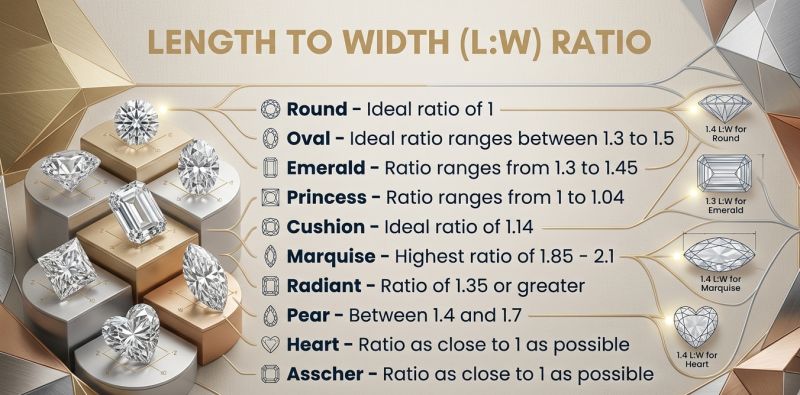
Demand for fancy shapes is not uniform. A clear hierarchy has emerged, defined by rarity, design utility, and consumer preference.

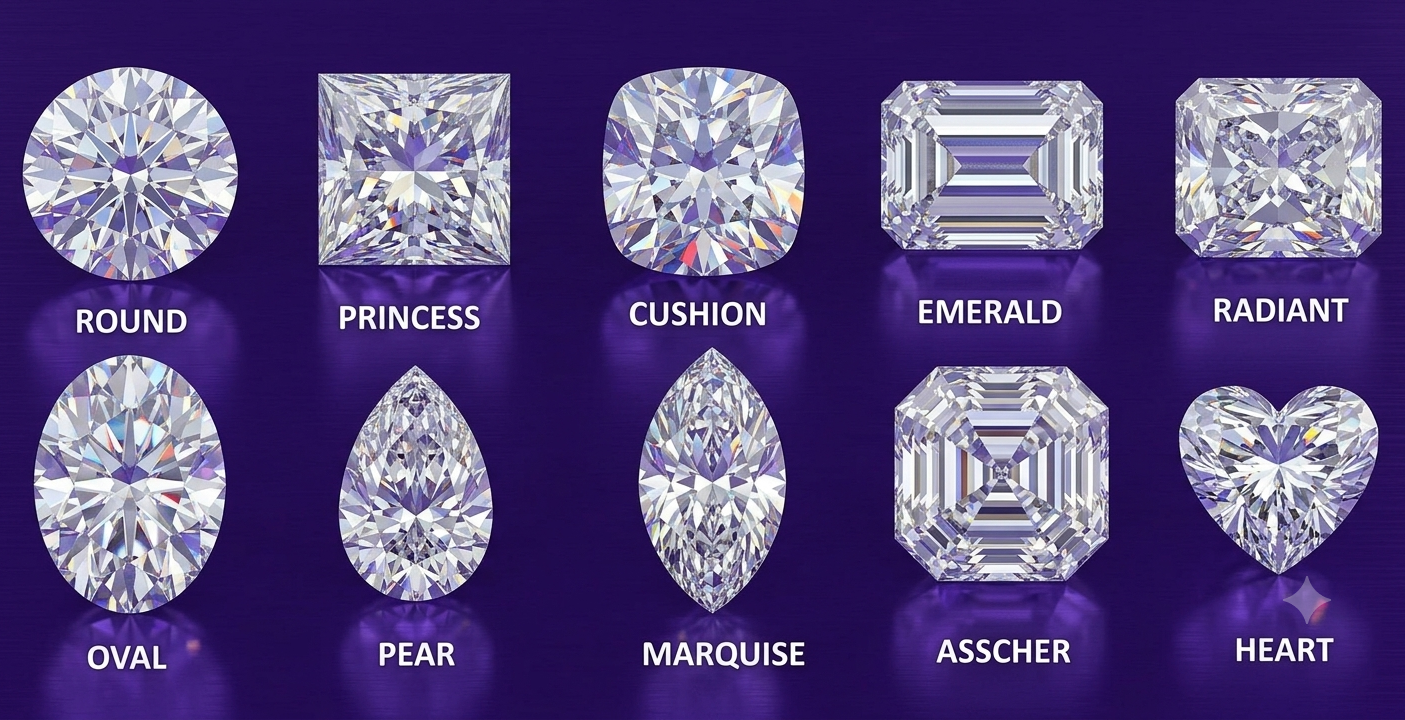
Marquise Cut: The Most Expensive Fancy Shape. The marquise cut has emerged as the premium leader among fancy shapes. High-quality marquises are in extremely short supply, making them the most expensive fancy shape today.

This rarity is not merely a function of demand; marquise diamonds represent only approximately 1.5% of GIA-certified diamonds available for sale globally. Achieving perfect symmetry in a marquise cut is technically challenging, resulting in limited availability and corresponding premium pricing. For those seeking to acquire these rare stones, CaratX's marquise diamond collection offers carefully selected high-quality options.

Long Cushion Cut: The Vintage-Modern Hybrid. The elongated cushion cut is performing exceptionally well across markets. Well-cut long cushions are easy to sell and consistently trade at a 20-25% premium compared to their square counterparts.

This premium reflects not only demand but also the cut's unique appeal combining vintage romance with a modern elongated profile. The popular "crushed ice" brilliance adds to its visual allure. Explore CaratX's cushion cut collection to compare elongated versus square options.

Elongated Oval: The Consistent Market Leader. The oval cut has arguably become the standout shape of the season, particularly in the U.S. retail market. Well-proportioned ovals with excellent symmetry and face-up spread are seeing strong demand in D-I color and VS-SI clarity categories.

Ovals have become a favorite choice for engagement rings, loved for their brilliance and the way they make fingers appear longer and slimmer. Prices for ovals are currently 5-10% higher than for pear-shaped diamonds, demonstrating how preferences continue to evolve among style-conscious buyers.

Browse CaratX's oval cut diamonds to see current availability.

Long Radiant and Emerald Cuts: Rare and Refined. These shapes are rare in well-balanced proportions, commanding premium pricing for high-quality stones. Emerald cuts deliver a refined "hall of mirrors" elegance, while radiant cuts merge that architectural beauty with intense brilliance. Both shapes are experiencing supply constraints in the premium categories.

The Supply Crisis in Premium Fancies -

The demand surge has collided with fundamental supply limitations. According to GIA supply analysis, only 3% of rough diamonds yield quality elongated shapes over 2 carats, creating natural scarcity. This is not merely a matter of rough availability but also of craftsmanship cutting a fancy shape requires greater precision and results in higher wastage, making it harder to produce at scale without compromising brilliance.

The GJEPC (Gem & Jewellery Export Promotion Council) reports there are currently reported shortages of higher-quality 1.5-3.0-carat ovals, pears, and marquises. This has translated into demand for corresponding rough categories such as 5-9-carat white gem goods, which have increased as much as 10% year-to-date 2025.

Well-cut fancy shapes are becoming increasingly difficult to find and are commanding significant premiums. Conversely, fancies with bad proportions have become illiquid, confirming that quality not just shape determines marketability.

The 1-Carat Market -

While the 2-carat-and-above segment garners headlines for its fancy shape dominance, the 1-carat market tells an equally compelling story of shifting buyer priorities. This segment reveals a clear and growing gap between supply and demand that carries important implications for both buyers and sellers.

The global market for diamonds is increasingly digital. CaratX provides access to buyers across 18+ international countries, enabling sellers to reach B2B and B2C customers worldwide. Register as a seller on CaratX to list diamonds and jewelry for international sale.

Quality Differentiation. In a market where buyers are increasingly discerning, third-party certification matters. GIA and AGS reports provide the credibility that premium buyers demand.

Shop natural diamonds with certified grading reports to ensure buyer confidence.

For Buyers: Navigating the New Landscape

For consumers and wholesale buyers, the current market offers both opportunities and challenges:

Value Opportunity in Quality. While premium stones command higher prices, they also offer better liquidity and potential value retention. A well-cut D-F IF-VVS diamond, though expensive, will be easier to resell or upgrade than a poorly cut stone of equivalent carat weight.

Shape Selection. Elongated shapes offer superior face-up appearance per carat, potentially allowing buyers to achieve desired visual impact at lower carat weights. For budget-conscious buyers, this represents genuine value.

Cut Quality Non-Negotiable. Given the market's clear preference for well-cut stones, compromising on cut quality is inadvisable. Poorly cut stones are difficult to resell and may require significant discounts.

Explore Inventory. Shop gemstones on CaratX at competitive prices, with inventory spanning natural diamonds, lab-grown options, and colored gemstones.

Browse our natural diamond collection to compare options across shapes, carat weights, and quality grades.

The Lab-Grown Context -

No analysis of the 2025 diamond market would be complete without acknowledging the lab-grown diamond segment. According to BriteCo's research, by 2025, a 1-carat lab-grown diamond averaged $1,000 or less at retail, compared to approximately $4,200 for a natural 1-carat diamond. Lab-grown diamonds now represent over 45% of U.S. engagement ring sales.

Frequently Asked Questions

Q1: Are elongated fancy shapes just a passing trend, or are they here to stay?

Based on structural factors including limited rough supply for quality elongated shapes (only 3% of rough yields quality elongated stones over 2 carats), changing consumer preferences documented by GIA, and sustained pricing premiums the shift toward elongated fancy shapes appears to be a lasting transformation rather than a temporary phenomenon. The data shows consistent outperformance across multiple quarters and geographic markets.

Q2: Which fancy shape offers the best value for my budget?

Value depends on priorities. For maximum perceived size per carat, ovals and marquises offer excellent face-up appearance. For vintage-inspired aesthetics with a modern twist, elongated cushions provide a compelling option. Radiant cuts merge sparkle with elongated proportions. Browse CaratX's collection to compare pricing across shapes.

Q3: Why is the marquise cut the most expensive fancy shape?

Marquise diamonds are expensive due to a combination of rarity (approximately 1.5% of GIA-certified diamonds available globally), cutting difficulty (achieving perfect symmetry between two pointed ends requires exceptional skill), and high wastage from rough diamonds. These factors converge to create significant supply constraints relative to demand.

Q4: What clarity and color grades should I target for a 1-carat diamond?

Buyer search data shows highest demand for D-F IF-VVS diamonds (premium segment) and G-J VS diamonds (value-quality segment). The optimal choice depends on budget and priorities. For engagement rings where brilliance is paramount, prioritize cut quality over color or clarity. For investment purposes, focus on D-F color with VS clarity or higher.

Q5: How do I identify a well-cut elongated diamond?

Well-cut elongated diamonds exhibit specific characteristics: minimal or no "bow-tie" effect (dark areas across the center), even facet alignment, consistent light return across the stone's surface, and proportions that maximize face-up appearance. For certified stones, review the GIA or AGS report. For non-round shapes, consult a qualified gemologist, as GIA does not assign cut grades to fancy shapes.

Q6: Is now a good time to sell my diamond inventory?

For well-cut elongated shapes in the 2-carat-and-above category, market conditions are favorable due to strong demand and limited supply. For standard rounds under 1.50 carats and poorly cut stones, market conditions are challenging due to oversupply and selective buyer behavior. Register as a seller on CaratX to access international buyers and current market pricing.

Q7: What is the difference between natural and lab-grown diamond market trends?

Natural diamonds command premium pricing based on rarity, geological formation, and long-term value retention. Lab-grown diamonds have captured significant market share (over 45% of U.S. engagement rings) but face declining prices due to oversupply. The trends toward elongated shapes and quality specifications apply to both categories, though natural diamonds show stronger price resilience in premium segments.

Q8: How do I get started selling diamonds internationally?

CaratX provides a platform for selling diamonds and jewelry to buyers across 18+ international countries. Sellers can register for B2B and B2C access, list natural and lab-grown diamonds, and reach global buyers. Detailed pricing information is available here.

Conclusion

The 2025 diamond market represents a fundamental realignment of consumer preferences, pricing dynamics, and inventory valuation. The shift toward elongated fancy shapes in the 2-carat-and-above category reflects a broader cultural movement toward individuality, visible value, and distinctive design. Simultaneously, the growing gap between available inventory and buyer demand in the 1-carat segment underscores the premium that quality commands in an increasingly educated marketplace.

Start selling diamonds in 18+ international countries: www.caratx.com/register

Sellers register on CaratX marketplace to start selling to B2B and B2C buyers: www.caratx.com/register

Sell jewelry internationally through our CaratX seller plan: www.caratx.com/register

Shop gemstones from our CaratX marketplace at unbeatable prices: https://caratx.com/search-results/gemstones

Shop natural diamonds: https://caratx.com/search-results/Natural

More details about our pricing: https://caratx.com/generic-pages/launch-your-products-on-caratx

Follow CaratX for more insightful and educational content on diamond market trends, pricing analysis, and industry developments.

0 Comments

Please login to leave a reply.