
Introduction:
In the world of fine gemstones, where the brilliant round cut has long dominated the engagement ring market, there exists a quiet rebel: the Asscher cut diamond. Connoisseurs and vintage-style enthusiasts prize this square-shaped, step-cut diamond for its perfect symmetry, deep mirror-like reflections, and unmistakable Art Deco elegance.
Unlike brilliant cuts that prioritize fiery sparkle, the Asscher cut focuses on clarity, structure, and geometry. Its unique “hall-of-mirrors” effect creates broad, watery flashes of light rather than the pin-fire scintillation of a round diamond. For those who appreciate architectural precision and understated luxury, the Asscher cut is the ultimate statement.
This guide explores every facet of the Asscher cut diamond from its century-old history and technical anatomy to market value, buying considerations, and its growing presence in custom luxury jewelry. Whether you are a B2B seller looking to stock distinctive inventory or a B2C buyer seeking a non-mainstream engagement ring, this article will equip you with the knowledge to make an informed decision.
A Glimpse into History: The First Patented Diamond Cut
The story of the Asscher cut begins in 1902 in Amsterdam, when master diamond cutter Joseph Asscher of the famed Asscher family perfected a new faceting pattern for a steep, square-cut diamond. This cut was revolutionary: it became the world’s first patented diamond cut, a testament to its unique geometry and optical properties.
The original Asscher cut featured 58 step-cut facets, a small table, and a high crown characteristics that gave it a subtle, elegant brilliance rather than an overt sparkle. It rose to prominence during the Art Deco movement of the 1920s and 1930s, when geometric shapes and clean lines were celebrated in architecture, fashion, and jewelry.
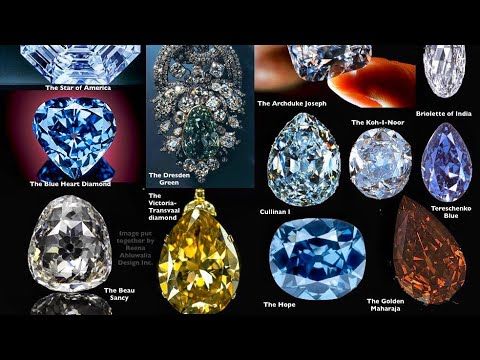
The Asscher family’s legacy extends beyond this patented cut. The Royal Asscher Diamond Company, founded in 1854, was responsible for cutting some of the most famous diamonds in history, including the colossal Cullinan diamond the largest rough diamond ever found, weighing 3,106 carats. The company was later granted royal status by the Queen of the Netherlands, becoming the “Royal Asscher Diamond Company.”
In 2001, nearly a century after the original patent, Joseph Asscher’s great-grand nephews, Edward and Joop Asscher, revolutionized the design once again. They introduced the Royal Asscher Cut, which features up to 74 facets arranged in a more complex pattern to enhance brilliance while maintaining the iconic hall-of-mirrors effect. This modern iteration represents over 170 years of diamond craftsmanship.
The Anatomy of an Asscher Cut Diamond -
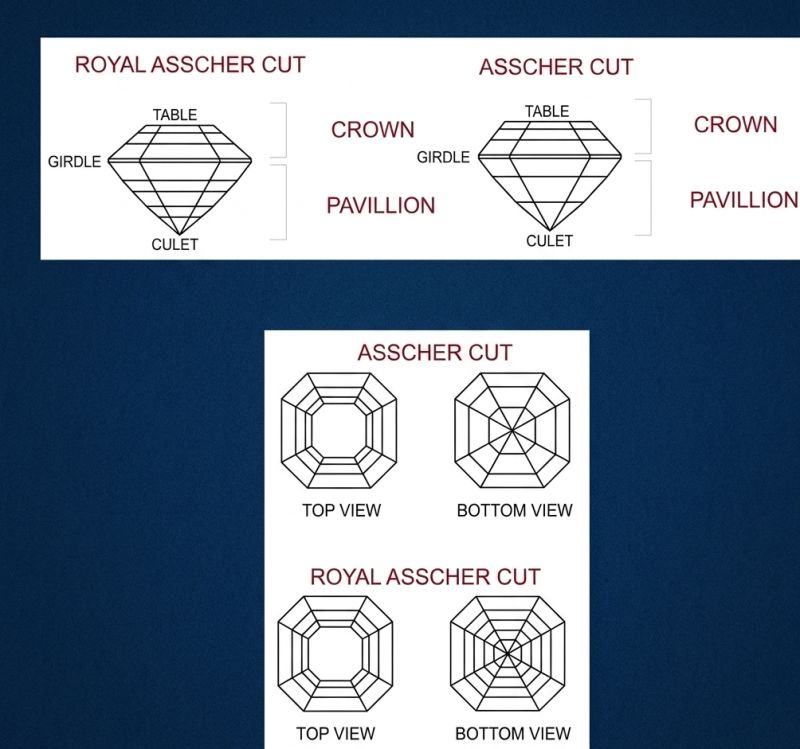
To truly understand the beauty of an Asscher cut, we must dissect its structure layer by layer. The anatomy of any diamond includes the crown, girdle, and pavilion, but the Asscher’s unique proportions and faceting pattern set it apart.
Crown (Top Section) -
The crown is the upper portion of the diamond, extending from the table to the girdle. In an Asscher cut, the crown features:
A large, open table: This flat, topmost facet acts like a window into the stone. Because the table is so expansive, it highlights the diamond’s clarity more than its sparkle.
Step-cut facets: Arranged in concentric rows parallel to the girdle, these facets create broad, mirror-like flashes of light rather than the intense sparkle of brilliant cuts. This is where the “hall of mirrors” begins.
A high crown angle: The steep crown contributes to the diamond’s depth and layered visual effect.
Girdle (Middle Edge) -
The girdle is the outer edge that separates the crown from the pavilion. In well-cut Asscher diamonds:
Medium girdle thickness is ideal for durability without adding unnecessary weight.
The girdle helps hold the diamond securely in place when set in a ring or pendant.
Some Asscher cuts feature a faceted girdle, which can enhance light performance.
Pavilion (Bottom Section) -
The pavilion is the lower part of the diamond, responsible for reflecting light back through the crown.
Deep pavilion proportions: Unlike shallower cuts, the Asscher’s depth is crucial for creating its signature layered reflections.
Step-cut facets on the pavilion: These work in concert with the crown facets to bounce light in a controlled, geometric pattern.
Large culet: Many antique Asscher cuts have a noticeable culet (the tiny facet at the bottom tip), which adds to the vintage aesthetic.
Facet Structure -
The standard Asscher cut contains approximately 58 facets, the same number as a round brilliant diamond but arranged completely differently. The Royal Asscher cut boasts up to 74 facets, adding an extra layer of brilliance without sacrificing the step-cut’s signature broad flashes.
Because the facets are large and open, any inclusions or color tint within the diamond will be more visible. This is why clarity is paramount when selecting an Asscher cut.
The Hall-of-Mirrors Effect:
The most captivating feature of an Asscher cut diamond is the “hall-of-mirrors” effect an optical illusion created by the interaction of its step-cut facets, deep pavilion, and high crown.
Imagine looking into a mirrored room: you see infinite reflections of yourself receding into the distance. In an Asscher cut, light enters through the large table, travels down into the deep pavilion, and reflects back in concentric, step-like patterns. The result is a series of nested squares and broad, watery flashes of light that seem to have depth and dimension.
This effect is distinctly different from the “fire” (dispersion of light into rainbow colors) of a round brilliant cut. While a brilliant cut dazzles with many small, colorful sparkles, an Asscher cut mesmerizes with fewer, larger, mirror-like flashes. It is a quieter, more architectural kind of beauty.
From a gemological perspective, the hall-of-mirrors effect is achieved through precise optical engineering. The angles of the step-cut facets must be perfectly aligned to create the illusion of depth. Any deviation in symmetry or proportion will diminish the effect, making cut quality absolutely critical in an Asscher diamond.
Clarity and Color: Why VS2+ is Non-Negotiable
When it comes to Asscher cut diamonds, clarity is king. The large, open table and step-cut facets act like a magnifying glass, making inclusions far more visible than they would be in a brilliant cut diamond. A small crystal or feather that would be hidden in a round diamond can become a glaring imperfection in an Asscher.
Industry experts recommend the following clarity guidelines:
VS2 (Very Slightly Included 2) or higher for optimal eye-clean appearance.
VS1 or better for larger stones (2 carats and above), as inclusions become more pronounced with size.
SI clarity is generally not recommended for Asscher cuts, as inclusions are typically visible to the naked eye.
Color is also more visible in Asscher cuts compared to brilliant shapes. The open center of the stone allows body color to show through more easily. For a truly colorless appearance, aim for G color or higher. However, some buyers intentionally choose lower color grades (J or K) to enhance the vintage, warm aesthetic of an antique Asscher cut.
From a certification standpoint, always insist on a report from a reputable laboratory such as the Gemological Institute of America (GIA) or the American Gem Society (AGS). The GIA, the world’s foremost authority on diamond grading, provides detailed reports that outline the precise qualities of your Asscher diamond. The American Gem Society (AGS) also offers rigorous grading and consumer protection resources.
Market Insights: Pricing, Rarity, and Investment Potential
Market Share and Pricing
Asscher cut diamonds occupy a niche segment of the diamond market, accounting for less than 3–5% of total diamond sales. This rarity is part of their appeal: owning an Asscher cut signals a preference for understated elegance over mainstream choices.
From a pricing perspective, Asscher cuts typically cost 5–15% less than comparable round brilliant diamonds. In some cases, the discount can be even steeper up to 25–35% less than rounds, depending on quality and market conditions. This price advantage is due to several factors:
Cutting efficiency: Asscher cuts retain more weight from the rough diamond compared to rounds, reducing manufacturing costs.
Lower demand: While growing, demand for Asscher cuts remains below that for rounds, ovals, and cushions.
However, high-quality Asscher diamonds particularly those with exceptional symmetry, VS1+ clarity, and GIA certification command strong value and can appreciate over time, especially in the vintage and custom jewelry markets.
Asscher Cut vs. Emerald Cut: A Detailed Comparison
One of the most common questions buyers ask is: “How does an Asscher cut differ from an emerald cut?” While both are step cuts with large tables and open facets, the differences are significant:
Asscher Cut vs Emerald Cut Diamonds – Structured Comparison
1. Shape
Asscher Cut: Square shape with a length-to-width ratio of 1.00–1.05.
Emerald Cut: Rectangular shape with a ratio typically above 1.30.
2. Corners
Asscher Cut: Cropped corners, creating an octagonal appearance.
Emerald Cut: Also has cut corners, but appears more elongated.
3. Facets
Asscher Cut: Standard: 58 facets Royal Asscher: 74 facets.
Emerald Cut: Typically 50–58 facets.
4. Hall-of-Mirrors Effect
Asscher Cut: Strong and highly pronounced, forming concentric square reflections.
Emerald Cut: More subtle and linear reflections.
5. Face-Up Size
Asscher Cut: Appears smaller per carat due to deeper cut.
Emerald Cut: Appears larger per carat due to wider spread.
6. Best For
Asscher Cut: Ideal for vintage, Art Deco, and geometric designs.
Emerald Cut: Best suited for modern, minimalist styles and gives an elongated finger appearance.
Buying Guide: How to Select the Perfect Asscher Cut Diamond
1. Prioritize Clarity (VS2 minimum)
Because the step-cut design magnifies inclusions, never compromise on clarity. VS2 is the entry point for an eye-clean Asscher. For stones over 2 carats, aim for VS1 or higher.
2. Choose Color Wisely (G or better recommended)
The open table reveals body color. For a modern, colorless look, select G or higher. If you prefer a warm, vintage aesthetic, J or K can be acceptable, but be aware that warmth will be noticeable.
3. Insist on GIA or AGS Certification
Never buy an Asscher cut without an independent laboratory report. The Gemological Institute of America (GIA) and American Gem Society (AGS) are the gold standards for diamond grading.
4. Evaluate the Hall-of-Mirrors Effect
When viewing an Asscher cut in person or via high-resolution video, look for:
Clear, concentric squares that appear to recede into the stone.
Broad, mirror-like flashes rather than pin-fire sparkle.
No dead spots or dark areas in the center.
5. Consider the Setting
Asscher cuts shine best in settings that complement their geometric nature:
Solitaire settings in platinum or white gold emphasize the stone’s clean lines.
Halo settings with small round diamonds can add brilliance while protecting the cropped corners.
Bezel settings offer a modern, secure fit and highlight the octagonal shape.
Three-stone settings with baguette side stones create a classic, Art Deco-inspired look.
6. Understand Carat Weight vs. Face-Up Size -
Because Asscher cuts are deep, they look smaller face-up than rounds of the same carat weight. A 2-carat Asscher typically measures around 7mm x 7mm, while a 2-carat round measures approximately 8mm in diameter. If finger coverage is important, consider going up in carat weight or choosing a setting that adds visual size.
Caring for Your Asscher Cut Diamond
Asscher cut diamonds, like all diamonds, are remarkably durable (10 on the Mohs hardness scale). However, the large, open table and step facets can show dirt, oil, and fingerprints more readily than brilliant cuts. To maintain the hall-of-mirrors effect:
Clean regularly using warm water, mild dish soap, and a soft toothbrush.
Avoid ultrasonic cleaners if the diamond has internal fractures or inclusions.
Store separately from other jewelry to prevent scratching.
Have the setting inspected annually by a professional jeweler to ensure prongs are secure, especially given the cropped corners.
Frequently Asked Questions (FAQ)
Is an Asscher cut diamond a good investment?
Yes, when selected carefully. Asscher cuts with high clarity (VS1+), GIA certification, and exceptional symmetry tend to hold their value well. Their rarity (less than 5% of the market) and growing demand in the custom and vintage jewelry sectors contribute to their investment potential.
Why does my Asscher cut look dark in some lighting?
Asscher cuts rely on precise angles to create the hall-of-mirrors effect. In low or direct overhead lighting, the stone may appear darker because light is not entering at optimal angles. This is normal for step-cut diamonds. View the diamond in diffuse, natural light to see its true beauty.
Can I get an Asscher cut in lab-grown diamond?
Absolutely. Lab-grown Asscher cuts are widely available and offer the same geometric beauty at a fraction of the price. A 2-carat VS2 H-color lab-grown Asscher typically costs $3,000–$5,000, compared to $15,000–$25,000 for a natural equivalent.
What is the difference between an Asscher cut and a square emerald cut?
While often used interchangeably, the terms have subtle distinctions. An Asscher cut traditionally has a higher crown, deeper pavilion, and smaller table, creating a more pronounced hall-of-mirrors effect. A square emerald cut is typically cut with a larger table and shallower pavilion, resulting in a more modern, understated look.
Are Asscher cut diamonds more expensive than round brilliants?
No, Asscher cuts are generally less expensive than round brilliants of comparable carat, color, and clarity typically 5–35% less, depending on quality and market conditions.
Where to Buy and Sell Asscher Cut Diamonds -
For those looking to purchase or sell Asscher cut diamonds, CaratX offers a global marketplace connecting B2B and B2C buyers with verified sellers. Whether you are a retailer seeking distinctive inventory or a consumer searching for the perfect vintage-inspired diamond, CaratX provides access to a curated selection of natural and lab-grown Asscher cuts.
Shop Natural Diamonds on CaratX
Sellers: Register to Start Selling to 18+ International Buyers
Learn More About CaratX Seller Plans
View Pricing and Launch Your Products on CaratX
CaratX also offers an extensive Diamond Guide and Education section to help buyers understand the 4Cs and make informed decisions.
For daily education on diamonds, gemstones, and jewelry trends, follow CaratX on social media and subscribe to our newsletter. Whether you are a seller looking to expand into 18+ international markets or a buyer seeking the perfect stone, CaratX is your trusted partner.
Start selling diamonds in 18+ international countries – Register as a Seller
Shop natural diamonds and gemstones at unbeatable prices – Visit CaratX Marketplace
Learn about our pricing and seller plans – View Pricing Details