
Introduction: Why Rubies Command the Highest Prices in Colored Gemstones
Throughout human history, few gemstones have captured the imagination quite like the ruby. Known as the "King of Gemstones" in ancient Sanskrit texts, rubies have adorned the crowns of emperors, the jewelry of royalty, and the collections of discerning investors for over two millennia.
Today, fine-quality rubies remain among the rarest and most valuable objects on Earth with top specimens selling for more per carat than all but the most exceptional diamonds.
The ruby's significance extends far beyond its beauty. In Hinduism, rubies were believed to grant their wearers safety and harmony. Burmese warriors implanted rubies into their skin to make them invincible in battle. Medieval Europeans believed rubies could predict misfortune by darkening in color. This mystical heritage, combined with extreme geological rarity, makes rubies one of the most fascinating subjects in all of gemology.
At CaratX, we've built the world's most transparent marketplace for natural diamonds and colored gemstones, connecting discerning buyers with verified, high-quality gems from across the globe.
The Geological Marvel: How Rubies Form
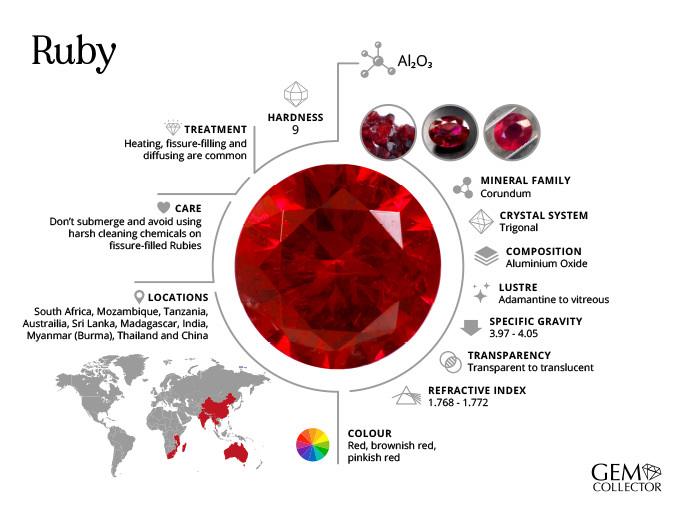
Before diving into quality factors, understanding how rubies form provides crucial context for their rarity. Rubies are the red variety of the mineral corundum (aluminum oxide), with chromium causing the red color. The presence of chromium creates tremendous stress in the crystal structure, making large, clean ruby crystals extraordinarily rare.
According to the Gemological Institute of America (GIA) , rubies form under specific metamorphic conditions that occur in only a handful of locations worldwide. The most famous sources include:
Myanmar (Burma) : Produces the finest "pigeon's blood" rubies from the Mogok Stone Tract
Mozambique: Currently the world's most productive source of fine rubies
Thailand: Known for darker, iron-rich rubies
Sri Lanka: Produces lighter, pinkish rubies
Madagascar: Emerging source with Burmese-quality potential
The International Gem Society (IGS) notes that ruby deposits are approximately 1/100th as common as diamond deposits, explaining why fine rubies command such extraordinary prices.
The Four Cs of Ruby Quality:
Color: The Single Most Important Quality Factor
When gemologists evaluate rubies, color accounts for 50-60% of the stone's value. The ideal ruby color is a vivid, slightly purplish red with medium to medium-dark tone and strong saturation, what the trade calls "pigeon's blood red."
Understanding Pigeon's Blood Ruby
The term "pigeon's blood" originated in the Mogok mines of Myanmar and refers to the richest, most vibrant red imaginable.
A pure red hue with the slightest hint of blue
Strong red fluorescence under UV light
No modifying colors (brown or gray) when viewed face-up
Exceptional color uniformity
Less than 1% of all rubies mined worldwide qualify for the pigeon's blood designation, making them among the rarest of all gemstones.
Color Grading Factors -
Hue: The primary impression of color. Rubies range from orange-red to purplish-red, with pure red commanding the highest premiums.
Tone: The lightness or darkness of the stone. Rubies that are too dark appear blackish; those too light are classified as pink sapphires rather than rubies.
Saturation: The intensity or purity of color. The most valuable rubies exhibit "vivid" saturation, intense color without any brownish or grayish masking.
Shop premium color rubies at CaratX
Clarity: Understanding Ruby Inclusions
Unlike diamonds, where clarity is paramount, rubies are expected to contain inclusions. In fact, completely flawless rubies are virtually nonexistent and when they do appear, they're almost certainly synthetic.
Types of Ruby Inclusions -
Silk: Fine rutile needles that can create a soft, velvety appearance. When properly oriented, silk can actually enhance a ruby's beauty by scattering light and creating a softer, more desirable look.
Healing Fingerprints: Fluid-filled cavities that resemble human fingerprints, indicating where the crystal healed after fracturing.
Crystal Inclusions: Small crystals of other minerals trapped during formation.
The "Sleepy" Phenomenon -
Some of the most valuable Burmese rubies exhibit a slightly hazy or "sleepy" appearance caused by dense silk. This phenomenon, prized by connoisseurs, creates an internal glow that distinguishes fine rubies from ordinary ones.
Cut:
Ruby cutting presents unique challenges. Because rough ruby is so valuable, cutters must balance beauty against weight retention. Unlike diamonds, which have standardized cuts, rubies are cut to preserve as much weight as possible while achieving optimal color.
Key Cut Considerations -
Proportions: Well-cut rubies return light evenly across the surface, creating uniform color and brightness. Poorly cut rubies may have "windows" (areas where light passes through without reflecting) or "extinction" (dark, lifeless areas).
Symmetry: The facets should align properly, and the outline should be balanced.
Polish: Fine polishing enhances luster and allows light to enter and exit properly.
View expertly cut ruby jewelry at CaratX
Carat Weight:
Rubies exhibit the steepest price-to-size curve of any colored gemstone. While a 1-carat fine ruby might command $10,000-15,000 per carat, a 3-carat stone of equivalent quality can easily exceed $100,000 per carat. a tenfold increase for triple the size.
The Rarity Factor Explained
The gem-quality ruby crystals large enough to cut 2+ carat stones are geologically anomalous. For every 1,000 carats of rough ruby mined, only about 1 carat emerges as fine gem material. For stones over 5 carats, the ratio becomes even more extreme.
Historical auction records from Christie's and Sotheby's demonstrate this rarity premium:
The "Sunrise Ruby" (25.59 carats) sold for $30.3 million over $1.1 million per carat
The "Graff Ruby" (8.62 carats) sold for $8.6 million—$1 million per carat
Fine 3-5 carat Burmese rubies regularly exceed $200,000 per carat at auction
Explore ruby carat weights at CaratX
Treatment and Enhancement:
Perhaps no factor affects ruby value more significantly than treatment status. The vast majority of rubies on the market today undergo some form of enhancement, with heat treatment being the most common and accepted.
Heat Treatment
Approximately 95-98% of all rubies are heat-treated to improve color and clarity. This ancient practice, documented as far back as the Roman Empire, involves heating stones to temperatures around 1,600-1,800°C to:
Dissolve rutile silk for improved transparency
Heal internal fractures
Improve color uniformity
Reduce purplish or brownish modifiers
The FGA (Gem-A) recognizes heat treatment as an accepted practice, though it significantly impacts value compared to untreated stones.
Beryllium Diffusion
A more recent innovation, beryllium diffusion introduces beryllium at extreme temperatures to create or enhance red color in pale corundum. Unlike simple heat treatment, diffusion adds foreign elements and is considered a more significant enhancement.
Lead Glass Filling
Some lower-quality rubies are filled with lead glass to improve apparent clarity. These stones are significantly less valuable and less durable than untreated or heated rubies. The Federal Trade Commission (FTC) has specific guidelines requiring disclosure of glass filling in rubies.
Untreated Rubies:
Less than 1% of rubies on the market are completely untreated. This extreme rarity explains why untreated rubies command premiums of 50-200% over comparable heated stones.
Geographic Origin: The Terroir of Rubies
Like fine wine, rubies from certain locations command premium prices due to their unique characteristics and historical prestige.
Myanmar (Burma)
The most coveted origin, Burmese rubies from Mogok exhibit:
Intense fluorescence creating an inner glow
Dense, fine silk producing velvety appearance
The finest pigeon's blood color
Premiums of 300-500% over comparable stones from other origins
Mozambique
Since 2009, Mozambique has emerged as the world's most important ruby source:
Colors rivaling Burmese quality
Generally cleaner than Burmese stones
Limited fluorescence (differentiating them from Burma)
More affordable than Burmese, though prices rising rapidly
Thailand/Cambodia
Historically significant sources producing:
Darker, more brownish-red stones
High iron content reducing fluorescence
Often heavily treated
More affordable option for commercial jewelry
Sri Lanka
Produces lighter, pinkish stones that:
Bridge the gap between ruby and pink sapphire
Often exhibit exceptional clarity
More abundant in larger sizes
Popular for delicate, feminine jewelry designs
Browse rubies by origin at CaratX
Ruby Certification: Why Laboratory Reports Matter
Given the extreme value differences based on origin, treatment, and quality factors, independent laboratory certification is essential when purchasing fine rubies.
Leading Gemological Laboratories -
GIA (Gemological Institute of America) : The most widely recognized laboratory worldwide www.gia.edu
SSEF (Swiss Gemmological Institute) : Premier European lab, especially for colored stones www.ssef.ch
Gübelin Gem Lab: Legendary Swiss lab with unparalleled expertise in origin determination www.gubelin.com
AGL (American Gemological Laboratories) : Leading US lab for colored stones www.aglgemlab.com
GRS (GemResearch Swisslab) : Widely recognized for colored stone reports www.grslab.com
What Laboratory Reports Should Include
Identification: Natural ruby vs. synthetic or simulant
Weight and measurements: Precise dimensions
Color description: Including pigeon's blood designation if applicable
Clarity characteristics: Type and extent of inclusions
Cut grade: Proportions and finish quality
Treatment analysis: Heat, diffusion, or other enhancements
Origin determination: Geographic source if identifiable
Comment section: Any notable characteristics
All CaratX rubies include laboratory certification
Synthetic and Treated Rubies:
Not every ruby purchase needs to be a natural, untreated Burma stone. Understanding the full spectrum of ruby products helps buyers make informed decisions at every price point.
Synthetic Rubies
First successfully created in 1902 by Auguste Verneuil, synthetic rubies have identical chemical composition and physical properties to natural rubies but are manufactured in laboratories.
Growth structure analysis
Trace element chemistry
Inclusion characteristics
Synthetic rubies offer an affordable entry point for those who love ruby's beauty but don't require natural origin.
Composite Rubies -
Doublets and triplets combine thin slices of natural ruby with other materials to create larger-looking stones. These should always be disclosed and sell for a fraction of solid natural ruby prices.
Imitation Rubies -
Materials like garnet, spinel, or glass that resemble ruby but have different chemical compositions. These are not rubies and should be clearly identified as imitations.
Ruby Jewelry:
Best Settings for Rubies
With hardness of 9 on the Mohs scale, rubies are exceptionally durable second only to diamonds. However, their inclusions can make them vulnerable to hard blows. Recommended settings include:
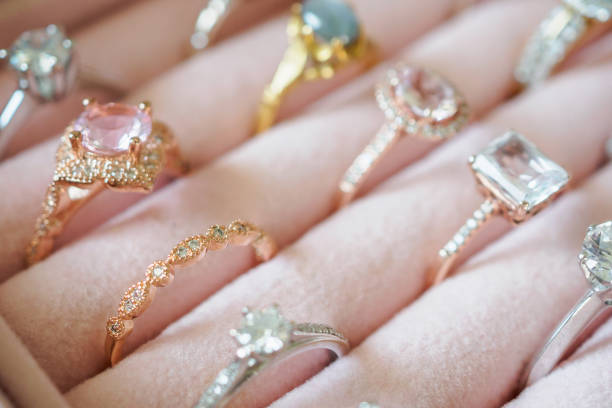
Bezel settings: Maximum protection, ideal for rings Prong settings: Allow maximum light exposure, require secure prongs Halo settings: Diamonds or other gems surrounding the ruby enhance perceived size Three-stone settings: Classic engagement ring style
Ruby Jewelry Care
The British Museum recommends:
Ultrasonic cleaning only for untreated or heated rubies (never for fracture-filled stones)
Warm soapy water and soft brush for all rubies
Avoid harsh chemicals and extreme temperature changes
Professional inspection annually for prong security
Store separately from harder gems (diamonds) to prevent scratching
Explore ruby jewelry at CaratX
The Ruby Market:
The demand for fine rubies has grown over 30% in the last decade, according to industry data. Several factors drive this growth:
Emerging Market Demand
Growing wealth in Asia, particularly China and Vietnam, has created new demand for colored gemstones.
Supply Constraints -
Myanmar's political situation and declining production from traditional sources have constricted supply. Mozambique, while productive, cannot match the quality of classic Burmese material indefinitely.
Record Auction Prices
Recent auction results demonstrate ruby's investment potential:
2015: Sunrise Ruby (25.59 ct) - $30.3 million
2020: Estrela de FURA (55.22 ct) - $34.8 million (rough)
2023: 8.18 ct Burmese ruby - $5.2 million
Invest in rubies through CaratX
For Sellers
Gem and jewelry businesses can reach buyers worldwide through our platform: Register as a seller on CaratX
Wholesale Opportunities
Volume buyers can access competitive pricing through our B2B marketplace: Explore wholesale options
Pricing Plans
Transparent pricing with no hidden fees: View CaratX pricing plans
Expert Tips for Ruby Buyers -
What to Look For
Color first: Prioritize vivid red over size or clarity
Check treatment: Understand what you're buying
Verify origin: Geographic origin significantly impacts value
Review certification: Always buy certified stones
Compare pricing: Research comparable stones before purchasing
Frequently Asked Questions About Rubies
Q: What is the difference between a ruby and a pink sapphire?
A: Technically, both are corundum. The distinction is color saturation. Most laboratories classify stones with strong, medium-dark red saturation as rubies, while lighter stones are pink sapphires. However, boundaries vary between laboratories.
Q: Are lab-created rubies real rubies?
A: Yes, chemically and physically, they are identical to natural rubies. However, they lack the rarity and investment value of natural stones. They're excellent for fashion jewelry but not considered collectible.
Q: How can I tell if my ruby is treated?
A: Without laboratory testing, you cannot reliably determine treatment. Always obtain independent certification for significant purchases. Even experienced gemologists require microscopic analysis to identify most treatments.
Q: What makes Burmese rubies so special?
A: The unique geological conditions in Mogok produce rubies with exceptional fluorescence and fine silk, creating an inner glow unmatched by other sources. Their historical significance and extreme rarity also contribute to their premium status.
Q: How should I clean my ruby jewelry?
A: Warm soapy water and a soft brush is safest for all rubies. Ultrasonic cleaners are safe for untreated and heated rubies but may damage fracture-filled stones. Avoid steam cleaners for any treated ruby.
Q: Are rubies good for engagement rings?
A: Excellent! With hardness 9, rubies are durable enough for daily wear. Their rich red color symbolizes passion and commitment. Many couples choose ruby engagement rings as distinctive alternatives to diamonds.
Q: What is the most expensive ruby ever sold?
A: The Sunrise Ruby, a 25.59-carat Burmese pigeon's blood ruby set by Cartier, sold for $30.3 million at Sotheby's Geneva in 2015—the current world record for any colored gemstone.
Q: Can rubies be worn every day?
A: Yes, rubies are durable enough for daily wear. However, like all fine jewelry, they should be removed during heavy physical activity, cleaning with harsh chemicals, or sleeping.
Conclusion:
From the mines of Mogok to the world's finest auction houses, rubies have maintained their position as the most coveted of colored gemstones for over two millennia. Their combination of intense color, extreme rarity, and remarkable durability creates a value proposition that transcends fashion and economic cycles.
Whether you're purchasing a ruby for its beauty, its investment potential, or its symbolic meaning, understanding the factors that determine quality ensures you'll make an informed decision. At CaratX , we're committed to providing the transparency, verification, and security that fine gemstone purchases deserve.
Start your ruby journey at CaratX today
Sellers: Join our global marketplace