

The Ultimate Guide to Wedding Band Styles: From Classic Bands to Modern Masterpieces
Home
News And Media The Ultimate Guide to Wedding Band Styles: From Classic Bands to Modern Masterpieces SHOP NOWHome
News And Media The Ultimate Guide to Wedding Band Styles: From Classic Bands to Modern Masterpieces SHOP NOWApr, 17, 2026 by Archit Mohanty 0 Comments
The journey of choosing a wedding band is deeply personal. For centuries, this unbroken circle has served as the ultimate symbol of eternal love and commitment, a tradition believed to date back to ancient Egypt around 6,000 years ago. The circular form, with no beginning or end, represents infinity, while the ring finger of the left hand was thought by the Romans to have a direct vein to the heart, known as the Vena Amoris, or "vein of love".
This guide explores the most popular wedding band types, delves into the crucial aspects of diamond quality, and highlights the latest market trends, empowering you to make an informed and meaningful choice.
The global bridal jewelry market is a significant driver of the industry, valued at roughly $90 billion, with wedding-related purchases remaining the largest single source of demand. Within this vast market, wedding bands represent a substantial share, with estimates suggesting they make up approximately 20–25% of total jewelry sales globally.
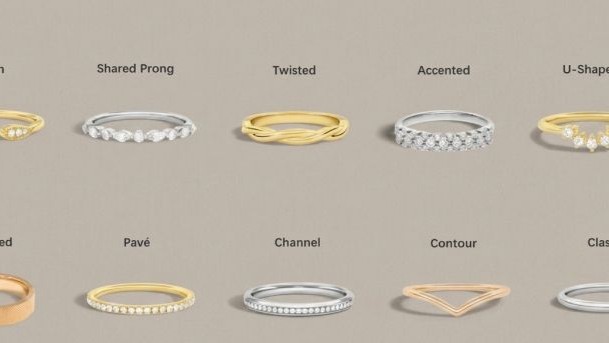
The classic band is defined by its simple, clean lines. It is typically a plain metal ring with a comfortable fit, often featuring a rounded or flat profile. This style remains the most chosen globally, celebrated for its understated elegance and incredible versatility. It serves as the perfect foundation for a wedding set, effortlessly complementing any engagement ring without overshadowing it.
Best For: Minimalists, traditionalists, and anyone who values a piece that will never go out of style.
Metal Options: Available in any metal, including platinum, yellow gold, white gold, rose gold, and palladium.
Browse our collection of Classic Wedding Bands for timeless designs.
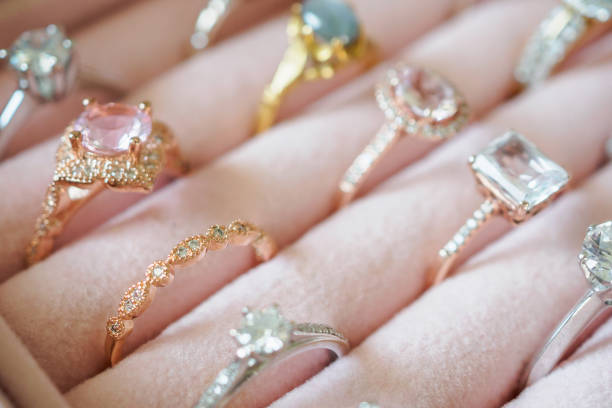
A pave band features a surface that appears to be "paved" with diamonds. Tiny gemstones are set closely together with minimal metal showing, held in place by tiny beads or prongs. The result is a continuous line of brilliance that maximizes the ring's sparkle.
Popularity: Pave details are incredibly popular, featured in an estimated 30–35% of modern bands. They are especially favored for adding a touch of glamour to a classic silhouette.
Best For: Those who love diamond sparkle and want a ring that catches the light from every angle.
The small diamonds in a pave setting can collect lotion or dirt, so regular professional cleaning is recommended to maintain their brilliance.
In a channel set band, diamonds are nestled between two continuous metal walls, creating a smooth, sleek "channel" of stones. This setting offers a high level of protection for the diamonds as the metal walls shield them from impact, making it one of the most secure settings for an active lifestyle.
Best For: Active individuals, those who work with their hands, or anyone who wants a modern, streamlined look with diamonds.
Key Advantage: The smooth edges of a channel set band are less likely to snag on clothing or scratch surfaces compared to prong settings.
The shared prong setting is a design where each diamond is held between two prongs that are "shared" with the adjacent stones. This exposes more of each diamond's surface area, allowing maximum light to enter from all sides. The result is exceptional brilliance and fire, as the diamonds appear to float in a continuous, unbroken line of light.
Best For: Anyone seeking the brightest possible diamond wedding band.
Caution: While beautiful, shared prongs offer less metal-to-diamond contact, so prongs may wear down over time and require professional inspection to ensure stones remain secure.
The twisted band features two or more strands of metal intertwined. This elegant design is rich with symbolism, representing the union of two individuals, their families, and their lives coming together as one. The strands can be made of the same metal for a seamless look or different metals (e.g., rose gold and white gold) for a striking contrast.
Best For: Couples who appreciate symbolic design and want a band that tells a story of connection.
Variations: The twist can be subtle and tight or bold and loose, and it can be combined with pave diamonds along one or both strands for added sparkle.
An engagement ring often has a unique shape a high-set center stone, a halo, or a three-stone design. A contour band is specifically curved to match the profile of a particular engagement ring, allowing the two rings to sit flush against each other without a gap. This ensures a seamless, elegant stack.
Best For: Anyone with a non-traditional engagement ring that a straight band won't fit against.
Customization: For a completely perfect fit, contour bands are often custom-made to match the exact specifications of the engagement ring.
The open band is a contemporary design where the metal band does not fully close; it has a small gap or opening, usually on the top or bottom. This creates a modern, architectural look. The open ends can be finished with small accent stones, or the band can be left completely plain for a stark, minimalist effect.
Trend Status: Open bands are a key part of a larger shift toward freedom and style in wedding ring trends.
Best For: Modernists and minimalists looking for a unique, fashion-forward piece. They are also incredibly stackable and customizable, making them a dream for layering or adding personal flair.
A U-shaped band features a concave, U-shaped groove cut into the metal, where diamonds are set. This unique shape allows for better light reflection from all angles, making the diamonds appear larger and more brilliant than in a standard channel setting.
Best For: Those who want the security of a channel-like setting but with enhanced brilliance and a unique profile.
Distinctive Feature: The U-shape creates a softer, more rounded look on the interior of the ring, which can be more comfortable for some wearers.
Knurled bands feature a textured surface, often created by a machine process that presses a cross-hatch or diamond pattern into the metal. This not only creates a visually interesting, industrial look but also makes the ring exceptionally durable and resistant to showing scratches.
Best For: Those who prefer a non-traditional, rugged aesthetic, particularly popular for men's wedding bands.
Practical Benefit: The textured surface provides a better grip, preventing the ring from slipping around on the finger.
An accented band is a broad category that includes any band with small diamonds or design highlights that add elegance without being fully covered in stones. This could be a band with a single diamond, a small cluster, or a pattern of alternating stones and metal. The goal is balanced, understated sparkle.
Best For: Someone who wants a touch of diamond brilliance but prefers a more subtle look than a full pave or shared-prong band.
Versatility: This style works beautifully as a standalone piece or as a stackable ring to be worn with other bands.
Understanding the quality of the diamonds and the properties of the metal in your wedding band is essential for making a wise investment.
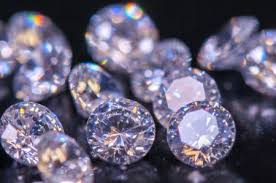
The Gemological Institute of America (GIA), the world's foremost authority on diamonds, developed the "4Cs" (Color, Clarity, Cut, and Carat Weight) as a universal standard for assessing diamond quality. A GIA Diamond Grading Report provides the most trusted analysis, verifying a diamond's quality with an internationally recognized, non-profit organization. When shopping, always look for a certificate from a reputable lab like the GIA.
Cut: This is the most important of the 4Cs. A diamond's cut grade determines its brilliance, fire, and scintillation (sparkle). The GIA evaluates cut on a scale from Excellent to Poor. An Excellent cut diamond will be exceptionally bright.
Clarity: This measures the absence of internal inclusions or external blemishes. The GIA clarity scale ranges from Flawless (FL) to Included (I3). The "Very Slightly Included" (VS1 and VS2) and "Slightly Included" (SI1 and SI2) grades offer the best value. An SI1 diamond may appear "eye-clean" (no visible flaws to the naked eye) to up to 20% of observers.
Color: The GIA color scale for natural diamonds grades from D (colorless) to Z (light yellow or brown). Colorless diamonds (D-F) are the rarest and most valuable, but near-colorless (G-J) diamonds offer exceptional beauty and value, as they appear white to most untrained eyes when set in a ring.
Carat Weight: This refers to the diamond's weight, not its size. Two diamonds of the same carat weight can have very different values depending on their cut, color, and clarity.
The metal you choose for your wedding band will impact its appearance, durability, and long-term maintenance. The GIA provides excellent resources on this topic, highlighting that platinum is an excellent choice for engagement and wedding rings due to its density and strength. The Responsible Jewellery Council (RJC) also offers standards for ethical sourcing.
Platinum: A naturally white metal, platinum is the most durable choice for daily wear. It is dense, hypoallergenic, and develops a rich, natural patina over time. It does not require replating, making it a low-maintenance, heirloom-quality choice.
Gold (Yellow, White, Rose): Gold is a classic choice but is naturally soft, so it is alloyed with other metals for durability. Purity is measured in karats (14K, 18K). 18K gold is softer and more prone to scratches. White gold is typically plated with rhodium to achieve its bright white finish and will require replating every few years.
Palladium: A member of the platinum family, palladium is a naturally white, lightweight, and hypoallergenic metal. It offers outstanding durability at a more affordable price point than platinum. It is an excellent, low-maintenance alternative to white gold or platinum.
The wedding band market is dynamic and evolving, with new preferences shaping the industry.
Customization: The demand for custom and unique bands is growing fast. A 2025 study revealed that New York ranks as the seventh most enthusiastic state for personalized wedding bands. Couples are increasingly moving away from "off-the-shelf" rings, seeking pieces that reflect their personal style.
Minimalist and Stackable Designs: Minimalist ring stacks have emerged as a defining trend, characterized by thin, low-profile bands often made from recycled metals and conflict-free stones. This approach emphasizes subtlety, layering, and customization.
Matching Bands: Around 60% of couples now choose matching or coordinated wedding bands, a testament to the enduring appeal of shared symbolism.
CaratX is more than just a marketplace; it's a ecosystem for buying and selling diamonds, gemstones, and finished jewelry. Whether you are a retailer looking to expand your inventory, a jeweler seeking a global platform, or a consumer searching for the perfect stone, CaratX provides the tools and connections you need.
For Sellers: CaratX provides a powerful platform to sell diamonds and jewelry internationally. With access to buyers in over 18 countries, you can expand your reach far beyond local markets. Sellers can register on the CaratX marketplace here to start selling to both B2B and B2C buyers.
For Buyers: CaratX offers a vast inventory of natural diamonds and gemstones. You can shop natural diamonds or shop gemstones at unbeatable prices.
Pricing Transparency: For more details about our pricing and seller plans, check out our Pricing Information page.
The perfect wedding band is a reflection of your unique love story. By understanding the diverse styles available, from the classic band to the modern open band, and by educating yourself on the 4Cs of diamond quality and metal properties, you can confidently select a ring that will be a cherished symbol for generations.
Whether you are drawn to the brilliant sparkle of a shared prong band, the symbolic unity of a twisted band, or the durability of a knurled band, your choice is a deeply personal one. As the market continues to evolve with trends toward customization, stackable designs, and ethical sourcing, CaratX remains your trusted partner in navigating this exciting landscape, offering access to a global marketplace for all your diamond and jewelry needs.
1. What is the most durable wedding band style for an active person? For maximum durability, look for metals like platinum or palladium, paired with a secure setting. A channel set band or a knurled band offers excellent protection for stones and resistance to scratches, making them ideal for active lifestyles.
2. How do I choose a wedding band that fits with my engagement ring? If your engagement ring has a unique shape, a contour band is specifically curved to fit flush against it. For a more modern look, consider an open band, which can be designed to accommodate a high-set center stone. Alternatively, a simple classic band can be worn on a different finger or on the other hand.
3. What are the latest trends in wedding bands for 2025-2026? Current trends include minimalist and stackable bands, often made from recycled metals, custom and personalized designs, and the use of alternative materials like palladium. Open bands and twisted bands are also gaining popularity for their unique, symbolic designs.
4. Why is a GIA certificate important when buying a diamond wedding band? A GIA certificate is the most trusted and universally recognized diamond grading report. It provides an unbiased, expert assessment of the diamond's 4Cs (Cut, Color, Clarity, Carat Weight), ensuring you know exactly what you are buying and that you are paying a fair price.
5. Can I sell my jewelry internationally through CaratX? Yes. CaratX is designed to help sellers reach a global audience. You can register as a seller and start selling diamonds, gemstones, and jewelry to B2B and B2C buyers in over 18 international countries. Visit our seller registration page to learn more.
Jun, 18, 2026
Aug, 06, 2022
Aug, 06, 2022
0 Comments
Please login to leave a reply.