

💎Beyond the Margin Mirage: Why Natural Diamonds Dominate Total Profit in 2025
Home
News And Media 💎Beyond the Margin Mirage: Why Natural Diamonds Dominate Total Profit in 2025 SHOP NOWHome
News And Media 💎Beyond the Margin Mirage: Why Natural Diamonds Dominate Total Profit in 2025 SHOP NOWMar, 03, 2026 by Archit Mohanty 0 Comments
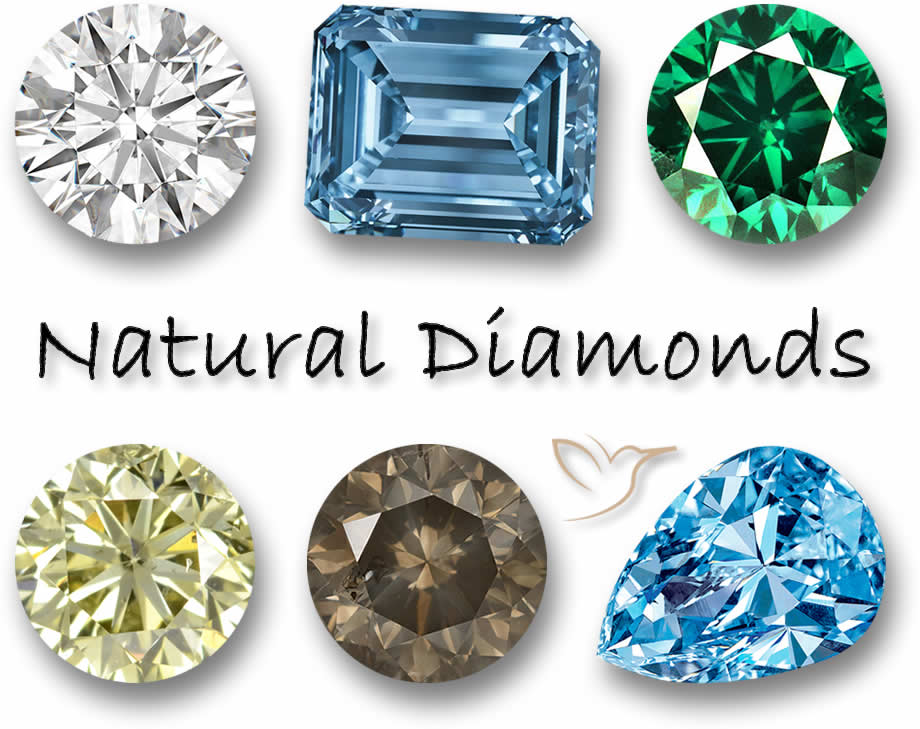
The year 2025 has been a fascinating case study in market segmentation for the diamond industry. On one side, we have the technological marvel of Lab-Grown Diamonds (LGDs), which have achieved remarkable efficiency, boasting margins as high as 72% .
On the other, we have the geological marvel of Natural Diamonds, operating with slimmer margins but playing a completely different financial game.
Recent retail data confirms a counterintuitive truth: Natural diamonds still deliver more total gross profit dollars for retailers. While the siren song of high-percentage margins on LGDs is tempting store owners, it is the natural stone that continues to pay the bills and build wealth for the jewelry sector.
Here is the deep dive into the economics of the 2025 diamond market, and why "high margin" doesn't always mean "high profit."
In retail 101, we learn that margin is a percentage, but profit is paid in dollars. This is the fundamental disconnect in the current diamond discourse.
Retailers are currently seeing margins on lab-grown diamonds hit an all-time high. However, these percentages are calculated on a rapidly depreciating asset base.
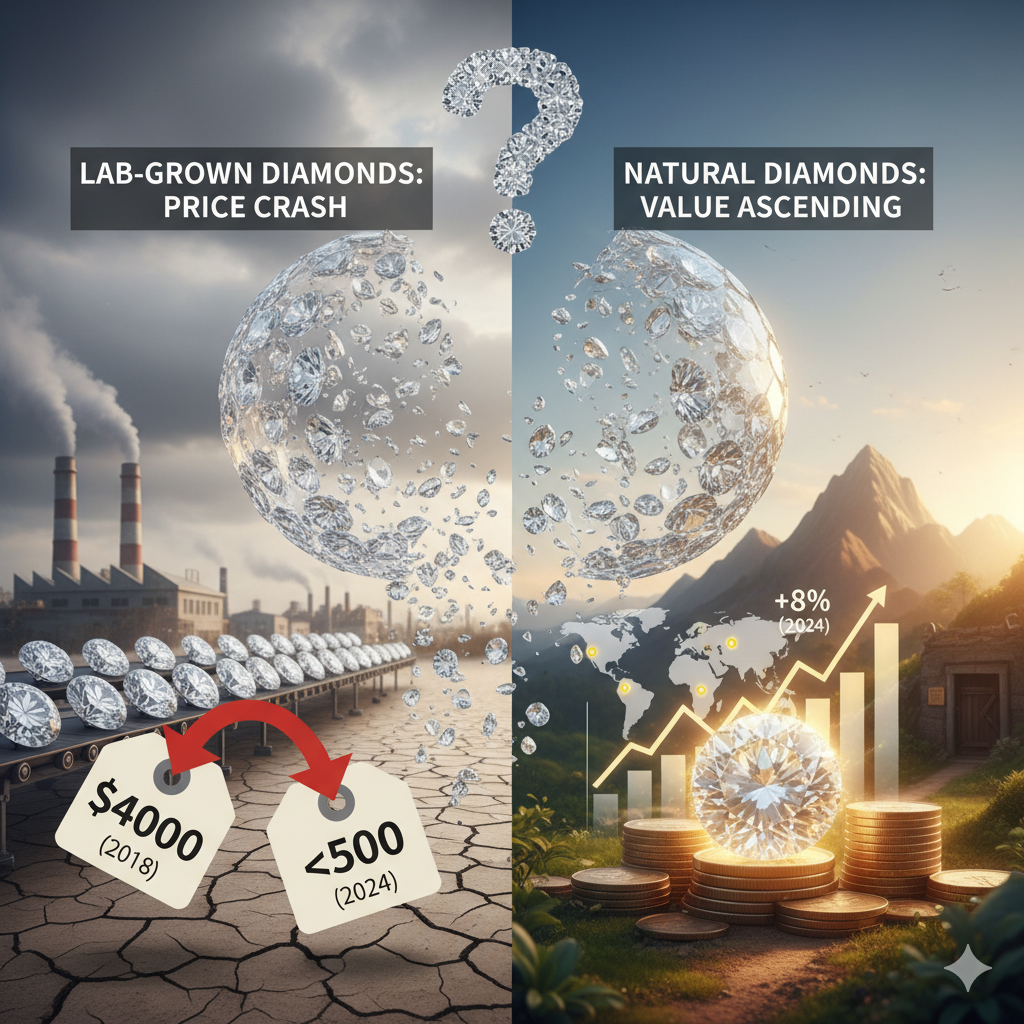
According to industry analysis from industry analysts like Paul Zimnisky, the price of lab-grown diamonds has experienced a freefall of over 25% to 40% in specific categories over the last 18 months alone.
If you sell a lab-grown diamond for $1,000 at a 72% margin, you make $720 in gross profit. If you sell a natural diamond for $10,000 at a 40% margin, you make $4,000 in gross profit.
To match the profit dollars of that single natural diamond sale, a retailer would need to sell roughly 5.5 lab-grown diamonds. Considering the staff hours, marketing costs, and customer acquisition efforts required, the efficiency of selling one high-value natural stone far outweighs the volume game required for lab-grown.
The preference for natural diamonds isn't just about sentiment; it's about economic utility and perceived permanence.
Natural diamonds are a non-renewable resource. The Gemological Institute of America (GIA) extensively documents the billions of years required for natural diamond formation. This geological time scale creates an inherent scarcity that lab-grown goods, which can be produced in a matter of weeks in a factory, simply cannot replicate.
Consumers purchasing engagement rings particularly for stones 1 carat and above are increasingly viewing the purchase as a store of value. In an age of economic uncertainty, the desire for assets that hold value is driving affluent buyers back to natural stones. As highlighted by The Economist, luxury goods are increasingly seen as alternative investments, and natural diamonds fit this bill perfectly.
Despite the buzz around lab-grown, retail store data suggests that closing rates are often higher with natural diamonds. Why? Because the "reason for purchase" is stronger.
When a consumer understands that a diamond is a unique piece of ancient history, it justifies the higher price tag. There is an emotional resonance that a lab-grown stone, chemically identical but origin-different, struggles to match. For many, the diamond is a symbol of unique, enduring love, a symbol better represented by a one-of-a-kind natural stone than a mass-produced laboratory product.
Let's be clear: Lab-grown diamonds are not going away. They have carved out a significant niche in the fashion jewelry sector and for budget-conscious buyers. However, the market dynamics are brutal.
Supply Glut: As noted by industry publications like JCK Online, the production capacity for lab-grown diamonds has exploded. This increased supply has decimated resale values and squeezed the dollar profit potential out of the category.
Commoditization: LGDs are rapidly becoming a commodity. Consumers can shop price across hundreds of online vendors, driving margins down despite the high initial markup. The "race to the bottom" in pricing is well-documented by analysts at Bain & Company, who note the deflationary pressure in the sector.
For retailers, this means LGDs are excellent for cash flow and foot traffic but poor for building long-term equity in your inventory.
To capitalize on the current market, retailers must adopt a hybrid strategy that leverages the strengths of both categories without falling into the "margin trap."
Use LGDs as Entry Points: Use lab-grown diamonds to capture the budget-conscious millennial and Gen Z buyer. They serve as an excellent introduction to your store. Once the customer is in the door, the sales conversation can pivot to the value and permanence of natural diamonds for life's major milestones.
Dominance in Bridal: Ensure your bridal section is dominated by natural diamonds. The engagement ring is the highest Average Order Value (AOV) moment in a person's life. This is where you maximize total profit dollars.
Leverage Marketplaces: To maximize reach without overextending inventory costs, utilizing a B2B and B2C marketplace is key. This allows you to showcase your natural diamond inventory to a global audience.
If you are a jeweler looking to expand your reach, you should register on the CaratX marketplace to connect with buyers in over 18 international countries. It’s the fastest way to liquidate inventory at profitable rates while accessing new demographics.
Looking ahead, the market will likely settle into a peaceful coexistence. Lab-grown diamonds will dominate the fashion and entry-level bridal markets due to their affordability. Natural diamonds will continue to reign supreme in the high-end bridal and investment markets.
The key takeaway for 2025 is to stop looking at margin percentages in a vacuum. Profit is denominated in dollars, not percentages. By maintaining a strong inventory of natural diamonds, particularly in the 1ct+ range, retailers ensure they capture the lion's share of the market's gross profit dollars.
Are you ready to optimize your inventory mix? Shop natural diamonds from certified sellers exclusively on CaratX .
Generally, no. Lab-grown diamonds have little to no resale value due to decreasing production costs and increasing supply. They are best viewed as a fashion purchase rather than a financial investment. Natural diamonds, due to their rarity, have historically held value better over time.
The cost difference is driven by scarcity and the cost of discovery. Natural diamonds are millions to billions of years old and require immense effort and capital to mine, sort, and cut. Lab-grown diamonds are manufactured in weeks. The price reflects the story, the rarity, and the enduring value of a natural resource.
Yes. CaratX provides a platform for sellers to reach a global audience. Whether you are a manufacturer, wholesaler, or retailer, you can register to start selling to B2B and B2C buyers in international markets today.
Currently, the market shows the strongest demand for natural diamonds in the 1 carat and above range, particularly for engagement rings. SI clarity and G-H color remain the "sweet spot" for value and demand.
You don't have to. Focus on education and trust. Use platforms like CaratX to offer competitive pricing on certified stones, but emphasize the quality of your service, the certification of your diamonds (GIA/IGI), and the unique story behind natural diamonds.
To ensure the accuracy and authority of the information presented in this analysis, we have relied on data and insights from the following reputable sources:
Gemological Institute of America (GIA): For foundational knowledge on diamond formation, grading, and the 4Cs.
Paul Zimnisky Diamond Analytics: For state-of-the-art industry data on rough diamond prices, lab-grown diamond market trends, and economic forecasting.
JCK Online: For retail-level news and trends affecting jewelers and vendors in the North American market.
Bain & Company Insights: For global luxury goods market analysis and the annual "Global Diamond Industry Report."
The Economist: For macroeconomic context regarding luxury assets, inflation hedging, and consumer behavior shifts.
De Beers Group Reports: For industry-wide consumer sentiment surveys and diamond demand statistics.
Ready to expand your diamond business?
Explore our competitive Pricing and Seller Plans to see how CaratX can help you dominate the global market.
Shop loose gemstones and diamonds at unbeatable prices on our marketplace.
Sellers! Don't wait. Register on CaratX here to access buyers in 18+ countries and maximize your profits today.
Jun, 18, 2026
Aug, 06, 2022
Aug, 06, 2022
0 Comments
Please login to leave a reply.